



Running a theatre requires coordinating rotating crews, managing ticket sales across multiple performance dates, and keeping patrons happy despite the chaos unfolding behind the curtain.
I evaluated 5 theatre management software options on staff scheduling, ticketing, CRM capabilities, mobile access, and real-world pricing. This guide will help you figure out which software best fits your theatre’s scale and budget so backstage confusion stops bleeding into opening night.
| App | Best for | Starting Price | Key Considerations |
| Connecteam | Theatre management teams coordinating rotating crews and rehearsal schedules | Just $29/month for the first 30 users | Strong scheduling software with drag-and-drop planning and real-time updates, but no built-in ticketing CRM |
| Spektrix | Venues focused on selling tickets and donor campaigns | Service charge based on sales volume | Great patron lifecycle coverage, but no workforce scheduling capabilities |
| Leap Patron Management | Fundraising-heavy organizations that want Salesforce-powered patron data | Contact vendor | Deep donor records and ticketing, but setup complexity can slow smaller teams |
| Arts People | Smaller venues that want low-commitment ticket sales and memberships | Per-ticket pricing (no monthly platform fee) | Good value for selling tickets, but limited mobile administration and marketing without add-ons |
| AudienceView Professional | Large venues with gate control and high-volume, multi-entry events | Per-ticket pricing | Enterprise-grade controls to streamline access operations, but can feel heavy for smaller theatre management teams |
What’s New in This Update (March 2026)
- Added Spektrix as a top pick.
- Removed ThunderTix, Tessitura, ArtsMan Theater Manager, and HubWorks.
- Improved ranking metrics to focus on important day-to-day theatre operations.
- Expanded all reviews with real user experiences.
- Updated PatronManager branding to Leap Patron Management.
- Included updated screenshots for each provider.
Our Top Picks
-
1

Best for theatre management teams coordinating rotating crews and rehearsal schedules
-
2

Good for venues focused on selling tickets and donor campaigns
-
3

Good for fundraising-heavy organizations that want Salesforce-powered patron data
Why trust us?
Our team of unbiased software reviewers follows strict editorial guidelines, and our methodology is clear and open to everyone.
See our complete methodology
How I Ranked the Best Theatre Management Software
I prioritized tools that solve real operational problems for theatre teams, from selling tickets to coordinating crews across rehearsals, tech weeks, and performance runs. The rankings reflect how much each platform can help assist in the day-to-day operations of theatre management.
Must-have theatre management features
- Ticketing and box office: The platform must handle reserved seating, pricing tiers, and high-volume sales on performance dates without crashing or slowing down.
- Scheduling: Creating rehearsal schedules, assigning shifts, and allowing crew to clock in and out efficiently without manual follow-up.
- Customer relationship management (CRM): Patron records must track booking history, donation amounts, and contact details in a way that helps with repeat engagement.
- Mobile access: Theatre staff are typically deskless. If core functions require a desktop login, the tool ranks lower for this audience.
Dealbreakers for this category
- No real-time notifications: If schedule changes or shift updates require manual follow-up to reach crew members, the tool isn’t competitive for theatre operations.
- No clear pricing: Tools that hide pricing entirely or require multi-step processes before showing any cost information rank lower. Theatre budgets are often tight and require predictability.
- No way to handle seasonal scaling: Theatre staffing swings dramatically between production runs and off-seasons. A tool that locks you into per-user pricing year-round, with no flexibility for fluctuating team sizes, loses points.
Nice-to-have differentiators
- Training and onboarding: Modules for health and safety, equipment use, and venue-specific protocols help get seasonal hires up to speed fast.
- Fundraising tools: Donation prompts during checkout or dedicated pledge tracking give theatres the chance to generate more revenue.
- Email marketing: Segmented campaigns based on patron behavior and booking history help fill seats for slower performance dates.
- Reporting: Clear visibility into ticket sales, fundraising income, and hours worked helps theatre managers make informed decisions about budgeting and staff.
With these considerations in mind, here’s how each platform performed.
The 5 Best Theatre Management Software of 2026
-
Connecteam — Best for theatre management teams coordinating rotating crews and rehearsal schedules
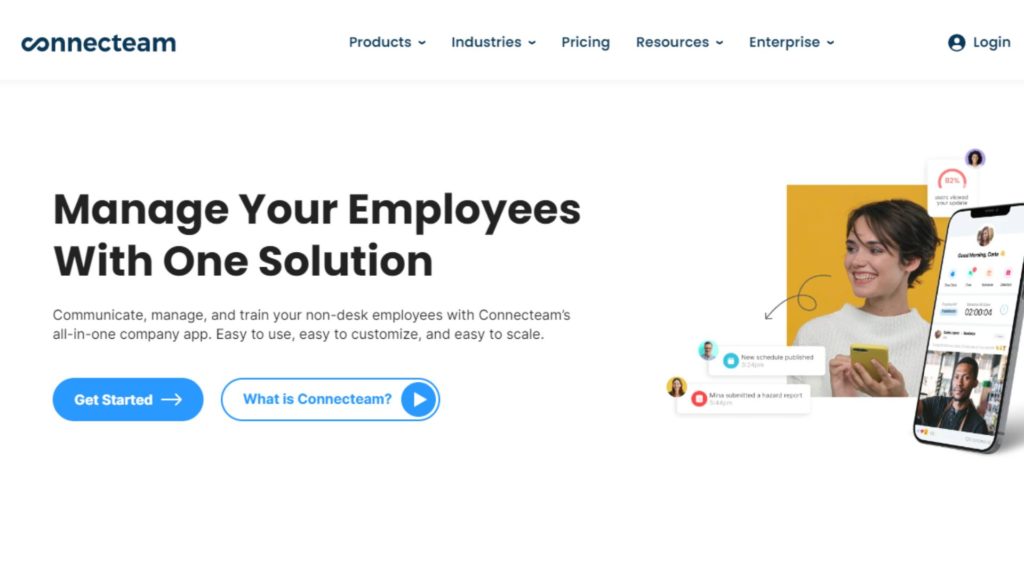
Connecteam is a mobile-first workforce management platform that streamlines operations for deskless teams like theatre staff. Stagehands, front-of-house crew, and seasonal hires can all access schedules, clock in, and communicate from their phones without needing to check a shared computer backstage.
Why I chose Connecteam: I ranked Connecteam #1 because it includes the most functionality vital to theater management. Connecteam’s drag-and-drop scheduling with real-time updates, accurate time tracking for hourly crews, and cross-team communication on mobile are all head and shoulders above alternatives for managing theatre staff.
Although patron-facing tools like ticketing and CRM are handled better by dedicated platforms on this list, no other tool matches Connecteam’s ability to keep rotation production staff coordinated from rehearsal through closing night.
How I used the scheduling tools
While testing Connecteam, I was able to set up rehearsal schedules and assign tasks to my hypothetical staff and crew, and the drag-and-drop scheduling app made it easy to map out a week of tech rehearsals without much effort.
I found I could route call time changes and venue updates through the team chat, meaning nobody shows up at the wrong door. People get notified about their schedules in real time, so fewer “I didn’t know I was on today” moments. I could also automate recurring shifts and use the time clock to track hours worked, which can really streamline operations and improve payroll accuracy for hourly crews.
Based on what I tested, a typical production week with Connecteam might look like this: On Monday, the stage manager publishes the week’s rehearsal schedules and assigns load-in tasks to the crew. By Tuesday afternoon, an actor calls in sick for Wednesday’s run-through, so the assistant director posts the shift as open, and a swing claims it within the hour. On Thursday, the production manager reviews timesheets, catches a missed punch from a carpenter who forgot to clock out, and corrects it before Friday’s payroll export.
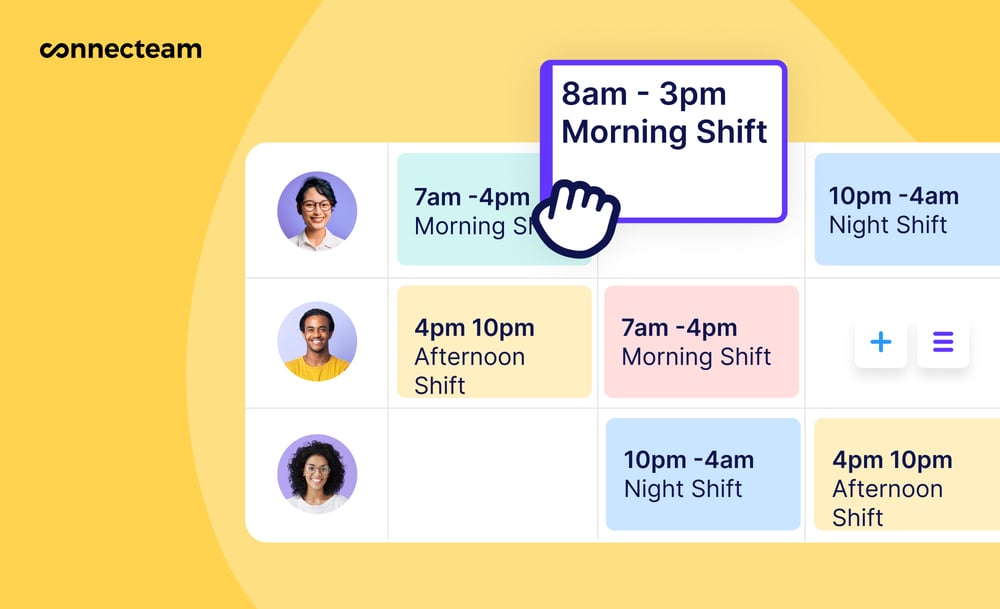
With the drag-and-drop scheduler in Connecteam, reassigning a tech rehearsal shift from one crew member to another takes a few seconds. How the employee directory works
Connecteam features an employee directory that tracks data for employees, artists, and contractors. It was user-friendly, and I could store job titles, phone numbers, and other customizable fields. I like that employees can update their details in the app, search the database by name and job title, and send each other instant messages. So, if the lighting designer needs to reach the props master at 10 pm during load-in, they can.
Setting up forms and training modules
Digital forms let me create and e-sign essential paperwork, such as health and safety checks and onboarding documents. And I could pair it with employee training, using customized modules for venue-specific topics such as fire safety protocols, rigging equipment procedures, or front-of-house evacuation plans. I like the statistics on training progress that show you whether your events-managing workforce is up to speed.

Making training available through a convenient mobile interface makes it easier for staff to complete quickly. How document storage handles theatre paperwork
Theatres deal with a lot of paperwork: union agreements, stage crew safety checklists, production contracts, rehearsal call sheets, etc. Connecteam includes team document storage and management, so I could sync new document versions on the cloud, set user permissions, and share specific files with users in the directory.
How the communication tools work for theatre teams
What I really like about Connecteam for theatre staff management is its mobile app functionality. Staff and creatives are often deskless, so being able to update schedules, view tasks, and communicate on the go is essential.
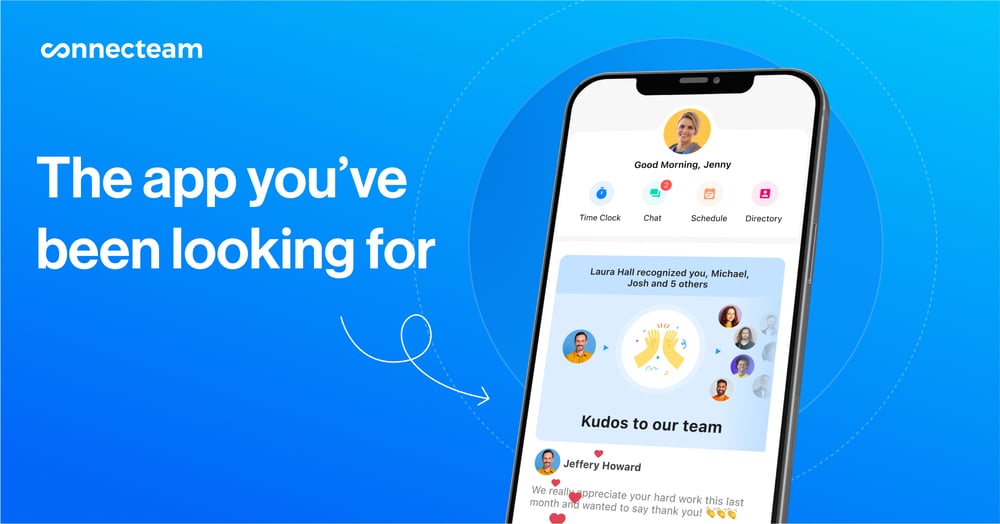
Connecteam allows your theatre staff to show appreciation for each other’s hard work, keeping morale high. When Connecteam may not be a good fit
Connecteam doesn’t include ticketing, seat management, or patron CRM tools. If your theatre needs audience-facing box office software, you’ll still need a dedicated ticketing system like Spektrix or Arts People alongside Connecteam.
Connecteam also offers a free for life plan – Get Started Now!
0Key Features
- Scheduling with recurring rehearsal shifts
- Time tracking with payroll export
- Employee directory with custom roles
- In-app team messaging
- Mobile training modules
- Centralized document storage
Pros
- Reduces last-minute call time confusion with real-time schedule updates
- Improves payroll accuracy for hourly crews
- Centralizes cast and crew communication in a single app
- Keeps production documents accessible from any device
Cons
- No audience-facing features (like patron CRM or fundraising)
- No built-in ticketing or box office tools
Pricing
Free-for-life plan availablePremium plans start at $29/month for 30 users
14-day free trial, no credit card required
Start your free trial -
Spektrix — Good for venues focused on selling tickets and donor campaigns
Available on
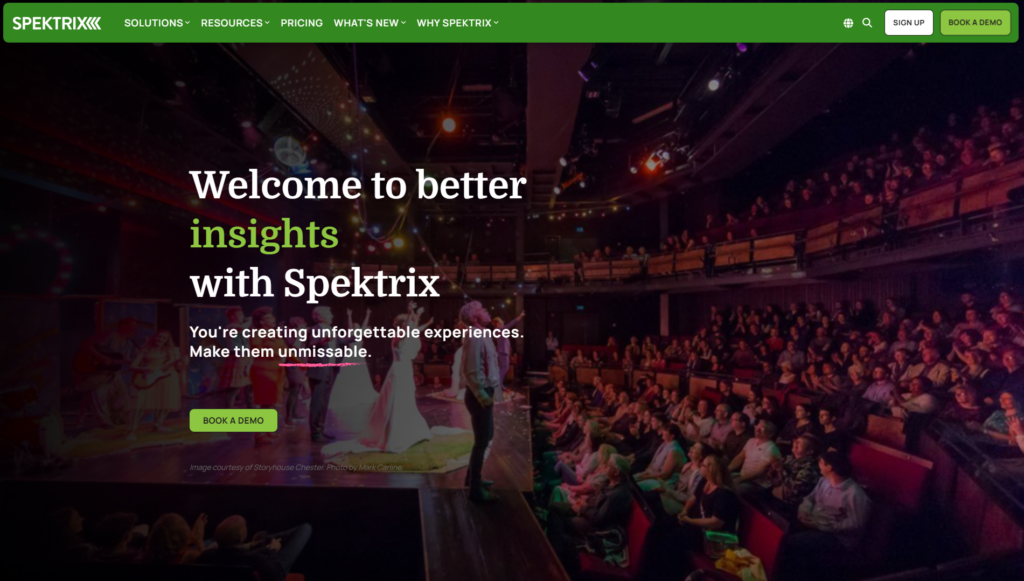
Spektrix is a cloud-based ticketing and CRM platform for arts organizations. It bundles box office sales, email marketing, and fundraising into 1 system.
Why I chose Spektrix: I like that everything comes in 1 package. Ticketing, CRM, and email marketing through Dotdigital are included at no extra cost. For theatres that want a single system instead of juggling multiple tools, it simplifies things. Pricing is relatively simple, too, with an all-inclusive service charge that scales based on your total gross income from tickets and merchandise.
How the box office interface performed
The first thing I noticed from Spektrix’s demo is that the single-screen sales interface is fast and intuitive. I think it’s important that staff can process a sale, see the patron’s history, and apply discounts without clicking through multiple screens.
Dynamic pricing is built in, too, which is good. I like that you can set rules so prices automatically adjust based on demand. For example, if 70% of seats sell for a Saturday show, the remaining tickets can bump up $5 automatically. Or I could see a manager deciding to drop seat prices for slower Tuesday performances.
What I liked about the email marketing tools
Spektrix includes Dotdigital email marketing integration at no extra cost, which I think is useful for many theatres. Managers can set up automated email sequences triggered by patron behavior. When someone buys a ticket, they get a confirmation, parking info a week before the show, and a thank-you email the day after.
I also like that the segmentation tools tag patrons automatically based on what they buy, donate, or attend, because it makes follow-ups more relevant without creating extra manual admin.
How fundraising tools stack up
Donation prompts appear during ticket checkout. There’s a pipeline dashboard that shows you how far down the funnel a potential donor has progressed, and I appreciate that the reports can show which activities are performing best, so managers can choose what to focus on.
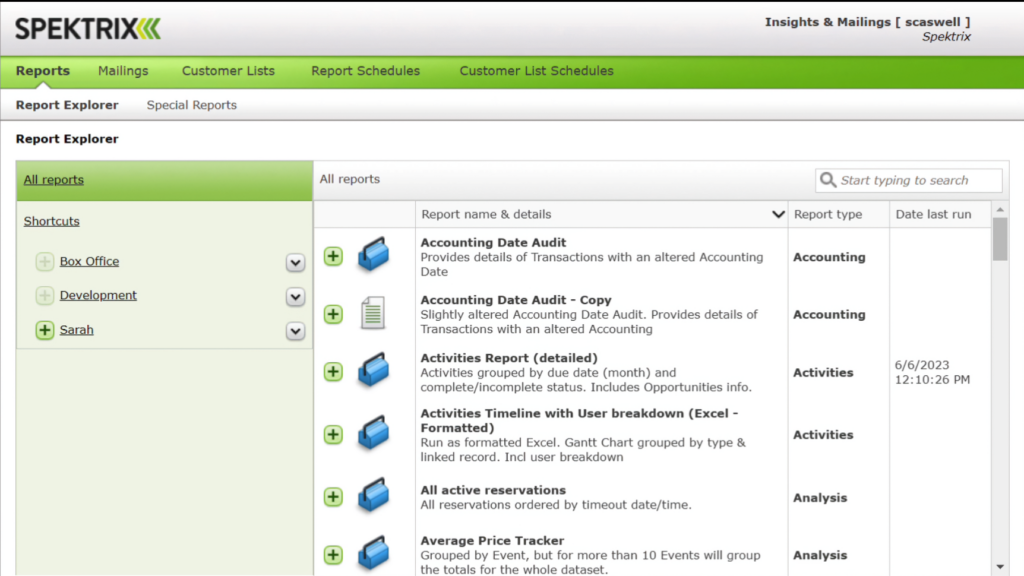
The report library helps explain why Spektrix is often chosen by teams that need recurring finance and development reporting. Integrations
Spektrix has an open API, and I like that it connects with Zapier so managers can automate between systems without needing custom development every time.
One thing I found disappointing is that the platform is only available in the UK, Ireland, the US, Canada, Australia, and New Zealand. Organizations outside these regions will need to look elsewhere. And while it handles patron-facing operations well, I noticed there’s nothing for scheduling ushers, tracking crew hours, or communicating with front-of-house teams. For a performing arts organization with a large crew, this gap means running a second platform for internal operations.
What users say about Spektrix
Spektrix has essentially every feature one would need for the performing arts industry. There are features for ticketing, customer lists, emailing, and so much more. I especially love the software integration with Dotdigital.

Spektrix does not provide users to input the financial data, such as GL strings for data upload into other systems. All the financial reports must be custom developed by Spektrix team.

Key Features
- Cloud-based ticketing with dynamic pricing
- Included Dotdigital email marketing
- Donor pipeline tracking
- Open API with Zapier integrations
Pros
- All-inclusive pricing with no per-user fees
- Fast box office interface
Cons
- Available in only 6 countries
- No staff scheduling or time tracking
Pricing
Service charge based on sales volume Trial: No Free Plan: No
-
Leap Patron Management — Good for fundraising-heavy organizations that want Salesforce-powered patron data
Leap Patron Management (formerly PatronManager) is a CRM and ticketing platform built entirely on Salesforce.
Why I chose Leap Patron Management: Each patron has a single record that shows purchases, donations, event attendance, and email engagement. For fundraising-heavy organizations, this unified view makes donor cultivation more manageable.
Salesforce foundation
Leap runs directly on Salesforce, which gives me access to enterprise-level infrastructure. Managers can build custom reports without hiring a developer—for instance, they can set up a report that shows all subscribers who donated over $500 last year and live within 20 miles.
I like how Salesforce gives me access to over 3,000 third-party integrations and excellent automation capabilities, but I do think it has a significant learning curve, and smaller teams with limited admin staff may find the 3-4 month implementation timeline a problem. If your box office manager is also your marketing director and your HR department, then you probably won’t have the bandwidth to configure and maintain a Salesforce-based system.
How ticketing and the box office worked in practice
The ticketing side includes reserved seating with a “Pick Your Own Seats” option for patrons. Staff can sell tickets, scan barcodes, and check in attendees using tablets.
I like that the mobile app lets staff view donor profiles on the fly. For instance, an executive director can check a patron’s giving history on their phone before greeting them at an event. I think this makes for a solid patron-facing application, but there are no tools for managing crew schedules, tracking hours, or communicating with your backstage team.
What I found in the fundraising and donor management
Grant tracking includes deadline reminders and pledge management, with automated thank-you workflows built in. I found there are no fees on donations beyond credit card processing, which matters for fundraising-heavy organizations. Since Leap sits on Salesforce, organizations can access third-party apps through the AppExchange, including wealth screening tools.
What users say about Leap Patron Management
Having used several other programs, I find Leap Patron Management to be one of the most intuitive and user-friendly. When I need assistance, the community resources and customer support are prompt and helpful, making it easy to get the answers I need.
While the platform is easy to use, there’s a bit of a learning curve with some of the more advanced reporting features.
Key Features
- Built on Salesforce with 3,000+ app integrations
- Unified patron records across ticketing and donations
- Grant tracking and pledge management
- Mobile box office and ticket scanning
Pros
- Powerful custom reporting without coding
- No fees on donations beyond credit card processing
Cons
- Implementation can take months, stalling a theatre mid-season
- No tools for scheduling shifts or tracking hours for theatre staff
Pricing
Contact vendor Trial: No Free Plan: No
-

Arts People — Good for smaller venues that want low-commitment ticket sales and memberships
Available on
Arts People is a ticketing and CRM platform for nonprofit performing arts, now part of Neon One.
Why I chose Arts People: The biggest selling point for me is its per-ticket pricing with no monthly subscription fees. Community theatres and smaller professional venues get real features without enterprise pricing. The per-ticket model means software costs drop to zero during the off-season. Setup is quick, too, taking days to weeks rather than months.
How the box office operations performed
The system selling tickets handles both reserved seating and general admission. The demo showed me how managers can build seating charts and set up rule-based pricing (different rates for weekends, seat locations, or member discounts) without calling support.
I also discovered that Arts People has helped organizations sell over 30 million tickets and process $250 million in donations. However, on the downside, there’s no full mobile app for box office operations. For me, this is a real problem for theatres that need to process walk-up sales easily. And while there’s a built-in mailing list for basic communications, there’s no way to schedule or communicate with volunteers and crew.
How membership management works
I found that Flex passes, season packages, seat retention for returning subscribers, automatic member discounts, and presale access are all built in. For theatres with loyal subscriber bases, the automation reduces manual work and helps managers make informed decisions about future marketing.
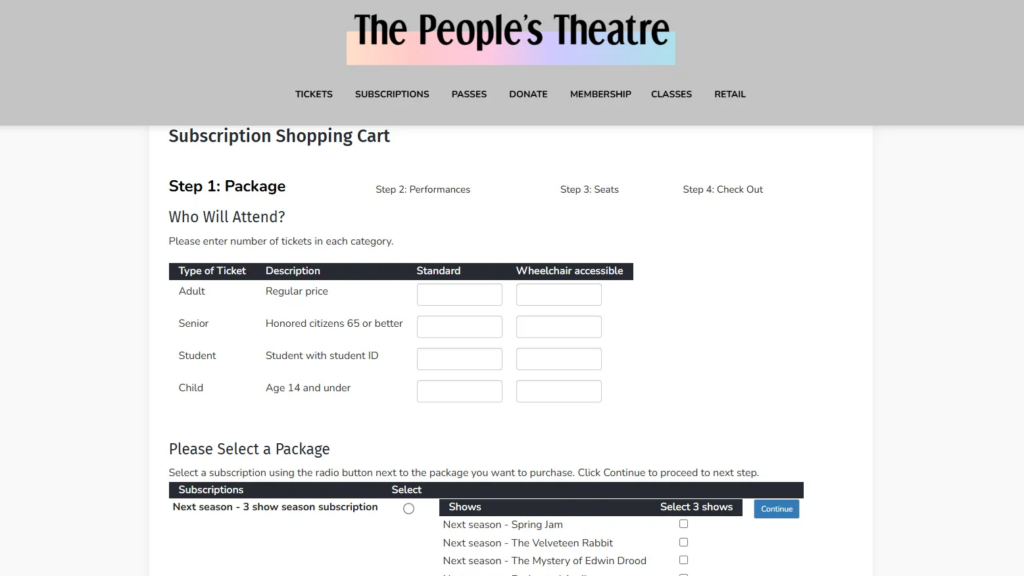
The subscription checkout flow supports package sales and seating tiers, which matters for theatres that rely on season memberships. What the Neon One ecosystem adds
Since Arts People is part of Neon One, it connects to Neon CRM for organizations that outgrow the basic donor tools. A ticket purchase automatically updates the patron profile in Neon CRM without manual data entry.
Notable limitation
I think it’s important to note that without the Neon CRM add-on, email capabilities are basic. You get a mailing list, and that’s about it. If you rely on targeted campaigns to fill seats for specific performance dates, you’ll either need Neon CRM or a third-party email tool on top.
What users say about Arts People
Great customer service, usual response time is within in hours. they have an emergency number as well. Integration to our website was easy, they made it work with what we have and it was great.
When Neon One acquired Arts People the fees increased without any improvements to the software or customer service. I appreciated their arts-focused service in the beginning, but I chose to leave because it felt as though the customers had become an afterthought.
Key Features
- Reserved seating with customizable seating charts
- Flex passes and season subscription management
- Neon CRM integration for donor tracking
- Built-in mailing list
Pros
- Per-ticket pricing with no monthly fees
- Quick setup
Cons
- Limited email marketing without the Neon CRM add-on
- No way to schedule or communicate with volunteers and crew
Pricing
Per-ticket pricing (no monthly platform fee) Trial: No Free Plan: No
-

AudienceView Professional — Good for large venues with gate control and high-volume, multi-entry events
Available on
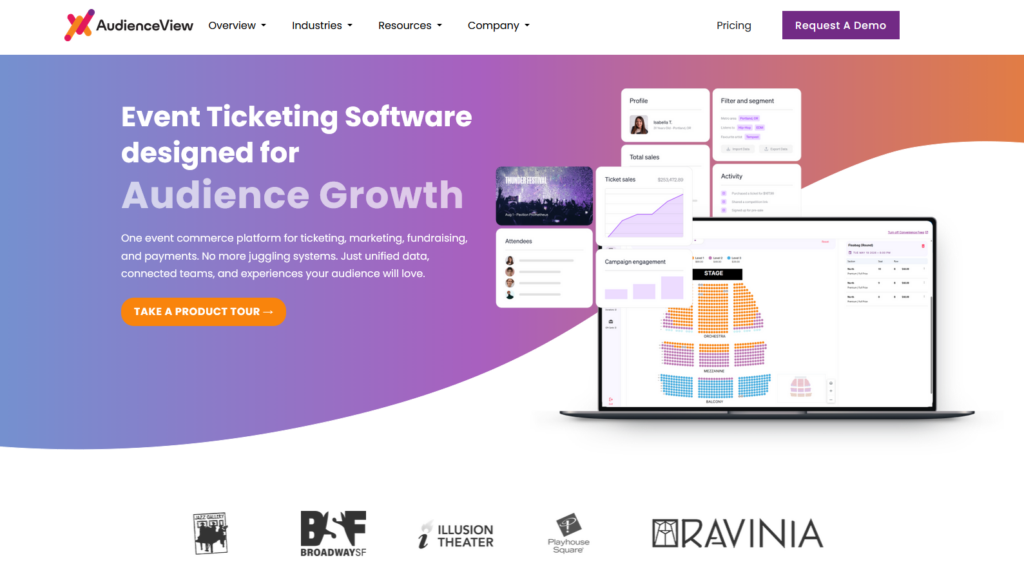
AudienceView is an enterprise ticketing platform serving over 9,000 venues globally. It comes in 2 main tiers designed to streamline operations for different scales: AudienceView Professional for mid-market theatres, and AudienceView Unlimited for large venues and universities.
Why I chose AudienceView: Organizations running 2,000-seat performing arts centers or university venues with multiple gates need this level of complexity. The enterprise tier includes 24/7/365 emergency support, which matters when thousands of patrons are waiting to get in.
What I found in the access control and gate management setup
The Unlimited tier offers gate-based access control with zone tracking, real-time attendance monitoring, and entry/exit tracking. This means managers can track which patrons have entered for a specific performance date, restrict patron movement between zones, and validate third-party tickets.
I also found the platform supports unlimited ticket types, dynamic pricing, auto-renewal subscriptions, and group sales. This does, however, mean a steep learning curve that can overwhelm smaller teams. And while AudienceView manages patron flow through gates, there’s no scheduling or time tracking for the front-of-house teams working those gates.
How the marketing distribution works
I think it’s worth knowing that AudienceView owns TheaterMania and WhatsOnStage, 2 consumer platforms with millions of engaged live-event fans. When managers list a show in AudienceView Professional, it can automatically be exposed to this audience.
White-label branding and campus integration options
I found that with the Unlimited tier, organizations get to keep all service charge revenue and can control whether to absorb fees, pass them to customers, or split them. Plus, patrons stay on the venue’s branded site throughout checkout. For universities, the platform integrates with campus authentication systems and student ID cards.
What users say about AudienceView
Great value for money and helps alot with collection management, very easy to use, I will definitely recommend.
I did not find the software to be intuitive, and pulling reports is burdensome. Accessing and analyzing historical ticket/attendance information is not simple.
Key Features
- Multi-gate access control with zone tracking
- TheaterMania and WhatsOnStage marketing exposure
- White-label branding with fee control
- University and campus authentication integrations
Pros
- Built-in audience reach through consumer platforms
- 24/7/365 support on enterprise tier
Cons
- Pricing and complexity make it impractical for smaller theatres
- No scheduling or time tracking for large front-of-house teams
Pricing
Per-ticket pricing Trial: No Free Plan: No
Compare the Best Theatre Management Softwares
| Topic |
 Start for free
|
|
|
|
|
|---|---|---|---|---|---|
| Reviews |
 |
|
|
|
|
| Pricing |
Starts at just $29/month for the first 30 users
|
Service charge based on sales volume
|
Contact vendor
|
Per-ticket pricing (no monthly platform fee)
|
Per-ticket pricing
|
| Free Trial |
yes
14-day
|
no
|
no
|
no
|
no
|
| Free Plan |
yes
Free Up to 10 users
|
no
|
no
|
no
|
no
|
| Use cases |
Best for theatre management teams coordinating rotating crews and rehearsal schedules
|
Good for venues focused on selling tickets and donor campaigns
|
Good for fundraising-heavy organizations that want Salesforce-powered patron data
|
Good for smaller venues that want low-commitment ticket sales and memberships
|
Good for large venues with gate control and high-volume, multi-entry events
|
| Available on |
What Is Theatre Management Software?
Theatre management software is a set of tools that helps the performing arts sector meet specific needs, like coordinating rotating casts across rehearsal schedules, managing reserved seating, and tracking donor relationships. Features that theatre management software offers, like rehearsal scheduling, dynamic ticket pricing based on seat location and demand, and integrated donation prompts during checkout, are built for how theatres operate.
How Does Theatre Management Software Work?
Theatre management software lets you create an event for each show, define seating areas, and set ticket pricing rules, such as “$100 per seat in the stalls” and “$50 per seat in the circle.” Promotional offers can also be added, such as “20% off for under-25s.”
You can also include other items for sale, such as food and drinks, playbills, and merchandise. To support fundraising efforts, you can create donation programs that target different interests, like “support new writers.”
The software can also help manage day-to-day operations. You can create schedules and shift patterns for each production, assign tasks to individuals, and allow them to tick off work when it’s completed.
When a new employee joins, simply add them to the employee directory, where they can provide details such as their phone number. You can also assign compulsory training and onboarding modules, like health and safety guidelines, to specific users.
The Benefits of Theatre Management Software
Using management software to run your theatre’s operations saves time and money. You can cut admin overhead and increase your ticket sales by giving patrons a smooth booking journey.
Benefits include:
- Lower costs: Using software to automate shifts, set ticket pricing tiers, and mass-email audiences means lower labor costs for manual administrative tasks.
- Freed up time: As they’re not processing ticket orders manually or tracking artist hours in a spreadsheet, your office staff can spend their time on strategic planning.
- Higher income: A ticket booking and donation system that’s quick and easy to use, paired with effective marketing, increases your box office and fundraising revenues.
- Better customer experience: Audiences appreciate a well-designed interface, with clear pricing tiers and a smooth booking process.
- More targeted marketing: The CRM tracks important customer data, like previously booked shows, while email marketing tools help build targeted campaigns.
- Clearer schedules: Productions run more smoothly when an app tells staff and creatives what they need to do, when, and where.
How Much Does Theatre Management Software Cost?
In many cases, you need to speak directly with theatre management software providers to get a quote. The price often depends on the size of your institution, including your box office revenue and the number of shows performed annually, as well as your required features and budget.
For solutions that include ticketing features, you may pay a flat monthly fee and a percentage commission or a fee per ticket sold. Spektrix, for example, uses a per-ticket service charge that scales with volume. Arts People charges per ticket with no monthly fee.
If the software solution includes employee management features, it may charge a flat monthly fee and an added per-user fee.
Some providers offer a free trial on their paid plans, but not many include a free plan. Connecteam is an exception here. It offers both a 14-day free trial and a free plan for up to 10 users, making it easy to test before committing.
FAQs
The operations behind arts management are substantial, from selling thousands of tickets to managing staff, crew, and creatives. Theatre management software can streamline operations and sales, saving you time and allowing you to focus on creating great shows. Connecteam specifically helps with internal operations, such as scheduling crews, training staff, and keeping everyone communicating, while other platforms, such as Spektrix and Arts People, handle patron-facing functions.
Theatre management software comes at a price, but the cost and time savings it creates make it worth it. You can step away from tracking schedules and customer details in spreadsheets and give patrons a great booking experience with theatre-specific ticketing. For internal operations, Connecteam’s free plan for up to 10 users means you can test whether the software fits your workflow without any financial risk.
To use theatre management system software effectively, keep customer records up to date, create clear pricing tiers, and personalize marketing campaigns according to audience segments. In addition, create a production schedule, assign shifts and tasks, and give staff appropriate training. Using Connecteam for staff coordination alongside a ticketing platform gives you coverage across both internal operations and patron-facing needs.
The Bottom Line On Theatre Management Software
Theatre management software supports operational activities from staff training to scheduling and time tracking, as well as ticketing, fundraising, and other patron-facing requirements. Theatre-oriented features, such as demand-driven dynamic pricing, help improve the customer experience while reducing admin costs and increasing revenue.
Some solutions focus exclusively on ticketing, fundraising, and marketing, while others additionally cover internal tools such as an employee directory, training modules, and instant messaging. For internal operations such as scheduling crews, communicating with deskless staff, and training volunteers, Connecteam is the strongest option on this list.
Try Connecteam for free today to see how it can help manage your theatre’s workforce, or book a demo to get a personalized walkthrough.