

Paper checklists and scattered spreadsheets can leave you slacking on your personal deadlines. But the consequences can be much worse for businesses, with the wrong checklist software leading to missed deadlines, poor accountability, failed audits, and damaged reputations.
I reviewed 5 of the best online checklist apps to evaluate how easy it is to create and manage checklists. I also went beyond checklist management and looked at how they help with task management, workflow automation, and collaboration across devices.
| App | Best for | Starting Price | Key Considerations |
| Connecteam | Teams turning checklists into assigned daily work | Just $29/month for the first 30 users | Combines checklists with task management, communication, and workforce tools, but there’s no offline functionality. |
| SafetyCulture | Inspection checklists and corrective actions | $24/user/month | Excellent for inspections and compliance tracking, but less suited to general task or project management. |
| Process Street | Repeatable process checklists and approvals | Contact vendor for price | Strong workflow and SOP management capabilities, but can feel overly complex for basic checklist needs. |
| Trello | Visual checklist boards and lightweight workflows | $5/user/month | Easy to learn and highly flexible, but lacks advanced compliance, approval, and operational management features. |
| Todoist | Simple personal and small-team checklists | $5/month | Simple and intuitive for everyday personal task management, but is limited for larger teams and structured business workflows. |
What’s New in This Update (August 2026)
- Removed TickTick, ClickUp, Asana, and Proofhub, and added SafetyCulture, Process Street, Trello, and Todoist to serve more diverse use cases other than project management.
- Adjusted my ranking criteria to prioritize checklist management and usability features over general workforce management tools.
- Updated pricing, review scores, and customer testimonials.
Our Top Picks
-
1

Best for teams turning checklists into assigned daily work
-
2

Best for inspection checklists and corrective actions
-
3

Best for repeatable process checklists and approvals
Why trust us?
Our team of unbiased software reviewers follows strict editorial guidelines, and our methodology is clear and open to everyone.
See our complete methodology
How I Chose the Best Online Checklist Apps
Checklist apps serve different purposes. Some are designed for frontline teams completing operational tasks, while others focus on project workflows or personal productivity.
That’s why I chose 5 tools that work for the many ways businesses and individuals use checklists, including frontline operations, inspections and compliance, process management, project collaboration, and personal task tracking.
Must-have features for online checklist apps
- Easy checklist creation and customization: I ranked platforms higher if they make it simple to build, edit, and reuse checklists. Tools that required extensive setup or technical expertise for recurring checklists scored lower.
- Reminders and notifications: I chose apps that send reminders for upcoming tasks and deadlines, as well as real-time updates. This feature is essential for staying organized and on top of tasks and projects.
- Cross-device accessibility: Since many checklists are completed in the field or at multiple locations, I prioritized platforms that automatically sync across computers, mobile devices, and tablets.
- Progress tracking and reporting: I looked for tools that provide visibility into checklist completion through features like dashboards, reports, status updates, or activity logs.
- Task assignment and accountability: For business-focused checklists, I gave higher ratings to checklist apps that enable project managers to assign tasks and track completion.
Dealbreakers for online checklist apps
- Lack of accountability features: Tools lost points if they didn’t clearly show who is responsible for each checklist or task, and whether work has been completed.
- Poor collaboration: A checklist app without native collaborative features like built-in chat, comments, notifications, or shared workspaces received lower ratings.
- Overly complex setup: While advanced functionality has its place, I avoided tools that require significant training or administrative effort for basic or free checklist management.
Nice-to-have differentiators for online checklist apps
- Workflow automation: I gave extra credit to platforms that seamlessly integrate checklists into workflows by automating approvals, routing tasks, managing recurring schedules, sending reminders, and handling follow-up actions.
- Templates and process standardization: I ranked tools with strong template libraries or reusable checklist frameworks higher because they reduce setup time and improve consistency.
- Compliance and audit tracking: I gave platforms that maintain detailed completion records, inspection logs, or audit trails additional consideration, particularly for operational and safety-focused use cases.
- Integrations: I favored tools that connect with project management, communication, scheduling, or business management software, allowing checklist data to fit into broader workflows.
The 5 Best Online Checklist Apps of 2026
-
Connecteam — Best for teams turning checklists into assigned daily work
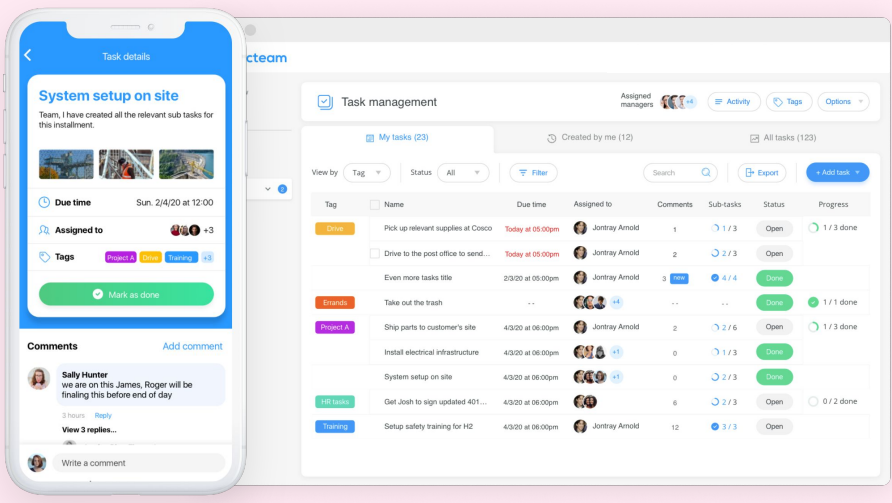
Connecteam is the best online checklist app for businesses that want to turn checklist items into actionable daily tasks. Managers can assign checklists to team members, track progress, and communicate with them in real time without leaving the app.
Why I chose Connecteam: Connecteam earned the number 1 spot because its checklists can directly improve the efficiency and quality of daily workflows for frontline teams. I loved the customizable checklist templates that serve different use cases, along with the built-in chat and instant updates to keep teams aligned across devices.
Let’s take a look at some of Connecteam’s checklist features:
Easy checklist creation with attachments
Connecteam makes it easy to create and share custom checklists and digital forms, even for non-technical users. I could start from scratch and choose which fields to add, or pick one of their checklist templates and make quick changes to set it up. Custom templates can be stored and reused to simplify recurring checklists.
The platform has an intuitive interface, and I loved how my team and I could add images, PDFs, Excel spreadsheets, and other files to checklists and forms from anywhere. This helps me share detailed instructions and keep clear records of work.
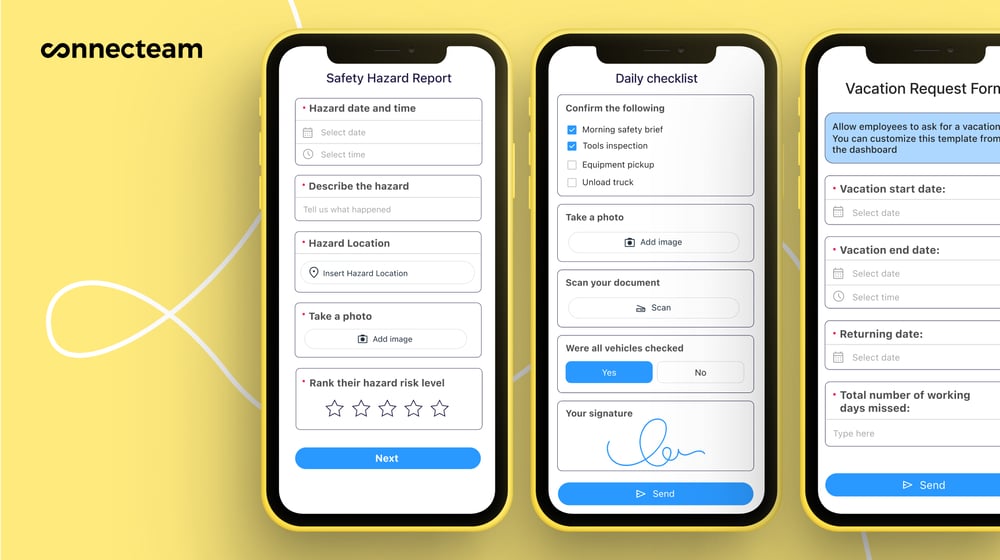
Connecteam offers a variety of digital checklist templates for different use cases. Automated checklist creation and completion
What stood out to me was the AI-powered automation for checklist creation. The file-to-form automation lets me turn a PDF form or a picture of a paper checklist into a digital version in seconds.
Connecteam also has a speech-to-text feature, where employees can fill out forms by speaking instead of typing. I was super impressed with how the AI feature automatically organized and summarized employees’ voice inputs on forms.
Create tasks and get automatic notifications
It was a major advantage that I could connect my checklists with workflow execution through a central task management app. I could create and assign tasks, subtasks, and projects, and ensure employees have a clear understanding of their duties by adding checklists, descriptions, and images to each task.
Team members get instant notifications of their assignments, while managers get automated status updates and a live overview of all tasks to track progress in real time.
My team and I could also share updates and files through Connecteam’s online team chat, so there was better collaboration and alignment.
Up-to-date, dynamic forms
Anyone on my team, be it a field worker or a manager, could update or fill out checklists on their phones, and changes would reflect across devices instantly. So, teams always had the latest, most relevant, and accurate information.
Another standout feature for me was Connecteam’s adaptable forms, where the items change based on user input. For example, the questions within my form or checklist would change based on whether a chef or a waiter was filling it out, so they only get asked what’s relevant to their daily workflows.
This gives me targeted data on different areas of my business that could lead to improved productivity, rather than a generic overview. I could also easily export and share reports of these insights throughout the organization.
Ensure compliance with industry regulations
I found that Connecteam helps support compliance. I could create task lists customized to my company’s health, safety, and labor regulations and even add e-signatures or require geolocations for compliance purposes.
I particularly appreciated the live overview of checklists and a full record of completed tasks, which I could use to demonstrate compliance during audits or health and safety inspections.
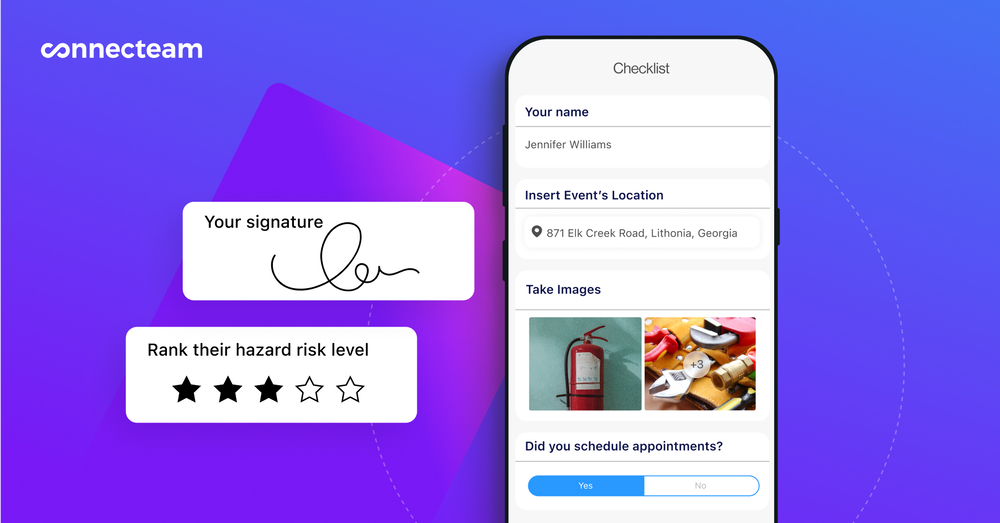
Connecteam lets you add e-signatures and geolocation to checklists for better compliance. And so much more…
Connecteam is a complete employee management app that allows you to manage your entire business from your phone. You can create schedules and training materials, upload and store documents, manage all HR operations, and even communicate with your team with in-app chat and a social media-style news feed.
The paid plan starts at just $29 per month for up to 30 users, and small businesses with fewer than 10 users can access the app completely free.
When Connecteam may not be the best fit
Connecteam is not the best fit if your non-desk workers are in areas without WiFi or cell connection.
Connecteam also offers a free for life plan – Try Connecteam here!
0Key Features
- Checklists and forms with attachments
- Customizable checklist templates
- AI-powered checklist automation
- Task management
- Dynamic forms
- Records of completed tasks
Pros
- Create and share checklists in minutes
- Save time with AI-powered file-to-form and speech-to-text automation
- Connect checklists with task management
- Share checklists and information with your team instantly
Cons
- No offline mode
- Free plan limited to 10 users
Pricing
Free-for-life plan availablePremium plans start at $29/month for 30 users
Simplify and streamline your paperwork with Connecteams online checklist app
Try Connecteam here -
SafetyCulture — Best for inspection checklists and corrective actions
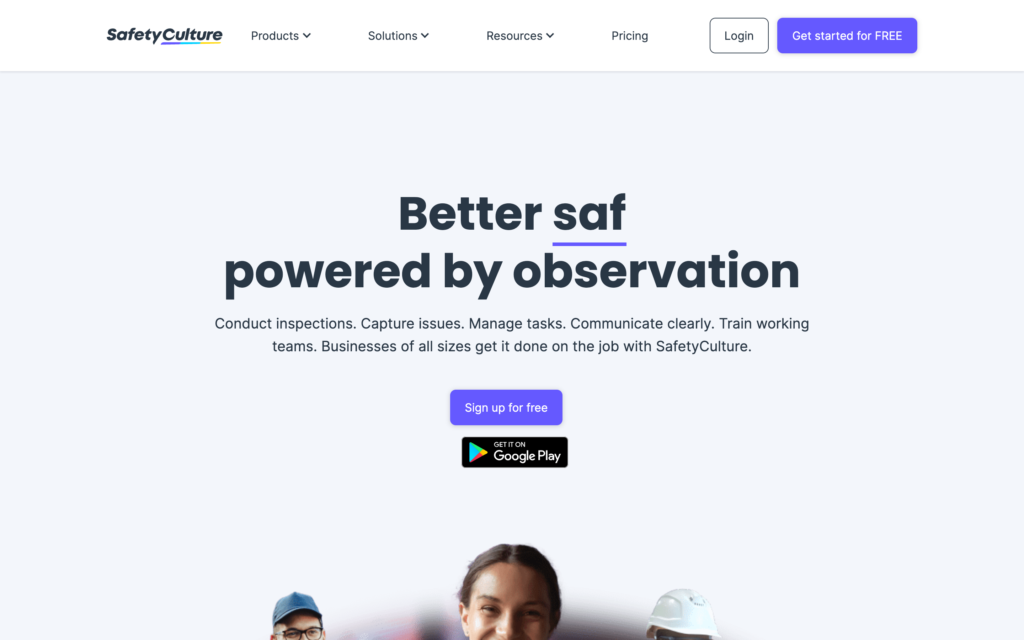
What’s new with Mitti (by SafetyCulture) (iAuditor)
In August 2026, SafetyCulture rebranded as Mitti.
SafetyCulture is an operations and inspection platform designed to help businesses digitize checklists, inspections, audits, and corrective action workflows.
Why I chose SafetyCulture: I ranked SafetyCulture 2nd because it’s one of the strongest options for businesses that rely heavily on inspections, audits, and compliance processes. Our full SafetyCulture review praised the platform’s massive template library and how easy it makes it to create inspection checklists.
Inspections and checklist management
SafetyCulture has a huge library of 100,000+ pre-built templates that can be customized to fit different industries and workflows. I also like how teams can use its AI-powered template generator to create their own checklist templates in minutes.
Beyond checklist creation, SafetyCulture makes it easy to schedule one-off or recurring inspections, assign them to groups or individuals, and track completion. Automatic reminders help ensure inspections don’t get missed, which is particularly valuable for compliance-focused organizations.
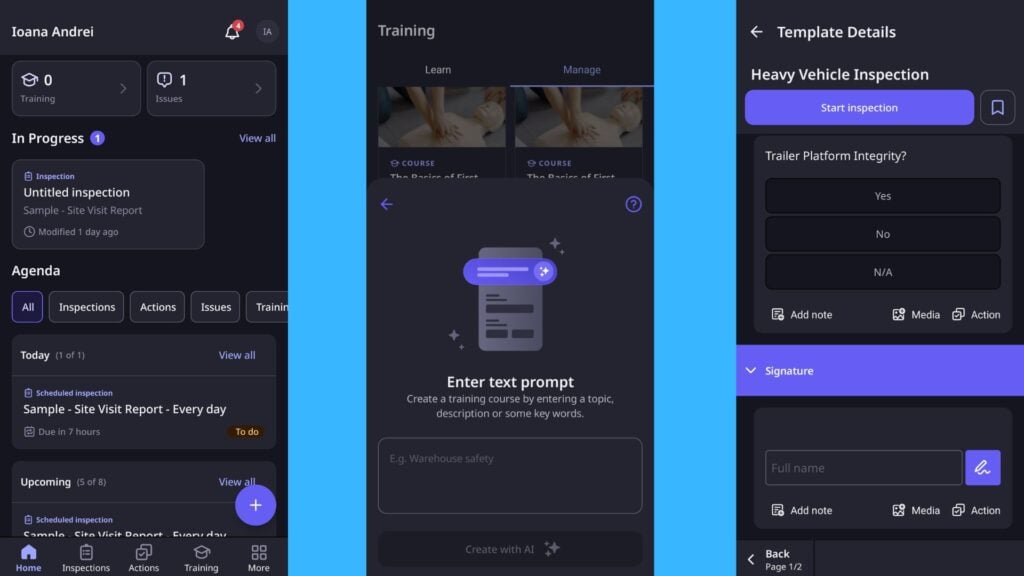
Easily create and track inspection checklists using templates on the SafetyCulture app. Task management and accountability
If I find an issue during an inspection on SafetyCulture, I can immediately create a corrective action and assign it to a specific employee. Most online checklist makers don’t have this follow-up capability, so I’d have to manually create tasks to fix issues.
SafetyCulture refers to tasks as “actions,” and you can add different types of actions, customize them, and monitor progress on the action tracker. Through this highly detailed dashboard, I could easily filter actions and get an overview of all action creation and completion dates and times.
I especially loved the ability to link actions to specific inspections, which increases accountability around deadlines. The platform also keeps detailed records of actions and inspections, making it easier to review past activity when needed.
Reporting and training tools
Another feature that impressed me is SafetyCulture’s reporting capabilities. Inspection results, checklist completion rates, and action statuses can all be tracked through dashboards and reports, helping managers identify recurring issues and operational trends.
I also liked that the platform includes over 1,000 templates for training courses. I could deliver learning content, assign training materials, and monitor employee progress in the same system. This is particularly useful when checklist procedures and employee training need to stay aligned.
Notable limitations
While SafetyCulture is great for inspections and compliance workflows, it’s less effective for general-purpose checklists and task management. You can assign tasks and inspections to team members, but it lacks operational features like time tracking, scheduling, time off, or availability.
It has a very intuitive user face, it’s easy to navigate, the functionality is logical and easy to understand. The inspection tool especially has set the standard for us, its logic and capabilities are awesome.

The price tag to move from a free version to paid model. I believe the first 10 seats should always be free. Software support should never be behind a paywall.

Key Features
- Customizable inspection templates
- Task management
- Training courses
- Records of actions and inspections
Pros
- AI template generator for quick, custom templates
- Combine inspections, tasks, and training in 1 platform
Cons
- Non-responsive customer support
- No time tracking, scheduling, or availability features
Pricing
Starts at $24/user/month Trial: Yes — 30 days Free Plan: Yes — (up to 10 users and 5 active inspection templates)
-
Process Street — Best for repeatable process checklists and approvals
Available on
- Web
- iOS
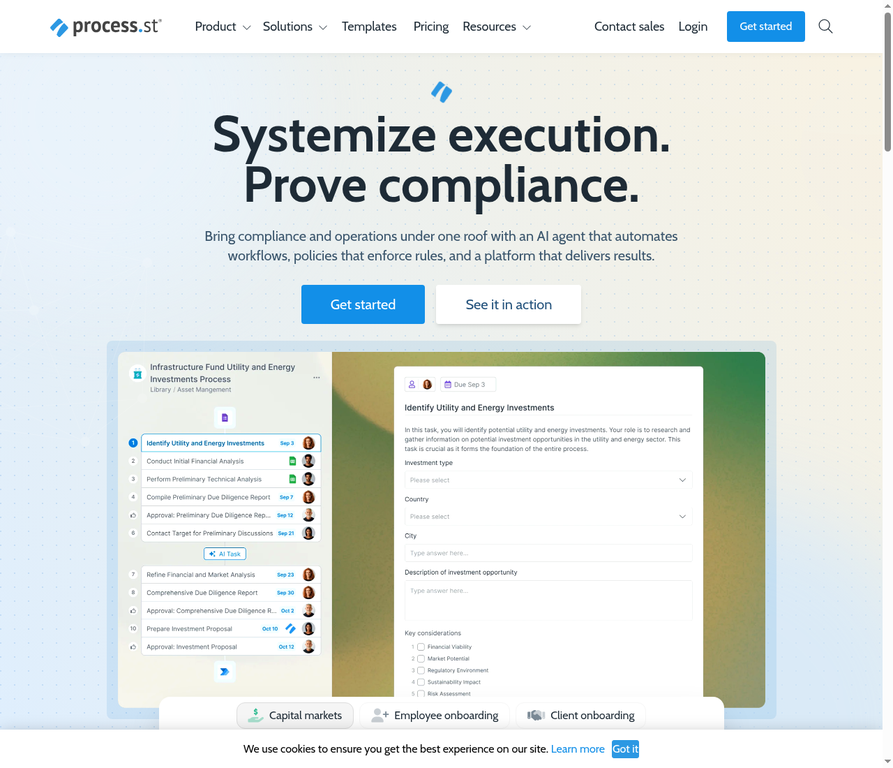
Process Street is a workflow and checklist management platform that standardizes recurring processes and automates approvals.
Why I chose Process Street: I included Process Street because it’s great for executing repeatable processes. If your goal is to make sure employees follow the same steps every time, whether that’s onboarding new hires, processing invoices, conducting audits, or managing client projects, then Process Street is a compelling option.
Actionable workflows
Instead of storing SOPs in static documents, I like that Process Street converts them into interactive workflows (or checklists) that guide users through each step. I especially appreciate how easy it is to set up recurring workflows.
I could create repeatable Workflow Runs, which are a list of tasks that employees follow to complete a specific process. I could assign tasks to different employees, set dynamic due dates, and add files and instructions, without leaving the workflow/checklist.
There are customizable templates for creating Workflow Runs, which save time and effort compared to manually adding each step of a process. To add to this, I loved the option to make this process even faster through AI. You can either use Process AI to generate a new workflow for your use case or upload a document, and the AI will create it for you.
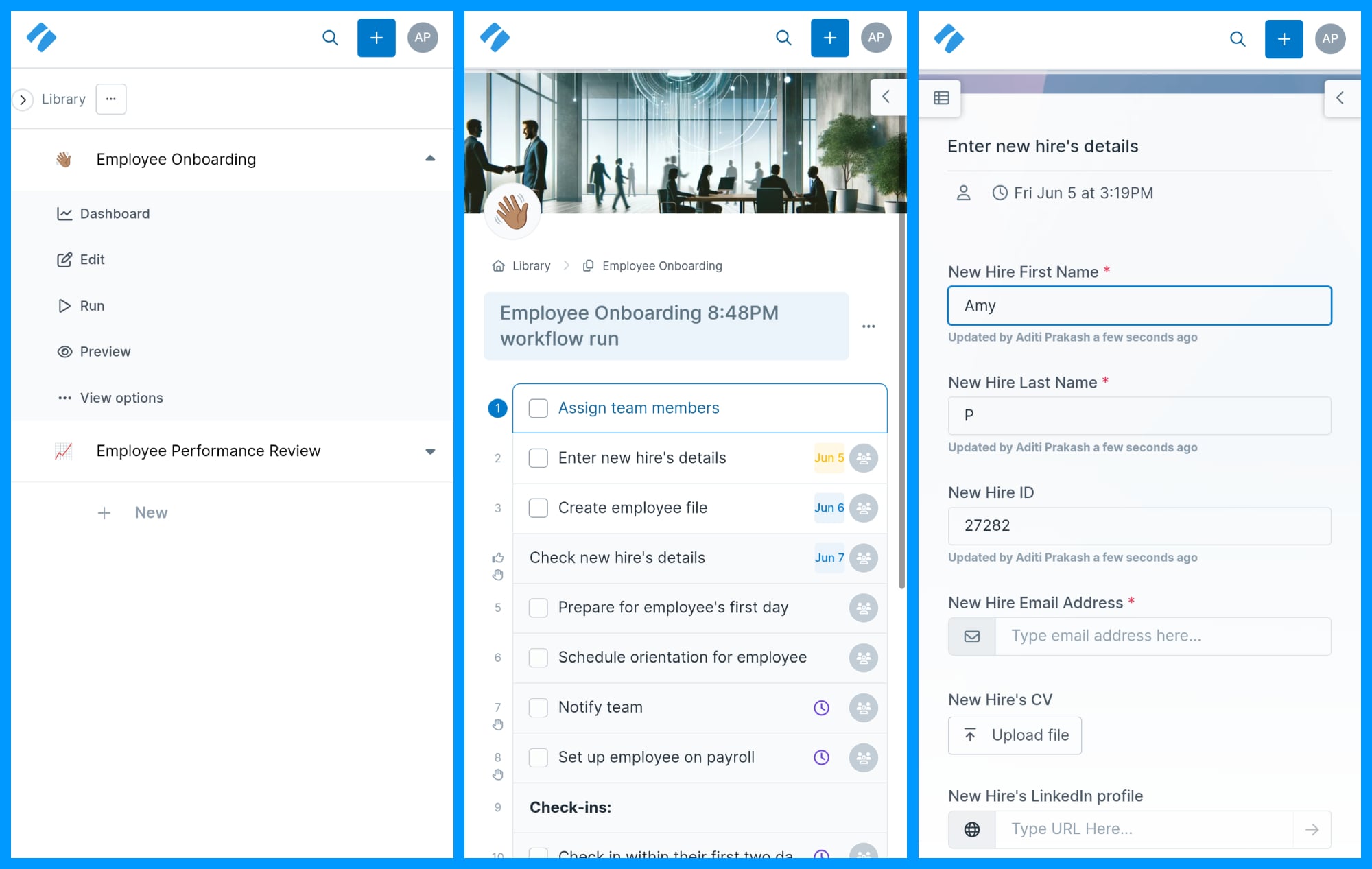
Create and run checklist-based workflows for recurring processes in minutes. Build approval processes directly into checklists
For businesses with review requirements, Process Street’s approval features are a major advantage.
Managers can require sign-offs before employees move to the next stage of a process, creating more control over critical workflows. This works well for areas like compliance, finance, HR, and quality assurance, where skipping steps can create costly mistakes.
The platform also records who completed each task and when, giving managers a clear audit trail without requiring additional documentation.
Automation and adaptability
What stood out most during my evaluation was how much administrative work Process Street can eliminate.
Apart from using AI for creating recurring workflows, Process Street also uses conditional logic to automatically adapt workflows based on user responses. For example, an employee may only see certain tasks if a specific answer triggers them. This keeps workflows cleaner and prevents users from working through irrelevant steps.
Notable limitations
Process Street is designed for structured processes, which means it can feel excessive for teams that simply need straightforward task lists or daily checklists. It also doesn’t offer employee scheduling, time tracking, location tracking, or other features required for managing the operations of deskless teams.
Simple to use. I have used this tool for new hire onboarding and this is simple to use and very structured.
One downside is that advanced features like automations and conditional logic can feel overwhelming for new users at first. There is a learning curve when building more complex workflows, but once learned, the system becomes very powerful and efficient.

Key Features
- Recurring workflow checklists
- Approve and sign off on workflows
- Conditional logic
- Task assignments and due dates
- Audit trails and activity tracking
Pros
- Excellent for SOP-driven operations
- Strong approval controls
- Helps standardize repeatable processes
Cons
- More complex than traditional checklist apps
- Less suitable for deskless teams and personal task management
Pricing
Contact vendor for price Trial: Yes — 14 days Free Plan: No
-

Trello — Best for visual checklist boards and lightweight workflows
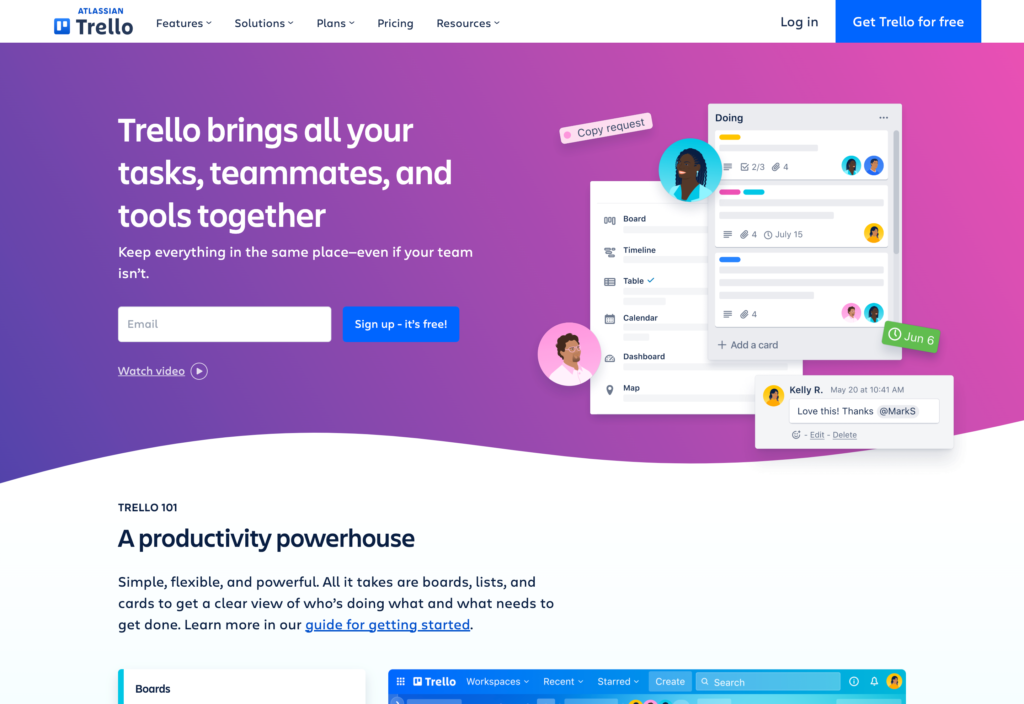
Trello is a visual project management platform that uses boards, lists, and cards to help individuals and teams organize work.
Why I chose Trello: I ranked Trello in the 4th spot because it’s an easy way to turn checklists into visual workflows. Our full Trello review praised its ease of use and flexibility, and I think it’s a particularly good fit for small teams and project-based work.
Visual workflows
What stands out most about Trello is how flexible its board system is. I could create boards for virtually any process and then organize work using lists and cards.
Within each card, it’s easy to add checklist items, due dates, attachments, comments, and assignees. I like that a simple checklist can grow into a more detailed task when needed, without becoming overwhelming.
The drag-and-drop interface is another highlight. Moving cards between stages takes only a few seconds, making it easy to track progress without updating complicated status fields or reports.
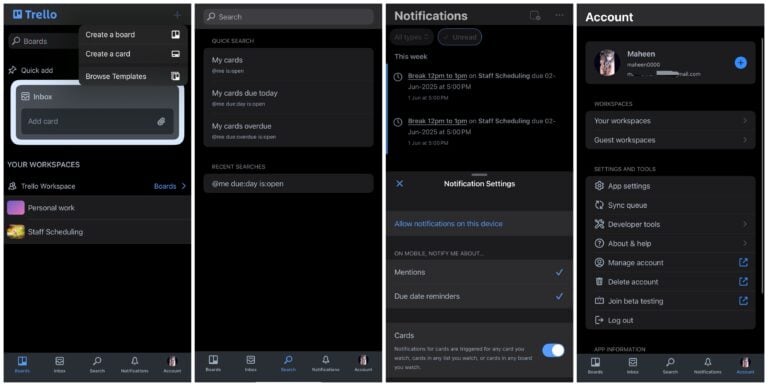
Create visual boards to organize checklists and track progress on the Trello app. Simple collaboration
Trello does a good job of keeping teamwork simple. I can assign team members to cards, tag them in comments, and get notifications for any updates. This creates enough accountability for most projects without introducing the complexity often found in enterprise project management platforms.
I also appreciate task visibility across the platform. Opening a board provides an immediate overview of active jobs, upcoming deadlines, and completed work, reducing the need for status meetings and follow-up messages.
Automations and integrations
For teams managing recurring processes, Trello includes built-in automation through Butler. I can use automations to move cards, assign tasks, send reminders, update due dates, and perform other routine actions automatically.
While not as advanced as dedicated workflow automation platforms, it’s more than capable of handling many common checklist-related processes. Trello also integrates with a wide range of business tools, including Slack, Microsoft Teams, Google Drive, Dropbox, Jira, and Outlook.
Notable limitations
Trello is best for lightweight workflows, but it’s not meant for organizations that need detailed operational controls or highly structured processes. It also lacks features to manage deskless teams, including employee scheduling, shift-based task assignments, timesheets, and location tracking.
As a remote team, being able to organise tasks into their actual state remotely is a lifesaver- approvals; easy. In progress; visible at a glance. Responsible person; visible immediately.
It lacks depth and tends to feel too simple, there aren’t a lot of deep features like deadlines on individual tasks or nesting tasks.
Key Features
- Kanban-style boards
- Checklist creation within cards
- Task assignments and due dates
- Workflow automation
- File attachments and comments
Pros
- Easy to learn
- Solid free plan for individuals or small teams
- 200+ integrations available
Cons
- Limited process management capabilities
- Hard to manage multiple boards without Standrard or Premium plan
Pricing
Starts at $5/user/month Trial: Yes — for the Premium plan Free Plan: Yes
-

Todoist — Best for simple personal and small-team checklists
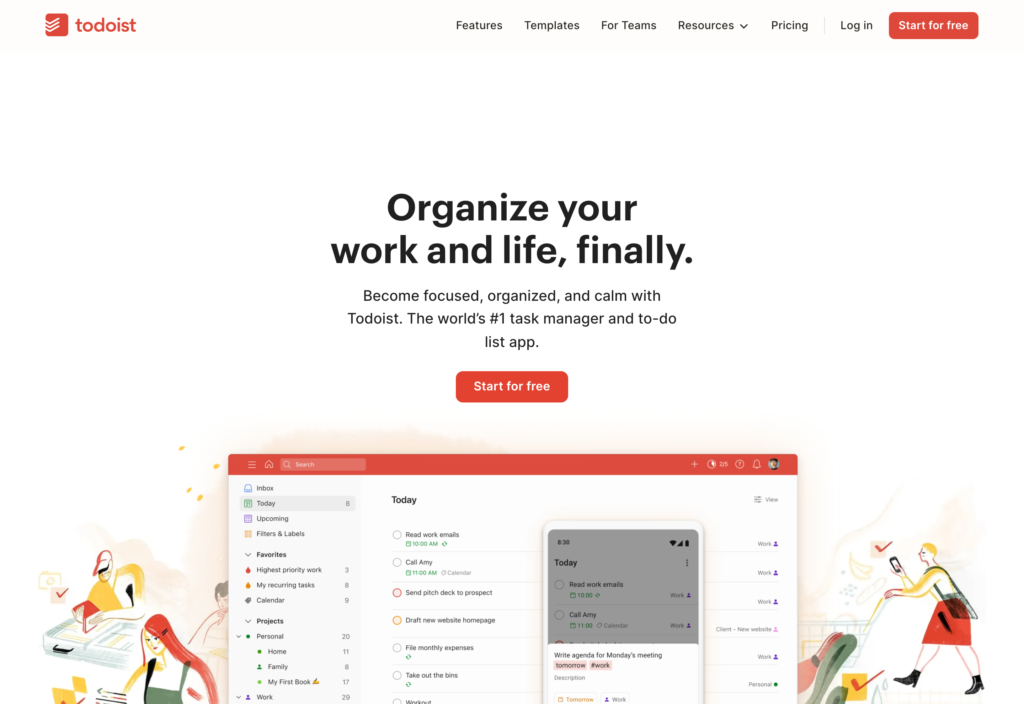
Todoist is a task and checklist app that helps users keep track of daily responsibilities, recurring tasks, and personal projects.
Why I chose Todoist: I added Todoist to this list because not everyone needs workflow automation, inspections, or project boards. Sometimes the best checklist app is simply the one you’ll actually use every day. Todoist excels at helping users create and organize tasks and checklists without much effort.
Quickly create and organize checklists
Todoist’s biggest strength is its simplicity. Whether I’m creating a grocery list, planning a work project, or managing household chores, adding new tasks takes seconds. The interface is clean and easy to navigate.
I especially loved how Todoist uses natural language for deadlines and scheduling. You don’t have to specify dates; instead, you can just say “next Friday” or “every Friday for the next 4 weeks,” and Todoist will handle the scheduling.
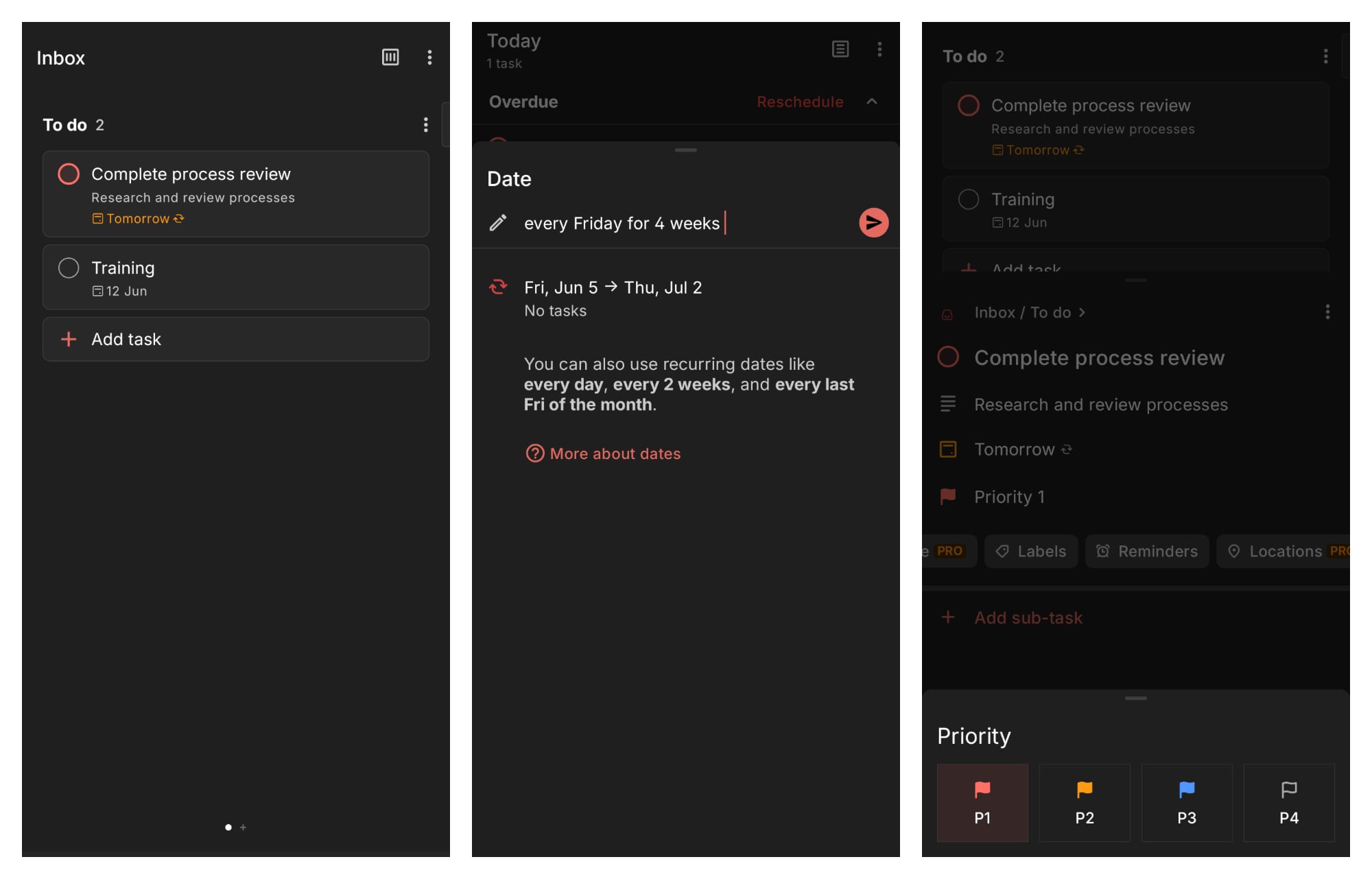
Quickly create tasks, add deadlines, and fill in details on the Todoist app. I also like how flexible the organization system is. Projects, labels, filters, and priority levels provide enough structure to keep things organized.
Manage recurring tasks
If, like me, you regularly complete the same tasks each day, week, or month, Todoist does an excellent job of keeping those responsibilities visible. I found recurring tasks easy to configure, and the best part is that the platform automatically regenerates them after completion.
For people managing routines, habits, maintenance schedules, or recurring administrative work, this can eliminate a surprising amount of manual effort. There are also customizable reminders and productivity tracking tools to help maintain consistency.
Share checklists with others
While I see Todoist primarily as a personal checklist software and productivity tool, it can also support lightweight collaboration.
Users can share projects, assign tasks, leave comments, and receive notifications when work is completed. In my opinion, this makes it suitable for families, freelancers, and small teams that need basic accountability without adopting a full project management system.
The collaboration tools aren’t particularly advanced, but they can be effective as a small team checklist app.
Notable limitations
Todoist is a simple task and checklist app for personal or small team use; it’s not built for operational workflows or frontline teams. Businesses wanting a broader feature set will need to look elsewhere.
Quick to add tasks, easy to set dates. Simple enough that I actually use it. The keyboard shortcuts are also nice.
Key features like reminders, labels, and filters are restricted unless you upgrade Lacks advanced project management tools like timelines or Gantt charts.
Key Features
- Recurring tasks and checklists
- Natural language task creation
- Projects, labels, and filters
- Task assignments and comments
- Reminders and notifications
Pros
- Fast and easy to use
- Excellent recurring task management
Cons
- Limited business workflow capabilities
- Basic reporting and analytics
Pricing
Starts at $5/month Trial: Yes Free Plan: Yes
Compare the Best Online Checklist Apps
| Topic |
 Start for free
|
|
|
|
|
|---|---|---|---|---|---|
| Reviews |
|
|
|
|
|
| Pricing |
Starts at just $29/month for the first 30 users
|
Starts at $24/user/month
|
Contact vendor for price
|
Starts at $5/user/month
|
Starts at $5/month
|
| Free Trial |
yes
14-day
|
yes
30 days
|
yes
14 days
|
yes
for the Premium plan
|
yes
|
| Free Plan |
yes
Free Up to 10 users
|
yes
(up to 10 users and 5 active inspection templates)
|
no
|
yes
|
yes
|
| Use cases |
Best for teams turning checklists into assigned daily work
|
Best for inspection checklists and corrective actions
|
Best for repeatable process checklists and approvals
|
Best for visual checklist boards and lightweight workflows
|
Best for simple personal and small-team checklists
|
| Available on |
Web, iOS
|
What is a checklist app?
A checklist app is a program that allows you to edit a digital checklist and have a group of employees, students, or peers check off tasks as they are completed. Checklist apps often integrate with other apps to streamline the process of completing assigned tasks.
How do checklist apps work?
Checklist apps use internet connections to sync tasks and subtasks as team members complete them. Their interface allows users to create and assign tasks with deadlines and reminders. Some employ a simple drag-and-drop interface, while others have more complex systems.
Checklist apps often feature location-based and deadline-oriented reminders to help team members prioritize specific tasks. Many also include the ability to integrate with calendar software or communicate with other users via a chat function.
Benefits of Online Checklist Apps
There are lots of benefits to using checklist apps, including:
Accessibility from anywhere
Employee checklist apps can be accessed from anywhere with an internet connection, allowing users to view, edit, and update their lists from various devices such as smartphones, tablets, and computers.
Motivation and accountability
Checking off completed tasks in an online checklist provides a sense of accomplishment and motivation. It also creates a visual record of progress, fostering accountability and encouraging users to stay focused on their goals.
Real-time collaboration
Many online checklist apps enable real-time collaboration, allowing multiple users to work on the same checklist simultaneously. This is particularly useful for team projects and shared tasks.
Task organization
Checklist software often comes with features like categorization, prioritization, and due dates, helping users organize tasks effectively. Some apps also offer tags and labels for further customization.
Automatic notifications and reminders
Team members can set up notifications and reminders for tasks, ensuring that important deadlines are not missed. These reminders can be sent via email, push notifications, or SMS.
Easy updates and edits
Online checklists can be easily updated or modified. Tasks can be added, edited, or deleted without the need for erasing or rewriting, promoting flexibility and adaptability.
Integration with other work software
Many online checklist apps integrate with other productivity tools and software, allowing seamless transfer of data and tasks. Integration with schedules, email, and project management tools enhances productivity.
Data Analysis and reporting
The best checklist apps provide analytics and insights based on employee activity. This data can be valuable for productivity tracking or for businesses to optimize their workflows.
Customization
Managers can often customize the appearance and functionality of the app to suit their preferences. This flexibility ensures that the app aligns with the user’s specific needs and workflow.
How Much Do Checklist Apps Cost?
The cost of checklist apps varies depending on the features and plans offered by different providers. For instance, Todoist, a popular checklist app, offers a free basic version with limited features. Their premium plan, which includes advanced features such as task reminders and productivity reports, costs around $3 per month when billed annually.
Zenkit, another well-known checklist app, provides a free plan with basic functionalities suitable for personal use. Their paid plans, which offer collaboration features and additional customization options, start at $9 per user per month when billed annually.
In comparison, Connecteam, a comprehensive checklist app tailored for businesses, offers a flexible pricing structure based on the number of users.
Small businesses with up to 10 users get access to the free online checklist feature, and can use all features at no cost. Pricing starts at $29 per month for up to 30 users, providing advanced features like task automation, offline mode, and employee scheduling, making it a suitable choice for teams or businesses of all sizes with specific organizational needs.
>>Get started with Connecteam for free today!<<
FAQs
Connecteam is the best app for making checklists. Users will love how easy it is to use as well as the helpful features like schedule management, location tracking for tasks, and reminders.
- Write or type a list of the biggest tasks you need done for the day.
- Break these big tasks down into steps. These steps are called subtasks.
- Add these items to your checklist.
- Check off tasks and subtasks as you complete them.
While pen and paper or a word processor may be helpful for a personal checklist, you can also use checklist apps like Connecteam to create helpful online checklists that can be shared with others.
The Bottom Line On Online Checklist App
When choosing a checklist app, consider your team’s specific needs. Do you need a chat function? Schedule management? Milestone and progress updates?
For an all-in-one app to help you digitize your business, Connecteam is our favorite checklist app. Available in the office or the field via desktop and mobile, the app offers all the functions business owners want in a checklist app without the price tag of comparable apps.