

If your construction company still relies on whiteboards, paper forms, spreadsheets, and group texts to manage projects, it’s only a matter of time before miscommunication, missing paperwork, and costly mistakes slow your jobs down.
I reviewed 5 free construction management software platforms and ranked them based on the features construction businesses actually need, how easy they are to use in the field, and how well they can grow with your company.
Use these picks to keep crews aligned, stay on top of every job site, and deliver projects on time and on budget.
| App | Best for | Starting Price | Key Considerations |
| Fieldwire | Viewing plans and managing field tasks | $39/user/month. | On-site execution with intuitive mobile plan viewing and task assignments. Free plan limited to 5 users. |
| Monday.com | General construction project management with templates | $9/user/month | Highly customizable boards and excellent construction templates for tracking progress. Free plan is limited to just 2 users and 3 boards. |
| ClickUp | Office project management and time tracking | $7/user/month | Time tracking and detailed project management dashboards. Lacks field features like geofencing and specialized construction checklists.<br /> |
| Zoho Projects | Best for project budgeting and team collaboration | $4/user/month | Strong budgeting tools with Gantt charts. The interface can be complex to navigate, and it’s not purpose-built for construction workflows. |
| Wrike | Construction teams using agile workflows | $10/user/month, for 2-15 users | Flexible task management and collaboration. Lacks industry-specific features like blueprint management. |
| Connecteam | Scheduling, time tracking, timesheets, and team communication | Just $29/month for the first 30 users | Drag-and-drop employee scheduler, Task management with progress tracking, Mobile-friendly forms and checklists, Messaging app for 1-on-1 and group chats. |
What’s New in This Update (August 2026)
How I Ranked the Best Free Construction Management Software
Here are some key features I looked for in free software solutions for construction businesses.
Core Construction Management Requirements
- Keeping projects on schedule: The software must provide visual task management and scheduling tools to prevent collisions between trades.
- Preventing budget overruns: Supervisors should be able to track expenses and estimate job costing in real time.
- Eliminating blueprint confusion: The system needs to ensure crews are always working from the latest plan versions to avoid costly rework.
- Organizing jobsite communication: The platform must keep RFIs, change orders, and daily reports centralized rather than lost in text messages.
Day-to-Day Usability
- Ensuring field adoption: The mobile app must be easy for non-tech-savvy crews to use directly from the job site.
- Working without cell service: The software should support offline capabilities so crews can access plans or track time in dead zones.
Cost and Scalability Protection
- Staying genuinely free: The platform must offer a real free plan, not just a limited-time trial.
- Scaling without breaking the bank: The software should offer affordable upgrade paths when the crew outgrows the free tier limits.
The 5 Best Construction Company Software for Free
-

Fieldwire — Best for viewing plans and managing field tasks
Fieldwire is a construction management software designed to enhance field operations with features like plan viewing, task management, and file and photo management.
Why I chose Fieldwire: I appreciated that Fieldwire delivers an intuitive, mobile-first experience for field teams managing plans and tasks on job sites.
Plan Viewing
In our full Fieldwire review, we found that Fieldwire’s plan viewer is user-friendly, lets you create real-time markups, and communicate between crew members. The system uses optical character recognition (OCR) to automatically label page names and detail callouts, which eliminates manual data entry.
We also found that the automated version control ensures team members always work from the correct drawings by marking older versions with a red watermark. It’s a helpful tool, but it’s important to note that the free plan is capped at 5 users, 3 projects, and 100 plan sheets, making it limited for growing crews to use without upgrading.
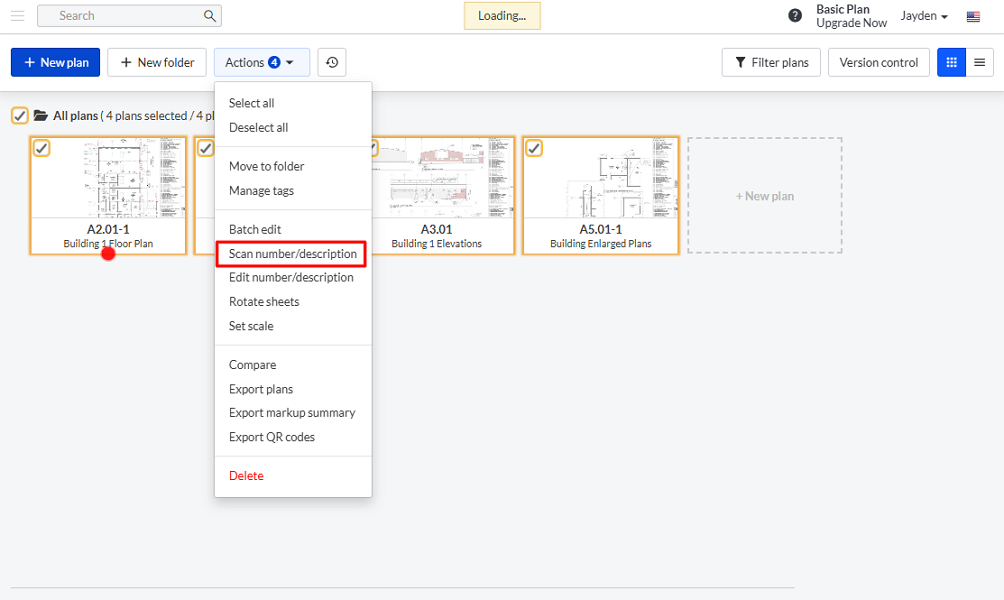
Fieldwire lets us view and name plans in just a few clicks. Task Management
Fieldwire lets you break projects down into tasks and manage them on Kanban boards, Gantt charts, or calendar views. In our testing, the Kanban view created a clear visual workflow, allowing us to see task statuses and track progress in real time.
One drawback we ran into is that Fieldwire doesn’t support task dependencies. When we changed the due date for one task on the Gantt chart, the start dates for related tasks didn’t adjust automatically. This could seriously limit its effectiveness for complex construction sequencing. Additionally, free users can’t edit the default task statuses, so you need a paid plan to create custom names and add colors.
Document and File Organization
The platform provides a centralized hub for managing project documents and files. During testing, we found the folder system helpful for grouping similar files together, and I also like that tasks, photos, and forms are organized within their specific projects to prevent mix-ups.
You can upload files directly from a mobile device or cloud storage. However, Fieldwire lacks vital workforce management features like a built-in time tracker, and it doesn’t offer billing, invoicing, or other financial management tools, which could be a deal breaker depending on your company’s needs.
What users say about Fieldwire
The platform effectively addresses the complexities of project management in the construction sector, offering tools that enhance communication and organization. The real-time updates and mobile accessibility have been particularly beneficial, allowing our team to stay connected and informed, regardless of location.

Sometimes it can be hard to operate on a mobile compared to on a PC. Being able to edit certain information or draw/edit over a drawing.

Key Features
- Mobile-accessible plan viewing
- Task assignment and prioritization
- Cloud storage for documents and photos
- Automated plan version control
Pros
- Strong optical character recognition for plans
- Reliable offline capabilities on mobile
Cons
- Limited project capacity on the free plan
- Lacks task dependencies for scheduling
Pricing
Starts at $39/user/month. Trial: No Free Plan: Yes — (up to 5 users)
-

Monday.com — Best for general construction project management with templates
Monday.com is a flexible project management platform that helps teams organize tasks, plan schedules, and visualize workloads.
Why I chose Monday.com: Monday.com stands out for its customizable dashboards, powerful resource allocation tools, and construction templates that make it easy to get started.
Customizable Boards and Templates
In our full Monday.com review, we found that Monday.com’s biggest advantage is its flexibility. You can build custom workflows tailored to how your construction team operates. The platform includes pre-built templates for construction projects, helping you get started faster.
You can organize work across multiple boards, each with its own columns, automations, and views, and the visual interface makes it easy to track project progress at a glance.
But it’s important to note that the free plan is limited to 2 users and 3 boards, making it a better fit for solo operators or very small teams than growing construction businesses.
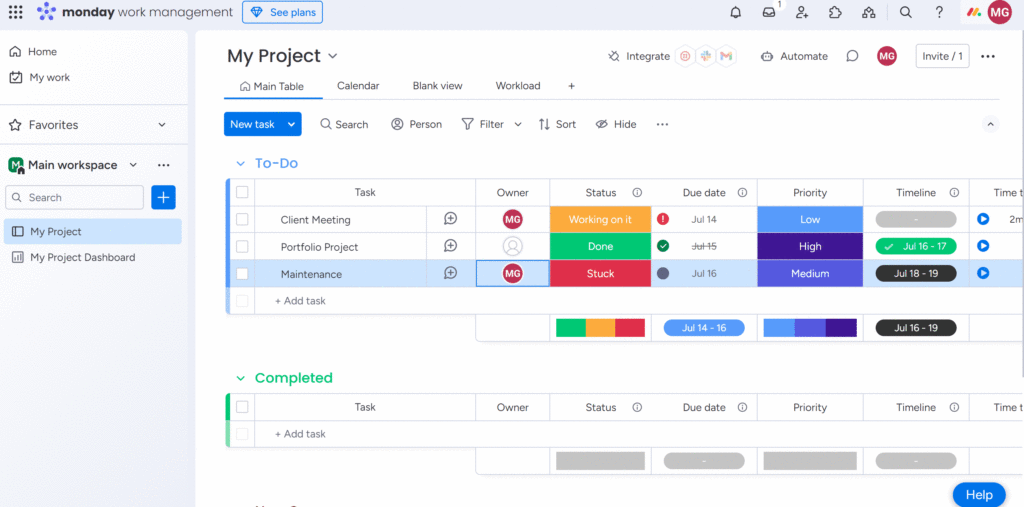
With Monday.com we created multiple boards with tasks and tracked their progress. Monday.com includes a workload view that shows how much work is assigned to each team member across daily, weekly, or monthly time periods. This helps managers balance workloads and avoid assigning too much work to one person.
You can measure capacity by task count, estimated hours, or priority level, depending on how your team plans work. However, we found that the workload view isn’t available on the mobile app, so field managers can’t check team capacity while on-site. For construction teams managing multiple job sites, this can make real-time task scheduling less convenient.
Time Tracking and Payroll Integration
Monday.com offers a time tracking feature that can be added to any board, allowing workers to log hours directly against their tasks. While logging time is simple, the platform doesn’t include built-in timesheets or payroll exports, so you’ll need third-party integrations to transfer hours into your payroll system.
It also lacks geofencing and location verification, meaning you can’t confirm workers are on-site when they log time. Plus, time tracking isn’t available on the free plan, so businesses that need to monitor labor costs will need a paid subscription.
What users say about Monday.com
I love how you can customize the boards and groups for project management and create a summary dashboard of all projects. It’s all very customizable.
One limitation I found is that forms only allow a single file upload, which makes it challenging when multiple documents need to be collected in one submission.
Key Features
- Customizable boards
- Workload view for team capacity planning
- Automation templates for task assignment
- Time-tracking column for task-level hour logging
Pros
- Very flexible work overviews
- Strong resource allocation visibility
Cons
- Lacks advanced time tracking tools
- Workload view not available on mobile
Pricing
Starts at $9/user/month Trial: Yes Free Plan: Yes — up to 2 users
-

ClickUp — Best for office project management and time tracking
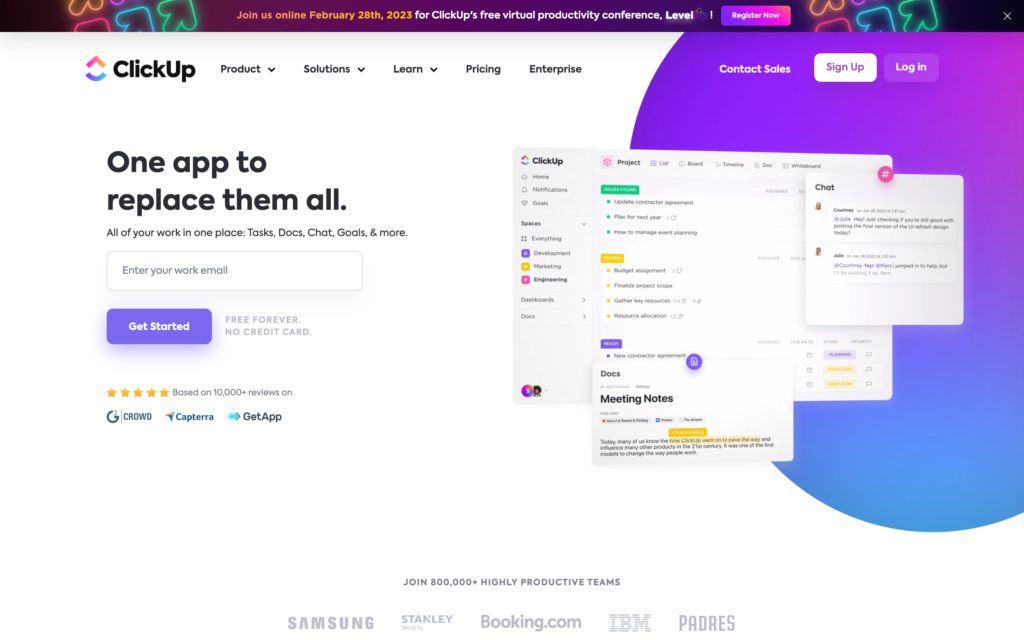
ClickUp is a team management software that can help a construction business’s office employees work more productively by centralizing tasks, documents, and communication.
Why I chose ClickUp: I included ClickUp because it delivers powerful task management, built-in time tracking, and an AI assistant that boosts productivity for office-based construction teams.
Task Organization
In our full ClickUp review, we found that ClickUp offers a detailed framework for managing construction projects with tasks and subtasks. Each task can include descriptions, custom tags, file attachments, checklists, and priority levels. The platform also supports task dependencies, making it easy to map out construction sequences and ensure work happens in the right order.
The downside is that ClickUp’s extensive feature set comes with a learning curve. Setting up and organizing your workspace takes some planning, and without a clear structure, it can become difficult to navigate.
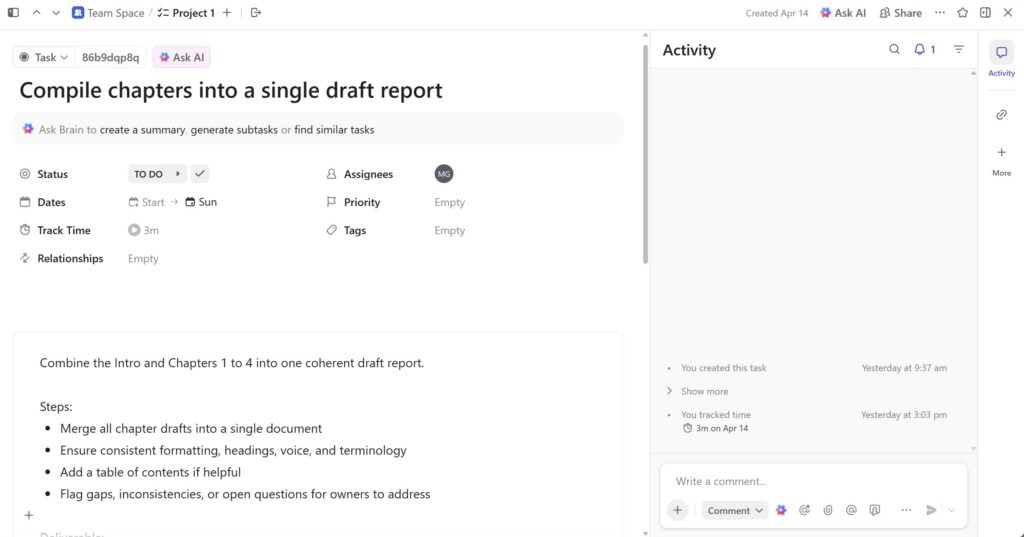
ClickUp tasks show title, status, tracked time, description, and activity feed. Built-in Time Tracking
ClickUp offers a time tracking tool that lets you log hours against individual tasks using a stopwatch or manual entry. You can tag time entries with custom labels and mark them as billable or non-billable to support invoicing and job costing.
Managers can review team timesheets and see what percentage of available hours are being tracked across the team. However, the time tracker lacks GPS verification, so there’s no way to confirm that workers are actually at the job site when they log time. It also doesn’t warn you if a timer is left running or someone exceeds a set hour threshold.
During testing, ClickUp also allowed overlapping time entries without any warning or flag on the timesheet, meaning managers must manually identify duplicate or conflicting logs. There’s also no option to lock timesheets, so employees can edit entries after they’ve been submitted.
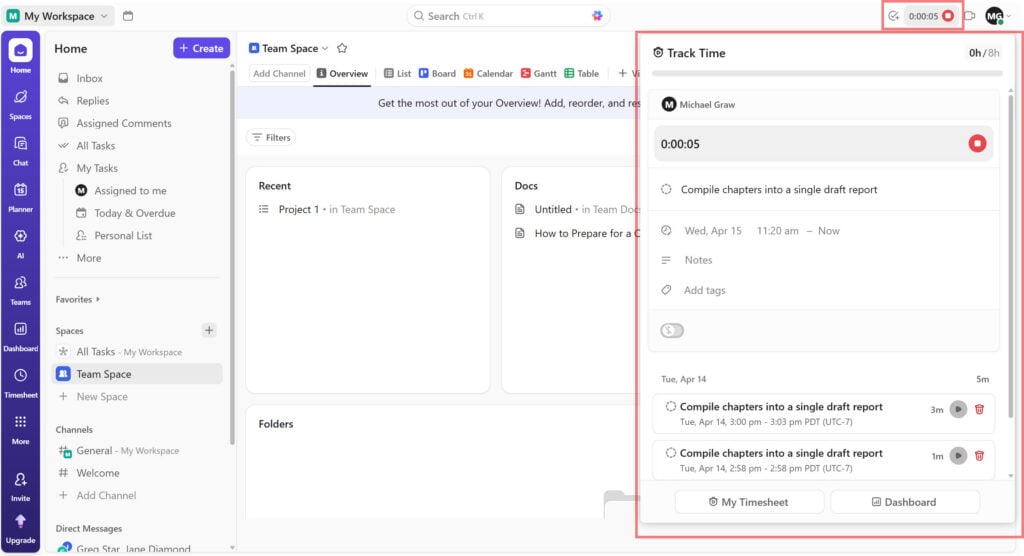
With ClickUp, we could track time to specific tasks and mark entries as billable or non-billable. Note: Free users receive limited trial usage; ongoing native time tracking starts with the Unlimited plan.
AI Tools and Documentation
ClickUp includes built-in tools for storing and sharing project information, including docs, notes, whiteboards, and wikis. Its Brain AI assistant can assign tasks, search across conversations and documents, and generate summaries or content, helping reduce administrative work. However, access to this tool is limited on the free plan.
ClickUp also doesn’t natively support spreadsheets or presentation files, so teams may still need separate tools for those. The mobile app is also limited offline, which means you can view existing tasks and notes, but you can’t create new work or log time without an internet connection.
What users say about ClickUp
I am using ClickUp for managing my projects and track tasks. I love the task management feature, I can easily assign tasks set deadlines and share updates. The dashboards are very helpful for quick overview of progress.
Offline functionality is limited, and frequent updates sometimes change workflows, which can be disruptive. On top of that, the level of customization can be overwhelming, especially when you’re just trying to keep things simple and consistent.
Key Features
- Task management, subtasks & dependencies
- Multi-project time tracking
- Brain AI assistant for task creation
- Built-in employee chat channels
Pros
- Flexible hierarchy for complex projects
- Billable vs. non-billable time entries
Cons
- AI tools limited on the free plan
- Time tracker lacks GPS and geofencing
Pricing
Starts at $7/user/month Trial: Yes — 15-days Free Plan: Yes — (unlimited users)
-

Zoho Projects — Best for project budgeting and team collaboration
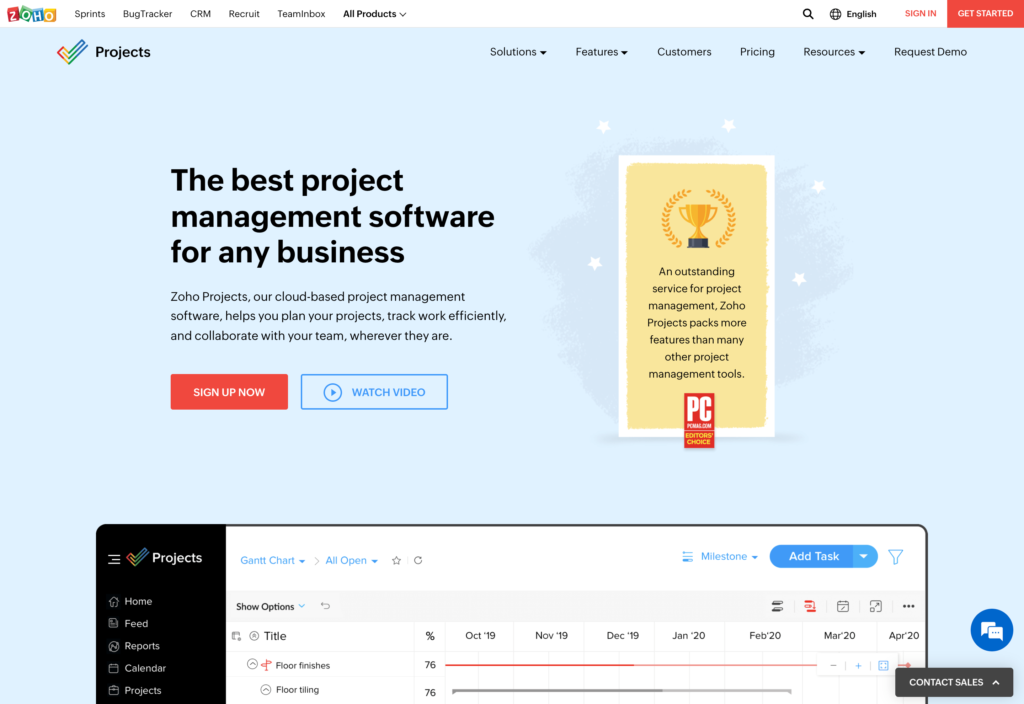
Zoho Projects is a cloud-based project management platform designed to help teams plan work, track progress, and collaborate efficiently.
Why I chose Zoho Projects: Zoho Projects combines visual project planning with powerful Gantt charts and offers strong collaboration tools at an affordable price point.
Visual Project Planning
Zoho Projects provides a built-in Gantt chart maker that helps teams visualize their entire project timeline. I noticed that the platform allows you to easily establish dependencies between tasks and reschedule work using a drag-and-drop interface. The platform color-codes work items and distinctly marks holidays and weekends, which makes it easier to spot overdue tasks.
However, I found that on the free plan that task dependencies are limited to Finish-to-Start relationships within a single project. To access all four dependency types or map dependencies across multiple projects, you need to upgrade to a paid tier.
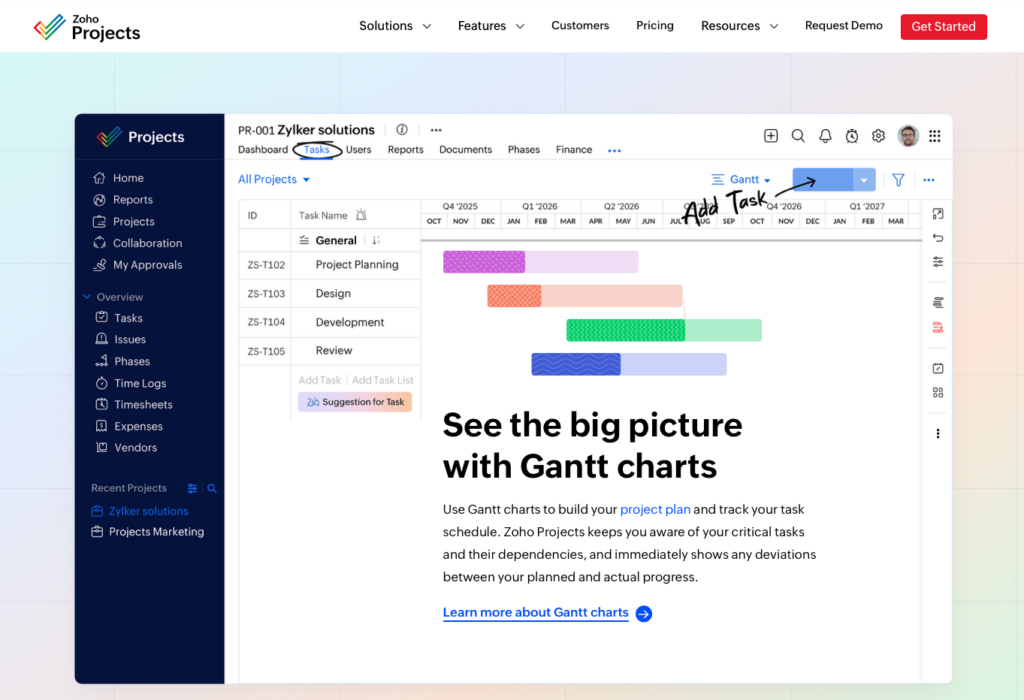
Zoho Projects uses Gantt charts to help teams plan projects and track tasks. Team Collaboration and Document Sharing
The platform includes several tools to keep teams aligned, including a social-style activity feed, document sharing, and a digital whiteboard. Users can integrate Zoho Projects with Google Workspace and Office 365, even on the free plan, which helps with document management.
The mobile apps for iOS and Android help field workers stay connected to the office. One limitation I encountered is that the free plan comes with only 5 GB of storage space. This storage limit can quickly become a constraint for construction teams that need to upload and share large CAD drawings, high-resolution site photos, and extensive blueprints.
Time Tracking and Budgeting Gaps
Zoho Projects offers solid tools for tracking time, managing timesheets, and monitoring project budgets through Earned Value Management. It can also compare planned versus actual hours to improve future estimates.
However, these workforce and financial management features aren’t available on the free plan, which is limited to basic task management for up to 5 users and 3 projects. Construction companies that need time tracking, timesheet approvals, or budget monitoring would probably need a paid plan.
What users say about Zoho Projects
I love that how I can easily break projects into tasks, subtasks and milestones. The time tracking feature is very useful, I can keep an eye on billable hours. Comments and updates are all in one place, make it easy to get real time updates for everyone.
Some of the files I tried to add to the project were too large so I couldn’t rely entirely on Zoho Projects for my file management. Also, some of the project views were not very customizable, so I found some of the fields were completely irrelevant to me but I could not remove them from the view.
Key Features
- Drag-and-drop Gantt charts
- Task dependencies and milestones
- Document sharing and whiteboards
- Mobile apps for iOS and Android
Pros
- Strong integration with Google and Office 365
- Clear visual timelines for projects
Cons
- Time tracking and budgeting require paid plan
- Free plan limited to 3 projects and 5GB storage
Pricing
Starts at $4/user/month Trial: Yes — 10-day Free Plan: Yes — For up to 5 users
-

Wrike — Best for construction teams using agile workflows
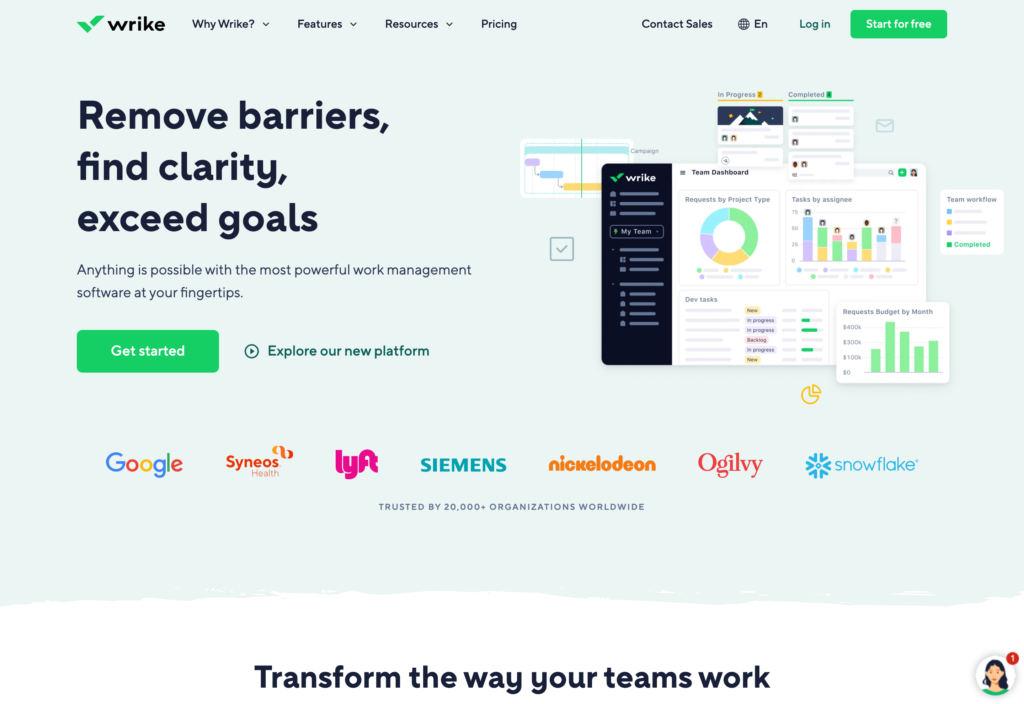
Wrike is a project management and collaboration platform that offers task management, multiple project views, and custom request forms.
Why I chose Wrike: I chose Wrike because of its advanced project management capabilities, customizable dashboards, and flexible workspaces that adapt to how your team works.
Project Organization
In our full Wrike review, we found that Wrike’s core strength is its flexible project management framework. The platform lets you organize work into customizable workspaces, and you can tailor the terminology to match your team’s language, renaming items as “clients,” “deliverables,” or whatever makes sense for your workflow.
Each project can have its own set of tasks, deadlines, budgets, and task relationships. You can visualize work in multiple formats: board view, table view, Kanban, calendar, or Gantt chart.
The catch is that the free plan only includes board, table, and Kanban views, so Gantt and calendar are locked behind a paywall. Plus, the free tier caps you at 200 active tasks and subtasks, which may be tight for larger construction projects.
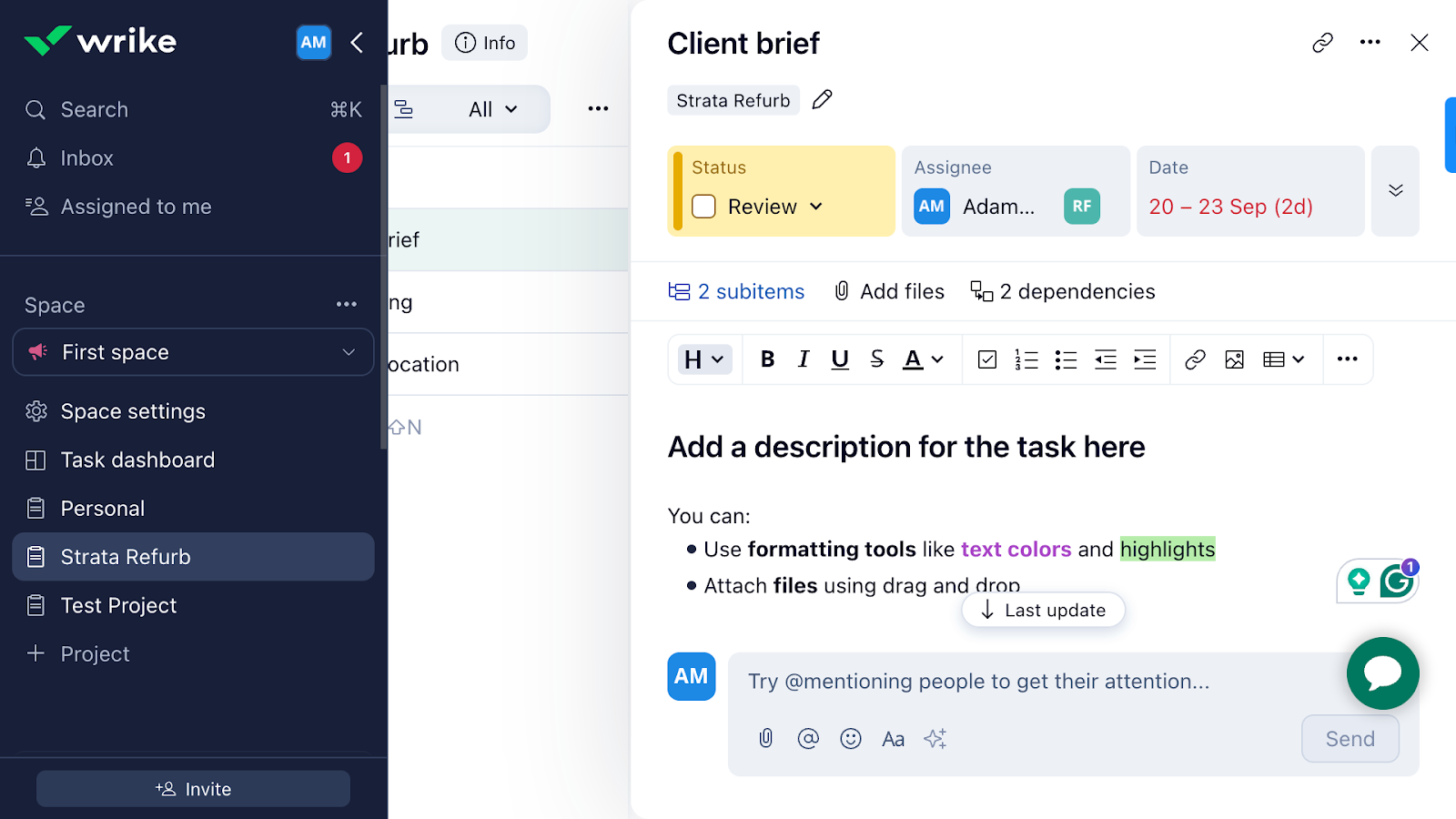
We could create and assign tasks and subtasks while testing Wrike. Custom Request Forms
Wrike includes a form builder that lets you create client briefs, change requests, RFIs, or internal requests. The form builder supports multiple question types and allows you to route completed submissions to specific team members or create public submission links for external stakeholders. This flexibility is useful for capturing structured data from clients or field teams.
However, Wrike doesn’t include a dedicated leave-request or overtime-approval workflow, so you’d need to build custom forms as a workaround. For construction teams managing shift swaps, time-off requests, and overtime approvals, this manual approach can become cumbersome.
Limited Time Tracking
While Wrike does include time tracking, it’s only available on the Business plan and above. Even when you upgrade, the time tracking feature is fairly basic. It lacks location verification (GPS or geofencing), so there’s no way to confirm workers are on-site when they log hours.
The system also doesn’t automatically distinguish between regular hours and overtime, which means construction companies would need to manually calculate overtime for payroll. For teams that need thorough labor tracking and accurate overtime calculations, Wrike’s time tracking capabilities fall short.
What users say about Wrike
It is easy to use this platform and I like the real-time task tracking, reporting, and collaboration features, which improve team coordination. It also keeps maintenance on schedule.
Wrike does not allow you to simply drag and drop a task onto the calendar; rather, you have to go into “edit” mode to move the task up or down on the calendar. The mobile version of wrike has little functionality as well
Key Features
- Customizable workspaces and terms
- Multiple project views including Gantt charts
- Custom request forms with public links
- Task dependencies and milestones
Pros
- Free plan supports unlimited users
- Highly customizable project organization
Cons
- Time tracking requires expensive paid plan
- Storage is strictly limited across all plans
Pricing
Starts at $10/user/month, for 2-15 users Trial: Yes Free Plan: Yes
Workforce Management Software for Construction Teams
-
Connecteam — Best for scheduling, time tracking, timesheets, and team communication
Connecteam is the best choice for construction companies that need workforce management combined with an intuitive mobile-first interface. The app offers features for scheduling, project management, reporting from the field, and more to ensure every project remains on track.
Why I chose Connecteam: Connecteam was developed to be the best free platform for construction companies, especially when it comes to drag-and-drop scheduling, mobile time tracking, and team communication.
Assign employees to projects with drag-and-drop scheduling
Connecteam makes it easy for you to assign your crews to jobs—a huge help when you’re juggling multiple job sites and coordinating with subcontractors.
You can create schedules in minutes using the drag-and-drop employee scheduler, which automatically alerts you to scheduling conflicts and helps balance workloads across your team.
If that takes too much time, you can use the auto-scheduler to create an optimal schedule with just a touch. When you need to make last-minute changes, you can immediately alert employees with push notifications.
Schedule jobs in seconds with Connecteam.
Manage tasks and capture updates from the field
Connecteam helps you organize construction work with employee task tracking, digital forms, and checklists in one place. You can assign tasks to employees, require specific certifications or training before work is assigned, and add subtasks, documents, images, and to-do lists so crews have everything they need on-site. Recurring tasks make it easy to stay on top of routine work like equipment inspections, fleet maintenance, and safety training.
Employees can also complete customizable forms and checklists directly from the mobile app while in the field. If your team needs to work hands-free, Connecteam’s AI-powered speech-to-text captures, summarizes, and organizes responses automatically.
Project managers can collect progress updates, quality inspections, safety reports, photos, videos, and other job-site documentation in real time, helping keep projects on track and issues from slipping through the cracks.
Complete job reports straight from the field.
Communicate with employees in the field
Connecteam offers an online team chat that supports one-on-one and group messages, which is handy for getting updates about progress or sharing requests from a client. You can organize your communication by creating dedicated channels for each project your business is working on.
Track employees’ work hours with a mobile time clock
Connecteam has a time tracking clock that employees can use to clock in and out of work right from their mobile devices, making it easy to track labor costs and employee productivity. Use the geofence to create virtual boundaries around your company’s project sites, so employees can only clock in after they arrive at a site.
Never miss who’s clocked in or on site.
And so much more…
Connecteam offers even more tools, including:
- Company employee directory: Give crews quick access to contact info for teammates and key business contacts without sharing personal phone numbers.
- Employee training software: Deliver courses and job-site orientations from employees’ phones.
- Staff documents: Store plans, contracts, and certifications with expiration reminders.
The best part? Connecteam’s Small Business Plan is completely free for up to 10 users and includes full access to all the tools you need to manage your construction crew.
When Connecteam isn’t a good fit
Connecteam is a workforce management platform, not a dedicated preconstruction or architectural tool. It doesn’t have heavy preconstruction bidding modules, complex architectural plan editing features, or dedicated CAD integrations. Larger construction firms that need specialized 3D modeling tools or dedicated bid-management networks may prefer a dedicated specialist tool.
Connecteam also offers a free for life plan – Try Connecteam here!
0Key Features
- Drag-and-drop employee scheduler
- Task management with progress tracking
- Mobile-friendly forms and checklists
- Messaging app for 1-on-1 and group chats
- Time clock with GPS and geofencing
- Customizable, mobile training courses
Pros
- Complete solution for project and team management
- Full mobile access for teams in the field
- Helps manage multiple job sites
- Provides instant communication across sites
Cons
- Lacks advanced preconstruction bidding tools
Pricing
Free-for-life plan availablePremium plans start at $29/month for 30 users
14-day free trial, no credit card required
Start your free trial
Best Free Construction Company Software Comparison
| Topic |
|
|
|
|
|
 Start for free
|
|---|---|---|---|---|---|---|
| Reviews |
 |
|
|
|
|
|
| Pricing |
Starts at $39/user/month.
|
Starts at $9/user/month
|
Starts at $7/user/month
|
Starts at $4/user/month
|
Starts at $10/user/month, for 2-15 users
|
Starts at just $29/month for the first 30 users
|
| Free Trial |
no
|
yes
|
yes
15-days
|
yes
10-day
|
yes
|
yes
14-day
|
| Free Plan |
yes
(up to 5 users)
|
yes
up to 2 users
|
yes
(unlimited users)
|
yes
For up to 5 users
|
yes
|
yes
Free Up to 10 users
|
| Use cases |
Best for viewing plans and managing field tasks
|
Best for general construction project management with templates
|
Best for office project management and time tracking
|
Best for project budgeting and team collaboration
|
Best for construction teams using agile workflows
|
Best for scheduling, time tracking, timesheets, and team communication
|
| Available on |
How to Choose the Right Free Construction Management Software
When evaluating free construction management software, keep these questions in mind to find the best fit for your crew.
Team Size & Budget
- How many employees and subcontractors need access to the software?
- Does the free plan limit the number of users or active projects?
- What is the cost per user if you need to upgrade to a paid plan as your crew grows?
Industry & Use Case
- Do your crews work primarily on-site, or do you need a tool for office-based project planning?
- Does the software support offline mode for job sites with spotty cell service?
- Do you need specialized features like blueprint markups and RFI management?
Feature Requirements
- Does the platform offer a built-in time clock with GPS and geofencing?
- Can you create task dependencies to enforce the correct sequence of construction work?
- Does the software include digital forms for safety inspections and daily reports?
What Is Free Software for a Construction Company?
Free construction company software includes digital tools and mobile apps designed to help construction businesses function and manage construction projects. These come at no cost. This type of software is tailored to address the unique requirements of the construction industry, such as planning and budgeting projects, managing on-site employees, construction payroll and complying with safety standards.
While some tools are entirely free, many software companies offer free versions of their paid platforms. These free tools have limitations, but they can still offer all the features a growing construction company needs.
How Does Free Software for Construction Companies Work?
You can use construction company software for free to get an overview of a construction job. That includes what employees are working on, what still needs to be done, and whether a project is staying on schedule and within budget. Use this information to aid real-time decision-making on a job site.
Many free construction software tools offer task management and communication features, enabling project managers, site managers, and contractors to direct employees in the field. This enhances overall productivity and coordination because employees know what they must do when they arrive at a job site and can easily report their progress.
The Benefits of Free Software for Construction Companies
There are several important benefits to using free software for your construction company.
Cost savings
Getting construction business software for free can save your company tons of money on software licenses while still enabling you to get most of the productivity benefits that construction tools offer. Free software tools can be particularly beneficial for small businesses on tight budgets.
Improved project management
Automated planning and progress tracking tools help you run your construction business more effectively. This enhances your team’s ability to complete projects on time and on budget, ensuring your clients are happy and want to recommend your company to others.
Enhanced communication and collaboration
In construction, communication is essential to ensuring employees, subcontractors, inspectors, and clients are all on the same page. Using construction business software for free enables you to communicate in real time with employees in the field, reducing costly errors. Improved communication can also help projects get done more quickly, cutting your labor costs and allowing you to take on more work.
Better safety management
Using construction business software for free can help you train employees on good workplace safety practices and provide a seamless mechanism for employees to report job site hazards. That ensures that every job site your team members work on is safer, reducing injuries and costly workers’ compensation claims.
How Much Do Paid Versions of Free Construction Software Cost?
It’s worth considering how much it would cost to upgrade to a paid version of free construction software. As your business grows and you need more features or more or unlimited users, upgrading the software you’re already using is often easier than switching to an entirely new platform.
Pricing varies widely by software platform. You can usually expect to pay around $10–$20/user/month for a basic paid plan, but some platforms are more expensive. For example, Fieldwire’s paid plans start at $39/user/month.
Connecteam is significantly more affordable, with plans starting at just $29/month for up to 30 users.
FAQs
We think Connecteam is the best software for construction companies. It’s an all-in-one solution that offers comprehensive features for communication, scheduling, time tracking, and task management. That’s why hundreds of construction companies use Connecteam.
Connecteam’s features enable you to manage projects, documents, and budgets—making it one of the best construction project management tools. Plus, it’s completely free for firms with up to 10 employees.
Most professionals use construction software to track projects. Task management, budgeting, scheduling, and other features can give you a solid overview of each construction project’s progress, costs, and more. You should also conduct regular on-site visits and meetings with clients and other stakeholders.
The Bottom Line on Free Software for a Construction Company
Construction software helps keep projects on schedule, crews connected, and work organized from the office to the job site. Whether you’re a specialty contractor or a growing general contractor, the right platform can simplify task management, improve communication, and help maintain safety and compliance without stretching your budget.
The best choice depends on how your team works. Some platforms focus on complex project planning for office teams, while others are built for managing field crews on the go.
For small-to-mid construction companies that want to avoid the complexity and cost of enterprise tools, Connecteam offers the best combination of simplicity, mobile access, and built-in communication. Start your free Connecteam trial today.