


When opening checks, temperature logs, and follow-up tasks get missed, small issues can quickly become food-safety risks or service problems.
I reviewed 7 Jolt alternatives and ranked them by checklist depth, food-safety workflows, and multi-location execution.
Use these picks to find restaurant operations software that helps your team complete daily work and gives managers a clear view of what still needs attention.
If you don’t have the time to read through our research, jump down to our quick comparison table.
| App | Best for | Starting Price | Key Considerations |
| Crunchtime | Best overall for multi-location restaurant operations execution | Contact vendor for price | Recurring checks and corrective-action triggers across restaurant groups. Continuous temperature monitoring is a separate solution. |
| Xenia | Digital checklists, audits, and frontline operations | Contact vendor for price | Flexible templates connect failed checks with follow-up tasks. Sensors and facilities work orders are add-ons. |
| Restaurant365 | Restaurant groups wanting operations inside a broader management platform | Contact vendor for price | Task execution alongside restaurant back-office tools. Check what’s included in your package. |
| SafetyCulture | Audits and inspection workflows | $24/user/month | Detailed inspections, actions, and reporting. Issue forms have less customization than inspection templates. |
| FoodDocs | Food-safety and compliance workflows | $79/site/month | Food-safety logs and corrective-action prompts. Batch traceability requires a higher plan. |
| Taqtics | Multi-location restaurant task execution | Contact vendor for price | Time-bound checks, audit scoring, and issue escalation. Entry-level template limits can restrict rollout. |
| Connecteam | Workforce operations plus forms and training | Just $29/month for the first 30 users | Forms and tasks alongside workforce tools. Training and communication use separately priced hubs. |
What’s new in this update (September 2026)
- Refocused the ranking on restaurant operations, food safety, and multi-location execution.
- Replaced scheduling-first picks with more directly relevant alternatives, removing HotSchedules, 7shifts, Sling, and Homebase.
- Reviewed pricing, plan limits, and trial availability.
Our Top Picks
-
1

Best overall for multi-location restaurant operations execution
-
2

Best for digital checklists, audits, and frontline operations
-
3

Best for restaurant groups wanting operations inside a broader management platform
Why trust us?
Our team of unbiased software reviewers follows strict editorial guidelines, and our methodology is clear and open to everyone.
See our complete methodology
What is Jolt?
Jolt was acquired by SmartSense in August 2025 and is now part of SmartSense ONE. Existing Jolt customers can keep using the same app, login, data, settings, and hardware, while SmartSense has folded Jolt’s restaurant workflows into a broader operations and compliance platform.
For restaurants, the core still includes digital checklists, SOPs, daily tasks, food-safety temperature logging, employee scheduling, time tracking, team communication, work orders, and labeling. SmartSense also adds broader capabilities such as reusable audits, corrective actions, condition monitoring, and analytics across locations.
Temperature management includes both staff-recorded checks and continuous monitoring. Probe readings support auditable HACCP workflows, and connected sensors monitor equipment and environmental conditions in real time with the ability to trigger alerts.
Why Are People Moving Away From Jolt?
Jolt already covers important restaurant operations and food-safety workflows, so switching is usually about finding a better fit rather than replacing every feature.
Some reviewers point to mobile performance and usability issues. One Capterra user said the app can be slow and checklist submissions difficult to review, while another reported slowdowns, freezing, and a time-consuming setup process. That same reviewer also felt the price could be high for smaller businesses.
Other users mention limits around visibility, reporting, and customization. One reviewer wanted better location visibility for distributed teams and questioned the value for the price. Another said reporting and customization could be more flexible, while a separate review noted too many minor notifications and limited reporting detail.
Different restaurants may need a different mix of tools, whether that’s better multi-location reporting, stronger inventory and accounting connections, simpler food-safety workflows, or better onboarding and communication. Since Jolt uses quote-based pricing, compare the full cost of the software, hardware, and setup you’d actually use.
How I Ranked the Best Jolt Alternatives
In order to rank the best Jolt alternatives, I focused on restaurant execution rather than just general employee scheduling.
Here’s what I prioritized:
- Checklist depth: Teams should be able to repeat opening, closing, and cleaning procedures with clear completion records.
- Audits and corrective actions: Managers need to identify failures, assign follow-up work, and check progress toward resolution.
- Food-safety workflows: The software should support the required logs and evidence, with clear distinctions between recorded readings and automated monitoring.
- Multi-location oversight: Regional leaders need useful reporting and appropriate access across stores.
- Task accountability and training: Employees should know what to do, who owns it, and where to find instructions.
- Restaurant fit and usability: Daily execution should suit restaurant teams; scheduling and time tracking are supporting considerations.
The 7 Best Jolt Alternatives for Restaurant Operations
-
Crunchtime — Best overall for multi-location restaurant operations execution
Available on
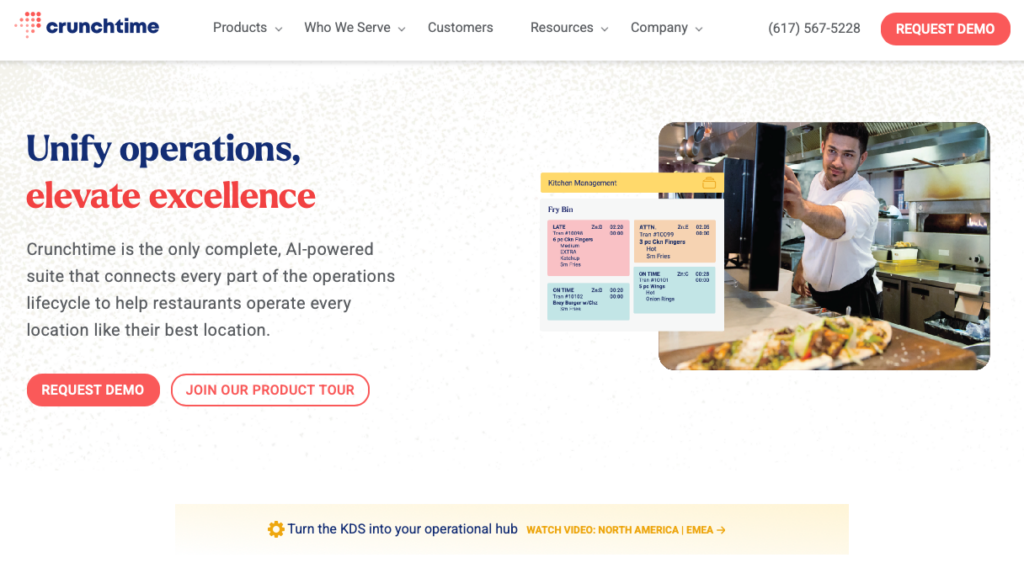
Crunchtime Ops Execution, formerly Zenput, manages operational checks and follow-up work across restaurant locations and franchise networks.
Why I chose Crunchtime Ops Execution: Crunchtime Ops Execution ranks #1 because its location hierarchies, recurring Projects, and food-safety triggers suit restaurant groups that need consistent execution across many stores.
Daily checks across locations
Crunchtime Ops Execution lets managers turn opening checklists, line checks, and audits into assigned work. Recurring Projects distribute checks by location, team, and role, while reporting highlights incomplete or late work rather than leaving regional managers to collect updates from each store.
The trade-off is configuration. A food-safety setup requires separate forms, recurring Projects, and reports. In Crunchtime’s example, three daily checks use three Projects, so someone needs to own the creation and keep it aligned with operating hours.
Temperature checks and corrective actions
Food-safety forms support pass/fail temperature ranges, dependent questions, and scoring. An out-of-range reading can trigger instructions, a follow-up task, or an alert to a district manager or maintenance team. Managers can track the response instead of treating a submitted checklist as proof that the problem is resolved.
Staff can use compatible Bluetooth thermometers or enter readings from other devices with photo evidence. Continuous equipment monitoring is separate, so replacing refrigerator sensors is different from replacing staff temperature checks.
Audit visibility and follow-through
Above-store teams can track whether work was completed on time and correctly. Location-level work and audit reports help managers retrieve records, while the franchise hierarchy supports oversight across more complex organizations.
Automated follow-up tasks and resolution monitoring add value after a failed check. For example, a flagged equipment issue can become assigned work rather than remaining a note in an audit report.
Key Features
- Recurring checks assigned by location and role
- Temperature ranges and corrective-action triggers
- Audit scoring and dependent questions
- Franchise hierarchies and location-level reporting
Pros
- Strong fit for multi-location restaurant execution
- Connects failed checks with follow-up work
Cons
- Recurring checks need structured setup
- Continuous monitoring requires a separate solution
Pricing
Contact vendor for price Trial: No Free Plan: No
-
Xenia — Best for digital checklists, audits, and frontline operations
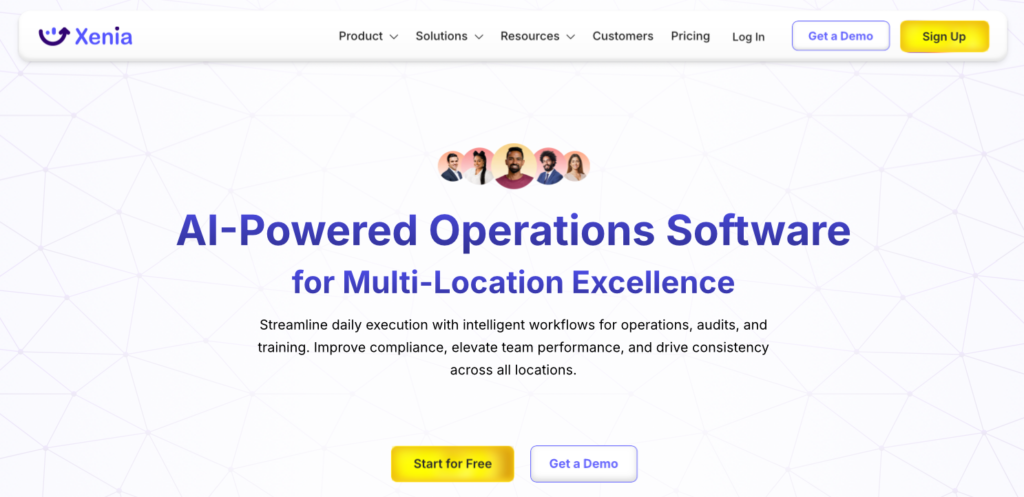
Xenia combines operational templates, audits, and follow-up tasks for frontline teams, with forms that cover opening checks, food-safety inspections, temperature logs, and shift handoffs.
Why I chose Xenia: Xenia’s conditional responses can turn a failed checklist item into a photo request, a follow-up question, or corrective work.
Flexible checklists and scored audits
Xenia’s reusable templates support both routine checks and more detailed evaluations. Managers can organize questions into sections, make responses required, and use weighted questions, section scores, and pass/fail thresholds for audits.
The same builder also supports temperature values, signatures, timestamps, and location evidence. That lets a restaurant record more than a checked box. For example, the condition of a prep area and the person who signed off on it. You adapt templates from the library rather than rebuild them for every recurring process.
Corrective work and temperature monitoring
Conditional logic can request evidence, notify a manager, or create a corrective task when an answer needs attention. Managers can then track corrective work through completion. This is useful when a failed check should start another workflow instead of ending with a recorded exception.
Xenia also supports Bluetooth temperature logging and continuous monitoring using LoRaWAN wireless sensors. Sensors and facilities work orders are listed as add-ons, so don’t assume a checklist subscription includes the full monitoring and maintenance setup. Match the proposed plan to the specific food and equipment checks you need.
Location controls and training resources
The Pro plan includes a location hierarchy, custom user roles, and reporting tools. These give larger teams more control over how responsibilities and information are organized across sites.
Custom dashboards and the training documentation hub also require Pro, which matters if your restaurant needs more than basic forms. Managers can use the documentation hub to keep instructions alongside frontline work, but buyers that need custom training and certification features should check the Enterprise offering.
Key Features
- Reusable checklists with conditional response logic
- Weighted audits with pass/fail thresholds
- Corrective tasks triggered by form responses
- Location hierarchies and training documentation
Pros
- Flexible evidence capture within everyday checks
- Connects inspection responses with corrective work
Cons
- Sensors and facilities work orders are add-ons
- Custom dashboards and training documentation need Pro
Pricing
Contact vendor for price Trial: Yes — 14 days Free Plan: No
-
Restaurant365 — Best for restaurant groups wanting operations inside a broader management platform
Available on
- Web
- iOS
- Android
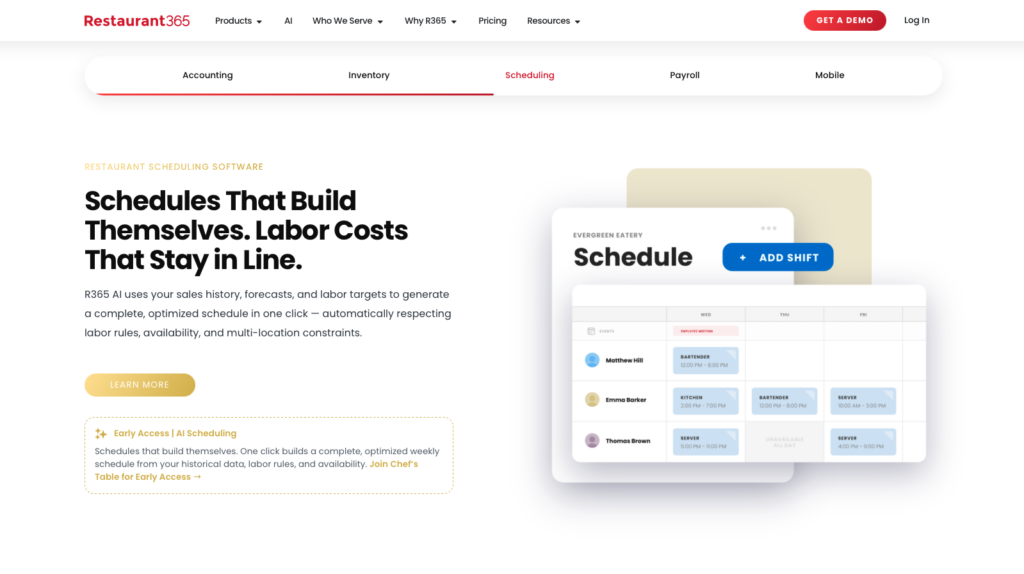
Restaurant365 combines accounting, inventory, workforce management, and daily operations, with task management to handle day-to-day execution.
Why I chose Restaurant365: Restaurant365 is a strong fit for groups that want task accountability to sit alongside the systems they use to manage food costs, staffing, and financial performance.
Checklists and daily task accountability
Restaurant365’s task management replaces paper checklists with assigned tasks that managers can track and verify in real time. Configurable checklists and standard operating procedures help groups standardize daily work across locations.
Regional and store-level views support completion tracking, and corrective-action triggers help managers respond to problems. During a demo, check how opening tasks, manager reviews, and unresolved issues reach the right owners.
Operations within a broader platform
Restaurant365 stands out for how much it brings together. Restaurant groups can manage operational tasks alongside inventory, accounting, and workforce tools instead of adding another standalone app.
That depth may be more than a team needs if the main goal is replacing checklists. Since Restaurant365 sells packages, core products, and standalone modules, confirm exactly what’s included before committing.
Restaurant training and performance tracking
Restaurant365 supports role-based training paths, progress tracking, and performance reviews. Managers can view company-wide and location-specific training trends, which helps identify where teams need more support rather than repeatedly retraining everyone.
Its training offering also integrates Always Food Safe certifications. For a Jolt replacement, confirm the temperature logging and HACCP workflows separately, since broader restaurant-management features don’t guarantee the same food-safety coverage.
Key Features
- Assigned checklists with completion verification
- Multi-location task monitoring and corrective triggers
- Restaurant inventory and accounting product options
- Role-based training with progress reporting
Pros
- Connects operations with broader restaurant management
- Supports training oversight across restaurant groups
Cons
- Confirm exactly what’s included
- May offer more than checklist-only teams need
Pricing
Contact vendor for price Trial: No Free Plan: No
-

SafetyCulture — Best for audits and inspection workflows
What’s new with Mitti (by SafetyCulture) (iAuditor)
In August 2026, SafetyCulture rebranded as Mitti.
Mitti, formerly SafetyCulture, is inspection software with customizable audits, issue reporting, action tracking, and training.
Why I chose Mitti: I chose Mitti because detailed inspection templates, approval workflows, and action records make it a useful option for teams that need more than just completion checkmarks.
Audits and checklists
Mitti lets managers customize inspection questions, answer types, and scoring, then schedule one-off or recurring inspections for individuals or groups. Automatic score totals and pass/fail checks help standardize results, while approval workflows can require a manager’s sign-off before a report is completed.
Inspection templates include numbers, media, locations, and other response types. That flexibility matters for audits that combine measurements with visual checks. Mitti schedules inspections, not general employee shifts, so treat it as the inspection layer rather than assuming it will replace your restaurant’s roster and timesheets.
Issues and corrective actions
Mitti’s actions can have an assignee, due date, priority, required evidence, and a link to an inspection. Employees update statuses and comments, and managers filter work by site, owner, or inspection to follow outstanding corrective actions.
Issue reporting has a narrower form builder. Issue forms allow up to 10 custom questions, and during testing they offered only two custom answer types: text and multiple-choice. That limits detailed incident intake that requires numeric fields or signatures, but it isn’t a limit on the separate inspection-template builder.
Reporting and training
Paid custom analytics can combine inspection, issue, and action data in dashboards, with access tailored to sites or individual users. Managers can download chart data and use training analytics to check course progress and quiz results.
Mobile access supports many daily tasks, but during testing we couldn’t edit courses on mobile. Course editing and issue-form customization require the web app, so admin can’t manage every part of a setup from their phones. Staff can still complete training and inspections on mobile.
Key Features
- Custom inspection scoring and approval workflows
- Recurring inspection assignments and reminders
- Action tracking with owners and evidence
- Inspection dashboards and training progress analytics
Pros
- Detailed inspection templates beyond basic checklists
- Connects audit records with assigned actions
Cons
- Issue forms limit question count and answer types
- Some admin tools only available on web
Pricing
Starts at $24/user/month Trial: Yes — 30 days Free Plan: Yes — (up to 10 users and 5 active inspection templates)
-

FoodDocs — Best for food-safety and compliance workflows
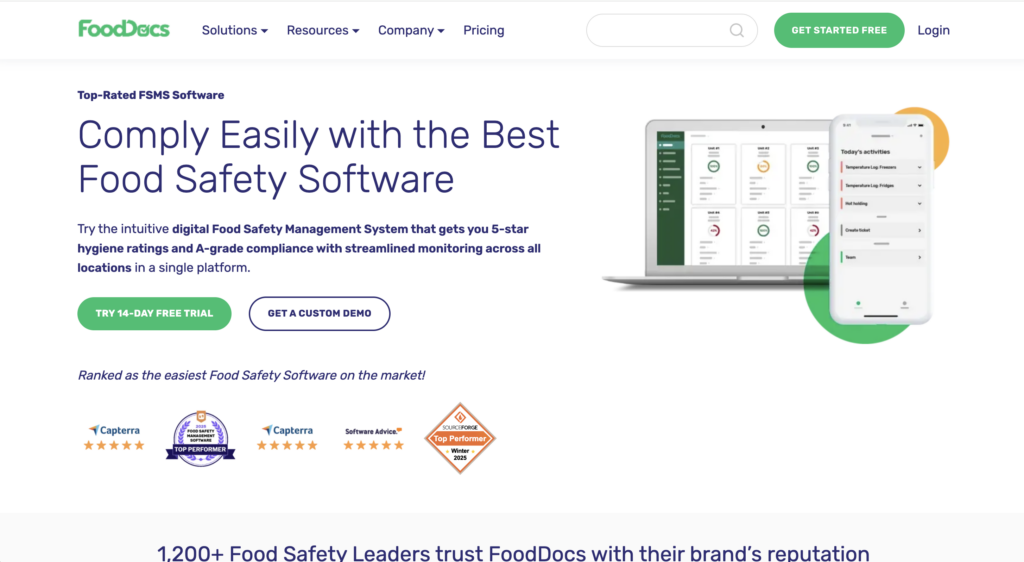
FoodDocs supports food-safety monitoring, records, audits, HACCP documentation, and daily checks.
Why I chose FoodDocs: I included FoodDocs because its monitoring logs, corrective-action prompts, and verification steps focus directly on food-safety follow-through.
Food-safety logs and monitoring tasks
FoodDocs brings temperature logs, cleaning records, opening and closing checks, and other HACCP logs into one system. Managers can create checklists, detailed forms, or one-off tasks and set the frequency needed for each process.
Logs can cover cooking, cooling, deliveries, and allergen controls. Traceability logging and batch-based monitoring require the Professional plan, though, so teams that need to follow batches shouldn’t assume the entry-level monitoring plan covers that requirement.
Audits and corrective-action prompts
When a monitoring result is out of range, FoodDocs can show preset or custom corrective-action instructions. Managers can also require completed entries to be verified, adding a review step instead of relying only on the original submission.
Audits support yes/no checklists or scored questionnaires, with scheduling and notifications to help teams complete them. These functions help with operational compliance, but a prompt isn’t proof that a hazard has been corrected. Set clear responsibilities for taking action and verifying the result as part of your food-safety process.
Multi-location oversight and instructions
FoodDocs has a traffic-light dashboard that gives managers an overview by department, location, or region. Role-based task assignment helps employees see their relevant checks. The Standard plan adds instructions and notifications to support completion.
Photos and videos attached to monitoring tasks can explain how a check should be done. Integrations and customized workflows require Enterprise, which is a real boundary for groups connecting food-safety records to other systems.
Key Features
- Food-safety monitoring logs and configurable tasks
- Corrective-action prompts with entry verification
- Scheduled audits with scored questionnaires
- Department, location, and regional status views
Pros
- Focused coverage of food-safety recordkeeping
- Links monitoring exceptions with response instructions
Cons
- Batch traceability requires a higher plan
- Integrations require an enterprise package
Pricing
Starts at $79/site/month Trial: Yes — 14 days Free Plan: No
-

Taqtics — Best for multi-location restaurant task execution
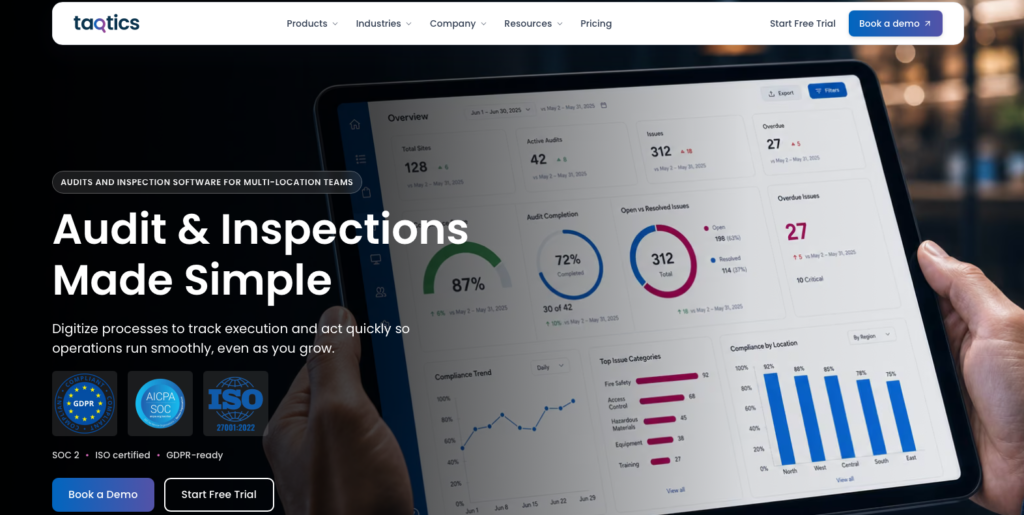
Taqtics brings checklists, audits, issue tracking, and training into one system to help restaurant groups keep execution consistent across locations.
Why I chose Taqtics: Taqtics made the list because its location-based responsibilities connect daily checks with issue assignment and escalation across a restaurant network.
Time-bound checklists and completion evidence
With Taqtics, managers can use scheduled checklists, reminders, geofencing, and photo proof to document recurring work. Headquarters gets visibility into completion, while restaurant teams follow the same procedures at each location.
Checks can cover hygiene, temperatures, and expiry dates, alongside other daily operating tasks. The Starter plan allows one audit template and one checklist template, which can be restrictive when opening, closing, cleaning, and food-safety routines need separate forms. For a multi-process rollout, confirm the template capacity before choosing the entry plan.
Audits and issue escalation
Standardized audit templates and scoring help managers compare results more consistently. Photos and comments support findings, and corrective-action tracking connects failures to follow-up work.
Issue management adds ownership, status tracking, and escalation for urgent problems. Automated ticket assignment and multi-team routing require Scale or above, so this distinction matters if you need a failed check to reach maintenance or another department without manual forwarding.
Location reporting and restaurant training
Taqtics organizes work around stores, regions, departments, and roles. That shared structure strengthens reporting and accountability across checklists, audits, and issues, instead of treating each inspection as an isolated record.
Training modules can include procedure videos and guides, with quizzes and completion tracking. There’s also a shared resource area that keeps policies and operating instructions accessible to store teams. This connects staff instruction with daily expectations without making employee scheduling the main purchase driver.
Key Features
- Time-bound checklists with geofencing and photos
- Standardized audit scoring and evidence capture
- Issue assignment, escalation, and status tracking
- Training modules with quizzes and completion tracking
Pros
- Location structure promotes multi-store task accountability
- Combines daily execution with training resources
Cons
- Entry plan limits checklist and audit templates
- Advanced issue routing requires a higher plan
Pricing
Contact vendor for price Trial: Yes — 14 days Free Plan: No
-
Connecteam — Best for workforce operations plus forms and training
Connecteam brings forms, tasks, scheduling, communication, and training into one employee app. It’s the best fit for restaurants that want tighter control over staff and daily operations, rather than just a specialized food-safety system.
Why I chose Connecteam: Connecteam connects everyday workforce execution with mobile forms and role-based training in the same app.
Opening checks and operational forms
Connecteam’s digital forms and checklists can replace paper opening checks, cleaning logs, and inspection forms. Managers can start from templates, require photos or signatures, and review submissions with the details needed for follow-up.
If you already have a paper form, Connecteam’s AI can turn a photo or upload into a structured digital version, so you can keep the same process without rebuilding it from scratch. Speech-to-text also lets employees capture and organize responses hands-free.
Dynamic forms adjust questions based on previous answers, such as showing different closing checks for front-of-house and kitchen staff. Conditional fields require Operations Advanced or above, so check your plan if branching workflows are important to how you work.
Assigned work across shifts and locations
Restaurant teams can assign duties by role or shift, capture proof of completion, and monitor progress in real time. Connecteam’s restaurant tools can help you multiple locations from one account with site permissions.
Employee scheduling and the employee time clock sit alongside forms and tasks in the Operations Hub. That makes them useful tools when the problem is knowing who’s working and which duties belong to them. Still, a form isn’t automatically a replacement for a dedicated HACCP workflow or sensor system, so consider those requirements separately.
Mobile training and team communication
Connecteam’s employee training software lets managers assign mobile courses with videos, documents, and quizzes, then track completion and follow-up needs across roles and locations.
Managers can build courses from scratch, customize templates, or use the AI Course Creator to generate training from a short prompt.
Just know that training and communication are sold through separate paid hubs, so Operations Basic alone won’t include the full setup most restaurants need.
0Key Features
- Mobile forms with completion evidence
- Task assignment by role or shift
- Employee scheduling and time tracking
- Mobile training courses with quizzes and reporting
Pros
- Connects workforce coordination with daily task execution
- Supports consistent onboarding across restaurant teams
Cons
- Conditional forms require a higher operations plan
- Training and communication use separate paid hubs
Pricing
Free-for-life plan availablePremium plans start at $29/month for 30 users
14-day free trial, no credit card required
Start your free trial
Compare the Best Jolt Alternatives
| Topic |
|
|
|
|
|
|
 Start for free
|
|---|---|---|---|---|---|---|---|
| Reviews |
  |
N/A
|
|
|
|
N/A
|
|
| Pricing |
Contact vendor for price
|
Contact vendor for price
|
Contact vendor for price
|
Starts at $24/user/month
|
Starts at $79/site/month
|
Contact vendor for price
|
Starts at just $29/month for the first 30 users
|
| Free Trial |
no
|
yes
14 days
|
no
|
yes
30 days
|
yes
14 days
|
yes
14 days
|
yes
14-day
|
| Free Plan |
no
|
no
|
no
|
yes
(up to 10 users and 5 active inspection templates)
|
no
|
no
|
yes
Free Up to 10 users
|
| Use cases |
Best overall for multi-location restaurant operations execution
|
Best for digital checklists, audits, and frontline operations
|
Best for restaurant groups wanting operations inside a broader management platform
|
Best for audits and inspection workflows
|
Best for food-safety and compliance workflows
|
Best for multi-location restaurant task execution
|
Best for workforce operations plus forms and training
|
| Available on |
Web, iOS, Android
|
FAQs
Crunchtime Ops Execution is the strongest overall fit on this list for multi-location restaurant execution. Xenia is worth considering for flexible frontline checklists and audits, while Restaurant365 suits groups that also want broader restaurant-management tools.
Mitti offers a free plan for up to 10 users with inspection-template and analytics limits. Connecteam offers its Small Business Plan for up to 10 users. Free trials from other providers shouldn’t be confused with permanent free plans.
Not by itself. Check that it supports your required records, corrective actions, verification, and retention needs. If your current setup includes probes, sensors, or labeling, demonstrate those workflows separately. Software can support a food-safety process; it doesn’t make the process compliant on its own.
The Bottom Line
The best Jolt alternative depends on what your restaurants need to manage better. Some teams need deeper food-safety controls and audit records, whereas others need clearer task ownership, easier training, or better oversight across locations. Focus on those priorities, then choose a system your team can use consistently.
For restaurants that mainly need to coordinate employees, Connecteam brings forms, tasks, training, and communication into one app. Try Connecteam for free today.
