


Goal tracking looks different depending on whether you’re managing frontline work, company OKRs, project delivery, or personal habits.
That’s why choosing the wrong app can leave goals disconnected from the way work actually gets done.
I reviewed 5 goal tracking apps across the main use cases people search for, comparing how each one handles progress visibility, accountability, collaboration, mobile access, and daily follow-through.
This guide will help you choose the right tool for your team, workflow, or personal goal-setting style.
| App | Best for | Starting Price | Key Considerations |
| Connecteam | Frontline and deskless teams turning goals into daily work | Just $29/month for the first 30 users | Best overall for assigning goal-related tasks, communicating updates, and tracking follow-through across mobile teams, but it doesn’t include a native OKR framework. |
| ClickUp | Project-driven teams linking goals to complex task workflows | $7/user/month | Strong for connecting goals to tasks, dashboards, and project views, but the interface can feel heavy for teams that only need simple goal tracking. |
| Weekdone | Teams adopting a formal OKR process | $90/month (billed annually) | Purpose-built for OKRs, alignment, and weekly check-ins, but it needs a separate tool for day-to-day task execution. |
| Asana | Office-based teams tracking goals inside cross-functional projects | $10.99/user/month | Good fit for teams already managing work in Asana, but Goals is locked behind the Advanced plan. |
| Habitica | Individuals and informal groups building daily habits | $5/month/user | Useful for personal motivation and habit consistency, but it lacks business goal tracking, reporting, and management controls. |
Changelog
Updated May 2026:
- Reduced the list from 10 apps to 5 tools that are focused on team and business goal tracking.
- Replaced older entries with ClickUp, Weekdone, and Asana.
- Added a Quick Picks section for faster side-by-side comparison.
- Rechecked and updated pricing, plan limits, and Capterra ratings.
Our Top Picks
-
1

Best for frontline and deskless teams turning goals into daily work
-
2

Best for project-driven teams linking goals to complex task workflows
-
3

Best for teams adopting a formal OKR process
Why trust us?
Our team of unbiased software reviewers follows strict editorial guidelines, and our methodology is clear and open to everyone.
See our complete methodology
How I Chose the Best Goal Tracking Apps
Goal tracking is a broad category. Some readers need a way to turn business goals into assigned work. Others want OKR software, project-based goal tracking, or a personal habit tracker that keeps them consistent.
That’s why I didn’t rank 5 tools that all do the same thing. Instead, I included apps that represent the main ways people track goals: frontline execution, project management, OKRs, cross-functional planning, and habit building.
Here are the key features I look for when comparing the best goal tracking apps, including free goal setting apps and paid options.
I prioritized tools that could clearly support at least one goal-tracking model:
- Execution-based goal tracking: Turning goals into assigned tasks, shifts, updates, and follow-up.
- Project-based goal tracking: Connecting goals to projects, tasks, dashboards, and workload planning.
- OKR tracking: Structuring objectives, key results, alignment, and recurring check-ins.
- Collaborative goal tracking: Helping teams see progress, communicate, and stay accountable.
- Habit tracking: Supporting recurring personal or group habits through reminders, streaks, or motivation systems.
Across all categories, I looked for:
- Clear goal creation and progress tracking.
- Progress visibility through dashboards, charts, status updates, or reports.
- Mobile access, especially for teams or individuals tracking goals away from a desk.
- Collaboration or accountability features, where relevant.
- Pricing that makes sense for the audience the tool serves.
I also looked for clear limitations:
- Whether the app is too complex for simple goal tracking.
- Whether it lacks task execution tools.
- Whether goal tracking is locked behind higher-tier plans.
- Whether the app is better for personal habits than business goals.
- Whether frontline or non-office teams would realistically use it.
With those criteria in mind, here’s how each goal tracker app stacks up.
The 5 Best Goal Tracking Apps of 2026
-
Connecteam — Best for frontline and deskless teams turning goals into daily work
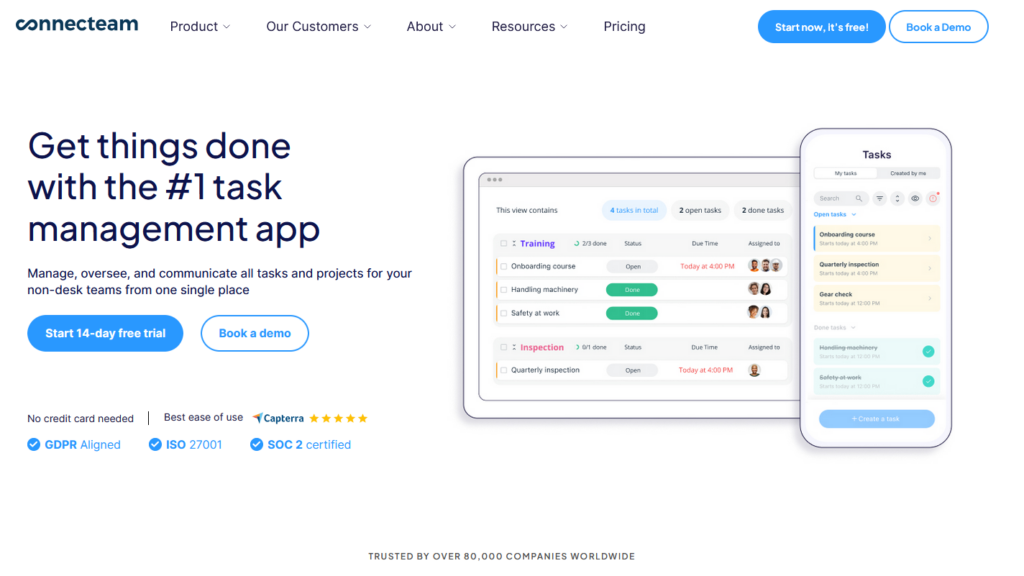
Connecteam is the best choice for frontline and deskless teams because it combines goal tracking with task assignment, scheduling, and team communication in one platform. It’s especially strong for managers who need staff to act on goals daily without juggling multiple apps.
Why I chose Connecteam: Connecteam scored highly on my core criteria. It makes it easy to break goals into assigned tasks, has mobile access for deskless teams, and offers real-time progress visibility through updates and chat. It’s the only app on this list that ties goal setting directly to shift scheduling and task assignment, which is what really turns a plan into daily execution. It doesn’t include a dedicated OKR (Objectives and Key Results) framework like Weekdone, though.
Let’s take a closer look at the benefits.
Break goals into assigned tasks
I love that Connecteam’s task manager lets you break down big goals into smaller, individual tasks, which can then be assigned to team members. You can send notifications, keep track of task progress, and assign due dates. Each task has a status, so you can see at a glance who’s moving forward and who might need a nudge.
Keep your team aligned with updates and chat
Connecteam lets you send updates, news, and announcements, so you can share team goals and progress easily. I like pairing this with Connecteam Chat, where team members can problem-solve together and keep each other accountable. I find that creating team chats for employees who share a goal or who are working on group goals together really helps. Knowing someone is checking in also motivates workers.

Team chat keeps goal-related conversations fast and in one place. Train your teams to hit their targets
From time to time, your team may need new skills to reach their goals. If they’re working on improving sales, for example, they may need to brush up on communication skills. Connecteam lets you create custom training and store unlimited documents in the team’s knowledge base so when a team needs to improve close rates or learn a new safety procedure, the training is always right there.
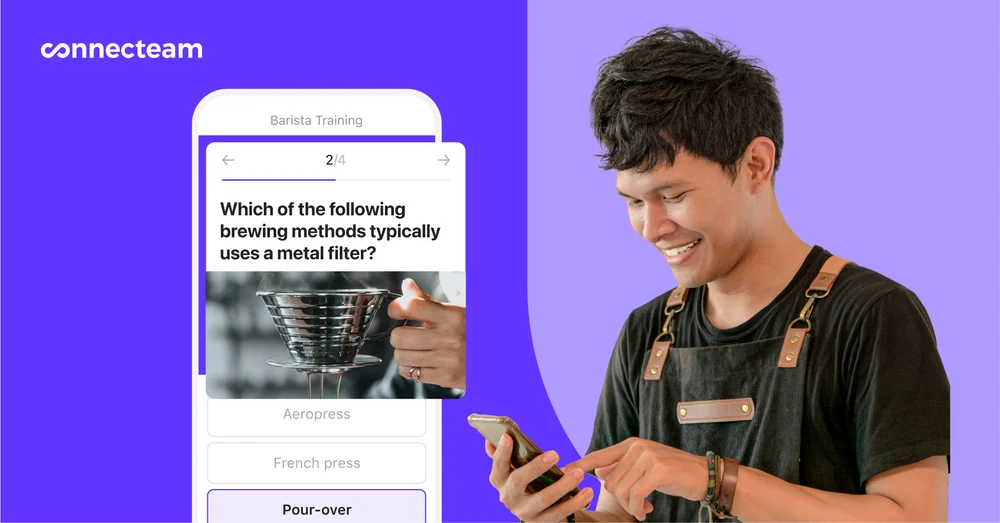
Built-in training courses help your team develop the skills they need to hit their targets. Motivate with recognition and rewards
A recent study found that immediate rewards help teams achieve both short- and long-term goals. Connecteam makes it quick and easy to send rewards as team members reach milestones. I find that even a small moment of recognition can keep a team’s habit goal momentum going when the bigger target still feels far off.

Recognizing milestone wins keeps your team motivated between bigger goals. Schedule time for goals
When you schedule time for goals, you make them happen. With Connecteam, you can assign tasks with deadlines, as well as schedule shifts and times for your team to work on specific goals. Connecteam’s Time Clock feature makes sure workers are where they need to be, ready to work on their objectives. It’s great for time management across your whole team.
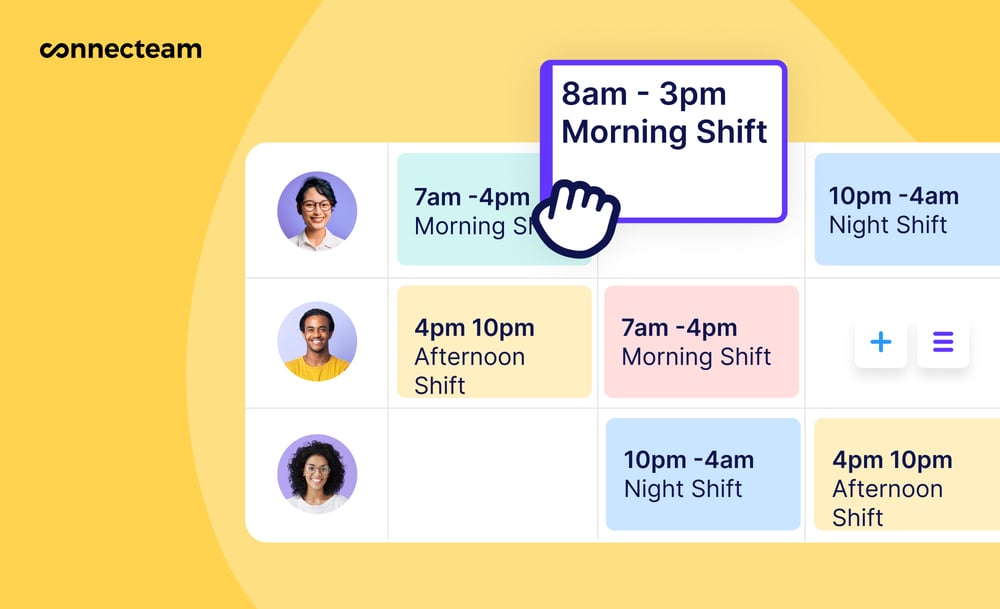
Scheduling dedicated time for goal work makes sure it actually happens. How it works in practice
A manager using Connecteam might set a monthly sales target, break it into weekly call goals assigned to each representative, then share a Friday progress update with the team. If someone’s behind, chat keeps the conversation private. It’s a straightforward loop: set the goal, assign the work, track daily, adjust weekly.
When Connecteam may not be the best fit
Connecteam is not the best option if you need a structured OKR framework with cascading objectives and key results. In that case, Weekdone is a better option. It’s also not ideal for teams that need advanced project management views like Gantt charts or task dependency tracking.
Connecteam also offers a free for life plan – Get Started Now!
0Key Features
- Task management
- Progress tracking
- Team chat
- Updates and announcements
- Employee training
- Rewards and recognition
Pros
- Turns goals into assigned, trackable daily tasks
- Built-in chat keeps goal discussions in one place
- Custom training helps teams build skills
- Rewards and recognition keep motivation high
Cons
- Integrations are still in development
- Lacks OKR tracking
Pricing
Free-for-life plan availablePremium plans start at $29/month for 30 users
14-day free trial, no credit card required
Start your free trial -
ClickUp — Best for project-driven teams linking goals to complex task workflows
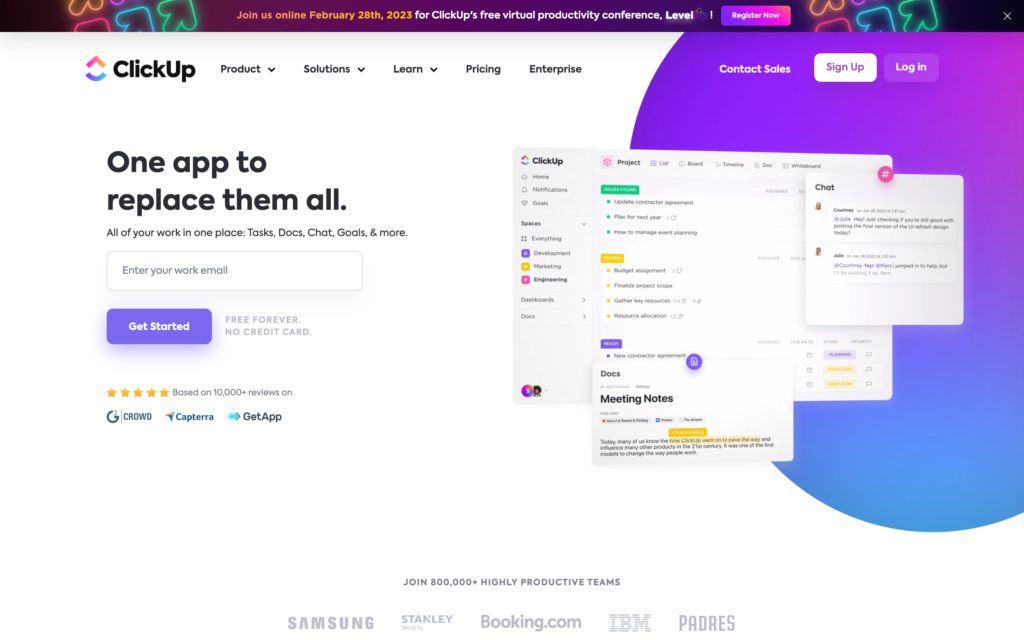
ClickUp is a project management platform with a built-in Goals feature that connects high-level objectives to everyday tasks. This review is based on our full ClickUp review, where we put the project management software through its paces.
Why I chose ClickUp: I included ClickUp because many teams don’t want a separate goal tracker. They want goals connected directly to projects, tasks, dashboards, and workload planning. ClickUp ties goals directly to tasks, so completing daily work automatically updates goal progress. For teams already managing projects in ClickUp, the Goals feature means there’s no need for a separate goal tracker app.
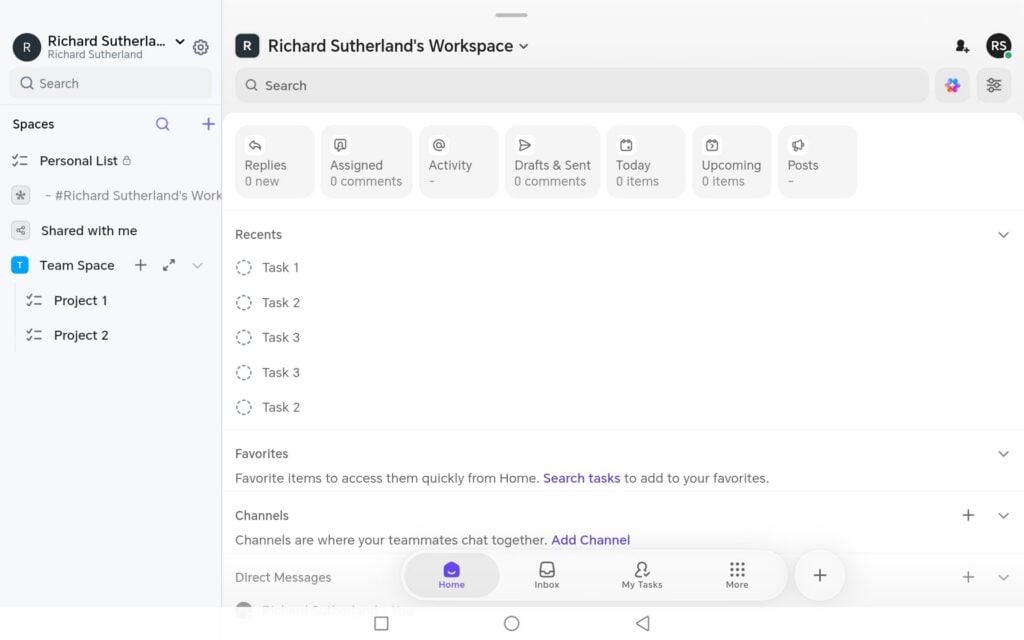
ClickUp’s mobile app organizes recent tasks and team channels so goal progress is easy to see. Goals and targets
ClickUp’s Goals feature breaks top-level objectives into measurable targets. There are four target types: numbers (like “complete four tasks”), true/false checkboxes, currency amounts, or linked tasks. When linked tasks are attached as targets, completing them automatically updates goal progress with no manual entry needed. Goal folders organize objectives by quarter, department, or sprint.
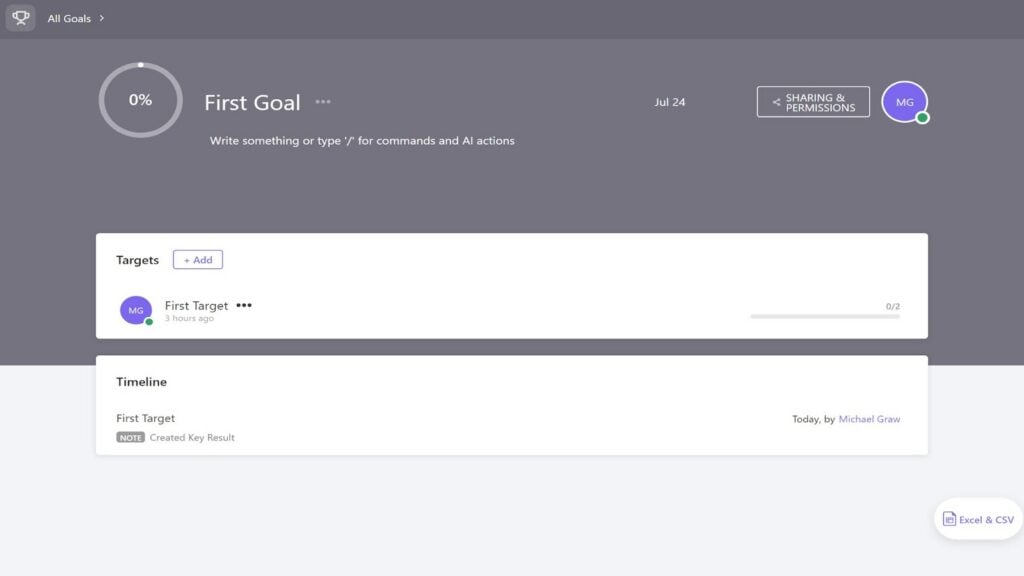
Goals update automatically as linked tasks are completed. Dashboards and task views
Goals appear in customizable reporting dashboards as cards with progress indicators. Beyond goals, ClickUp offers various task views such as lists, kanban boards, Gantt charts, and calendars for visualizing team work. I like the workload view the best, as it breaks down each employee’s availability by day and shows their capacity, helping managers distribute effort across projects.
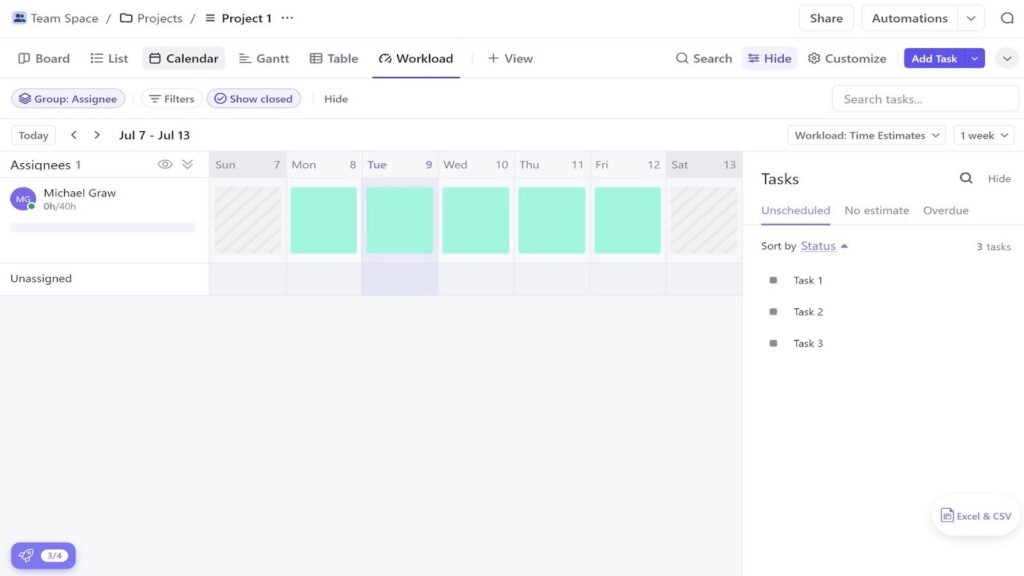
The workload view displays each worker’s current availability. Integrations
ClickUp offers over 1,000 integrations, including Slack, Microsoft Teams, Google Calendar, Zoom, and Zapier.
Notable limitationsThe flip side of ClickUp’s flexibility is complexity. There are Spaces, Folders, Lists, Tasks, and Goals, and it takes time to figure out where everything should go. I find the sidebar overwhelming, with multiple menus, sub-menus, and interactive buttons.
ClickUp also isn’t very accessible: keyboard navigation isn’t comprehensive and screen reader support isn’t WCAG 2.2 AA compliant. For deskless and mobile-first teams, Connecteam’s simpler interface is a better fit.What users say about ClickUp
What I like most about ClickUp is how it brings everything together in one place—tasks, timelines, comments, documents, and accountability are all interconnected. This reduces unnecessary back-and-forth and makes work much more transparent.


It is very buggy. Pages take long time to load and sometimes mobile app crashes. There are too many features I do not use, making the screen look very busy.
Key Features
- Goals with four target types
- Goal folders for organizing by quarter or team
- Customizable dashboards with progress cards
- Workload view showing team capacity
Pros
- Goals automatically update as employees complete linked tasks
- Customizable reporting dashboards
Cons
- Complex interface takes time to learn
- Limited accessibility support for screen readers
Pricing
Starts at $7/user/month Trial: Yes — 15-days Free Plan: Yes — (unlimited users)
-
Weekdone — Best for teams adopting a formal OKR process
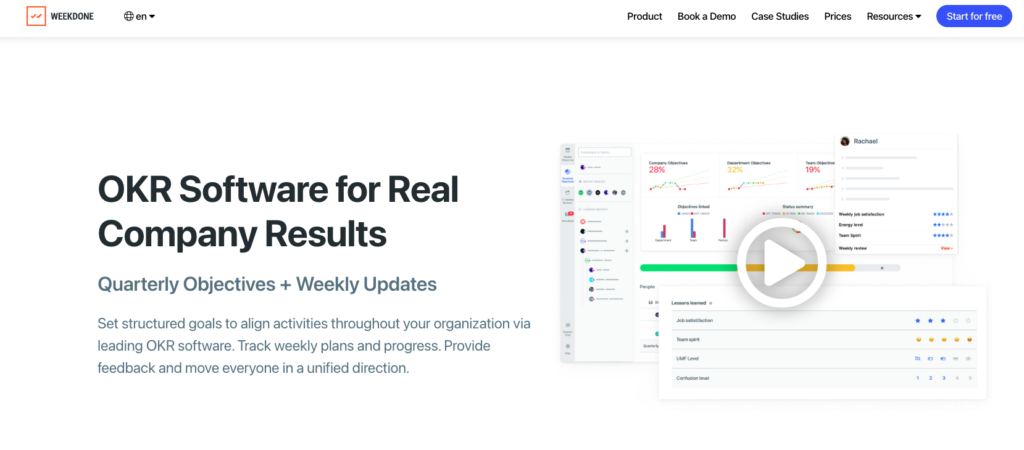
Weekdone is a purpose-built OKR (Objectives and Key Results) platform with weekly check-ins that structures goal setting around company, department, team, and personal objectives. It’s less about managing daily tasks and more about keeping company, team, and individual objectives aligned through a recurring check-in process.
Why I chose Weekdone: Weekdone is purpose-built for OKRs. For teams that need a structured framework for setting and tracking quarterly goals with weekly check-ins, Weekdone enforces that discipline out of the box.
OKR hierarchy
Weekdone organizes goals into four levels: company, department, team, and personal. Each objective gets Key Results (measurable targets), and these can be visually linked to show how team goals match up to company objectives. I like the OKR wizard, which guides users through writing effective OKRs and flags any vague inputs.
Weekly check-ins (PPP)
Weekdone uses the PPP (Plans, Progress, Problems) system. Each week, team members report what they plan to do, what they accomplished, and what’s blocking them. These check-ins link directly to OKRs, so weekly wins contribute to quarterly goal progress. Automated reminders help ensure nobody forgets to submit their update.
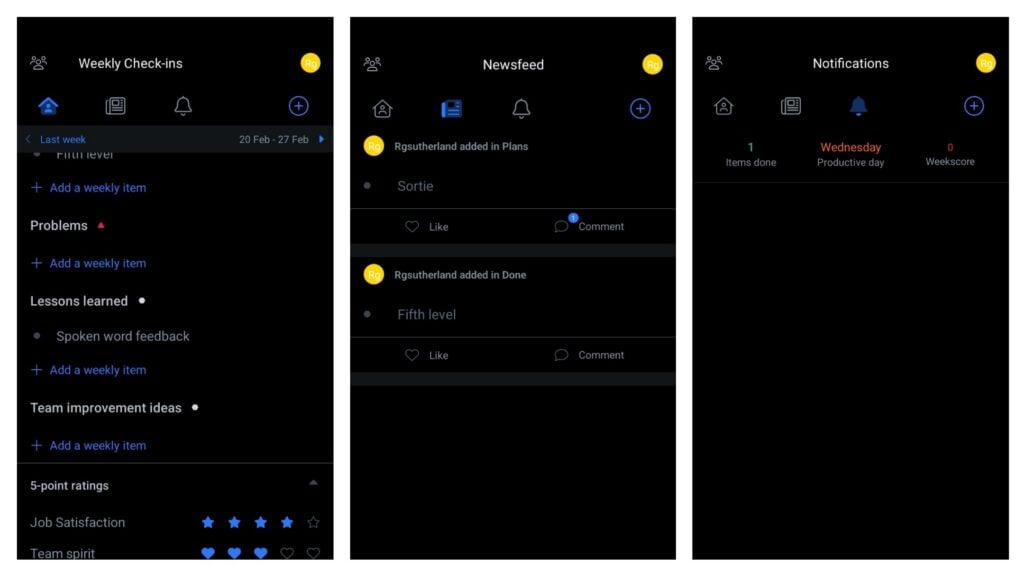
Team members can submit weekly plans, progress, and problems check-ins directly from their phones. Visualization and reporting
The hierarchy tree view shows exactly how individual goals connect to team and company objectives through an interactive map. Dashboards display aggregated progress with status charts, KPI trends, and completion rates. The smart goals app shows progress bars for projects and tasks.
Integrations
Weekdone integrates with Slack, Microsoft Teams, Jira, Asana, Trello, Basecamp, and Google Calendar. Zapier connectivity extends this to hundreds of additional apps.
Notable limitations
Weekdone is not a project management tool. It doesn’t handle task dependencies, file storage, or Gantt charts. Teams need to pair it with something like Asana or Jira for actual work execution. I also note the cost ramps up quickly. The free plan covers only three users, and adding a fourth jumps the price to $108 per month if paid monthly.
What users say about Weekdone
Easy and quick to set up my free account and love being able to organize goals, tasks at hand, and look into future of what is upcoming..simple lay out and dont need technical background to use plus has a mobile app which is a positive for me.
I find Weekdone’s learning curve manageable, making it easy to get up to speed quickly without much difficulty. The platform is self-explanatory and straightforward to use.
Key Features
- OKR hierarchy with company, team, and personal levels
- Weekly PPP check-ins
- Visual alignment tree showing relationships between goals
- Automatic reminders for weekly reporting
Pros
- Enforces OKR best practices with built-in coaching
- Weekly check-ins keep goals top-of-mind
Cons
- Must pair with other tools for task management
- Free version is only for 3 users
Pricing
Starts at $90/month (billed annually) Trial: Yes — (14 days) Free Plan: Yes — (up to 3 users)
-

Asana — Best for office-based teams tracking goals inside cross-functional projects
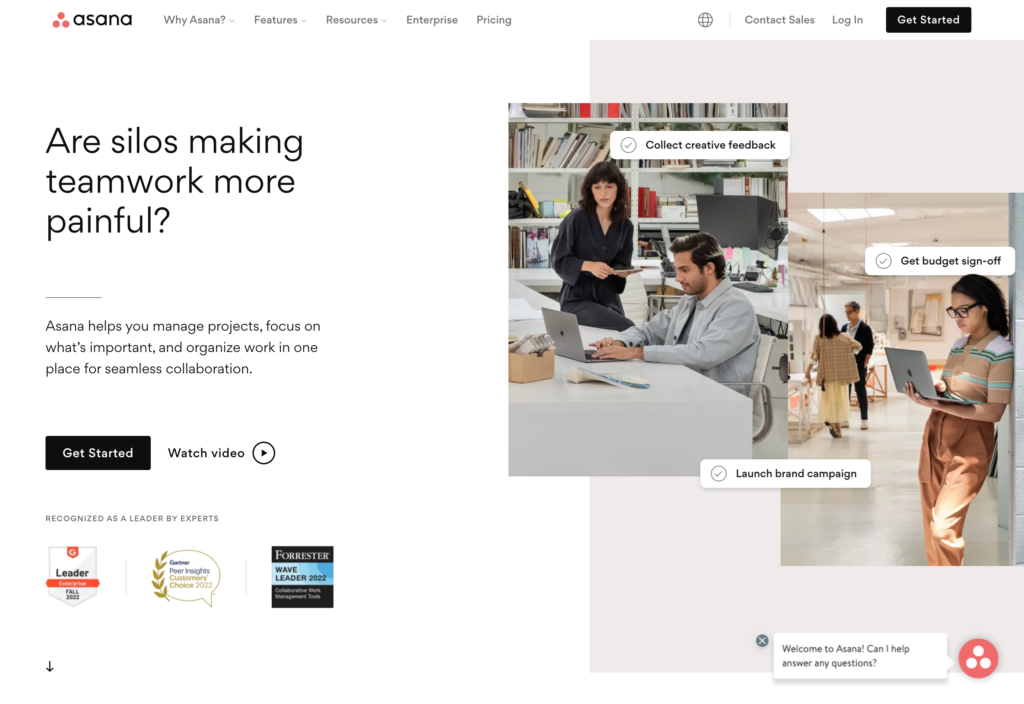
Asana is a project management platform where goals link directly to projects, portfolios, and tasks, with progress updating as work gets done. Our full Asana review found the software to be user-friendly with strong features, but these come at a high cost. Asana fits the project-and-portfolio side of goal tracking, especially for office-based teams that already use it to manage cross-functional work.
Why I chose Asana: Asana Goals creates a direct link from company strategy to everyday work. Goals link to projects, portfolios, or specific time-bound tasks, and progress updates automatically as work gets completed. For office-based teams already using Asana for project management, adding Goals keeps everything in one place.
Goals and subgoals
Asana supports individual, team, or company-wide goals linked to specific tasks and projects. Sub-goals can be nested under parent goals to create a hierarchy. For example, a company goal might have sub-goals for marketing, sales, and operations teams.
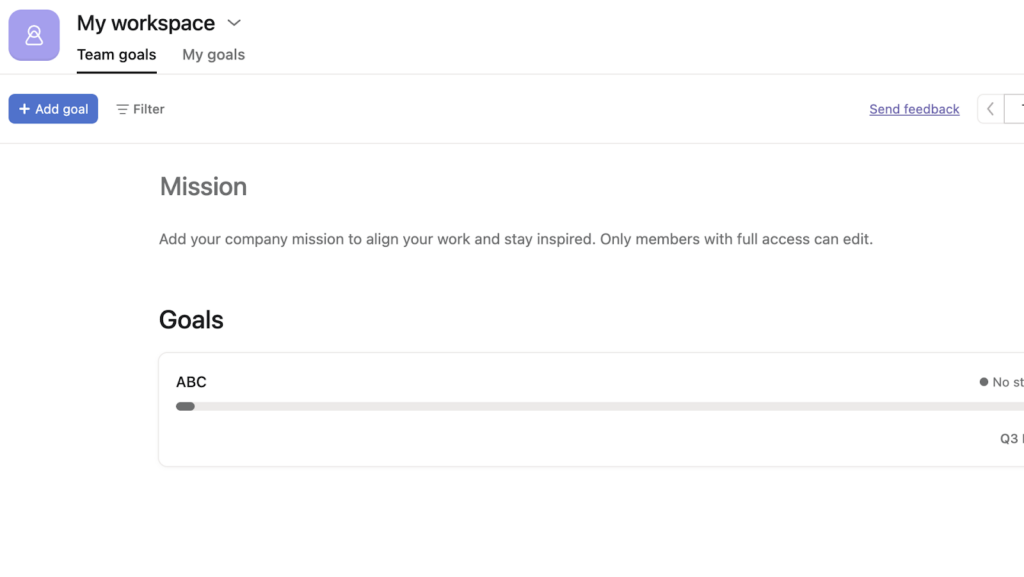
Goals can be filtered by team or status and linked to your company mission. Interface and usability
I like Asana’s clean interface. It uses simple fonts, muted gray and white colors, and a modern aesthetic. Light and dark modes are available. Accessibility features include a colorblind-friendly mode, voiceover support on iOS, and Siri task management. The platform also supports custom workflows with automated triggers.
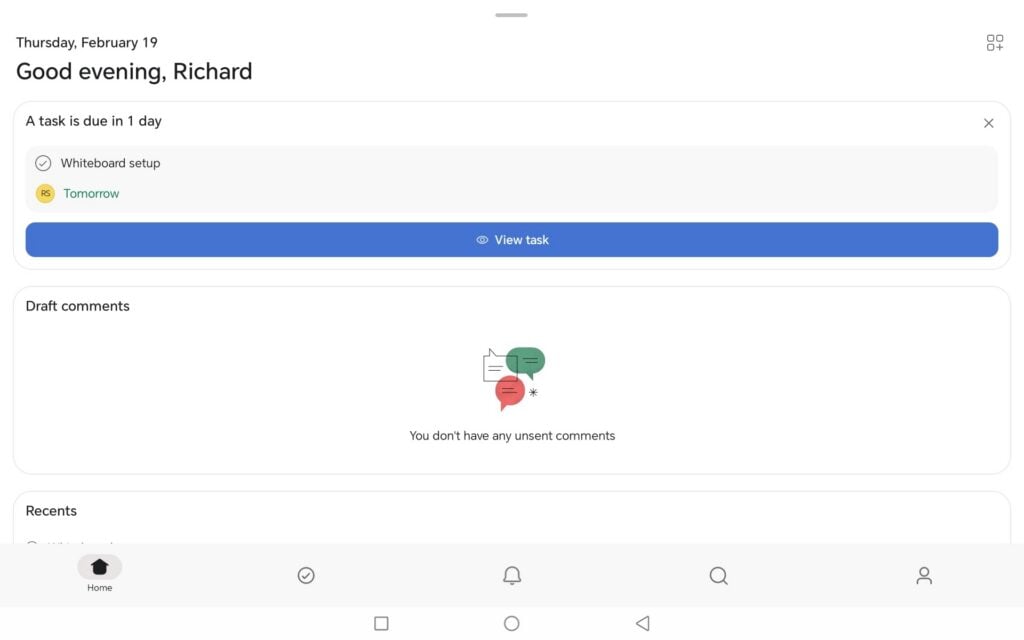
Asana’s modern mobile interface shows upcoming deadlines and due-date alerts. Dashboards and reporting
Users can create custom dashboards by choosing from predefined charts for resourcing, progress, and work health. Project dashboards summarize task progress by status and assignee. However, dashboards can’t be exported as PDFs, though you can save them as images.
Integrations
Asana integrates with Slack, Microsoft Teams, Google Workspace, Zoom, Salesforce, Jira, and many more via its app directory. Zapier and Workato enable custom automations.
Notable limitation
The big downside is that Goals are only available on Asana’s Advanced plan ($24.99/user/month) or its Enterprise plan. The free and Starter plans don’t include Goals at all. In addition, goal status labels require manual updates from the goal owner. For teams that forget to update, goals can look stale even when work is getting done.
What users say about Asana
It’s very convenient to create tasks that are part of a project as well as tasks that are completely individual. Collaborating on tasks is easy, and being able to set due date ranges helps team members know in advance when things need to be finished.
The notification settings can be a bit overwhelming at first if you don’t customize them, leading to a flooded email inbox. Also, some of the more advanced automation features are locked behind higher pricing tiers, which is something to consider for smaller teams.
Key Features
- Goals linked to projects, portfolios, or tasks
- User-friendly, accessible interface
- Custom workflows with automated triggers
- Project dashboards with progress charts
Pros
- Clean, modern user interface
- Goals connect directly with progress charts
Cons
- Goals only on Advanced plan ($24.99/user/month)
- Status labels require manual updates from goal owners
Pricing
Starts at $10.99/user/month Trial: Yes — (30 days) Free Plan: Yes — (Personal plan for up to 2 users)
-

Habitica — Best for individuals and informal groups building daily habits
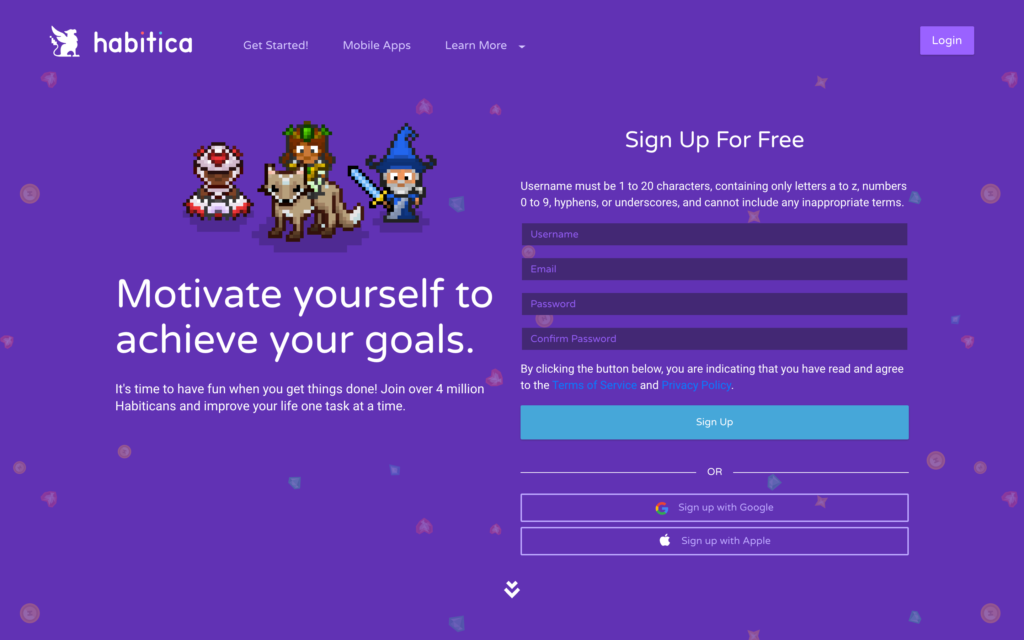
Habitica is a free goal app that turns daily habits and tasks into a role-playing game. It’s a unique option for personal motivation and building consistent routines.
Why I chose Habitica: Habitica is something different entirely. It’s a free goal-setting app that turns your habits and daily tasks into a role-playing game (RPG). If you or your team is struggling with motivation, making it into a game can be surprisingly effective at building consistent habits.
Task types
Habitica uses three task types instead of traditional goals: Habits (things you want to do more or less of), Dailies (recurring tasks on specific days), and To-Dos (one-time goals). Completing tasks earns your avatar experience points and gold. Missing Dailies costs health points, and if your health hits zero, you lose progress.
Gamification mechanics
The RPG mechanics include leveling up, earning gold, unlocking equipment, and collecting pets. The psychological trick that works on gamers like me is that missing tasks hurts. Your character will take damage and can even die. Variable rewards like random item drops keep engagement high.
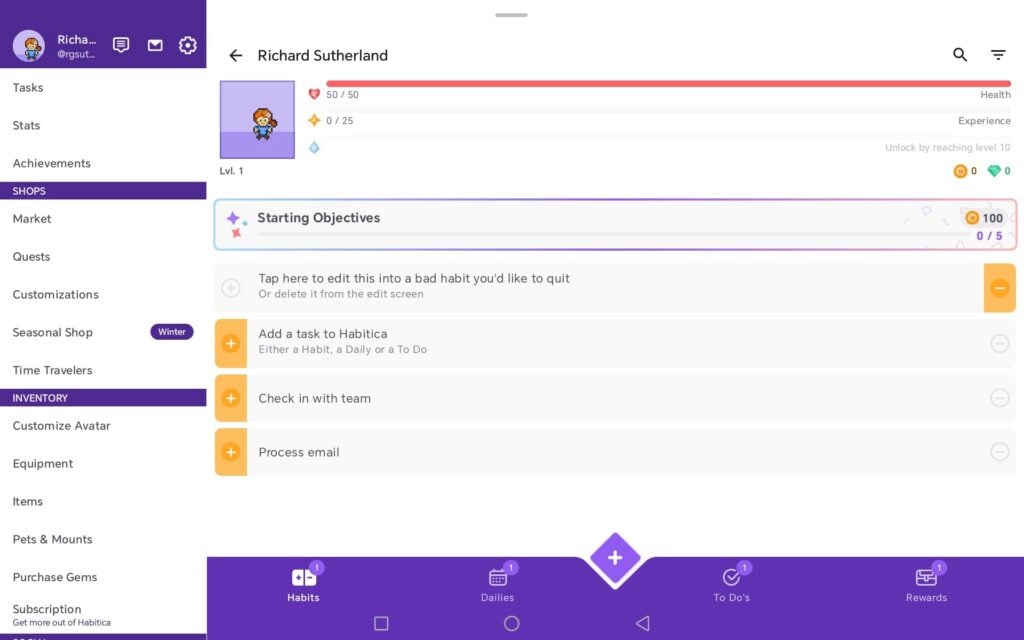
Missing a daily task damages your character’s health. Party quests and collaboration
You can form a “Party” with colleagues and go on quests together. If anyone in your party misses their Dailies, the whole team takes damage. Guilds let you join larger groups around common interests, and community challenges add specific goals to your task list.
Notable limitation
However, Habitica has no file attachments, no Gantt charts, no client-facing reports, and no subtasks in the traditional sense. It’s fun, but the pixel-art fantasy aesthetic may not fly in a corporate environment. I also don’t like that everything’s based on self-reporting: you click a button to mark tasks as complete with no way to verify, for instance. This limits accountability compared to Connecteam’s more robust task tracking.
What users say about Habitica
It’s such a good habit tracker, without ads, that I have used it for almost 2 years, to great effect for my habits.
Can be a bit frustrating when push notifications are inconsistent. I had hoped to rely on this to remind me when I need to do things but the notifications don’t consistently appear.
Key Features
- Three task types: Habits, Dailies, and To-Dos
- RPG mechanics with XP, gold, health, and leveling
- Party quests for group accountability
- Completely free core features
Pros
- Free (subscriptions are just optional cosmetics)
- Gamification makes habit goals engaging
Cons
- No business or team management features
- Self-reporting means no verification
Pricing
Starts at $5/month/user Trial: No Free Plan: Yes
Compare the Best Goal Tracking Apps
| Topic |
 Start for free
|
|
|
|
|
|---|---|---|---|---|---|
| Reviews |
 |
|
|
|
|
| Pricing |
Starts at just $29/month for the first 30 users
|
Starts at $7/user/month
|
Starts at $90/month (billed annually)
|
Starts at $10.99/user/month
|
Starts at $5/month/user
|
| Free Trial |
yes
14-day
|
yes
15-days
|
yes
(14 days)
|
yes
(30 days)
|
no
|
| Free Plan |
yes
Free Up to 10 users
|
yes
(unlimited users)
|
yes
(up to 3 users)
|
yes
(Personal plan for up to 2 users)
|
yes
|
| Use cases |
Best for frontline and deskless teams turning goals into daily work
|
Best for project-driven teams linking goals to complex task workflows
|
Best for teams adopting a formal OKR process
|
Best for office-based teams tracking goals inside cross-functional projects
|
Best for individuals and informal groups building daily habits
|
| Available on |
What Is a Goal Tracking App?
A goal tracking app is software that helps people define goals, break them into measurable steps, track progress, and stay accountable over time. The category is broad: some goal tracking apps are built for business execution, some for OKRs, some for project management, and others for personal habits.
For teams, the best goal tracking apps usually connect goals to tasks, owners, deadlines, updates, and reports. For individuals, the focus is often reminders, streaks, progress bars, and motivation. The right choice depends less on the label “goal tracking app” and more on how you actually plan to act on the goal.
How Does a Goal Tracking App Work?
Goal tracking apps ask you to define a goal or habit you or your team want to work on. You then access the platform daily and indicate how much you’ve worked on the goal.
The app automatically keeps track of the information for you. Over weeks and months, you can feel proud as you see yourself making progress. Some apps also allow you to make notes or collaborate on goals with teams.
Goal and habit tracking apps can be used on mobile devices, desktops, or the web. In many cases they sync up, so you can access your data wherever you are.
The Benefits of a Goal Tracking App
Improved goal visibility
Goal tracking apps help you improve your performance management by seeing exactly what work your employees are doing. With an app, your teams can be regularly reminded of their objectives, making progress more likely. Employees can also see what work is left to do, so they’ll be motivated to stay on track.
Visual progress tracking
For long-term goals, progress is often hard to visualize, especially if it’s hidden in a planner. With tracker apps, you can use charts and graphs to see exactly how far you are from success.
Team members can track progress on personal and professional goals in one place. You can gather data to see how to improve the way you approach goals.
Enhanced team motivation
Employee motivation is a big factor in helping team members achieve their goals. Goal tracking apps let workers encourage each other. Some even allow you to offer rewards for progress. Sharing a team’s progress can inspire others to keep pushing to the finish line.
Access to the resources your team needs to achieve their targets
To help your team members reach their goals, you may need a training program to teach them certain skills. Or, they might need checklists or step-by-step plans to turn an idea into a clear action plan. Some tracking apps offer such resources.
How Much Does a Goal Tracking App cost?
Goal tracking apps range from completely free to high-end enterprise pricing, depending on the features and team size.
| App | Free Plan | Paid Starting Price |
| Connecteam | Up to 10 users | $29/month for 30 users |
| ClickUp | Limited features | $7/user/month |
| Weekdone | Up to 3 users | $90/month for 10 users |
| Asana | Up to 2 users | $24.99/user/month (for Goals feature access) |
| Habitica | All core features | $5/month |
The Connecteam Small Business Plan includes everything you need to set and track goals for up to 10 users. The chat feature helps you communicate with your team, while the knowledge base and training give everyone the tools they need to reach their objectives.
Paid plans start at only $29/month for up to 30 users if you pay annually. Each additional team member is just $0.50 a month.
FAQs
A goal tracker app helps you track objectives anywhere, at any time. Connecteam goes further by linking goal setting to schedules and task management, so your goals get translated into a daily task list.
Goal tracking apps make SMART (Specific, Measurable, Achievable, Relevant, Time-bound) goals even smarter. You can break down big goals into what you can do today, so your plans become achievable. Connecteam’s task management helps you set smart goals by turning each objective into assigned tasks with due dates.
Several apps offer free plans for small teams. Connecteam’s Small Business Plan is free for up to 10 users and includes task management, team chat, training, and a knowledge base.
The Bottom Line on Goal Tracking Apps
The best goal tracking app depends on what kind of goal you need to manage. ClickUp and Asana are strong choices when goals live inside project work. Weekdone is better for formal OKRs. Habitica is useful for personal habits and informal accountability.
Connecteam is the best choice for frontline and deskless teams because it turns goals into assigned work, schedule-based execution, team updates, and trackable follow-through. If your biggest challenge is making sure goals actually reach employees’ daily work, Connecteam is the strongest fit.
Try Connecteam for free today or book a demo to start easily setting goals and tracking your team’s success.