

If you’re managing a growing team using spreadsheets and group texts, messages get missed, payroll errors pile up, and your best people start walking out the door.
I reviewed 7 employee management apps and ranked them by scheduling flexibility, time tracking accuracy, HR and onboarding capabilities, and compliance support.
Use these picks to unify your workforce operations, eliminate manual busywork, and keep your team engaged from hire to retire.
| App | Best for | Starting Price | Key Considerations |
| Connecteam | Best employee management solution for deskless teams | Just $29/month for the first 30 users | Strongest for frontline teams needing unified scheduling, time tracking, HR, and communication in one mobile-first platform. |
| Gusto | Small businesses syncing employee management with payroll | $49 base fee + $6 per seat per month | Seamless payroll integration alongside basic time tracking and HR tools; offers limited scheduling features. |
| Humanity by TCP Software | Enterprise scheduling compliance at scale | $2.75/user/month | Handles complex scheduling rules, labor laws, and large teams effortlessly; less mobile-friendly. |
| Rippling | Mid-market companies needing reporting and compliance automation | Contact vendor for price | Enterprise-grade reporting, compliance automation, and custom workflows; only administrators can contact support. |
| Deputy | Retail and hospitality shift scheduling | $5/user/month | Strong shift management, swapping, and time tracking for shift-based workers; limited flexibility for industries outside of retail and hospitality. |
| Zoho People | Affordable HR and attendance management | $1.25/user/month | Intuitive interface for managing employee records, attendance, and leave tracking. Requires other Zoho tools to work best. |
| Jobber | Field service crew management and dispatch | $29/user/month | Simplifies field service operations with scheduling, dispatch, and client management; may be expensive for small teams. |
What’s New in This Update (August 2026)
- Restructured the list from 10 tools to a more focused Top 7 to eliminate overlapping options.
- Added Humanity by TCP for its strong enterprise scheduling compliance capabilities.
- Added Rippling to cover organizations needing unified HR and IT infrastructure management.
- Removed 15Five, Proofhub, Workday, Sling, and Homebase.
- Replaced Zoho Workplace with Zoho People to accurately reflect Zoho’s HR and attendance management offering.
Our Top Picks
-
1

Best employee management solution for deskless teams
-
2

Best for small businesses syncing employee management with payroll
-
3

Best for enterprise scheduling compliance at scale
Why trust us?
Our team of unbiased software reviewers follows strict editorial guidelines, and our methodology is clear and open to everyone.
See our complete methodology
How I Ranked the Best Employee Management Software
Here are the key areas I looked for when evaluating the top employee management platforms:
Scheduling & Shift Management
- Ease of schedule building: The software should allow managers to create and adjust schedules quickly using visual tools like drag-and-drop, without navigating complex menus.
- Compliance and rule enforcement: The platform should automatically enforce labor laws, mandatory breaks, overtime limits, and custom scheduling rules to prevent violations.
- Shift flexibility: Employees should be able to request time off, swap shifts, and pick up open shifts with minimal friction and appropriate manager oversight.
- Forecasting and optimization: The tool should help predict staffing needs and optimize schedules based on historical demand and employee availability.
Time Tracking & Payroll Integration
- Mobile time clock: Employees should be able to clock in and out from their phones, with optional location verification like GPS stamps or geofencing.
- Accuracy and automation: The software should automatically calculate hours worked, overtime, and breaks without manual intervention or spreadsheet exports.
- Payroll export: Timesheets should export cleanly to payroll providers or accounting software, eliminating manual data entry and reducing errors.
- Fraud prevention: The system should include safeguards against time theft, such as biometric verification, geofencing, or photo capture at clock-in.
HR & Employee Management
- Onboarding and training: Managers should be able to create digital onboarding workflows, assign training courses, and track new hire progress from day one.
- Employee records and documentation: The platform should provide a centralized, searchable database for storing employee files, certifications, and compliance documents.
- Leave and attendance management: Employees should be able to submit time-off requests digitally, and managers should have clear visibility into attendance patterns and accrued balances.
- Performance and engagement: The tool should include features for employee feedback, recognition, or performance tracking to support retention.
Communication & Operations
- Built-in messaging: The platform should include secure in-app chat or announcement features that keep work communication separate from personal channels.
- Task and form management: Managers should be able to assign tasks, create digital forms and checklists, and track completion status in real time.
- Integrations: The software should connect with payroll, accounting, CRM, or other business tools already in use.
- Ease of use: The interface should be intuitive enough for both managers and frontline employees to adopt without extensive training.
I compared each tool using the same workflow checklist: scheduling and shift changes, time capture and approvals, employee records/onboarding, communication, and the cost or setup trade-offs that matter for growing frontline teams. I also used the findings from our full product reviews and hands-on checks where available.
The 7 Best Employee Management Software Solutions
-
Connecteam — Best employee management solution for deskless teams
Connecteam is the best choice for deskless and frontline teams because it combines powerful employee management features with an easy-to-use mobile app in one platform. It’s especially strong for businesses that need to handle scheduling, time tracking, communication, and HR tasks without switching between multiple apps.
Why I chose Connecteam: I ranked Connecteam #1 because it’s the most complete option for deskless teams, especially in areas like mobile time tracking, flexible shift scheduling, and built-in team communication.
GPS Time Clock
Connecteam’s employee time clock makes it incredibly simple to track employee hours accurately. Employees can clock in and out directly from their mobile phones, and the system’s real time GPS tracker captures a location stamp with every punch.
You can also set up geofences around your specific job sites or office locations. If an employee tries to clock in before they arrive at the designated area, the system blocks them, preventing time theft and early clock-ins.
Work hours are automatically recorded into timesheets for payroll, complete with overtime calculations, break times, jobs, tasks, and even locations. Employees can review their time entries before submitting them for managers to approve. Once approved, you can export timesheets directly to leading payroll providers, including RUN Powered by ADP®, QuickBooks, Gusto, Paychex, and Xero.
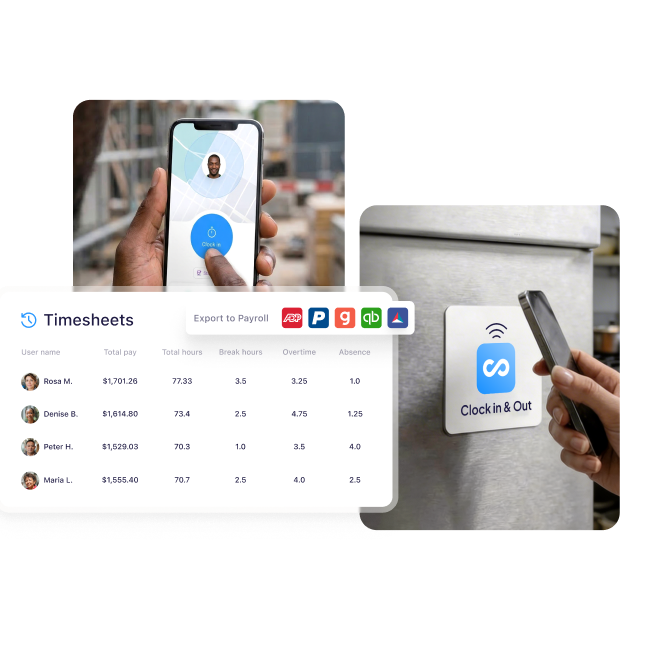
Track time accurately and send timesheets directly to payroll with Connecteam. AI-Powered Scheduling
Staff scheduling is fast with Connecteam’s drag-and-drop editor. You can create schedules across different locations or departments, use templates, and create recurring shifts. Employees receive instant notifications on their phones when shifts are published or changed.
If employees can’t work a shift, they can release it for qualified teammates to pick up, while managers can approve swaps before they’re finalized.
There’s also the AI-powered auto-scheduler, which instantly assigns open shifts based on employee availability, roles, fairness, and your custom compliance rules. If you accidentally double-book someone, the system flags the conflict before the schedule goes live.
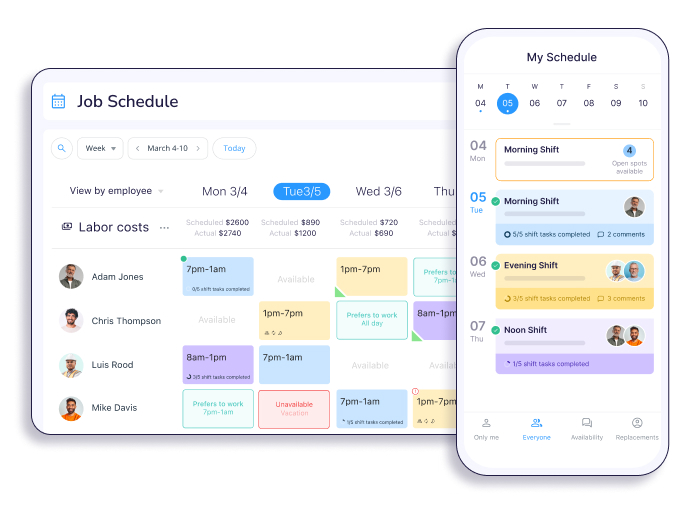
Know who’s working when and how much it’s costing your business. Built-in Team Communication
Instead of relying on messy text message threads, Connecteam provides a secure, online team chat for one-on-one or group messaging. You can separate chats by department or location so information stays relevant.
There’s also a company updates feed that functions like a social media timeline, which is perfect for sharing important announcements, safety protocols, or company news. You can even track who’s viewed your updates to ensure critical information is received.
Digital Forms and Task Management
You can digitize all your paper processes using Connecteam’s digital forms and checklists. Whether it’s a daily opening checklist, an incident report, or a safety inspection, employees can complete and submit them right from their phones.
Employee task tracking lets you assign specific jobs with detailed instructions, attach photos or files, and track the status in real time as your team completes their work.
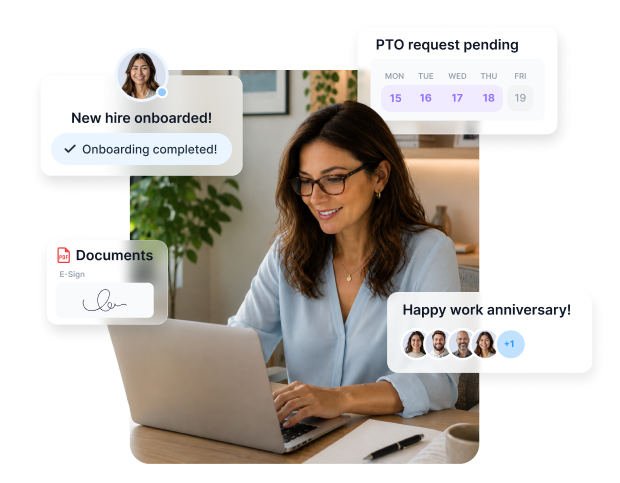
Manage the entire employee journey with Connecteam, from hiring and onboarding to training. HR and Onboarding
Connecteam handles the entire employee lifecycle, starting with hiring. You can post job openings directly from the platform, collect applications, and manage the hiring workflow all in one place. Once you’ve hired someone, you can send them customized onboarding packets with e-signatures to get them up to speed quickly.
Connecteam also lets you create mobile-friendly training from scratch, customize templates, or generate complete courses in seconds with its AI Course Creator. You can enrich training with videos, files, quizzes, and surveys, then track completion, quiz results, and learner progress, reminding employees to finish any outstanding training.
And so much more…
Connecteam also offers even more tools to help manage your team, including:
- Time off management with mobile requests and accrual balances
- A company employee directory for quick contact lookups
- A company knowledge base with an AI agent for instant answers
- Employee recognition tools and digital rewards
When Connecteam isn’t a good fit
Connecteam isn’t the best fit if you’re a large enterprise with complex HR needs like benefits administration, payroll compliance across multiple countries, or managing IT hardware and software licenses. If your team is mostly sitting at desks and you need deep integration with enterprise systems, you’ll probably need a different tool.
Connecteam also offers a free for life plan – Get Started Now!
0Key Features
- GPS time clock with geofencing
- Drag-and-drop scheduling
- AI-powered auto-scheduling
- In-app team chat and company newsfeed
- Mobile forms, checklists, and task management
- Digital hiring, onboarding, and training
Pros
- True unified platform for deskless teams
- Easy to use for managers and field staff
- Flat monthly pricing saves money as you grow
- Highly responsive customer support
Cons
- Not built for complex enterprise HR operations
- No global payroll or benefits administration
Pricing
Free-for-life plan availablePremium plans start at $29/month for 30 users
See Connecteam's App in Action
Request a Free Demo -
Gusto — Best for small businesses syncing employee management with payroll
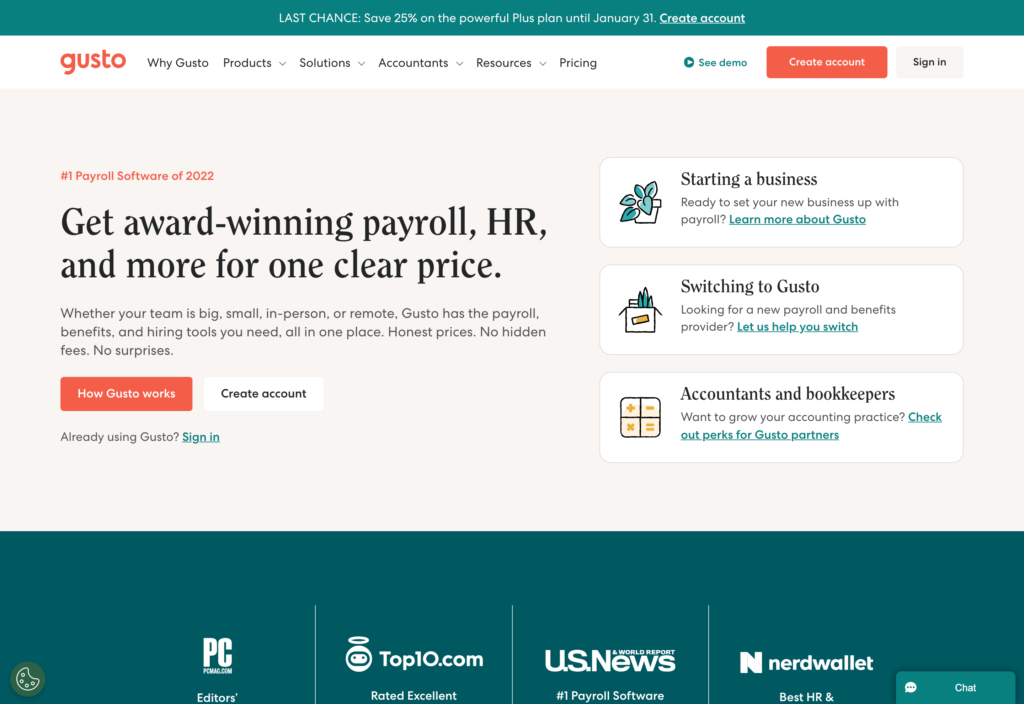
Gusto is a payroll and HR software solution designed to help small and medium-sized businesses manage their workforce and compensation.
Why I chose Gusto: Gusto stands out for its seamless payroll integration and intuitive interface, making it a strong choice for small businesses looking to sync HR with payroll processing.
Payroll and Tax Calculations
In our full Gusto review, we found it intuitive to handle payroll and basic HR tasks. Gusto calculates wages, deductions, and payroll taxes based on each employee’s details and the latest tax rules. Once you’ve reviewed the payroll summary, Gusto withholds the correct taxes, files the required forms, and can even pay federal and state tax agencies for you.
The platform is also flexible enough to handle different payroll needs. You can choose between 4-day, 2-day, or next-day direct deposits, create custom pay types for bonuses, commissions, or severance, and pay employees by either direct deposit or paper check. We found that the small touches, like customizing the company name shown on employees’ bank statements, make the payroll experience feel more polished and personalized.
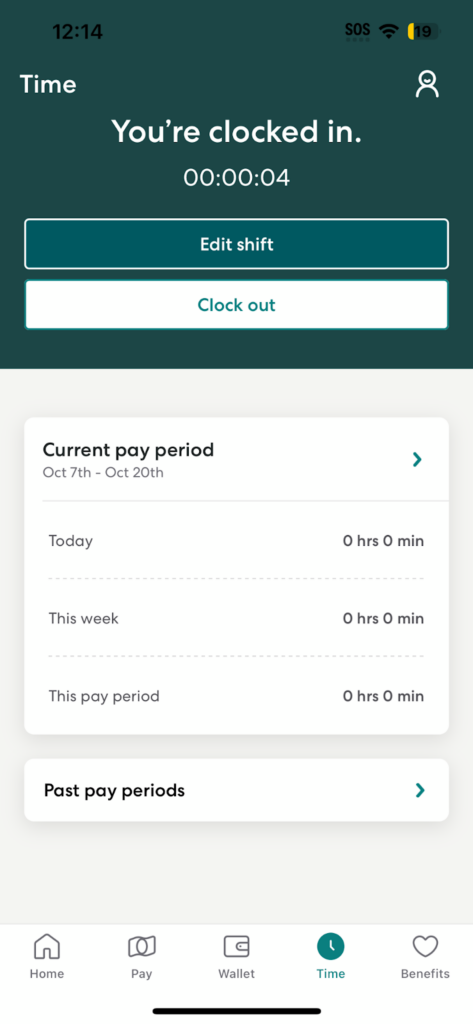
Employees can clock in and out of the Gusto mobile app, and check their pay and benefits. Employee Management
Gusto includes a centralized employee management hub where you can add new hires, organize your workforce, and manage onboarding. It also supports recruiting and background checks through built-in integrations, while an org chart makes it easy to see your team structure at a glance.
The platform also helps you manage employee expenses and benefits. Employees can upload receipts for reimbursement, which are automatically paid through payroll after approval. Gusto also supports health insurance, retirement plans, commuter benefits, and other perks, with more advanced benefits like 401(k) plans managed through integrated partners.
Time Tracking
While Gusto does offer time tracking, we found it to be fairly basic. Employees can clock in and out through the web or mobile app, but in our testing, the mobile time clock feature didn’t always function properly, especially when it came to the geolocation. On top of that, there are no reminders for break and overtime, which could lead to compliance issues if you’re not careful.
Note: Time Tracking is available only on Gusto’s Plus plan, priced at $80/mo + $12/mo per userWhat users say about Gusto
The platform is easy to use and does a great job simplifying payroll and HR tasks that can otherwise be time-consuming and complicated.

I don’t like the time tracker. There’s no pause button nor can I edit tasks in real time. Only when I start or end timer can I make edits.

Key Features
- Automated payroll and tax calculations
- Expense management
- Benefits and health insurance admin
- Basic time tracking
Pros
- Automates complex tax filings and payments
- Strong employee-facing financial tools
Cons
- Time tracking is limited and can be buggy
- No free plan available
Pricing
Starts at $49 base fee + $6 per seat per month Trial: No Free Plan: No
-
Humanity by TCP Software — Best for enterprise scheduling compliance at scale
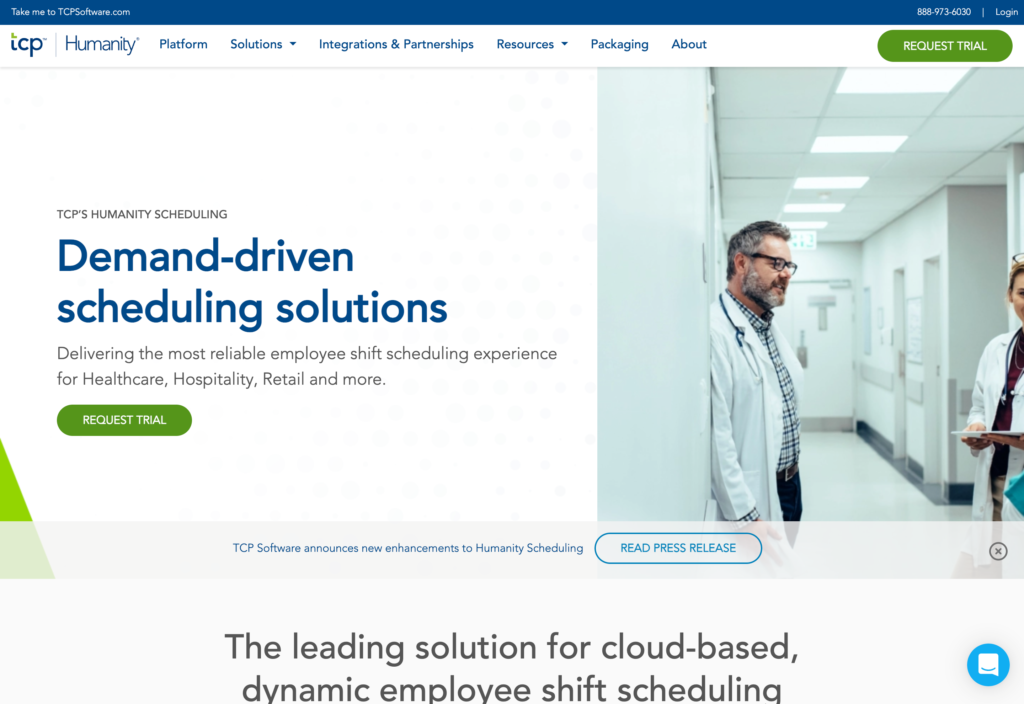
Humanity by TCP is a scheduling and workforce management tool built to handle complex labor compliance and large-scale shift planning.
Why I chose Humanity: I included Humanity by TCP because it handles complex scheduling scenarios well, making it a good fit for large enterprises that need strict compliance automation.
Compliance-Driven Scheduling
In our full Humanity review, we found it offers a strong mix of flexibility and automation. Managers can create schedules from scratch, reuse templates, copy shifts or entire schedules. Once published, schedules are instantly available across desktop, mobile, tablet, and Apple Watch, while features like open shifts and manager-approved shift swaps make it easy to handle last-minute changes.
What impressed us most during testing was Humanity’s focus on scheduling compliance. The platform includes pre-built labor rules, such as meal break requirements and child labor restrictions, helping managers create compliant schedules with less manual effort. However, the built-in rules are limited to US labor laws, so businesses in other countries must create their own custom compliance rules.
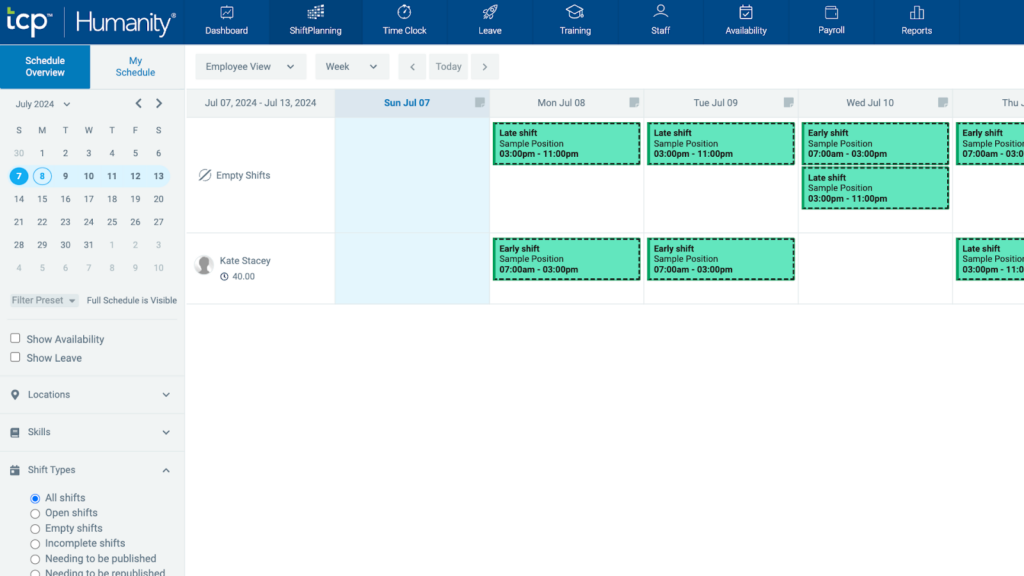
You can plan upcoming employee shifts with Humanity. AI-Powered Forecasting and Auto-Scheduling
Humanity also includes tools for generating schedules quickly. I liked the auto-scheduling feature, which can create compliant schedules based on staff skills and availability with just one click.
On top of that, Humanity offers an AI-powered forecasting tool that helps managers optimize schedules to ensure the right mix of staff is present without exceeding the labor budget. While helpful, it’s important to note that the AI features are only available on a higher tier paid plan.
Time Tracking and Payroll
Employees can access Humanity’s time clock from desktop, mobile, or Apple Watch. Managers get real-time visibility into attendance, including alerts for late clock-ins, while approved hours automatically flow into digital timesheets. One limitation we found is that the time clock records time to the nearest minute rather than the second, which can add up over time and impact costs for businesses.
For payroll, Humanity lets managers approve timesheets manually or automate approvals, apply overtime and premium pay rules, and generate payroll-ready reports for export.
What users say about Humanity by TCP
I really liked how easy Humanity Schedule is to use, especially when it came to managing shifts and pulling reports.
Humanity is not intuitive in use and needs more functionality to be a good system, on the computer and app version.
Key Features
- Pre-built and custom compliance scheduling rules
- AI-powered demand forecasting and auto-scheduling
- Time clock and timesheet generation
- Apple Watch app for quick schedule access
Pros
- Strong support for US federal and state scheduling laws
- Powerful predictive scheduling features
Cons
- Time clock rounds to the nearest minute
- AI tools locked behind high-tier paid plan
Pricing
Starts at $2.75/user/month Trial: Yes — 30 days Free Plan: No
-

Rippling — Best for mid-market companies needing reporting and compliance automation
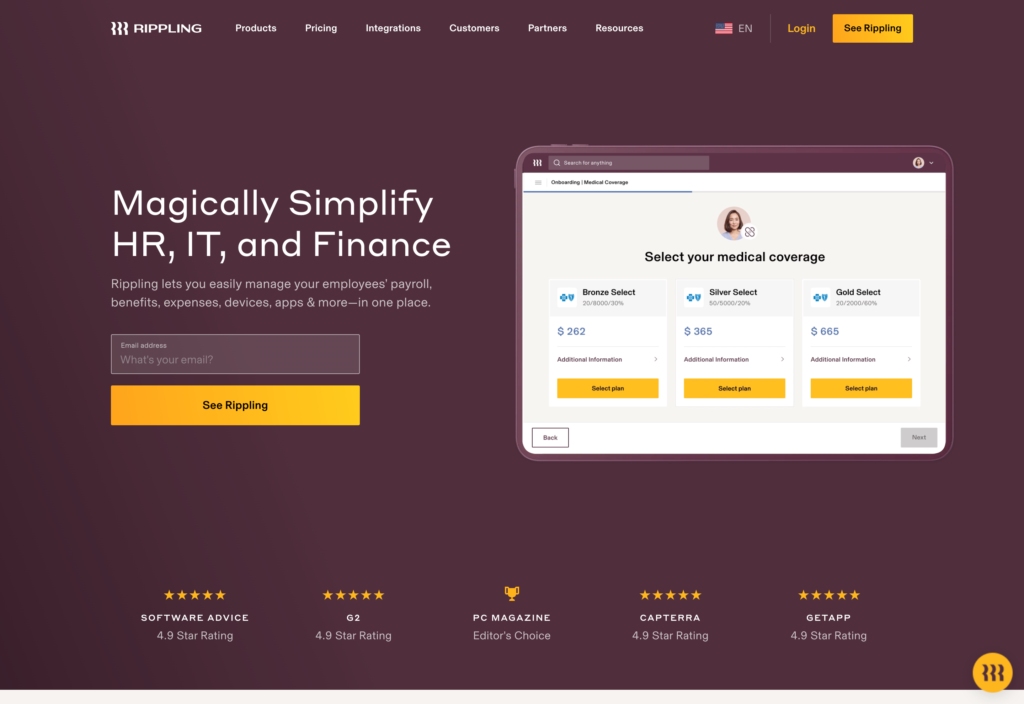
Rippling is a powerful workforce management platform that combines time tracking, scheduling, training, payroll, and reporting into one system.
Why I chose Rippling: Rippling combines scheduling and time tracking with advanced reporting, compliance tools, and workflow automation, making it a good fit for businesses with more complex operational needs.
Time Clock and Payroll
In our full Rippling review, we found that employees can clock in and out with the 1-click time clock. The system supports multiple verification methods, including centralized QR codes, selfie verification, and geofencing. To help with break enforcement, Rippling reminds employees to take required breaks and prompts them to add missed break time to their timesheets.
Hours are tracked in timecards, which can be processed automatically with Rippling’s native payroll offering.
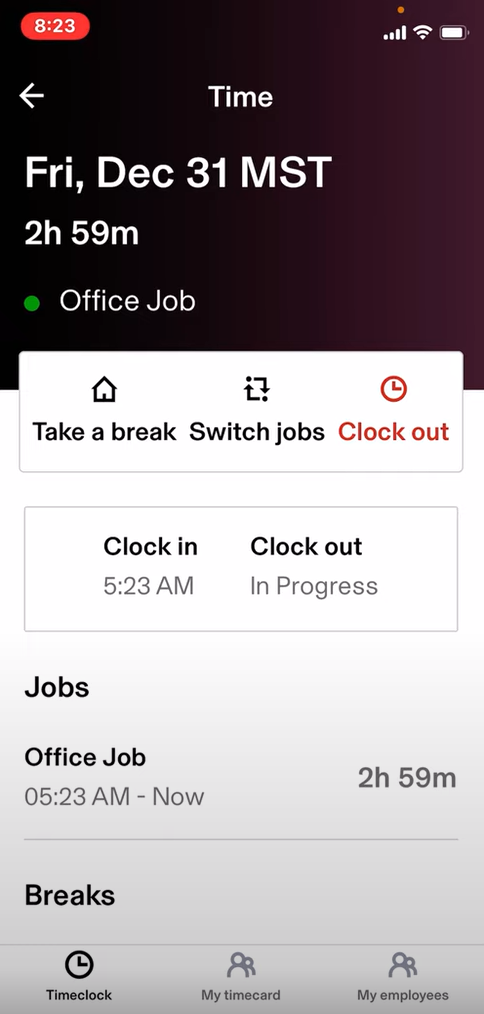
With Rippling’s mobile app, employees can clock in and out. Employee Scheduling
Rippling’s scheduling tool is well suited for businesses managing multiple teams or locations. Managers can organize employees by department, office, or other groups, then build schedules with a drag-and-drop editor that displays pay rates, overtime, certifications, and completed training. This makes it easier to assign qualified employees while keeping labor costs and compliance in mind.
You can also reuse previous schedules as templates, saving time on recurring schedules.
Training and Surveys
Rippling includes built-in training tools that help businesses keep employees up to date on required skills and compliance training. You can assign pre-built or custom courses to individuals or teams, schedule recurring training for annual certifications, and include quizzes to verify understanding.
One feature I especially liked is that training ties directly into scheduling, so you can require employees to complete specific courses before they’re allowed to clock in for certain shifts.
The platform also includes an employee survey tool with customizable templates, anonymous responses, and automated survey triggers. While creating and distributing surveys is simple, tracking who has and hasn’t responded isn’t as clear as it could be, making follow-up reminders more manual than necessary.
What users say about Rippling
It’s been great for managing our team’s HR stuff, payroll, and even IT onboarding. Things like setting up new hires with software access are way simpler now. I also like the benefits administration part, it’s pretty solid.
Generating custom reports requires several unnecessary steps, and migrating data from other systems is a tedious process.
Key Features
- Drag-and-drop scheduling
- Custom no-code automated workflows
- Time clock with selfie, QR, and geofence verification
- Comprehensive employee training module
Pros
- Granular permissions to control employee access
- Over 600 ready-made integrations
Cons
- Extremely difficult to get a quote or demo
- Doesn’t offer auto-scheduling capabilities
Pricing
Contact vendor for price Trial: No Free Plan: No
-

Deputy — Best for retail and hospitality shift scheduling
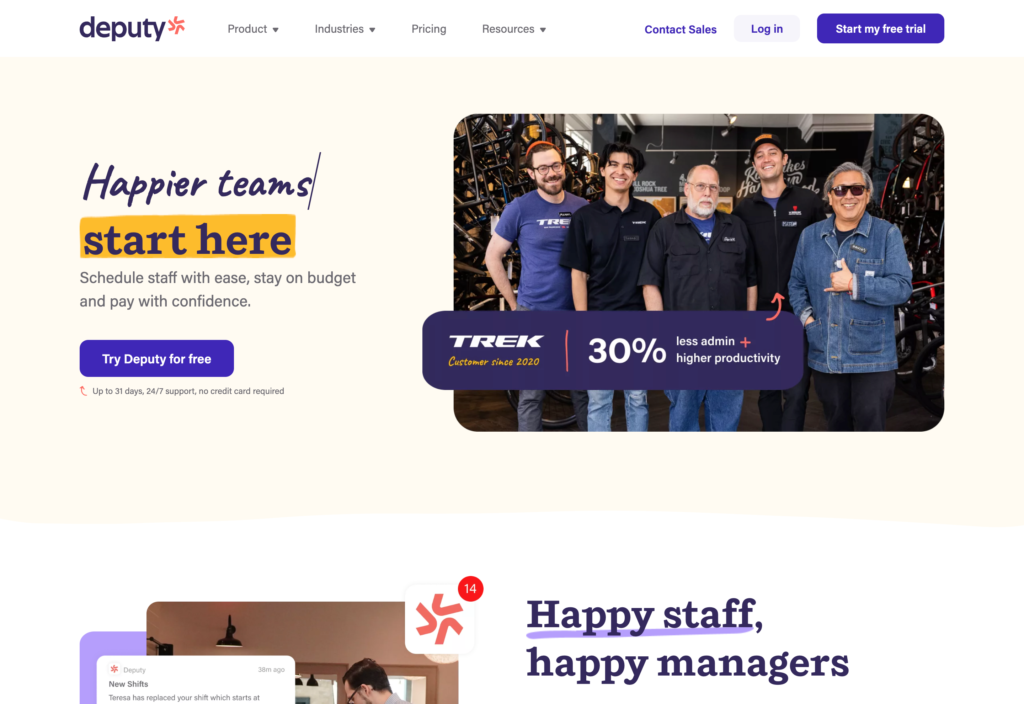
Deputy is a time tracking and scheduling platform built to handle the needs of shift-based teams.
Why I chose Deputy: Deputy stands out for automating shift assignments and preventing buddy punching with its facial recognition kiosk.
Shift Scheduling and Auto-Scheduler
In our full Deputy review, we found that the platform handles routine schedule building well, especially for shift-based teams. We created a live weekly roster and found the drag-and-drop tool made assigning staff to different work areas straightforward. We also tested the AI-powered auto-scheduler, which builds schedules automatically based on employee availability and business demand.
Managers can leave shifts open for team members to claim, and the system checks approved leave to prevent scheduling conflicts. However, one drawback we ran was that the system failed to flag a conflict when we deliberately scheduled the same employee for overlapping shifts in two different work areas.
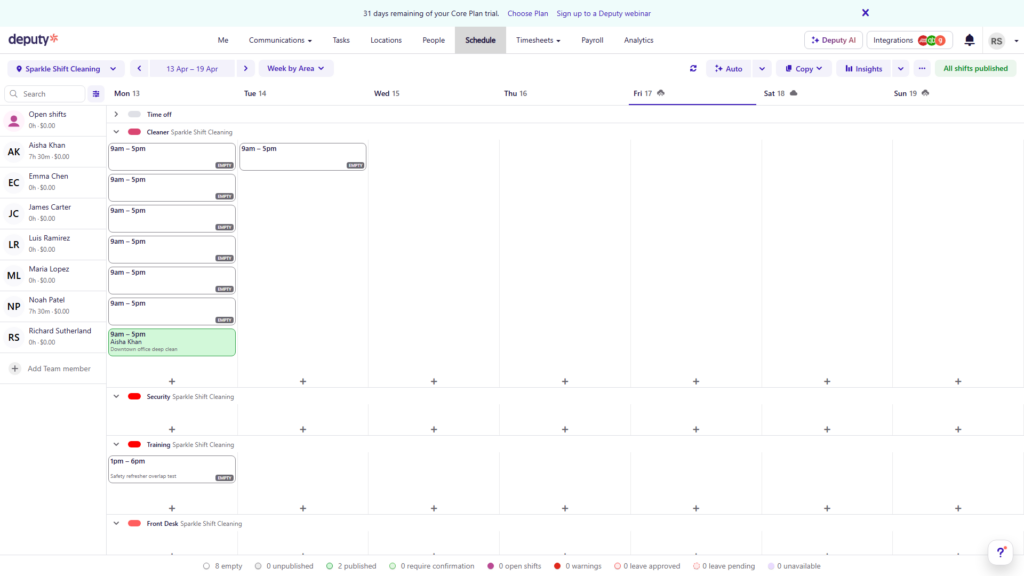
You can see work sites, assigned shifts, and publication status on Deputy’s scheduler view. Employee Time Clock and Timesheets
Employees can easily punch in to Deputy’s time clock using a web browser, their smartphone, or a shared kiosk. The kiosk app offers touchless biometric facial recognition, which provides a strong defense against buddy punching.
Managers can view employees’ GPS locations when they clock in and out from the mobile app. The platform also supports geofencing, preventing employees from clocking in unless they’re within a designated job site. As an added safeguard, Deputy automatically rejects shifts under 15 minutes and clearly marks scheduled employees who don’t clock in as absent on timesheets.
Internal Communication and Task Management
Deputy offers internal communication tools, including the News Feed, which seems useful for broadcasting announcements to specific locations or departments. Managers can attach PDFs, images, or videos, and employees can react or confirm they’ve read the post. While it works, it’s not as convenient as a dedicated chat with private and group messaging.
For daily operations, we tested the task management system and found it handles basic assignments well, letting managers set due dates and track progress. However, we found that the task tool doesn’t support detailed notes or file attachments, making it less practical for complex operational workflows.
What users say about Deputy
I liked how user‑friendly the Deputy app is. It made scheduling, clock‑ins, and team communication easy to manage, and the real‑time updates were especially helpful.
Sometimes the app can be a bit slow or glitchy, especially when trying to load shifts. Also, some features are not very clear at first and take time to understand.
0Key Features
- Drag-and-drop rostering
- Biometric facial recognition for shared kiosks
- Timesheets with absence tracking
- News Feed for announcements
Pros
- Auto-scheduling based on availability and demand
- Strong buddy punching and time theft prevention
Cons
- Lacks operation team chat
- Failed to flag overlapping shifts
Pricing
Starts at $5/user/month Trial: Yes — 30 days Free Plan: No
-
Zoho People — Best for affordable HR and attendance management
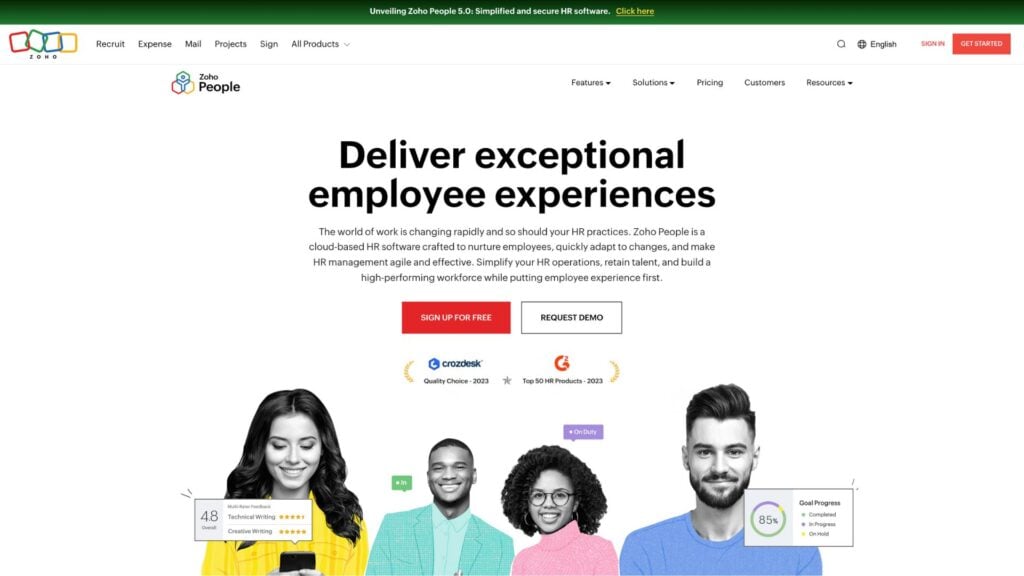
Zoho People is a human resources platform that centralizes employee data, time tracking, and performance reviews.
Why I chose Zoho People: Zoho People offers an affordable, customizable HR solution that’s ideal for small teams looking to move beyond spreadsheets.
Time Tracking and Attendance
In our full Zoho People review, we found the time tracking tool efficient and easy to use. Employees can easily review and adjust their hours if they make a mistake, which is less restrictive than some enterprise HCM systems.
We also tested the People Kiosk feature, which uses facial recognition to support centralized clock-ins for busy environments like manufacturing floors.
While the scheduling interface took some time to learn, Zoho People handles shift assignments well. It automatically filters employees by factors like location, making it easier to assign the right people, and supports automated shift rotations to reduce manual scheduling. Plus, we found that administrators can include overtime within maximum billable hours and automatically rotate shifts to save scheduling time.
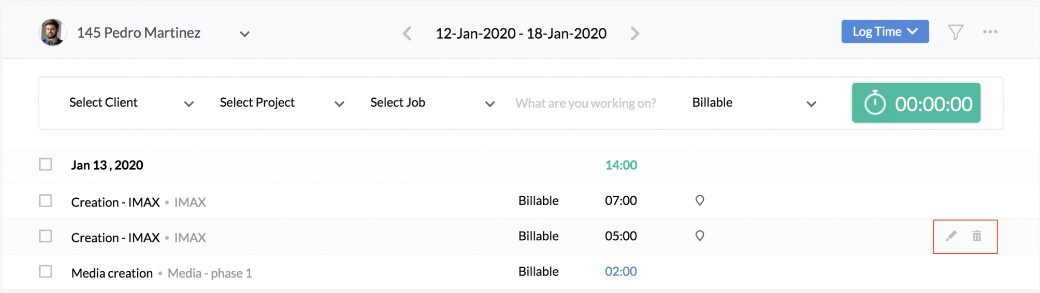
You can adjust hours simply with Zoho People’s time tracking system. Employee Database and Leave Tracking
Zoho People’s centralized employee database was well-structured. You can build profiles through a mix of HR administration and employee self-service, so staff can update their own details and view the organizational hierarchy through a Department Tree.
Leave management was also straightforward. Employees can request time off and check their leave balances in just a few clicks, while managers receive instant notifications and can approve requests with a single click or require multiple approvals for specific leave types.
Communication and Collaboration
Zoho People includes employee communication tools such as announcements, file sharing, forms, and messaging. Employees can also start chats, audio calls, or video calls directly from a coworker’s profile, although these features require the separate Zoho Cliq add-on.
What users say about Zoho People
It’s easy to use and helps manage daily HR tasks like attendance, leave, and employee records without much hassle. It saves time and keeps everything organized.
Attendance is a bare minimum feature in any HRMS, yet it’s not provided with basic plan in Zoho people.
Key Features
- Employee self-service database
- Facial recognition time clock kiosk
- Leave management tracking
- Shift scheduling and allocation
Pros
- Flexible attendance tracking
- People Kiosk with facial recognition
Cons
- Free plan limited to 3 users only
- Some features require separate Zoho add-ons
Pricing
Starts at $1.25/user/month Trial: Yes — 30-day Free Plan: Yes — (up to 5 users)
-
Jobber
Jobber — Best for field service crew management and dispatch
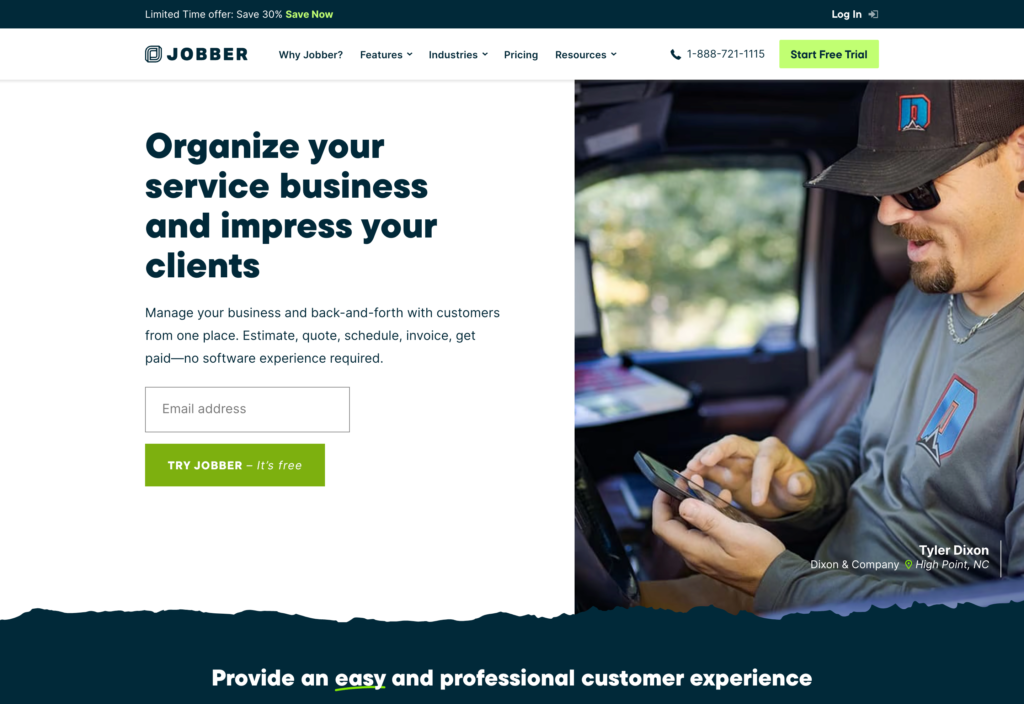
Jobber is a field service management tool designed to streamline scheduling, dispatching, and invoicing for trades like landscaping, HVAC, and cleaning.
Why I chose Jobber: I chose Jobber because its route optimization and client management tools are purpose-built for field service teams.
Quotes and Scheduling
In our full Jobber review, we found the platform excels at converting client interactions into billable work. Jobber lets you create detailed quotes with photos and line-item flexibility, and once clients approve them, the system automatically converts them into scheduled jobs.
The scheduling interface offers five different calendar views (Month, Week, Day, List, and Map) with drag-and-drop functionality for quick reassignments. There’s also route optimization, which displays team locations and suggests the most efficient routes between jobs.
During testing, we found that Jobber warns about scheduling conflicts but doesn’t prevent them. When we assigned an employee to overlapping jobs, the platform marked them as “unavailable” but still let us save the assignment, leaving it up to managers to catch and resolve conflicts.
Beyond that, Jobber’s scheduler is job-focused rather than employee-focused, which means it doesn’t account for hours worked, overtime, breaks, or labor rules when assigning jobs.
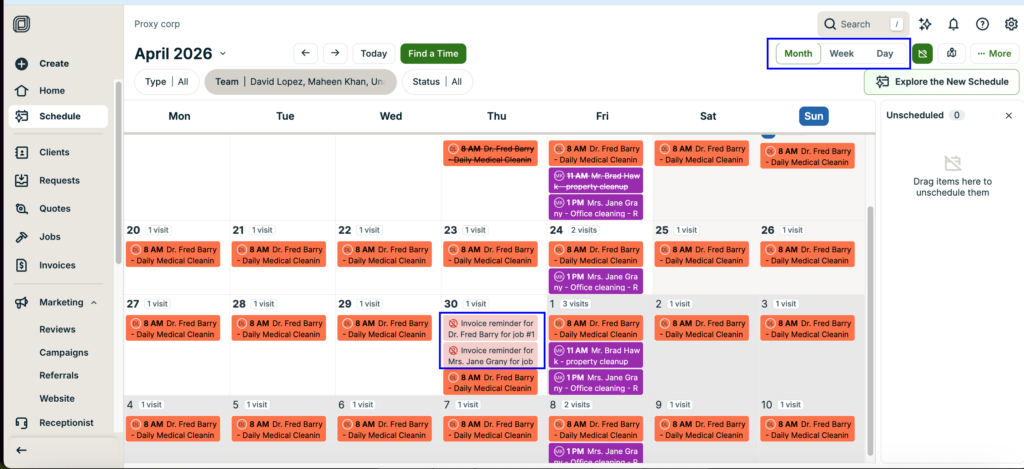
Jobber’s calendar shows color-coded jobs by employee and invoice reminders. GPS Tracking and Time Entry
Jobber’s GPS and time tracking capabilities work well for field operations. Employees can clock in using a simple timer on the mobile app or manually enter start and end times. The system tracks employee locations via GPS and shows real-time waypoint data on the map.
However, we found that Jobber doesn’t offer geofencing to automatically clock workers in and out based on location, which means employees must manually start and stop their timers. We also tested the overtime handling and found that while the system flags unusually long shifts with a warning, it doesn’t enforce overtime rules or calculate overtime automatically.
Job Forms and Checklists
Jobber’s job forms help employees document work as it’s completed. Teams can record completed tasks, upload photos, collect signatures, and automatically attach checklists to new jobs, making it easy to standardize work and provide clients with proof of service.
During testing, we found that employees couldn’t mark a job as complete until all required fields were filled, helping ensure important steps weren’t missed.
That said, the checklists seem best suited for documentation rather than guiding work in real time. They don’t require photo verification at specific stages, enforce quality checks throughout a job, or trigger follow-up actions based on responses, so businesses with more complex workflows may find them limiting.
What users say about Jobber
It makes our day to day work easier with scheduling, quoting, invoicing and estimates. Saves us a lot of time
The lack of reporting is disappointing. It could be so much better. The data is obviously there, but there is no easy way to get to the many reports I would like to know. The ability to customize reports or data pulls would be very useful.
Key Features
- Drag-and-drop scheduling and dispatching
- GPS tracking and route optimization
- Professional quoting, invoicing, and payments
- Job forms and checklists
Pros
- Intuitive mobile app with offline job form capability
- Strong client communication and CRM tools
Cons
- No geofencing for automatic clock-in/out
- Scheduling conflicts are flagged but not blocked
Pricing
Starts at $29/user/month Trial: Yes — for 14 days Free Plan: No
Compare the Best Employee Management Software Solutions
| Topic |
 Start for free
|
|
|
|
|
|
Jobber |
|---|---|---|---|---|---|---|---|
| Reviews |
 |
|
|
|
|
|
|
| Pricing |
Starts at just $29/month for the first 30 users
|
Starts at $49 base fee + $6 per seat per month
|
Starts at $2.75/user/month
|
Contact vendor for price
|
Starts at $5/user/month
|
Starts at $1.25/user/month
|
Starts at $29/user/month
|
| Free Trial |
yes
14-day
|
no
|
yes
30 days
|
no
|
yes
30 days
|
yes
30-day
|
yes
for 14 days
|
| Free Plan |
yes
Free Up to 10 users
|
no
|
no
|
no
|
no
|
yes
(up to 5 users)
|
no
|
| Use cases |
Best employee management solution for deskless teams
|
Best for small businesses syncing employee management with payroll
|
Best for enterprise scheduling compliance at scale
|
Best for mid-market companies needing reporting and compliance automation
|
Best for retail and hospitality shift scheduling
|
Best for affordable HR and attendance management
|
Best for field service crew management and dispatch
|
| Available on |
How to Choose the Right Employee Management Software
Picking the right employee management tool comes down to three things: how big your team is, what industry you work in, and which features you actually need every day. Here are the questions to consider before you commit:
Team Size & Budget
- Do you need a flat-rate pricing model, or are you comfortable paying a monthly fee for every single employee you hire?
- Does the software offer a genuinely useful free plan for small teams, or is it just a limited trial?
- Are essential features like HR tools and team messaging included in the base price, or do they require expensive add-ons?
Industry & Use Case
- Do your employees work in a single office, or do you manage a distributed field team that requires GPS location tracking?
- Does your industry require strict compliance with complex labor laws, overtime rules, and mandatory break schedules?
- Are you managing shift-based workers who frequently need to swap shifts and pick up open hours?
Feature Requirements
- Do you need a platform that handles operations, HR, and communication, or are you looking for a specialized tool just for one area?
- Does the mobile app function offline for employees working in areas with poor cellular reception?
- Can the software integrate with your existing payroll provider to eliminate manual data entry?
What is Employee Management Software?
Employee management software is a digital platform designed to help businesses streamline and automate their daily workforce operations. It serves as a centralized hub for managing everything from shift scheduling and time tracking to internal communication and human resources tasks.
By moving these processes out of spreadsheets and paper files, the software helps managers maintain accurate records, ensure labor compliance, and keep their teams connected. It’s especially critical for businesses with hourly, shift-based, or deskless workers who don’t sit at a computer all day.
How Does Employee Management Software Work?
Employee management software operates by centralizing and digitizing various HR processes. It typically begins by creating a comprehensive database to store employee information, including personal details, job history, and contact information.
Employees can often access self-service portals to update their information, request time off, or view pay stubs. The software automates tasks such as attendance tracking, leave management, and payroll processing, reducing manual effort and errors. It also generates reports and provides analytics to help HR professionals make data-driven decisions, ultimately streamlining HR operations and improving workforce management.
The Benefits of Employee Management Software
Employee management software can help your business in multiple ways, including:
Eliminated Payroll Errors
Manual timesheets and paper punch cards almost always lead to mistakes. Employee management software uses digital time clocks, GPS verification, and automated calculations to ensure that every minute is tracked accurately, preventing time theft and ensuring your team is paid exactly what they earned.
Saved Hours on Scheduling
Building a weekly schedule by hand is time-consuming, especially when you have to account for time-off requests and availability. With drag-and-drop tools and AI-powered auto-scheduling, managers can generate conflict-free schedules in minutes. If someone calls out sick, open shifts can be broadcast to the team instantly, filling gaps without endless phone calls.
Improved Team Communication
When you rely on personal text messages or scattered email threads, important information gets lost. Built-in communication tools provide a secure, professional space for company announcements, group chats, and direct messaging. This ensures that safety updates, policy changes, and daily instructions actually reach your frontline workers.
Reduced Turnover and Improve Retention
Employees appreciate visibility into their schedules, fair shift assignments, and easy access to company information. When your team feels organized and heard, they’re more likely to stick around. Many employee management platforms also include recognition and feedback tools that help managers celebrate wins and keep morale high, which directly impacts how long your best people stay with you.
Better Compliance and Reduced Legal Risk
Labor laws around breaks, overtime, and scheduling vary by location and industry. Employee management software automates compliance by enforcing mandatory breaks, tracking overtime limits, and logging all scheduling decisions. This creates an audit trail that protects your business if questions ever arise about wage and hour practices, and it saves your HR team from manually checking every schedule against labor laws.
How Much Does Employee Management Software Cost?
Employee management software pricing varies based on the features you need and how the vendor structures their plans. Most platforms charge a per-user monthly fee, which typically starts between $2 to $6 per employee. Some enterprise-focused tools require custom quotes, while others charge base fees plus a per-user cost, which can become very expensive as your business scales.
Connecteam offers a completely free Small Business Plan for up to 10 users, giving you access to all the core features you need to manage your daily operations without spending a dime. Paid plans start at just $29 per month for your first 30 users, making it incredibly affordable for growing teams.
The Bottom Line on Employee Management Software
Employee management software is built for businesses of all sizes, from small companies managing a handful of employees to large organizations with multiple departments, locations, or teams.
Whether you’re coordinating office staff, managing frontline employees, or supporting a hybrid workforce, the right platform centralizes everyday operations like scheduling, time tracking, communication, HR, and task management in one place.
For small-to-mid businesses that want to avoid the complexity and cost of enterprise tools, Connecteam offers the best combination of simplicity, mobile access, and built-in communication at a flat monthly rate. Start your free Connecteam trial today!
FAQs
If you manage multiple workflows like scheduling, training, and time tracking, an all-in-one tool like Connecteam will save you time and reduce app overload. If your needs are extremely narrow, a specialized tool might offer deeper control. Look for platforms that allow you to start with specific tools and expand as your needs grow.
Yes, look for tools with role-based access, time zone support, and centralized dashboards. Platforms like Connecteam support distributed teams with real-time updates, mobile access, and location-based tagging to keep everyone in sync, no matter where they work.
Start with essential features first, like scheduling or communication. Roll out the tool in phases and use your current structure as a blueprint. Many platforms, including Connecteam, offer dedicated onboarding support to make the shift smoother for both managers and employees.