



When schedules change, records sit in separate systems, and billing needs manual fixes, a missed step can delay care and payment.
I reviewed 7 ShiftCare alternatives and ranked them by scheduling, care records, mobile workflows, billing, compliance, reporting, and multi-location care support.
Use these picks to compare your options, spot gaps, and choose a system that fits your services and growth plans.
If you don’t have the time to read through our research, jump down to our quick comparison table.
| App | Best for | Starting Price | Key Considerations |
| AxisCare | Best overall for home care agency management | Contact vendor for price | Connects scheduling, EVV, care documentation, billing, reporting, and mobile communication. Closed-model U.S. states require the state EVV collector, and custom API work needs technical resources. |
| AlayaCare | Larger home and community care organizations | Contact vendor for price | Supports multi-service rostering, configurable visit verification, branch reporting, and detailed NDIS finance workflows. U.S. EVV needs state and payor validation, and pricing is quote only. |
| WellSky Personal Care | Established personal care agencies | Contact vendor for price | Combines non-medical, private-duty home care workflows with family access and multi-location support. EVV depends on whether a state allows an agency-chosen solution. |
| CareSmartz360 | Home care agencies prioritizing scheduling and EVV workflows | Contact vendor for price | Uses care-specific scheduling with GPS and telephony EVV. State workflows need validation, and mobile apps require iOS 15.1+ or Android 7.0+. |
| Aaniie | Home care agencies focused on caregiver engagement and operations | $195/month for up to 15 clients | Combines caregiver rewards with scheduling and home care operations. EVV materials address U.S. state requirements, and offline access is limited to downloaded Punchcards. |
| Alora Home Health | Home health agencies needing clinical and administrative workflows | Contact vendor for price | Connects plan-of-care documentation with EVV, claims, payroll exports, and multi-office administration. Offline documentation is an add-on, and state EVV models need aggregator confirmation. |
| Axxess Home Care | Agencies needing home care documentation and billing | Contact vendor for price | Connects scheduling, mobile documentation, EVV, billing, and family access. State EVV routes vary, so confirm your required vendor or aggregator before rollout. |
What’s new in this update (September 2026)
- Reranked the list around broad home care agency needs, from client intake and caregiver scheduling through care delivery, billing, and reporting.
- Added AlayaCare, CareSmartz360, and Aaniie to cover larger organizations, scheduling and EVV workflows, and caregiver engagement.
Our Top Picks
-
1
Best overall for home care agency management
-
2

Best for larger home and community care organizations
-
3

Best for established personal care agencies
Why trust us?
Our team of unbiased software reviewers follows strict editorial guidelines, and our methodology is clear and open to everyone.
See our complete methodology
What is ShiftCare?
ShiftCare is care management software for Australian NDIS, aged care, and home care providers and for U.S. IDD, HCBS, and non-medical home care providers. It brings rostering, GPS-verified time tracking, client records, care documentation, invoicing, and third-party integrations into one care-operations platform.
Basic plans cover core scheduling and mobile field work. In Australia, Professional adds the Job Board for vacant shifts and NDIS claim-file uploads, while Premium adds care plans, direct NDIA claims through a PRODA integration, and configured SCHADS interpretation. The U.S. entry plan advertises Sandata Medicaid-compliant EVV, and higher plans add smart matching and more advanced care tools.
U.S. Essentials starts at $8/user/month when billed annually, or $480/year at the five-staff minimum. ShiftCare also offers a 7-day free trial.
ShiftCare connects to payroll tools instead of processing payroll itself. Providers that need a full clinical EHR should confirm their required clinical workflows. For a deeper look at the product, read Connecteam’s ShiftCare review.
Why Are People Moving Away From ShiftCare?
ShiftCare brings scheduling, care management, and workforce coordination together for disability and aged care providers. However, some teams may find that its mobile administration, integrations, onboarding, and pricing no longer meet their needs as their operations grow.
Multiple users report that managing schedules and other administrative work from a phone can be difficult and time-consuming. One reviewer said the app focuses mainly on employees and called for dedicated mobile tools that let managers book staff, reschedule shifts, and run the business.
Other reported concerns include confusing onboarding, limited support, and uncertainty about API availability. One reviewer experienced unreliable integrations that required manual file transfers and felt the software had become expensive for smaller businesses. Another pointed to SMS limits, limited support-planning tools, and repetitive time fields when creating shifts.
Teams that run into these issues may prefer an alternative that’s easier to manage from a phone, connects more reliably with other tools, and simplifies daily work.
How I Ranked the Best ShiftCare Alternatives
To rank the best ShiftCare alternatives I compared each platform against the full work of a home care agency, while considering the differences between personal care, home health, community care, and regional funding models. Because ShiftCare serves both Australian and U.S. providers, I also considered regional funding and EVV requirements separately.
Here’s what I prioritized:
- End-to-end home care fit: The software should connect intake, daily operations, service delivery, and financial follow-up.
- Client and caregiver records: It should be easy to find client records, caregiver profiles, qualifications, availability, service needs, and relationship history.
- Scheduling and rostering: The software needs to support recurring visits, caregiver matching, open-shift recovery, conflict handling, travel context, and schedule changes.
- Care and visit documentation: Employees must be able to access care plans, visit notes, task completion, progress tracking, signatures, and relevant clinical documentation.
- Mobile and EVV: The software should provide a caregiver mobile app, point-of-care access, and electronic visit verification through GPS, telephony, or regional systems.
- Billing, payroll, and compliance: Managers should be able to handle invoicing, claims and payer workflows, payroll handoffs, verified visit data, and local compliance requirements.
The 7 Best ShiftCare Alternatives
-
AxisCare — Best overall for home care agency management
Available on
- Web
- iOS
- Android
- Windows
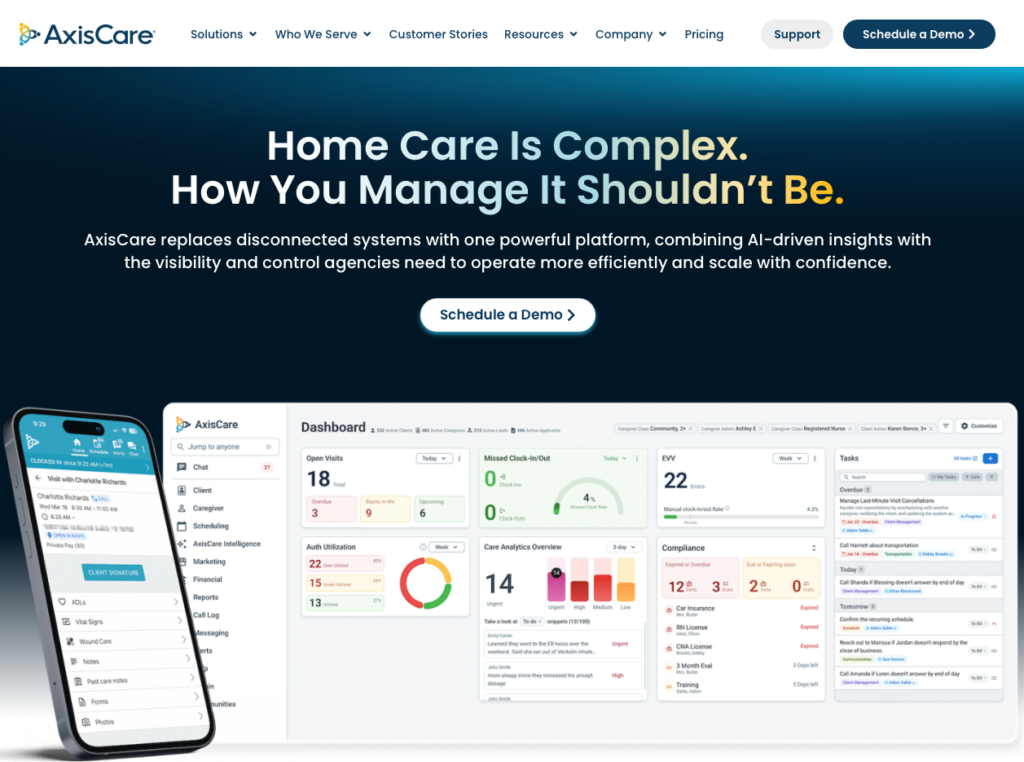
AxisCare is a home care platform that brings scheduling, care documentation, EVV, billing, reporting, and mobile communication together. On Capterra, it has a 4.7/5 rating from 729 reviews.
Why I chose AxisCare: I ranked AxisCare #1 because it combines caregiver scheduling with visit verification, payer workflows, and oversight for multiple branches.
Caregiver matching and open-visit recovery
AxisCare can recommend caregivers for an open visit using availability, skills, driving distance, preferred weekly hours, overtime, schedule history, and listed preferences such as pet allergies. These are recommendation inputs, so coordinators can still check qualifications, client fit, and local requirements before assigning the visit.
Schedulers can drag and drop assignments and send selected caregivers open-shift offers by text, email, or the mobile app. Late-arrival and approaching-overtime alerts help the office respond to a change before it turns into a missed visit or an avoidable staffing cost.
Goal-based care plans and mobile EVV
Care Plans record client objectives, goals, and interventions. Field staff can use a mobile device to document care activities, interventions, and progress toward goals when internet access is unreliable, while the Caregiver App provides visit details, GPS location, client notes, ADLs, and care plans.
Carers can clock in and out with GPS verification and collect secure client signatures. AxisCare automatically verifies visits against agency rules, so staff only need to review exceptions.
If your state follows a closed model, your organization must use the state-mandated system to collect EVV data. AxisCare can work alongside that system, but it can’t replace the required collector.
Billing, reporting, and branch oversight
AxisCare documents private-pay invoicing and client or family payment tools, while client appointments can sync with QuickBooks. Its named U.S. third-party payer paths include Medicaid, Veterans Affairs, and long-term care insurance, so buyers should confirm the exact payer workflow in their quote rather than assume one route covers every account.
Reporting includes more than 70 reports, a custom report builder with more than 80 visit-related fields, filters, permissions, exports, and scheduled Auto Run delivery. Select plans also include Business Intelligence tools. Enterprise agencies can manage several locations or branches in one system and use global reporting to review location and regional metrics.
AxisCare’s Open API is designed for use by your IT team or developers. If your agency plans a custom API integration, you’ll need your own technical resources or an implementation partner.
Key Features
- Caregiver matching with skills, distance, and workload inputs
- Goal-based care plans and mobile documentation
- GPS EVV with configurable verification rules
- Multi-payer billing and enterprise branch reporting
Pros
- Connects core home care agency workflows
- Supports oversight across several locations
Cons
- Closed-model U.S. states require state EVV
- Custom API work needs technical resources
Pricing
Contact vendor for price Trial: No Free Plan: No
-
AlayaCare — Best for larger home and community care organizations
Available on
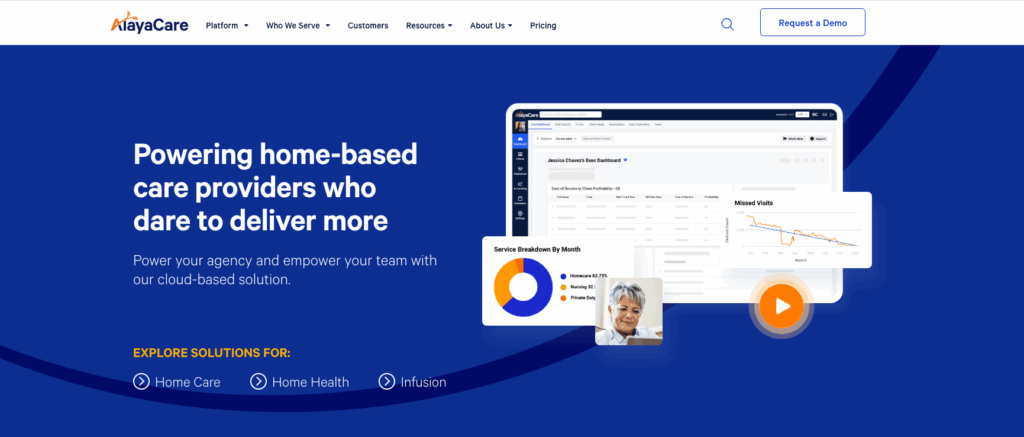
AlayaCare is a customizable platform for home and community care providers, covering scheduling, visit management, documentation, workforce tools, and reporting. On Capterra, it has a 4.1/5 rating from 188 reviews.
Why I chose AlayaCare: I chose AlayaCare because it combines multi-service rostering, configurable care workflows, branch-level reporting, and direct NDIS claims finance in one platform.
Vacant-visit matching and multi-service rostering
AlayaCare’s Visit Optimizer matches care workers to vacant visits using criteria set by the provider. Caregivers are matched based on their skills, distance from the client, and assigned hours, with the final decision left to the scheduler.
For NDIS-funded services, managers can schedule individual, group, and Supported Independent Living services from one place. They can also match workers to shifts based on their skills, compliance requirements, and availability, which can help larger providers manage multiple service types and locations.
For U.S. EVV, AlayaCare says its workflows support state and payor-specific rules. Agencies should confirm the exact state and payor path instead of assuming one configuration covers every service area.
Connected care plans and visit verification
Teams can configure care plans from approved libraries of diagnoses, goals, and interventions. The plans connect to scheduling, the mobile app, and documentation, and updates keep a full version history for audits. This gives office and field teams a shared record while preserving how a plan changed after reassessment.
Visit Verification captures time, date, and location in the care worker workflow across aged-care and disability services. Providers can set up checks by branch, funder, or service code, then use exception and audit workflows to reconcile visits.
NDIS claims and multi-branch reporting
For NDIS-funded services, AlayaCare submits and tracks NDIA-managed claims in the platform and reconciles payments against delivered visits. It also creates plan-managed and self-managed invoices from the same visit data, tracks planned and delivered funds, applies provider travel and transport rules, and syncs finance data to Xero and MYOB.
Data Exploration supports custom reports, visualizations, and calculations without code, plus customizable dashboards and role permissions. Leaders can drill down from total performance into a branch, team, or client when they need to trace a service or finance issue.
AlayaCare uses custom pricing based on your organization’s size, care models, regions, and the modules you choose. Use the quote and implementation scope to confirm configuration, migration, integrations, training, and the modules your workflow needs.
Key Features
- Vacant-visit matching with provider-set criteria
- Custom care plans with version history
- Visit verification and exception workflows
- NDIS claims, budgets, and finance syncing
Pros
- Supports multi-service rostering and branch reporting
- Links delivered visits to NDIS claims finance
Cons
- U.S. EVV needs state and payor validation
- Custom pricing requires a vendor quote
Pricing
Contact vendor for price Trial: No Free Plan: No
-
WellSky Personal Care — Best for established personal care agencies
Available on
- Web
- iOS
- Android
- Windows
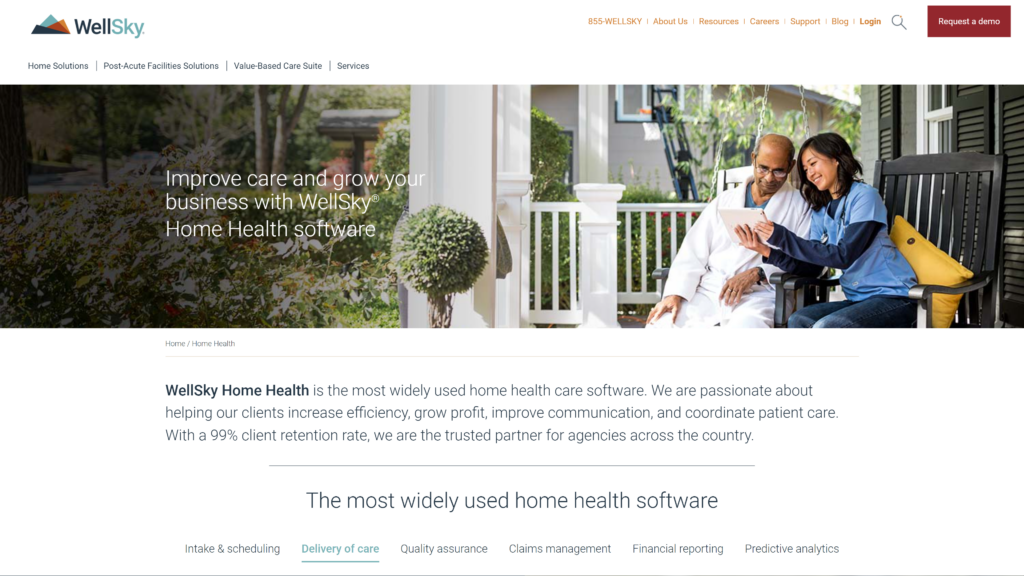
WellSky Personal Care is built for non-medical, private-duty home care organizations. It supports digital care plans, caregiver documentation, scheduling, visit verification, family communication, reporting, and integrations. On Capterra, it has a 4.4/5 rating from 280 reviews.
Why I chose WellSky Personal Care: WellSky Personal Care’s family portal, multi-location support, and data-sharing options are a solid choice for established agencies with several operational teams.
Digital care plans and family access
WellSky Personal Care’s digital care plans, caregiver documentation, and centralized client information give office and field teams a shared care record. The platform is purpose-built to support the unique needs of non-medical home care organizations, so agencies that also deliver skilled home health should check whether they need a separate clinical system.
There’s a secure family portal where loved ones can see the client care calendar and shift notes. They can also pay or split part of a bill, which can reduce routine calls when families need schedule or payment information.
Smart scheduling and state-specific EVV
Smart scheduling helps match caregivers and clients, while alerts flag missed or late shifts. From the mobile app, you can manage schedules, shifts, tasks, and profiles, while caregivers can access visit details.
EVV records visit date, time, location, services, and related information when caregivers clock in and out. If your state allows you to choose your own electronic visit verification (EVV) solution, WellSky Personal Care can support that workflow. It also offers connections with several EVV vendors, but agencies should confirm the required state route and implementation scope.
API and operational reporting
Multi-location support gives established agencies a way to operate across offices. WellSky Personal Care also advertises integrations with referral partners and third-party systems, but it’s a good idea to check whether each required connection is included, configured, or separately implemented.
The platform’s API can link internal applications, such as CRM tools, with external parties including hospitals, health plans, and referral sources. It follows current FHIR standards.
There are also insights that provide data on staff, financials, referrals, and clients, helping operational leaders examine performance.
Key Features
- Digital care plans and caregiver documentation
- Care-specific scheduling and missed-shift alerts
- Family portal calendar, notes, and bill payments
- API, reporting, and multi-location support
Pros
- Built for established personal care operations
- Supports family access and several locations
Cons
- Built for non-medical home care
- EVV depends on state choice
Pricing
Contact vendor for price Trial: No Free Plan: No
-

CareSmartz360 — Best for home care agencies prioritizing scheduling and EVV workflows
Available on
- Web
- iOS
- Android
- Windows
- Mac
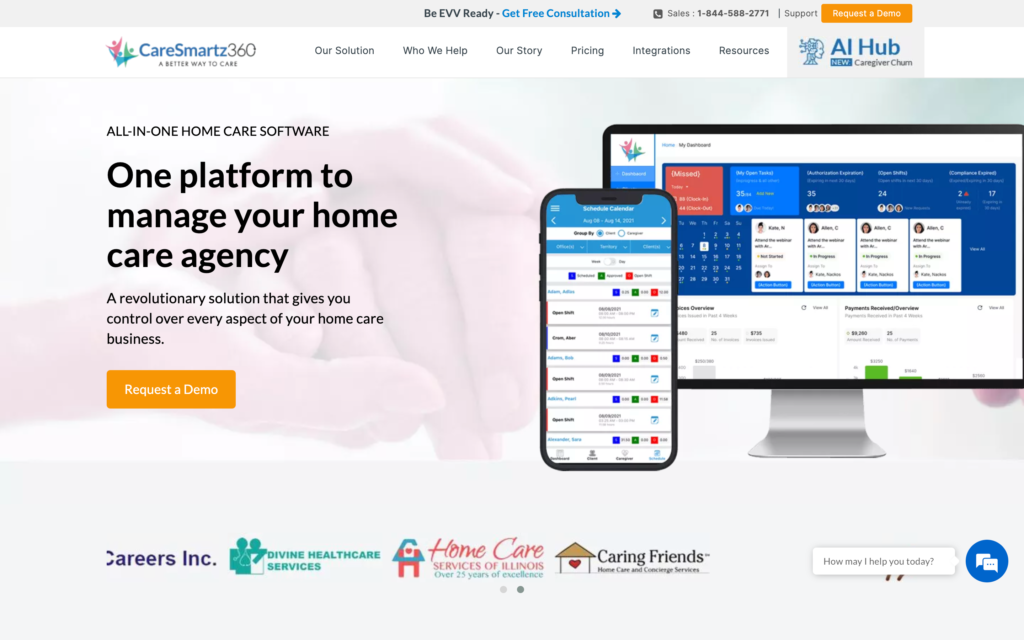
CareSmartz360 is cloud-based home care management software for agencies, franchisors, and facility-staffing providers. It combines scheduling, care planning, EVV, billing and payroll tools, caregiver apps, reporting, and multi-location data views. On Capterra, it has a 4.8/5 rating from 191 reviews.
Why I chose CareSmartz360: I chose CareSmartz360 because its care-specific scheduling recommendations and GPS or telephony EVV keep coverage and visit verification in the same operational workflow.
Smart scheduling and coverage recovery
CareSmartz360’s Smart Scheduler recommends caregivers for open visits using availability, skills, preferences, care needs, proximity, compatibility, and workload balance. Coordinators have control over the final decision, so the recommendation can help narrow the list without replacing the agency’s approval process.
The color-coded calendar shows caregiver and client schedules by day, week, or month, including open, scheduled, approved, and no-show visits. Agencies can create weekly, biweekly, or monthly recurring schedules, adjust one shift without rebuilding the plan, and offer last-minute open shifts to qualified caregivers.
GPS and telephony EVV with mobile care tasks
CareSmartz360’s telephony and GPS-enabled EVV captures clock-in, clock-out, and caregiver location. The caregiver app supports offline work, visit notes, tasks, care-plan access, client signatures, relevant client data, and alerts for open or cancelled shifts. Just know that the offline capability applies to the mobile EVV workflow, not every function in the platform.
CareSmartz360 supports EVV requirements across 45+ states with state-specific workflows and integrations. Agencies should still confirm which process applies to their services and state.
The mobile apps require iOS 15.1 or later or Android 7.0 or later, so check that caregivers’ current devices are compatible.
Billing, payroll, and multi-office reporting
CareSmartz360’s billing tools can generate invoices and submit claims to multiple payers, including Medicaid and long-term care insurance. Its payer guidance also lists private pay and Veterans Administration. It supports accounting and payroll integrations, CSV exports, payroll drafts, automated time capture, and links to ADP and Paychex. For more information, ask for a quote that clearly lists the included payer and payroll integrations.
Reporting includes more than 200 prebuilt reports, flexible filters, role-based access, custom report design, and Excel, CSV, or PDF exports. A single subscription can manage several offices and show both individual and consolidated data across locations.
Key Features
- Care-specific recommendations for open visits
- GPS and telephony EVV with offline use
- Multi-payer billing and payroll connections
- Custom reporting and consolidated location data
Pros
- Links scheduling with GPS and telephony EVV
- Supports recurring care and multi-office views
Cons
- State-specific EVV workflows need validation
- Mobile apps require iOS 15.1+ or Android 7.0+
Pricing
Contact vendor for price Trial: No Free Plan: No
-

Aaniie — Best for home care agencies focused on caregiver engagement and operations
Available on
- Web
- iOS
- Android
- Windows
- Mac
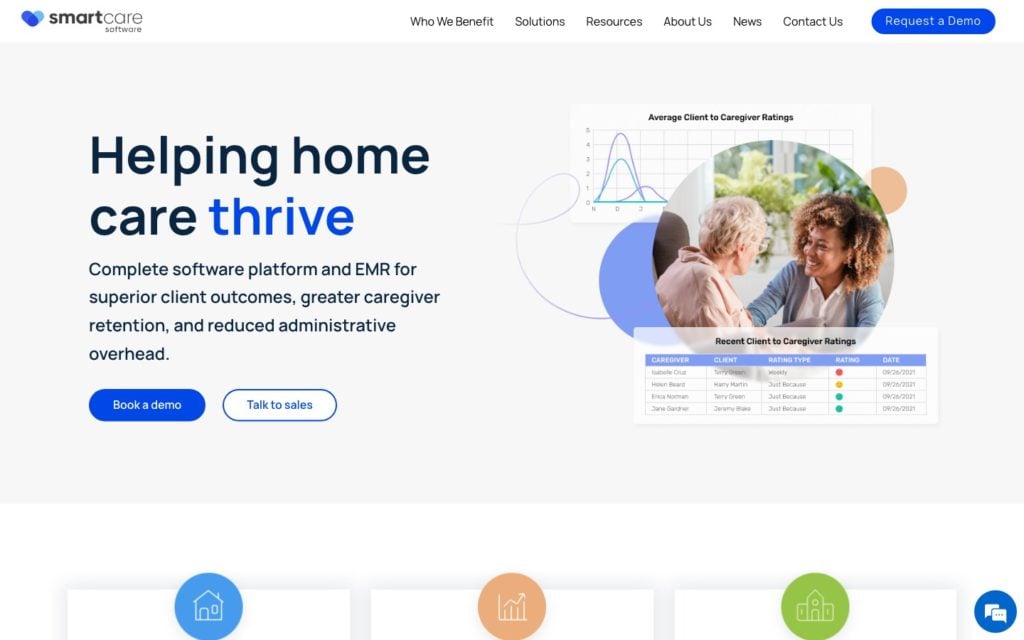
Aaniie is a home care platform for single-site and multi-location providers. It combines scheduling, EVV, care documentation, CRM, family access, billing, payroll, payments, caregiver rewards, and KPI reporting. On Capterra, it has a 4.4/5 rating from 19 reviews.
Why I chose Aaniie: Aaniie’s rewards program can connect caregiver recognition to work behaviors such as on-time clock-ins and extra-shift pickup instead of leaving engagement in a separate app.
Scheduling, matching, and caregiver rewards
With Aaniie, managers can use drag-and-drop and bulk scheduling, then review availability, compatibility, and geographic location when covering a visit. Overtime, travel, and wage insights add context. For an open shift, coordinators can contact a targeted caregiver group or the whole team by text, email, chat, or mobile notification.
The platform’s Caregiver Rewards program awards points for agency-defined actions such as clocking in on time or picking up an extra shift. Badges and leaderboards recognize caregiver achievements, but access to other rewards depends on whether you offer and set up the Rewards Program.
Mobile point-of-care, documentation, and EVV
In the caregiver app, Punchcards guide staff through each visit, including clocking in and out, completing care tasks, recording mileage and expenses, collecting signatures, and adding notes. Caregivers can also view schedules and care plans, update their availability, request open shifts, send secure messages, and track travel time and breaks. Agencies can require approval for open-shift requests.
Offline Mode lets caregivers access downloaded Punchcards without internet and sync their data once reconnected, but keep in mind that other mobile features may still require a connection.
Aaniie supports GPS, mobile, and telephone-based EVV for US providers and can send visit data to the state’s chosen aggregator. However, some states require agencies to use a specific EVV vendor, so confirm your state’s rules and required connection before rollout.
Payroll, payments, and multi-site KPIs
Aaniie Payroll connects schedules, timecards, and pay. It includes tax calculations and filing, flexible payroll runs, direct deposits and checks, and W-2 and 1099 year-end forms.
There’s also Aaniie Payments, which supports ACH and cards, full or partial refunds, payment splitting, and invoice-payment synchronization. Custom KPI dashboards provide real-time and historical views, while a corporate dashboard can compare performance across locations.
Key Features
- Caregiver rewards and leaderboards
- Drag-and-drop scheduling and coverage
- Downloaded Punchcards for limited offline work
- Payroll, payments, and multi-site dashboards
Pros
- Links caregiver engagement with daily operations
- Covers single-site and multi-location providers
Cons
- EVV fit depends on state model
- Offline mode is limited to downloaded Punchcards
Pricing
Starts at $195/month for up to 15 clients Trial: No Free Plan: No
-

Alora Home Health — Best for home health agencies needing clinical and administrative workflows
Available on
- Web
- iOS
- Android
- Windows
- Mac
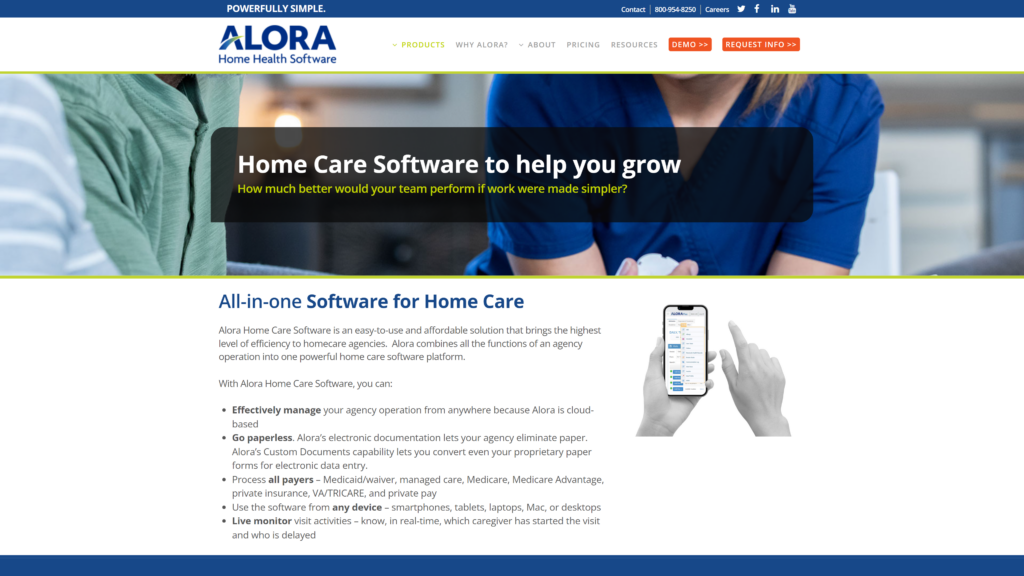
Alora Home Health is a cloud-based home health care platform for skilled and non-skilled care. It combines clinical documentation, scheduling, EVV, claims, payroll data exports, and multi-office administration. On Capterra, it has a 4.5/5 rating from 157 reviews.
Why I chose Alora Home Health: I included Alora Home Health because its plan-of-care workflow connects patient-specific visit notes with EVV, claims, and payroll follow-up.
Plan-of-care clinical documentation
Alora Home Health supports assessments, evaluations, plans of care, and visit notes for Medicare-covered disciplines. It includes OASIS and non-OASIS assessments, traditional CMS-485 forms, and a living plan of care that can be generated from an assessment or created independently. Managers can create visit notes from each patient’s care plan, helping caregivers document the services they were assigned.
Clinicians can complete documentation offline and sync it once they reconnect, but this feature costs extra. If your team needs offline charting, confirm that it’s included in your quote.
Scheduling and state-specific EVV
Schedulers can view work by patient, caregiver, or the whole agency. Alora flags potential scheduling conflicts, visit-frequency issues, and prior-authorization concerns.
GPS and telephony EVV support visit capture, while live monitoring gives administrators visibility into in-progress visits, delays, and no-shows. EVV information can feed into billing and payroll, reducing manual re-entry after the visit.
EVV requirements vary by state, including how data is collected and which aggregators are used, so confirm your state’s process and required aggregator before rollout.
Claims, payroll, and multi-office administration
Alora supports electronic or paper claims for Medicare, Medicaid and waiver programs, Veterans Affairs, private insurance, and private pay. Payroll tools calculate pay using hourly or per-visit rates and generate exportable reports. However, they may not connect directly with every payroll provider.
Several offices can operate in one system. Reports cover areas including Medicare cost, census, visits, compliance, and financials. Alora’s documentation centers on U.S. payers and state requirements, so agencies in other regions should check that the platform will be able to support their local requirements.
Key Features
- Living plan-of-care workflows
- OASIS, non-OASIS, and care-derived visit notes
- GPS and telephony EVV with live monitoring
- Claims, payroll exports, and multi-office support
Pros
- Connects clinical records with admin workflows
- Supports skilled and non-skilled care operations
Cons
- Offline documentation is an add-on
- State EVV models need aggregator confirmation
Pricing
Contact vendor for price Trial: No Free Plan: No
-

Axxess Home Care — Best for agencies needing home care documentation and billing
Available on
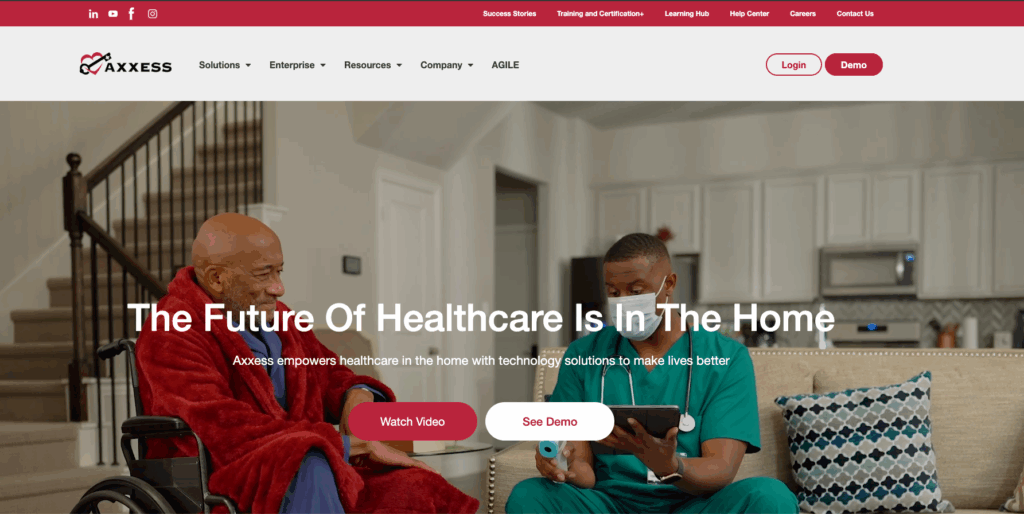
Axxess Home Care is a home care management platform for agencies. It combines intake, scheduling, caregiver documentation, EVV, billing, family access, and reporting. On Capterra, it has a 3.4/5 rating from 36 reviews.
Why I chose Axxess Home Care: I included it because it connects scheduling, visit documentation, EVV, and billing in one home care system, with family access and state-specific EVV connections.
Client intake, scheduling, and documentation
Agencies can manage intake, admissions, client records, and schedules in Axxess Home Care. Scheduling settings can flag authorization issues, filter caregivers by availability, and use matching criteria such as qualifications, skills, traits, and client preferences.
Agencies can create custom service documentation and visit notes for the care they provide. Caregivers can complete documentation from mobile devices, while administrators can link visit documentation to claims or invoices when a payer requires supporting records.
Mobile EVV and offline visits
Caregivers can see upcoming visits and use EVV from the Home Care mobile app. Agencies can configure EVV alerts for late arrivals and departures and decide whether manual time entry is allowed.
For offline work, caregivers must download upcoming visits while they still have internet access and remain signed in. Downloaded visits can then be used for offline EVV and eligible documentation, with data syncing after the device reconnects.
Axxess Home Care can connect with external EVV vendors, and the required route varies by state and payer. Confirm the EVV vendor, aggregator, and connection your agency needs before implementation.
Billing, family access, and payroll tracking
Axxess Home Care supports private-pay invoices and managed-care or insurance claims, along with payment and adjustment posting. Billing teams can also attach visit documentation to claims and invoices when required.
The Family Portal lets approved client contacts see upcoming schedules and invoices, and it can be used to pay invoices. Axxess Home Care also tracks hours for payroll and lets agencies manage employee pay rates, but payroll handoff requirements should be confirmed during implementation.
Reporting covers operational and billing activity, while activity logs show who accessed or completed information.
Key Features
- Client intake and caregiver matching
- Custom visit documentation and scheduling
- Download-first offline EVV and documentation
- Billing, family portal, and payroll tracking
Pros
- Connects core home care workflows
- Supports billing and family access
Cons
- State EVV routes require confirmation
- Payroll handoff needs implementation review
Pricing
Contact vendor for price Trial: No Free Plan: No
Compare the Best ShiftCare Alternatives
| Topic |
|
|
|
|
|
|
|
|---|---|---|---|---|---|---|---|
| Reviews |
  |
N/A
|
|
|
|
|
N/A
|
| Pricing |
Contact vendor for price
|
Contact vendor for price
|
Contact vendor for price
|
Contact vendor for price
|
Starts at $195/month for up to 15 clients
|
Contact vendor for price
|
Contact vendor for price
|
| Free Trial |
no
|
no
|
no
|
no
|
no
|
no
|
no
|
| Free Plan |
no
|
no
|
no
|
no
|
no
|
no
|
no
|
| Use cases |
Best overall for home care agency management
|
Best for larger home and community care organizations
|
Best for established personal care agencies
|
Best for home care agencies prioritizing scheduling and EVV workflows
|
Best for home care agencies focused on caregiver engagement and operations
|
Best for home health agencies needing clinical and administrative workflows
|
Best for agencies needing home care documentation and billing
|
| Available on |
Web, iOS, Android, Windows
|
Web, iOS, Android, Windows
|
Web, iOS, Android, Windows, Mac
|
Web, iOS, Android, Windows, Mac
|
Web, iOS, Android, Windows, Mac
|
|
Australian NDIS Considerations
The platforms on this list offer similar capabilities to ShiftCare, but not all of them are designed for Australian NDIS providers.
Ask each vendor to demonstrate how it handles the current NDIS price book, provider travel and transport, NDIA claims and reconciliation, payroll exports, Australian support, and data storage. Check claim-file uploads, direct PRODA submission, and PACE submission separately.
AlayaCare documents Australian tools for visit verification, NDIA-managed claims, payment reconciliation, invoicing, budgets, travel and transport rules, and Xero or MYOB syncing. By comparison, AxisCare, CareSmartz360, Aaniie, Alora Home Health, Axxess Home Care, and WellSky Personal Care primarily document US payer and EVV workflows.
Australian providers should ask every vendor to confirm their NDIS, PACE, PRODA, SCHADS, payroll, support, hosting, and implementation capabilities in writing.
Can Connecteam Replace ShiftCare?
Connecteam combines employee scheduling, an employee time clock, digital forms and checklists, and an online team chat. These tools can help an agency coordinate its workforce, standardize internal processes, and keep staff communication in one place.
But Connecteam doesn’t replace client records, care plans, clinical or visit documentation, EVV, billing, claims, or other care-specific workflows. It works best as a complementary tool for an agency that already has a clinical or care management system.
FAQs
AxisCare is the best overall pick in this list because it connects care-specific scheduling, client and caregiver workflows, mobile documentation, EVV, U.S. payer billing, reporting, and enterprise branch oversight.
None of the seven specialist alternatives in this list publicly advertises a permanent free plan. Connecteam is free for up to 10 users and can cover workforce scheduling and operations, but it isn’t specialist care management software and won’t replace care records, EVV, claims, or billing.
Map client records, care plans, visit notes, schedules, rates, invoices, payroll data, documents, permissions, and audit history. Then agree on field mapping, test imports, integration ownership, staff training, parallel payroll and billing checks, support escalation, and a rollback plan before go-live.
The Bottom Line
The right ShiftCare alternative depends on your care model, region, funding rules, and the process that needs the most support. Start by covering scheduling, mobile documentation, EVV, claims and billing, payroll handoffs, reporting, and multi-location oversight. Then confirm which features your plan includes and what’s involved in implementation, data migration, integrations, and staff training.
For Australian NDIS providers and agencies working with state-specific EVV or payer rules, don’t rely on a general feature list alone. Ask each vendor to demonstrate your exact claim path, compliance configuration, payroll workflow, data arrangements, and support model before signing.
