

Efficient time tracking and job management limited by basic scheduling capabilities
Verdict: 7.5/10
ClockShark is a cloud-based time tracking and job management platform that stands out for teams needing precise time tracking and job scheduling, especially in the construction and field service industries.
I found the GPS tracking and geofencing features particularly valuable for managing teams across various locations, ensuring accountability and efficiency. The software also excels at job costing and generating detailed reports, which can significantly improve project management and profitability.
However, while ClockShark offers solid features for its target market, it may not be the best fit for industries outside of construction, landscaping, or similar field services. The simplified scheduling system may also feel limiting for businesses with more complex workforce management needs. And, the per-user pricing structure could be a drawback for large or growing teams.
Key Features:
- GPS time tracking: Accurately track employee time and location with mobile clock-ins, shared device clock-ins (PIN/facial recognition), supervisor-led crew clock-ins, and geofencing.
- Timesheets: Manage timesheets for all employees, streamline payroll, and ensure accuracy.
- Overtime & breaks: Enforce overtime rules and track break durations for compliance with labor regulations.
- Job costing: Allocate time and expenses to specific jobs for precise project management.
- Scheduling: Create and assign shifts with drag-and-drop functionality and real-time updates.
- Shift wrap-up and compliance forms: Collect employee responses at clock-out or job switch, with yes/no, multiple choice, or short answer questions.
- Employee management: Create and manage employee profiles, roles, and permissions for efficient team management.
- Conversations: Enable job-specific communication with team members for seamless updates and file sharing.
- Mobile app: Enable employees to clock in/out, view schedules, and submit time off requests on the go.
- Reporting: Generate detailed reports on time, attendance, and job costs for informed decision-making.
Pros
- Easy to set up and navigate
- Detailed job costing and reporting features
- Accurate GPS tracking for field teams
Cons
- Pricing may be steep for small teams
- No AI-assisted scheduling
- May be overkill for businesses outside of field services
July 2026 Update
As of mid-2026, a 3-year contract term applied to all ClockShark plans.
How I Tested ClockShark
I signed up for ClockShark’s 14-day Pro trial, created a company workspace, and added 5 users with different roles, such as admin, manager, and employees. I tested core workflows, including time tracking, scheduling, job creation, and GPS geofencing in real conditions. I also deliberately tested edge cases: creating overlapping shifts, exceeding break durations, attempting time off requests without a policy in place, and clocking in from outside a geofenced location to observe how the system responded.
ClockShark Pricing
ClockShark offers 2 pricing plans: Standard and Pro.
| Standard Plan | Pro Plan | |
|---|---|---|
| Price | $40/month base fee + $9/month per user | $60/month base fee + $11/month per user |
| Best suited for | Small businesses needing basic time tracking and scheduling | Growing and multi-location businesses with advanced management needs |
| Features |
| All features in Standard, plus:
|
| Free trial? | Yes, 14 days | Yes, 14 days |
I signed up for ClockShark’s 14-day free trial, which is great for testing the software before committing. It’s worth noting that ClockShark doesn’t have a free plan, which might be a consideration for small businesses or those just starting out.
In my opinion, while ClockShark provides a solid offering, its pricing is steep, especially given that it lacks AI capabilities even on the Pro plan. Also, the base-fee + per-user pricing model can really crank up costs for large or growing businesses, who may be better off with a different pricing structure.
Here’s how ClockShark’s pricing compares to similar platforms.
| Team size | ClockShark(Pro) | QuickBooks Time (Premium) | Jibble(Premium) | Connecteam(Advanced) |
|---|---|---|---|---|
| View pricing | View pricing | View pricing | View pricing | |
| 10 Users | $170/mo | $100/mo | $45/mo | Free for life — All features and dashboards |
| 20 Users | $280/mo | $180/mo | $90/mo | $49/mo |
| 30 Users | $390/mo | $260/mo | $135/month | $49/mo |
| 50 Users | $610/mo | $420/mo | $225/month | $99/mo |
| Read our full QuickBooks Time review. | Read our full Jibble review. | Learn more about Connecteam | ||
| * All prices show the monthly cost when billed annually as of May 2026. | ||||
Overall, while I’m not entirely convinced about its value for money, ClockShark’s specialized features can make it a worthwhile investment for many field businesses. You’ll also get 10% off for committing to a 3-year contract.
Verdict: 5/10
ClockShark Usability and Interface
Signing up for ClockShark was quick and straightforward. I created my account with just an email and a password, and no credit card was required.
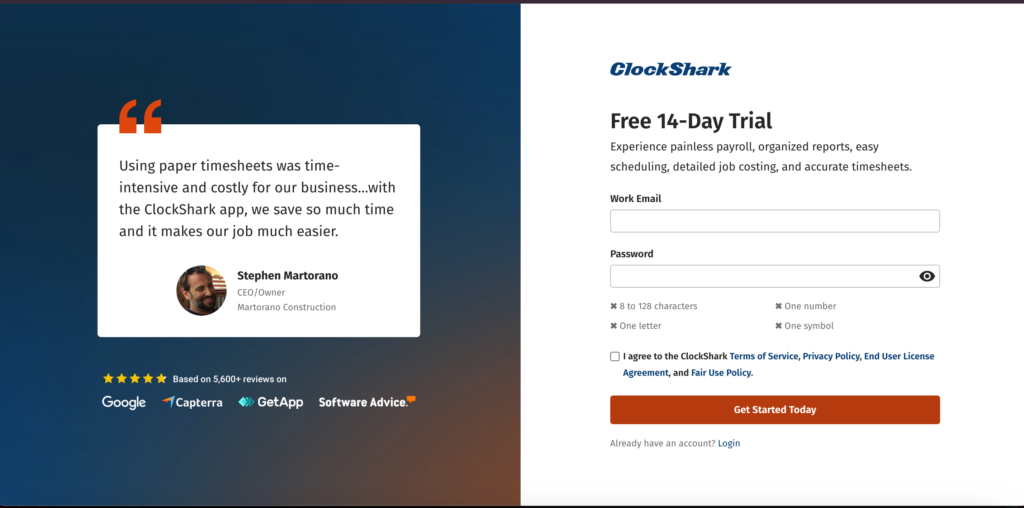
The 3-step process was simple and took just a couple of minutes. ClockShark asked for my first and last name, my work phone number, and company details such as company name, industry, number of employees, and location. After that, I was guided through a welcome screen featuring a short video to help me get started.
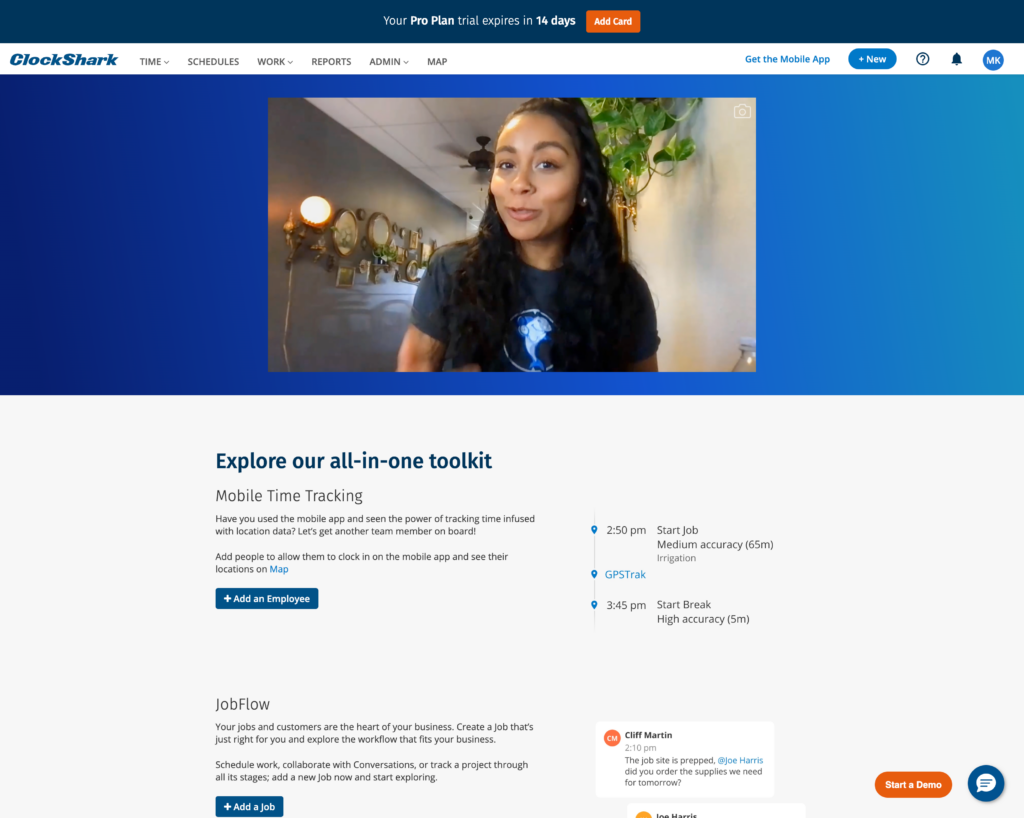
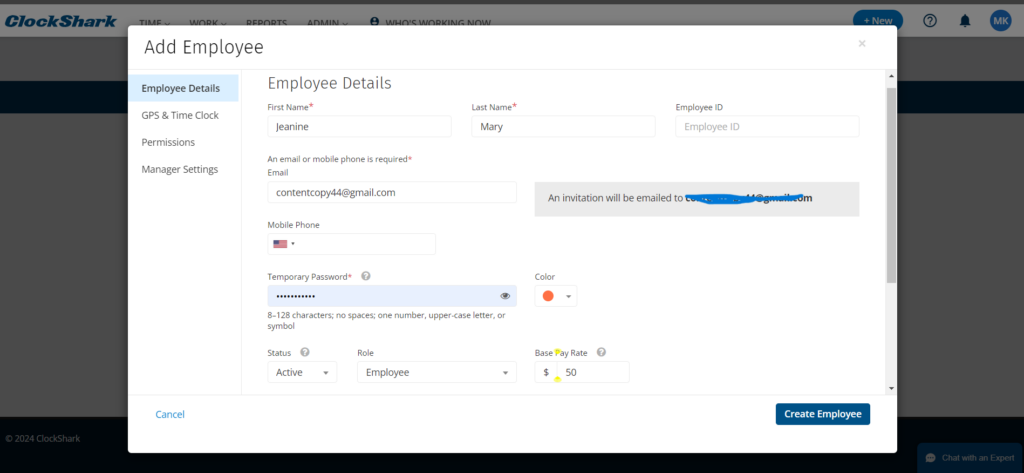
While the process itself was straightforward, setting up the workspace did take a bit longer than expected. I spent a couple of hours adding employees, jobs, tasks, setting permissions, and configuring schedules and time rules.
That’s when I noticed that ClockShark only offered 2 role-based permission levels: Employee and Admin. While I could customize permissions to give employees manager-like responsibilities (such as approving timesheets or managing time off), I had to configure these manually.
This is less intuitive than platforms that offer a built-in 3-tier system (employee, manager, admin), which is quicker to set up and easier to manage as teams grow.
In terms of its layout, ClockShark’s main dashboard was clean, well-organized, and easy to navigate. The top bar clearly displayed key features, like Time, Schedules, Work, Reports, Admin, and Map, making it super easy to find what I was looking for.
I also liked how these primary tabs are broken down into logical subcategories. The Time tab, for example, neatly organized timesheets and time-off requests, while the Work tab consolidated job-related functions like customers, tasks, and invoices.
That said, the app doesn’t have the most modern aesthetic. While it prioritizes clarity and ease of use over flashy visuals, users looking for a colorful, dynamic interface and design might find it somewhat lacking.
I also noticed that ClockShark lacks obvious accessibility features for users with visual impairments. While the interface is generally clear, there don’t appear to be specific considerations for color contrast or text resizing.
Verdict: 7.5/10
Mobile app
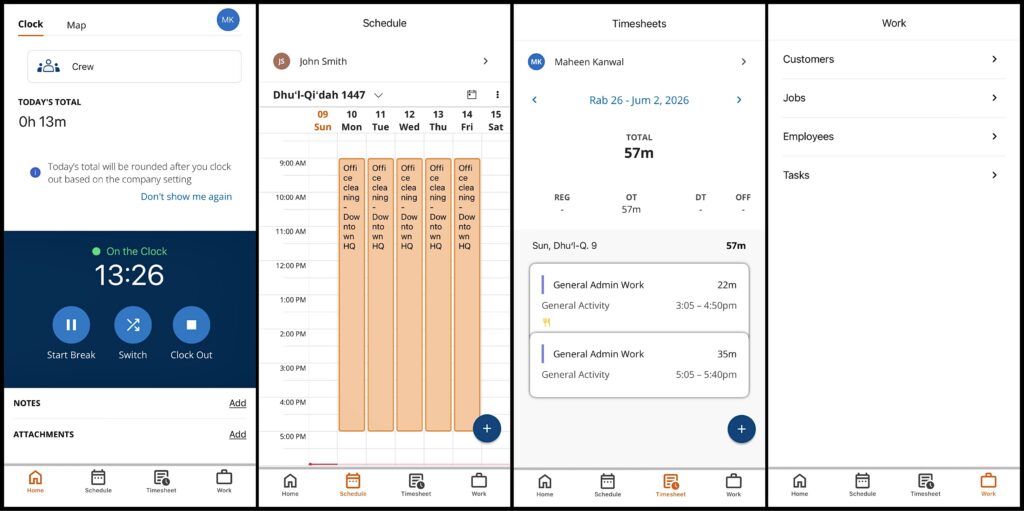
ClockShark offers mobile apps for Android and iOS.
However, I found 2 versions of the app live in both the App Store and the Google Play Store. And there was nothing in the onboarding flow or on the download screen to guide me to the correct one. Eventually, I figured out that the legacy version has a white logo, and the current version has an orange logo.
After I downloaded it, the app asked me to grant location permissions and then took me straight to the time clock. From the bottom navigation bar, I could quickly access the Home (clock and map), Schedule, Timesheet, and Work tabs.
While the mobile app had many of ClockShark’s key features, I found it lacked in a few areas. For example, it only showed one employee’s schedule at a time, in a 1-day, 3-day, or weekly format. There was no monthly view and no crew-wide overview, which I felt was a noticeable limitation for anyone managing a crew in the field.
The Timesheets tab was also basic. It showed work hours, breaks, and tasks, but didn’t provide the level of reporting or deeper insights available in the web version.
Overall, though, the mobile app was easy to use and sufficient for employees in the field. ClockShark also offered offline capabilities, allowing data to be recorded and synced later, which worked well during my testing.
Verdict: 7/10
| Menu Item | Admin | Employee* | ||
| Website | Mobile App | Website | Mobile App | |
| Features | ||||
| Time Tracker | ✅ | ✅ | ✅ | ✅ |
| Timesheets | ✅ | ✅ | ✅ | ✅ |
| Schedule | ✅ | ✅ | ✅ | ✅ |
| Time off | ✅ | ✅ | ✅ | ✅ |
| Quotes | ✅ | ✅ | ✅ | ❌ |
| Jobs & Tasks | ✅ | Limited | ✅ | Limited |
| Conversations | ✅ | ✅ | ✅ | ✅ |
| Shift Wrap-Up / Compliance Forms | ✅ | ✅ | ✅ | ✅ |
| Analysis Features | ||||
| Dashboard | ✅ | ✅ | ❌ | ❌ |
| Reports | ✅ | Limited | ❌ | ❌ |
| Management Features | ||||
| Kiosks | ✅ | ✅ | ❌ | ✅ |
| Approvals | ✅ | ✅ | ❌ | ❌ |
| Invoicing & billing | ✅ | ❌ | ✅ | ❌ |
| Settings | ✅ | ✅ | Limited (personal only) | Limited (personal only) |
| GPS + Geofencing Alerts | ✅ | ✅ | Limited | Limited |
| Crew Clock | ✅ | ❌ | ❌ | ❌ |
*By default, employees using the app can clock in and out, view their timesheets and schedules, and access designated customers, jobs, and tasks. However, permissions can be expanded, allowing them to edit and approve team timesheets, manage clock-ins and outs, and handle time off requests.
ClockShark Core Functionalities
GPS and time tracking
Clocking in and out
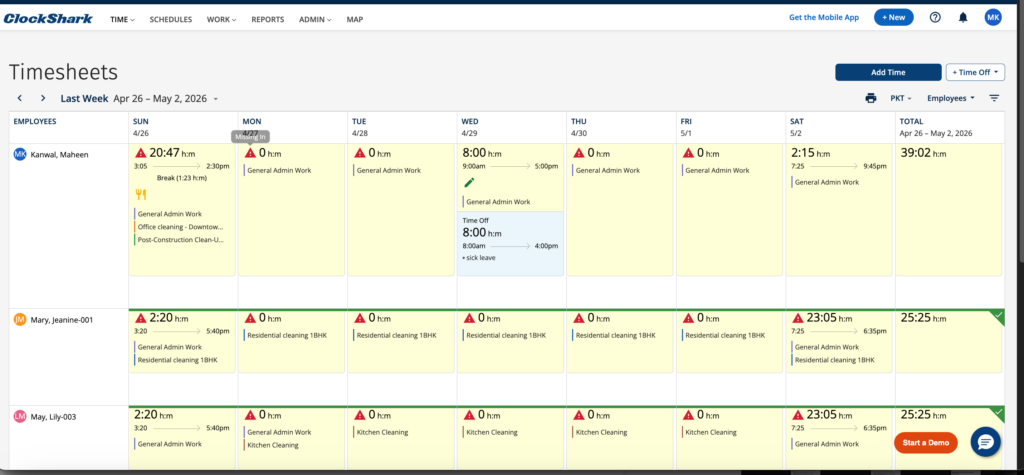
While exploring ClockShark’s time-tracking capabilities, I found the software exceptionally versatile and well-suited for field service and construction industries.
The system offers multiple ways to track time: via mobile device, web interface, and even a kiosk setup (called KioskClock), which is particularly handy for teams working at a fixed location.
Plus, I found the timer to be completely accurate (after testing it at 3 different times). You can start and stop the timer on the mobile or web app, and information will be synced.
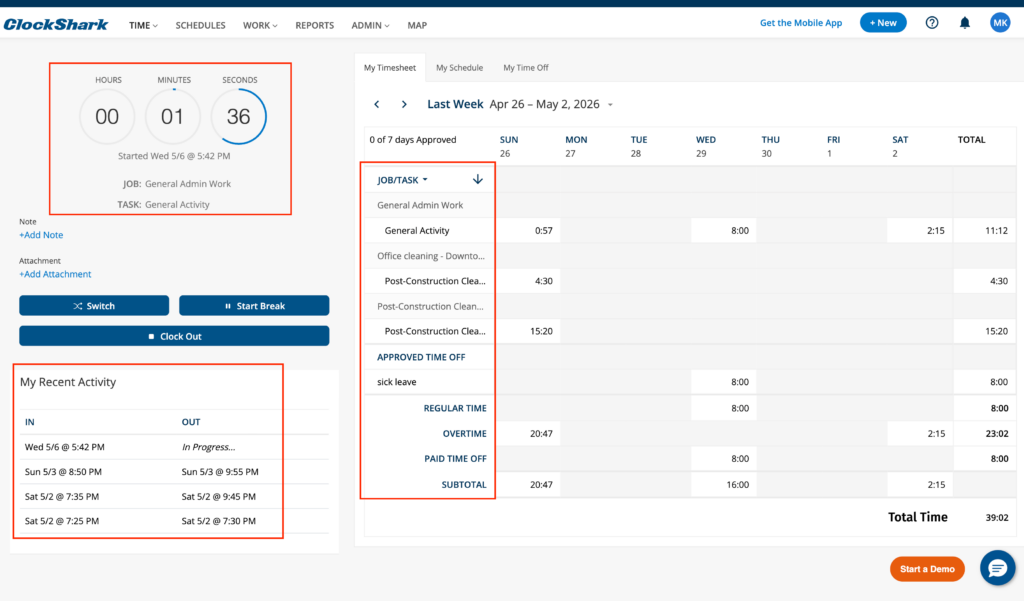
The system also logs missed clock-ins against scheduled shifts, which I confirmed during testing. When an employee failed to clock in at their scheduled time, the timesheet flagged it clearly with an alert, giving managers a quick way to spot and address attendance gaps in real time.
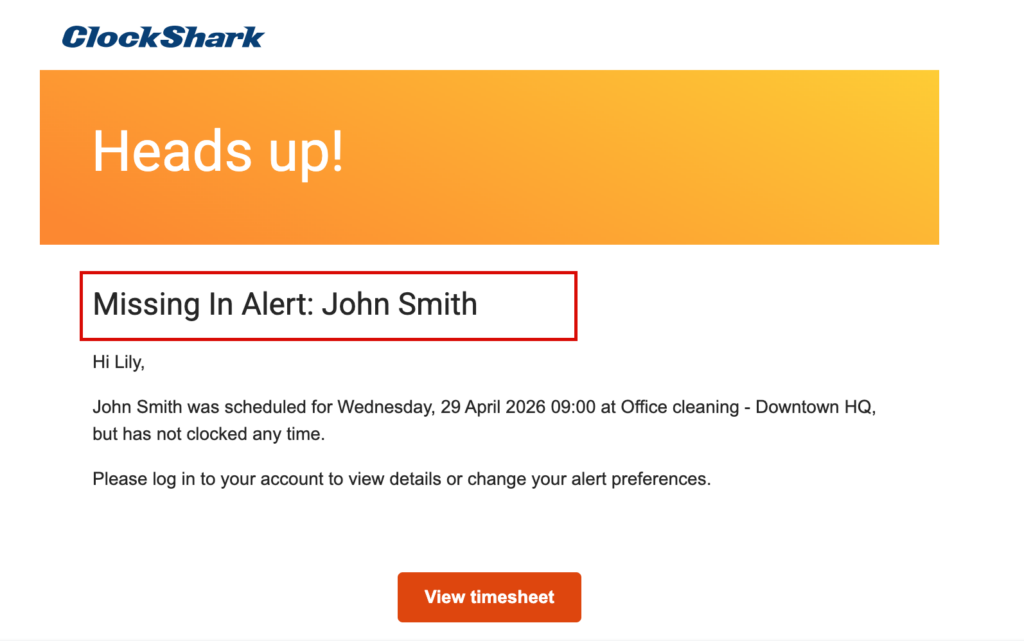
While ClockShark can send alerts for missed clock-ins and overtime, it doesn’t proactively alert employees if they leave the timer running for extended periods. I tested this by leaving the timer on for 15+ hours overnight, and no alert was triggered. However, you can set up notifications to remind employees about upcoming clock-ins or outs.
Lastly, I was impressed with the Crew Clock feature, which allows managers or supervisors to clock in all employees at once. I tested it by clocking in a group of employees on mobile, and it synced correctly across both the web and mobile apps.
This feature is especially helpful for businesses where workers start work at the same time and operate as a unit, for example, in some construction or event management projects.
Breaks and overtime
In addition to standard time-tracking features, ClockShark allows administrators to enforce a 30-minute break for employees via admin settings.
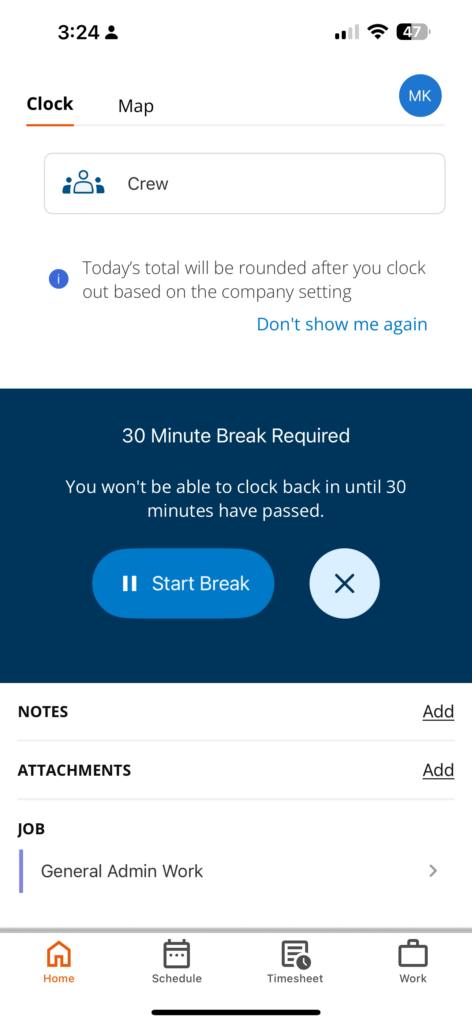
During my testing, when I left the break timer running for over an hour, I noticed that the system didn’t flag this, nor did it show any warning markings on the time clock timeline. While it’s ultimately up to the manager to approve the time, it would be beneficial for the system to visually flag longer-than-required breaks at a glance, providing better transparency for managers monitoring break durations.
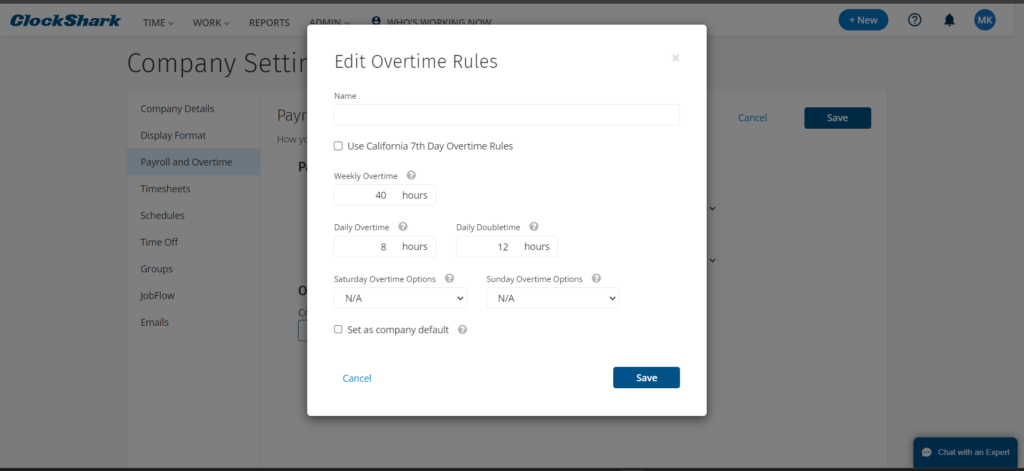
For overtime control, I could create custom rules or use the pre-built California overtime rule to ensure compliance with labor laws and minimize payroll errors. ClockShark was flexible enough to handle both daily and weekly overtime thresholds, as well as standard overtime or double-time rates. Once I configured my overtime rules, these applied consistently across teams without requiring manual intervention.
Time and location verification
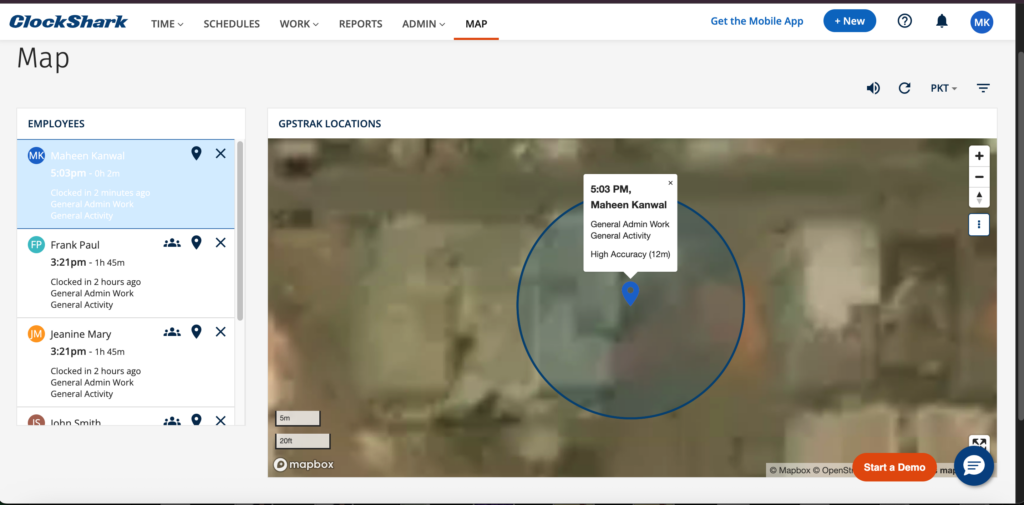
One aspect I really liked was the GPS tracking and geofencing features. The Map tab showed a live view of employee locations, with a list of employees on the left and a map on the right (toggleable between street and satellite view), making it easy to see who’s working, where, and on what job.
I also set up and tested ClockShark’s geofencing tool. When I clocked in from within a geofenced job site, the location registered with high accuracy within 12 meters.
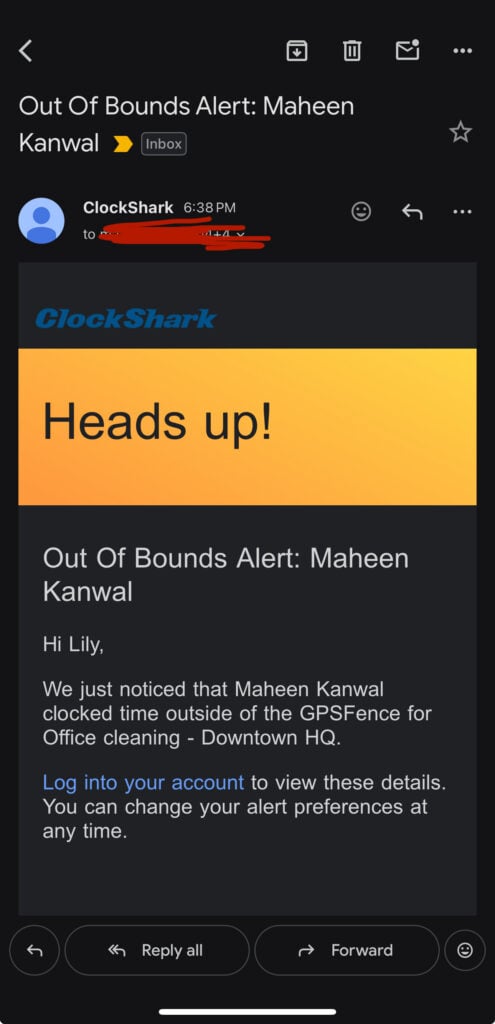
When I tried clocking in from outside the boundary, the system flagged it as “out of bounds” immediately, adding an extra layer of accountability.
Finally, I also appreciated the integration of facial recognition and photo capture options in the KioskClock (a great way to prevent buddy punching).
Timesheets
I could easily view, edit, and approve timesheets with a single click. Employees could also manually edit their times when necessary.
I like that ClockShark updates timesheets in real time, ensuring job costing and payroll calculations are as accurate as possible. Once timesheets are finalized, they can be synced with one of ClockShark’s payroll integrations for quick and hassle-free payments. Some apps like Toggl Track don’t offer payroll integrations, so I was pleased to see that ClockShark did.
Verdict: 9/10
Scheduling
With ClockShark, I could add shifts with basic options, such as selecting a date and time, setting repeat shifts, and adding a job.
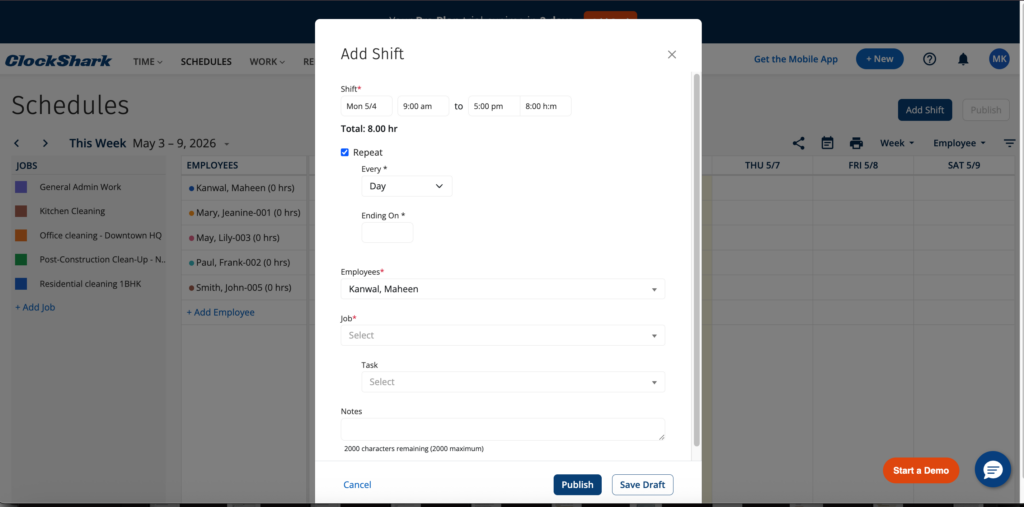
ClockShark’s drag-and-drop scheduling interface stood out to me as a major plus. I could easily move shifts around, assign employees to different jobs, assign recurring shifts, and make quick changes on the fly.
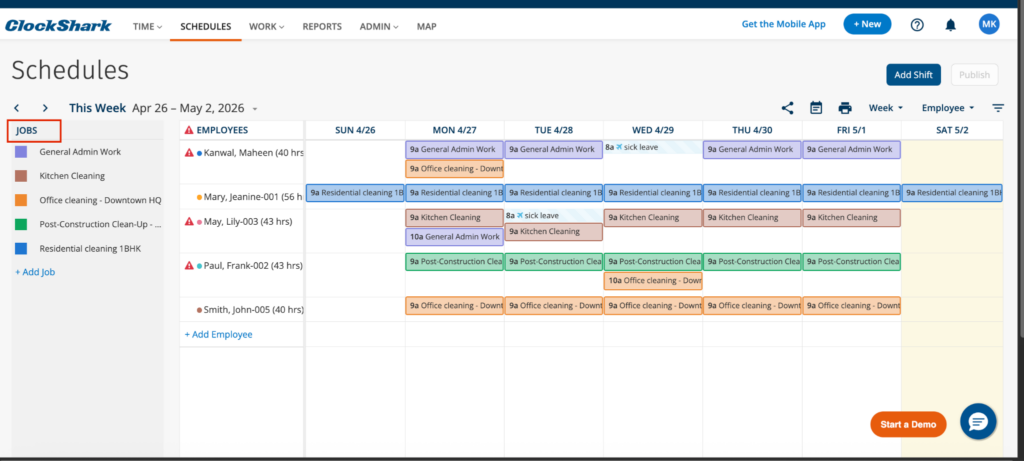
I appreciated the schedule’s visual layout, which offers daily and weekly views. The color-coding system for different jobs or employees makes it easy to get a quick overview of the week’s schedule at a glance.
Within the scheduler, employees can view detailed job descriptions, access necessary documents, and even get directions to job sites. ClockShark sends instant notifications to employees’ smartphones whenever a schedule is updated.
However, ClockShark’s scheduler isn’t without its limitations.
I found that the shift assignment was entirely manual. There was no AI-assisted scheduling or smart suggestions based on availability or workload, as I’ve seen in other platforms. I was also disappointed that there was no way to add open shifts for employees to choose from, which several competitors offer.
Also, when I deliberately created overlapping shifts for the same employee, the system showed a warning tooltip but still allowed me to publish the schedule without any block or additional confirmation. And no overtime alert was triggered, even when the totals clearly exceeded standard thresholds. For teams that rely on the system to automatically catch these errors, this is a meaningful gap.
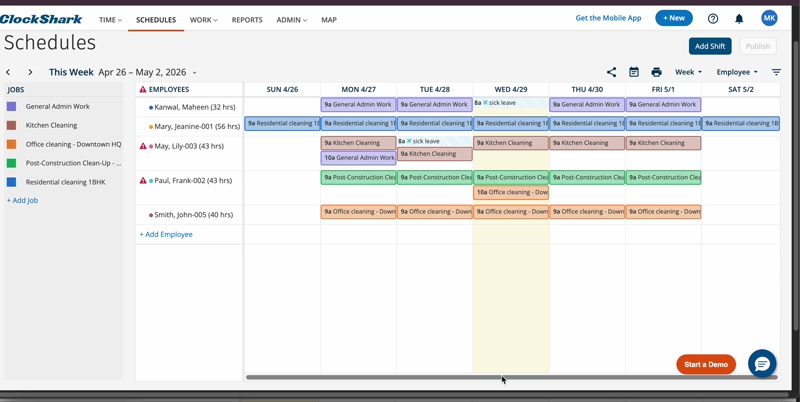
Finally, I noticed that schedules in ClockShark were tied to specific jobs rather than open time slots, making the scheduler better suited to dispatching field workers to job sites than building rotating schedules. If your primary need is workforce rostering across shifts and locations, tools like Connecteam handle that more naturally.
Verdict: 7/10
Time off management
Time off management works well once configured, but getting there requires more setup than you might expect. Before any employee could submit a request, I first had to create a time-off policy (there’s no option for employees to submit a simple request with just a reason and date). Some platforms have built-in policies based on the company’s location and labor laws, which could have been a time-saver.
Once set up, employees could request time off by selecting a policy, adding the requested days or hours, and sharing a description. I could also add time off on behalf of my employees, which I appreciated.
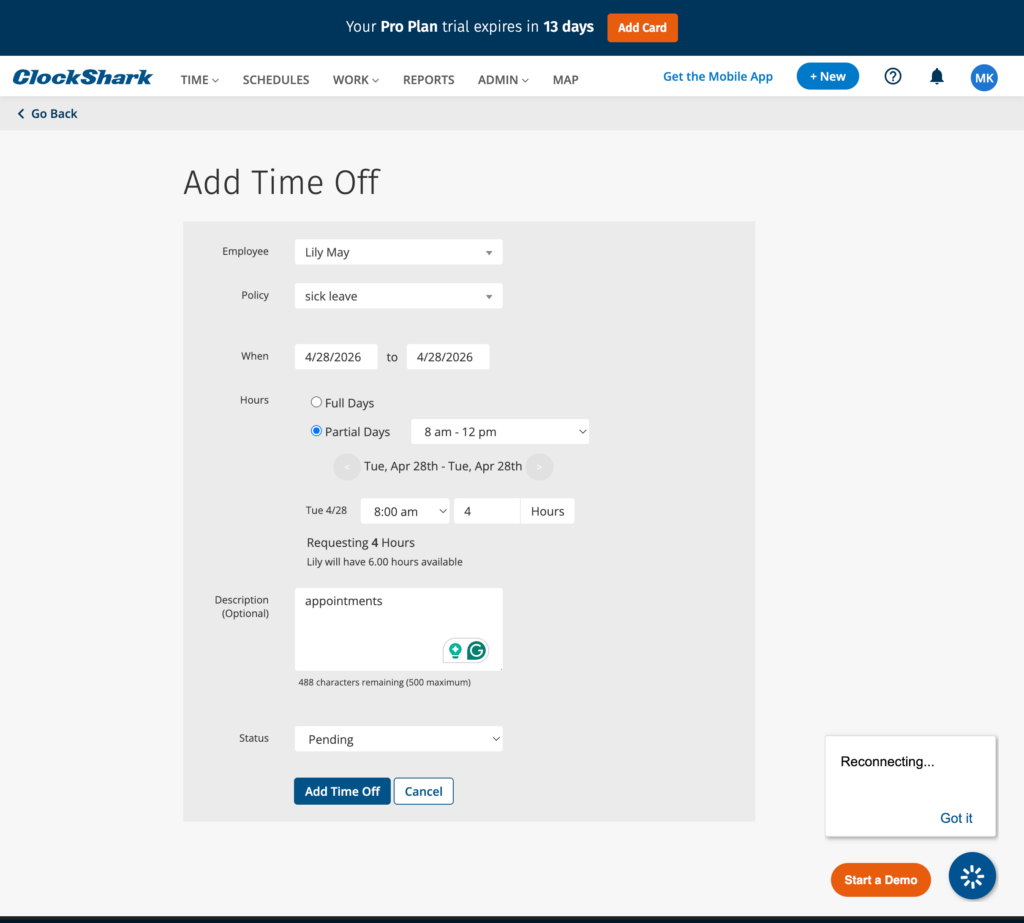
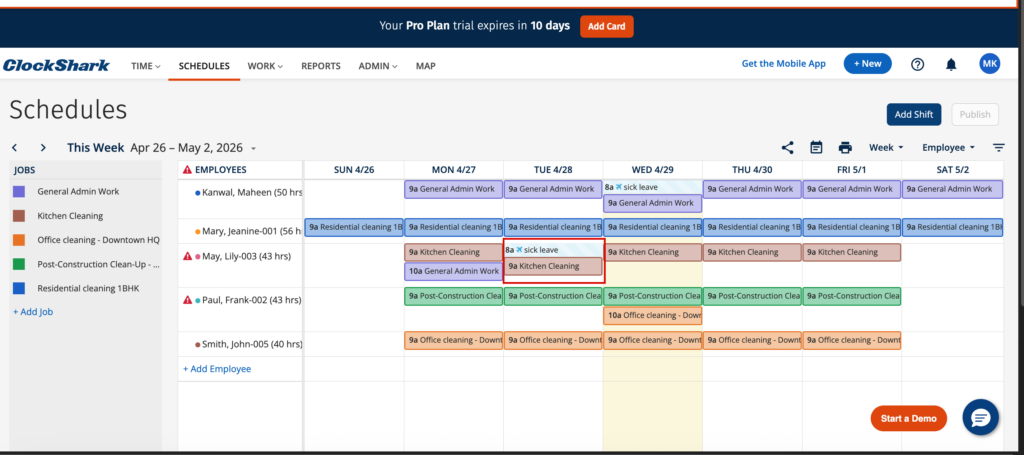
I also noticed that the system doesn’t automatically flag conflicts when an employee’s time-off request overlaps with a scheduled shift. This requires manual oversight and could lead to scheduling errors if not carefully managed.
Verdict: 7/10
Job management
ClockShark makes it easy to set up new jobs with a solid level of detail from the start. When I created a new job during testing, I could assign it a name, number, stage, color code, customer, address, and description. The stage options covered the full lifecycle: New, Ready to be Scheduled, In Progress, Complete, Canceled, and On Hold.
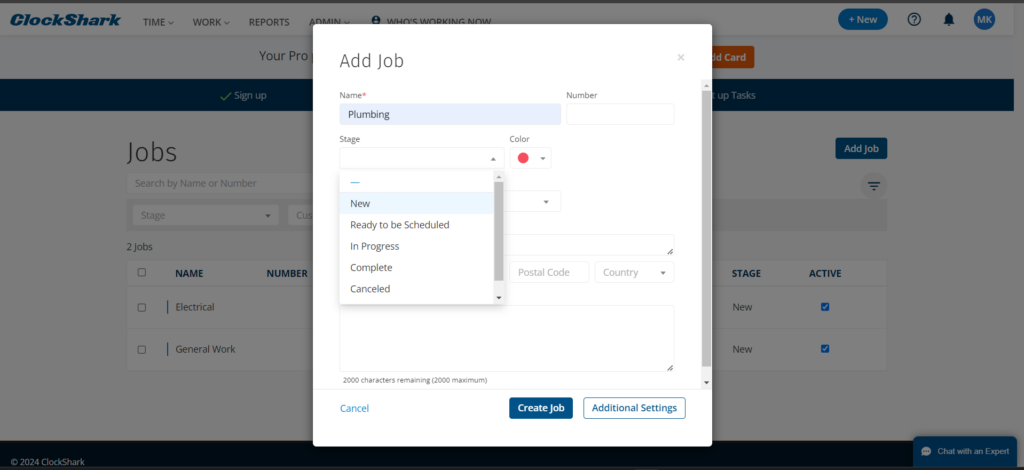
Each job can also have a GPSFence enabled, employee and task access restricted, a labor budget tracked, and a shift wrap-up questionnaire assigned. These settings gave me meaningful control over how each job is scoped and enforced in the field.
Task management
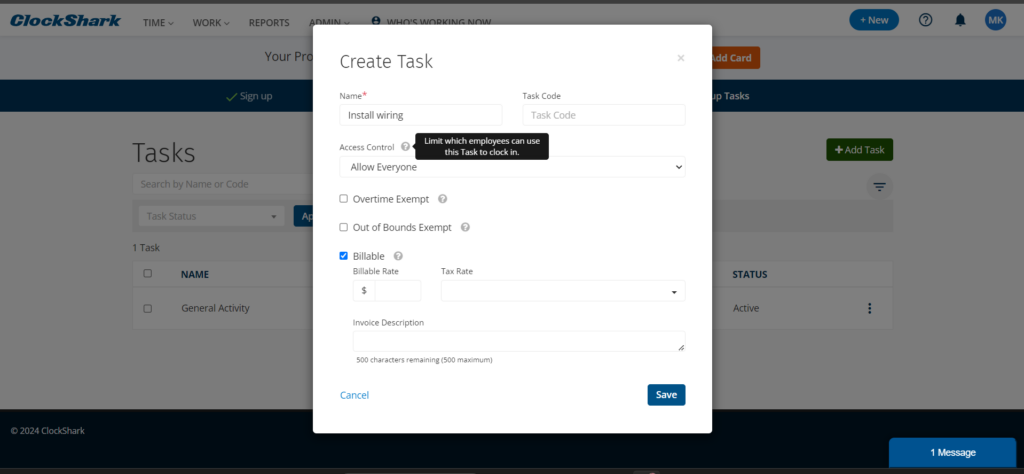
With the task management tools, I was able to break down jobs into specific tasks, assign them to team members, and set due dates. Each task had its own access control (allow everyone, allow everyone except specific employees, or allow only specific employees), a billable rate with a tax rate, an invoice description, and 2 compliance flags worth calling out:
- Overtime Exempt means time logged against that task will not count toward overtime calculations, regardless of company settings, which is useful for tasks like admin work or travel.
- Out of Bounds Exempt means that clocking in for that task from outside a geofenced area will not trigger an alert, which covers legitimate scenarios such as working from home or sales calls.
Both these exceptions worked correctly during my testing.
Quotes
With ClockShark, I quickly created professional-looking quotes based on job details and sent them directly to clients from within the system. Plus, ClockShark allowed me to convert accepted quotes into active jobs, reducing double data entry errors.
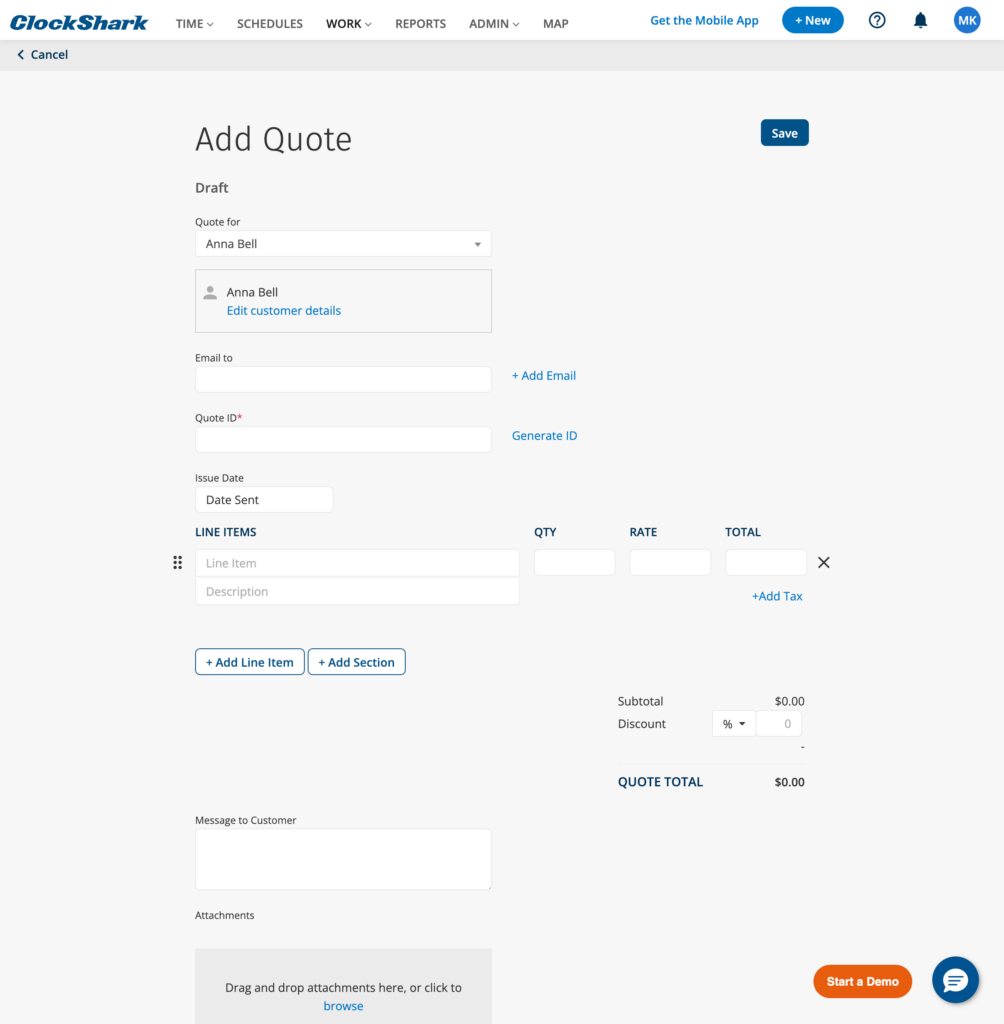
You can create professional quotes and directly send them to the clients from the platform.
Invoices
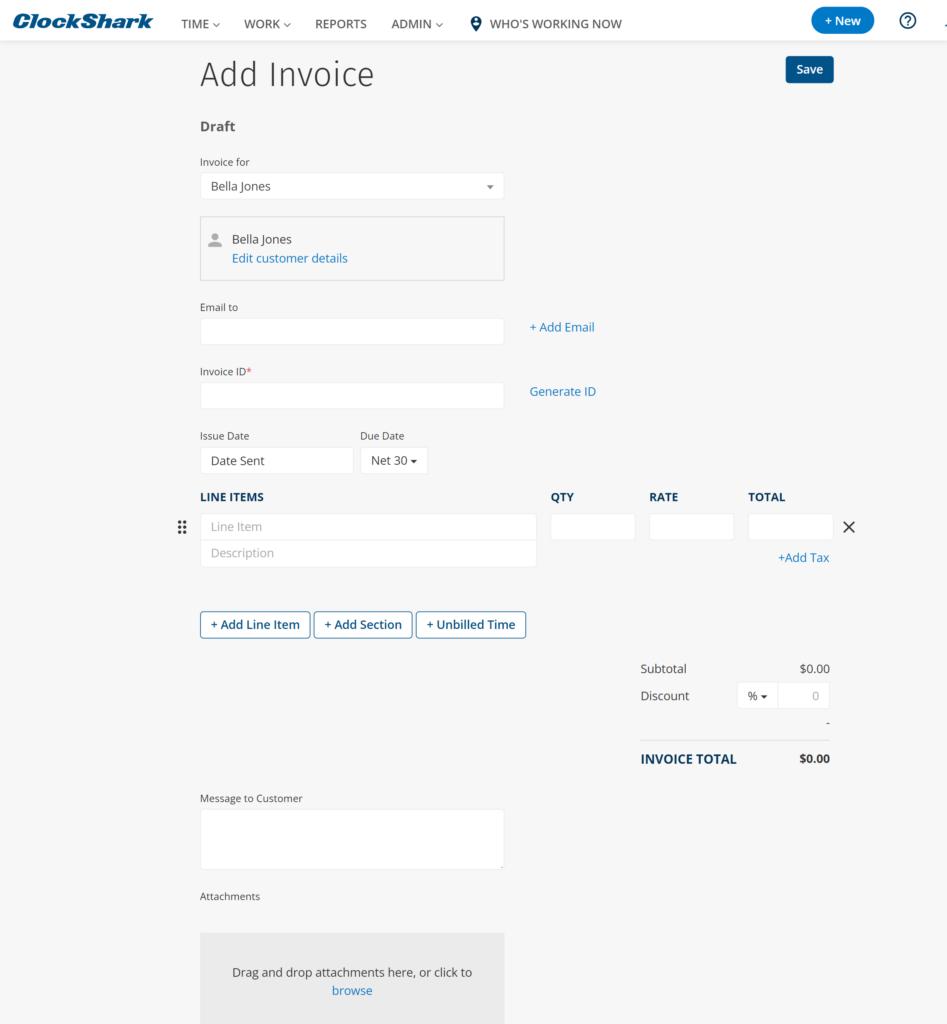
Finally, ClockShark automatically pulls tracked time and expenses associated with a job into invoices. When I tested this, the time entries populated correctly, and I was able to review and adjust them before finalizing, which helps reduce billing errors and potential disputes with clients. I also customized the invoice with my company branding.
Verdict: 8.5/10
Shift wrap-up and compliance forms
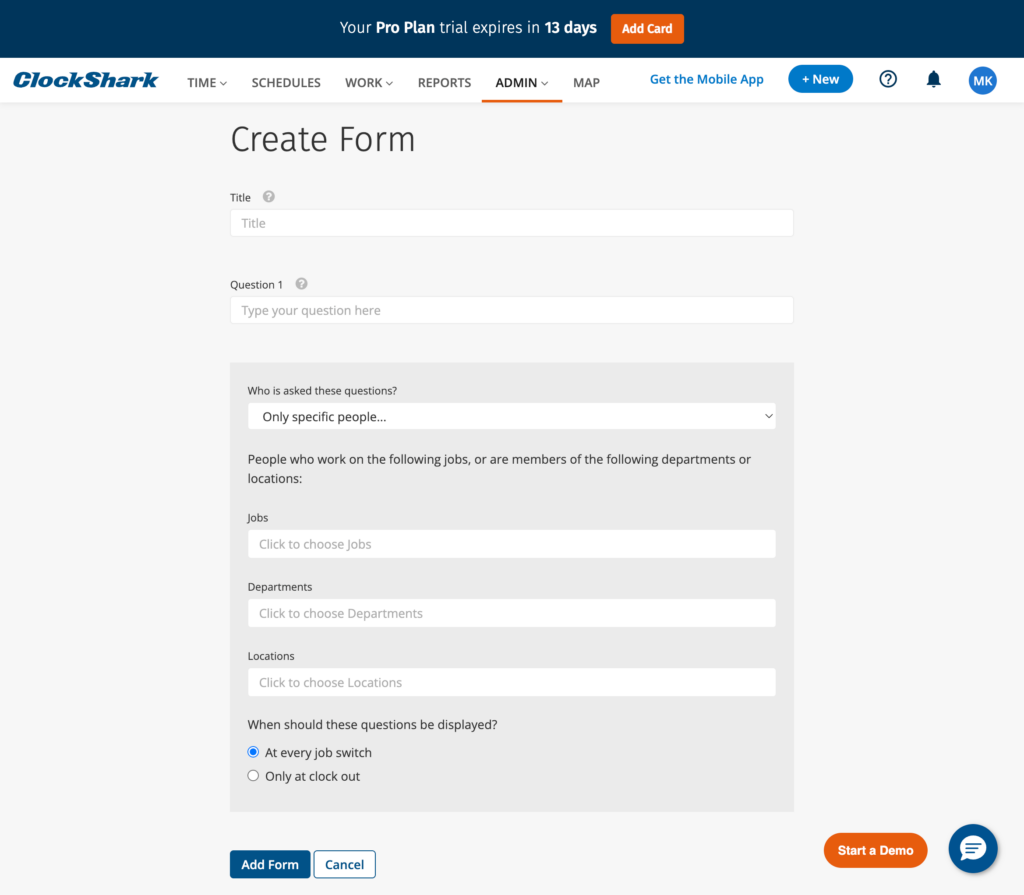
ClockShark’s customizable shift wrap-up forms let you collect structured responses from employees at clock-out or at every job switch. During testing, I created a form with yes/no, multiple choice, and short answer question types, and found the setup straightforward.
You can target forms to everyone or to specific employees, departments, or locations, and choose whether questions appear at every job switch or only at clock-out.
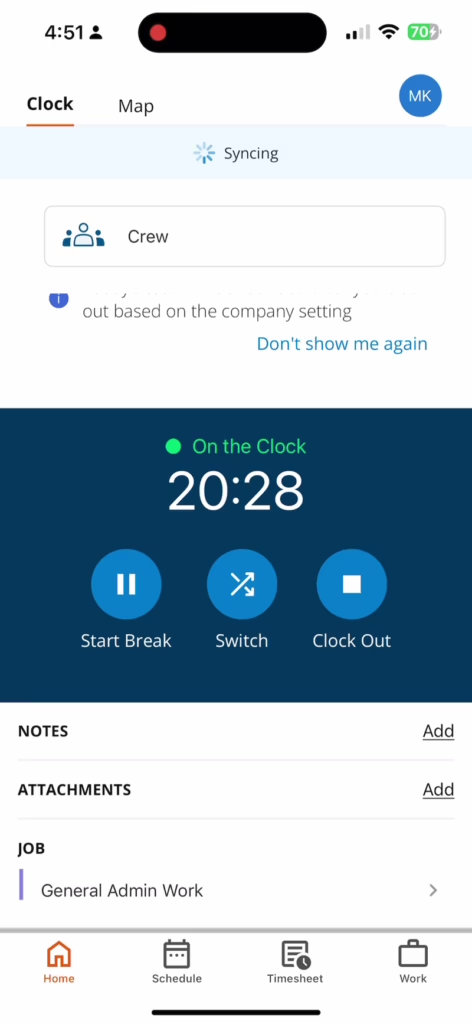
One feature I found useful is the “unexpected” flag on each answer choice. When building a yes/no question like “Has the site been cleaned up?”, you can mark “No” as an unexpected answer, which then triggers a notification for reporting purposes. This turns a simple clock-out form into a lightweight compliance tool without requiring any extra steps from the employee.
Another great feature is that if a form is skipped or left incomplete, ClockShark will send an email notification to the relevant manager, ensuring supervisors are aware when forms are not fully filled out.
That said, this feature falls short in its flexibility. Forms are limited to a single title and a linear list of questions, with no branching logic or conditional responses. You cannot, for example, show a follow-up question only when an employee answers “No” to a site safety check, or require a photo upload as evidence alongside an answer. For teams with formal compliance or inspection requirements, this will feel limited.
Verdict: 8/10
Conversations
ClockShark includes a Conversations feature that functions as a job-specific discussion thread. During testing, I used it to leave notes and share updates tied directly to a job, and found it kept communication organized and in context without scattering it across emails and texts. Team members can comment, share files, and post updates without leaving the platform.
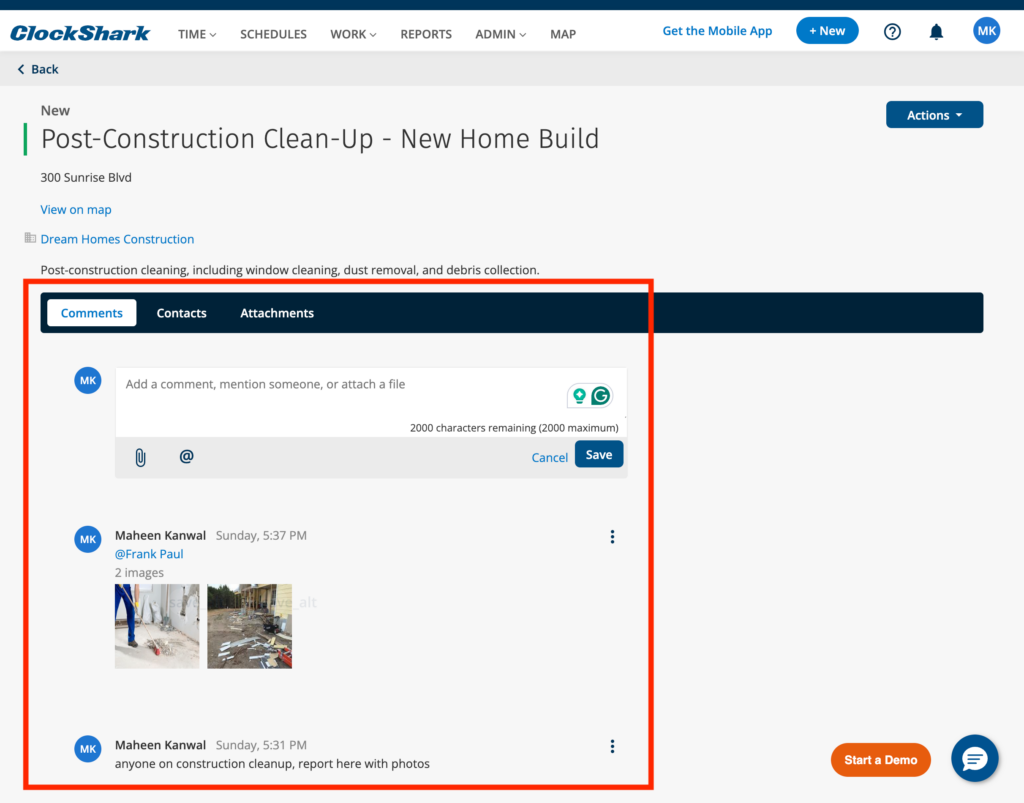
However, I found that it is not designed as a one-on-one or group chat, so it doesn’t replace a dedicated messaging tool for general team communication. Connecteam’s built-in chat covers the broader communication gap if that matters to your team.
Verdict: 7/10
Integrations
ClockShark provides support via phone, email, live chat, and an extensive knowledge base. The support team is readily available during business hours, and Pro plan customers can schedule time with a customer success representative for a more personalized support experience.
I found ClockShark’s support team prompt and helpful. After initiating contact through the chatbot Sharky, I was quickly redirected to a live agent who responded within minutes, providing clear and useful answers.
The system doesn’t automatically capture your info, though, and you have to provide your login details every time you want to chat with Sharky or the agent, which I found a bit annoying.
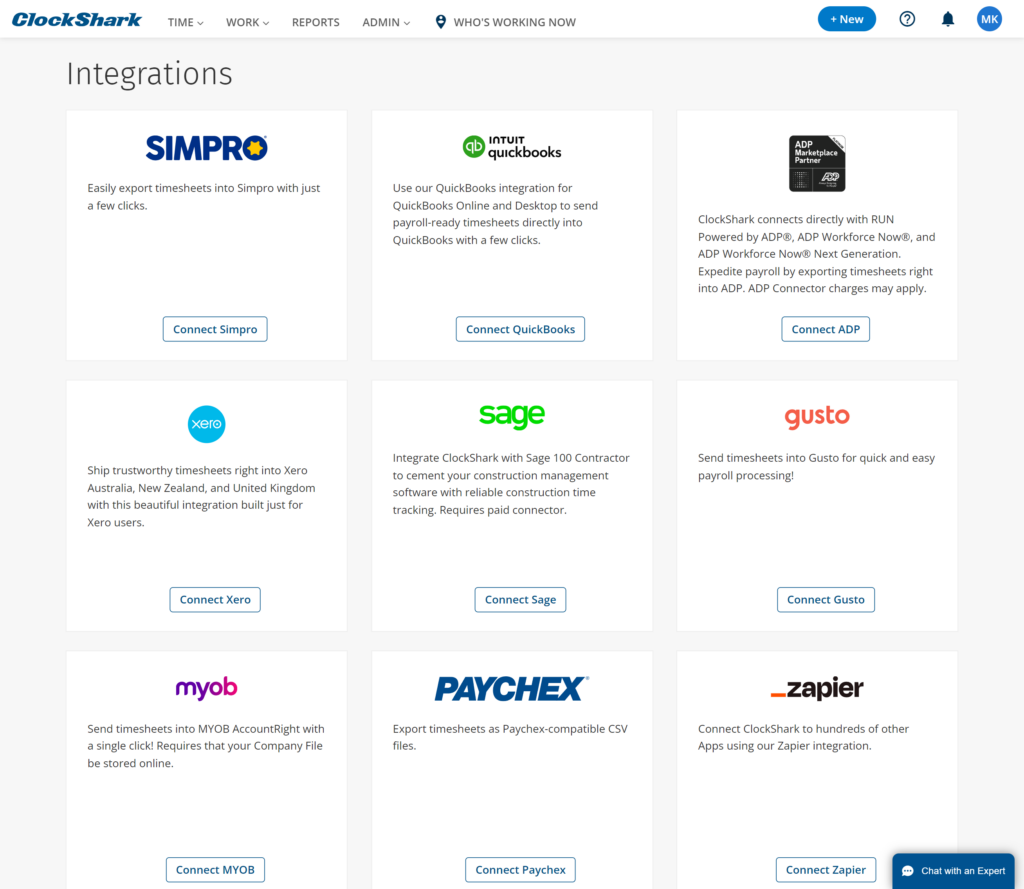
ClockShark’s integration capabilities are focused primarily on payroll and accounting software, which aligns well with its core functionality of time tracking and job management. Some notable integrations include QuickBooks, Xero, Sage 100 Contractor, ADP, Paychex, Zapier, and Simpro.However, I noticed that ClockShark’s integration options are quite limited compared to some competitors. For instance, it lacks direct integrations with popular project management tools like Asana and Trello, or CRM systems like Salesforce. Additionally, there’s no direct integration with HR management software, which could be beneficial for larger organizations.
Verdict: 7/10
ClockShark Security Features
I appreciate that ClockShark implements strong security measures to protect user information with high standards. It uses SSL technology to encrypt sensitive data such as credit card information, ensuring only authorized personnel can access it.
The platform uses cookies to enhance site interaction and maintain user session integrity. ClockShark also complies with privacy laws, including the California Online Privacy Protection Act. And, it’s part of the Simpro Group, which follows strict data protection policies, including the General Data Protection Regulation (GDPR). This includes keeping only necessary data for as long as needed and regularly reviewing data security measures.
However, it’s unclear whether ClockShark complies with HIPAA (the Health Insurance Portability and Accountability Act). If that’s crucial for your operations, you might need to contact the company for more information or use a HIPAA-compliant app like Connecteam.
Verdict: 8/10
ClockShark Reporting & Analytics
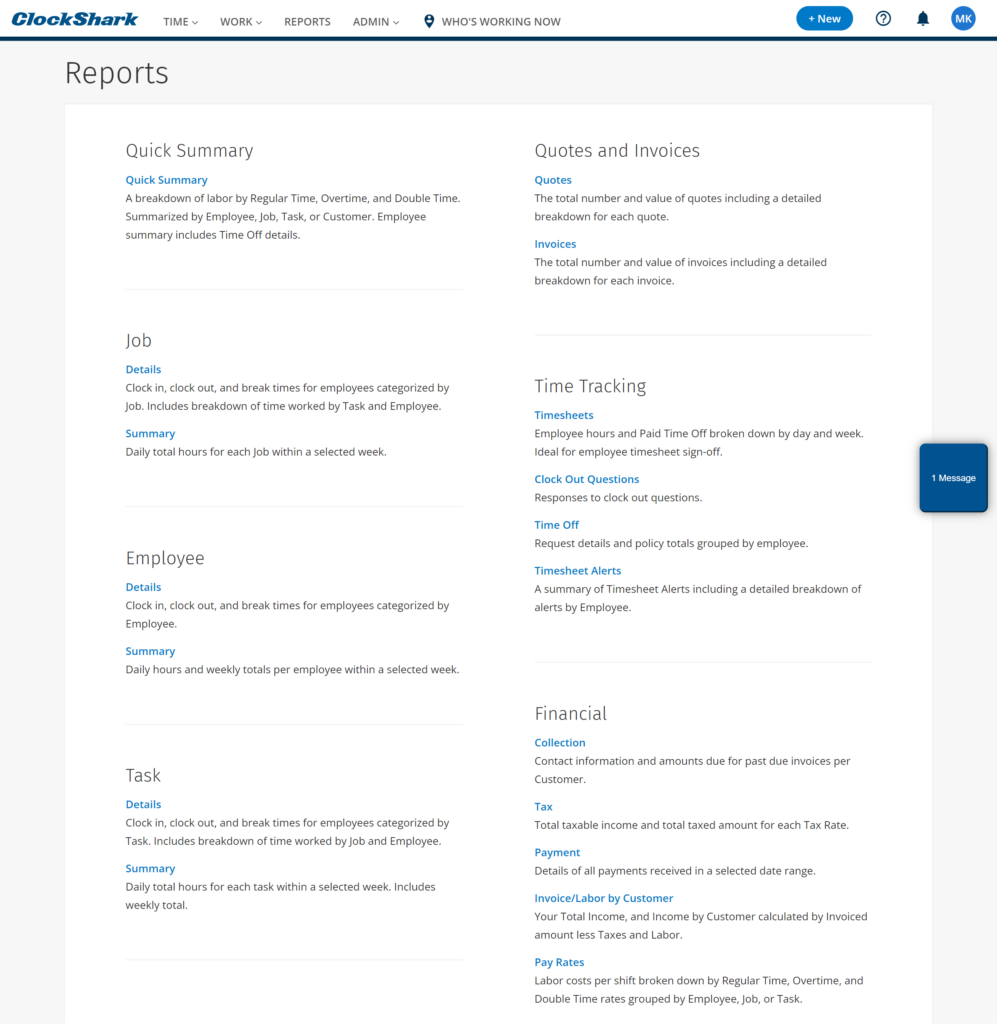
When I generated reports during testing, I found the process straightforward. From the Reports tab, I could pull breakdowns by employee, job, task, or customer, filter by date range, and export the results. The data was well-organized and easy to read.
ClockShark offers a variety of detailed reports, such as:
- Quick summary and detailed job reports: Provide breakdowns by employee, job, task, or customer, including time spent and overtime.
- Employee reports: Track individual employee timesheets, hours, and breaks, offering daily and weekly summaries.
- Time tracking reports: Include timesheet reports with employee hours, detailed PTO by day and week, and a summary of timesheet alerts.
- Task reports: Display time allocated per task for better project management.
- Financial reports: Include comprehensive details on invoices and payments, helping track financial health.
What I found missing was any layer of insight beyond the raw data. There are no predictive analytics, no AI-driven recommendations, and no trend visualizations. The reports tell you what happened; they do not help you act on it.
For field service managers who just need accurate payroll and job cost data, that is probably sufficient. For anyone wanting deeper operational insight, it falls short. Reporting is also unavailable on mobile entirely.
Verdict: 8/10
ClockShark Customer Support
ClockShark provides solid customer support with a variety of contact options to help resolve issues efficiently. You can reach their support team via live chat, email ([email protected]), or phone at 1-800-828-0689 (Toll-Free for US and Canada). Additionally, support tickets can be submitted through the help desk at https://www.clockshark.com/contact-support/.
Support hours are from 5 am to 5 pm PT (Monday to Friday), with Saturday and Sunday closed. While support is responsive during these hours, the weekend closure may be a downside for those needing assistance outside of these times (as is often the case for field businesses).
Also, if you need to speak with a representative outside of U.S. business hours, you may need to wait for a follow-up email or open a support ticket.
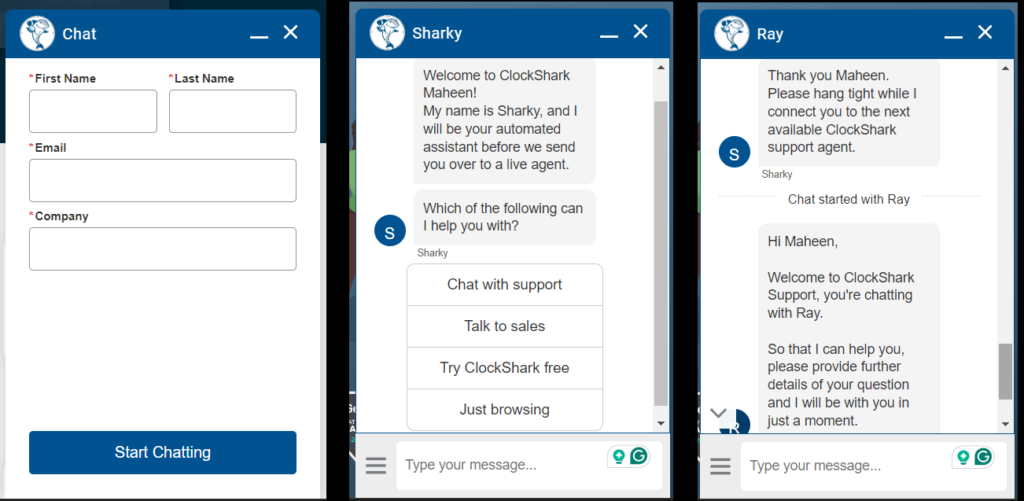
Overall, I found ClockShark’s support team prompt and helpful, though. After initiating contact through the chatbot Sharky, I was quickly redirected to a live agent who responded within minutes, providing clear and useful answers.
The system doesn’t automatically capture your info, though, and you have to provide your login details every time you want to chat with Sharky or the agent, which I found a bit annoying.
Verdict: 8/10
What are ClockShark’s Review Ratings from Review Sites?
(As of May 2026)
ClockShark App Review
ClockShark excels in providing strong time tracking and job management solutions tailored for the construction and field service industries. Its integration of GPS tracking, kiosk options, and mobile capabilities makes it ideal for businesses requiring reliable on-site employee management.
However, businesses looking for extensive analytical tools, advanced customization, or a more flexible pricing structure might find ClockShark’s pricing model limiting, especially for larger teams where costs can quickly accumulate.
Connecteam: The Better ClockShark alternative
Connecteam’s offering extends beyond ClockShark’s in both features and flexibility.
Connecteam’s flexible and advanced employee time clock allows workers to clock in from any device, including mobile, desktop, or kiosk. Connecteam’s kiosk mode supports multiple logins from a single device and can be set up across various locations, providing broader usability across different industries.
Connecteam also integrates timesheets with payroll systems like QuickBooks, Xero, and Paychex, making it easy to sync hours for payroll.
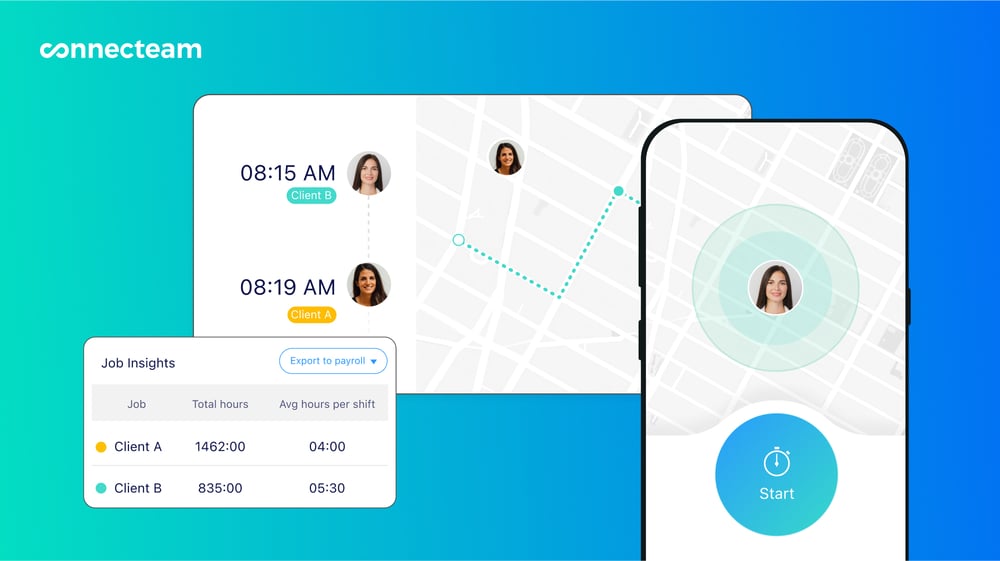
Moreover, Connecteam’s geofencing feature is more advanced, further enhanced by breadcrumbs technology. This GPS tracking feature records and displays the path or locations where an employee has traveled over a certain period. Plus, the platform allows for multiple geofences per location and custom-shaped geofences. This provides loads of flexibility for businesses with complex job site layouts.
Additionally, Connecteam takes drag-and-drop staff scheduling to the next level by offering automated scheduling and the ability to add open shifts that employees can claim based on their availability and preferences (with or without manager approval).
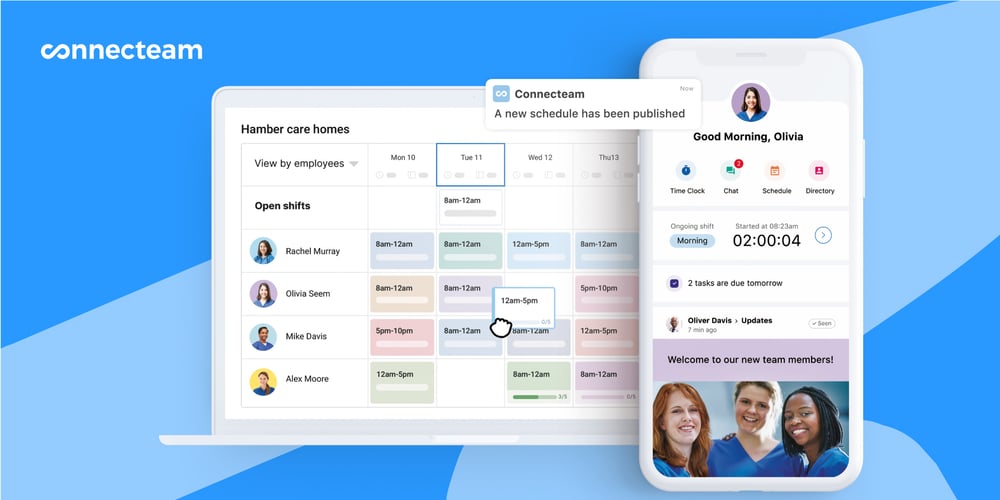
Where ClockShark offers basic clock-out forms, Connecteam’s digital forms and checklists support conditional logic, image uploads, and signature capture, and can be triggered at any point in a workflow rather than only at shift end.
Moreover, ClockShark’s Conversations feature keeps job-specific comments organized, but it stops there. Connecteam includes a full online team chat with one-on-one and group messaging, so teams can communicate in real time without needing a separate tool.
Connecteam also offers exceptional value for your money. It’s free forever for small businesses with up to 10 users, and plans for larger teams start at just $29 per month for up to 30 users. This makes it much more cost-effective than ClockShark, especially for small to medium-sized businesses.
FAQs
Yes, ClockShark offers a 14-day free trial.
ClockShark isn’t explicitly marketed as HIPAA-compliant, so if you’re in healthcare, you may be better off with apps like Connecteam that meet HIPAA standards for handling protected health information (PHI). It’s always best to double-check to ensure your data is secure and compliant.
No. ClockShark doesn’t track employees’ location when they’re off the clock.
