

Easy-to-use time tracker with AI facial recognition, but weak shift-scheduling tools.
Verdict: 7.4/10
Jibble is an easy-to-use time-tracking app for office, frontline, or field-based industries. On paper, it offers tools that cater to these workforces, such as kiosk mode, facial recognition, geofencing, location tracking, and time-off management.
During my recent testing rounds, I found Jibble to be excellent in some areas but underwhelming in others. The standout feature is AI facial recognition, which verifies employees automatically at clock-in to prevent buddy punching. I was particularly impressed by the speed of facial recognition, which automatically clocks employees into predefined tasks.
I also like the live location tracker, which shows employees’ locations in real-time, making it a solid choice for field managers and dispatchers who rely on real-time visibility. Its geofencing performs the basics well but lacks advanced capabilities for businesses that require pinpoint clock-in accuracy.
Despite its powerful features, Jibble isn’t suitable for shift-based teams. The lack of a shift-scheduling feature makes it difficult to plan, assign, and coordinate work shifts effectively.
Jibble Key Features
- Time tracking: Track time on web, desktop, mobile, and kiosk apps. Use AI facial recognition and geofencing to curb time theft, ensuring employees are paid only for the work they actually did.
- Time-off management: Create paid time off (PTO) policies and use lump-sum accruals to assign balances automatically. Employees can request time off on any device, and managers can approve requests on mobile while on the move.
- Activity monitoring: You can record blurred screenshots when employees are clocked in via Jibble’s desktop app to audit their productivity. However, you can’t track idle time or monitor the apps and websites employees use when clocked in.
- Live location tracking: The live location tracker updates employees’ locations in real time, which can help field managers improve accountability and safety. It also shows employees’ routes, allowing managers to audit their field activities more accurately.
Pros
- Easy-to-use web, desktop, and mobile apps
- Generous free plan
- Automated AI facial recognition
- Geofencing to prevent off-site punching
- Excellent customer support
Cons
- No shift-scheduling feature
- Limited report export and sharing options
- No built-in communication tool
- No HIPAA compliance
June 2026 update:
- Updated Jibble’s pricing after a major 2026 price increase. Premium rose from $2.49 to $4.49 per user/month on annual billing, while Ultimate rose from $4.99 to $7.99. We lowered the pricing score from 7/10 to 6/10 because the paid plans are now harder to justify.
- Retested Jibble’s core workflows and updated screenshots throughout the review to reflect the current web, mobile, desktop, and kiosk apps.
- Updated the time-tracking section to reflect Jibble’s latest controls and testing results, including the removal of preset time-tracking policies, automatic clock-in/out moving out of beta, and a geofencing limitation that can still let employees clock in to the wrong job or project.
Jibble Pricing
Verdict: 6/10
Jibble offers good entry-level value because its free plan includes unlimited users and essential time-tracking tools. However, its paid plans are harder to justify. Following Jibble’s 2026 price increase, the base paid plan is now much more expensive and the higher-tier plans still don’t offer enough advanced workforce management tools to fully justify the upgrade.
| Plan — Per Month (Billed Annually) | Features |
|---|---|
| Free — Free forever |
|
| Premium — $4.49 per user | Everything in Free, plus:
|
| Ultimate — $7.99 per user | Everything in Premium, plus:
|
| Enterprise — On request | Everything in Ultimate, plus:
|
| As of June 2026 | |
Jibble offers simple, per-user pricing with no hidden costs or paid add-ons, making it easy for businesses to calculate initial and recurring costs. The free plan is still quite generous, as it lets small businesses manage unlimited users and access essential time-tracking features.
But businesses that need more advanced tools, unlimited geofences, or multiple schedules will have to upgrade to a paid plan, an upgrade that now costs much more than before.
In March 2026, Premium increased from $2.49 to $4.49 per user/month on annual billing, while Ultimate rose from $4.99 to $7.99. That’s an increase of about 80% for Premium and 60% for Ultimate, making Jibble’s paid plans harder to justify than they used to be.
I started a free trial of the Ultimate plan for this review and tested all the features without worrying about an automatic charge to my card. Each plan, except Enterprise, has a 14-day free trial that doesn’t require a credit card.
That said, I didn’t like that the pricing page is tucked away under the Resources page and labeled “Upgrade Plans,” which isn’t intuitive. I had trouble finding the page, and many other users likely will as well.
How Does Jibble’s Pricing Compare?
| Plan | Jibble (Ultimate) | TimeCamp(Ultimate) | Hubstaff (Team) | Connecteam (Advanced) |
|---|---|---|---|---|
| View pricing | View pricing | View pricing | View pricing | |
| 10 users | $79.90/month | $99.90/month | $100/month | Free for life — all features and dashboards |
| 20 users | $159.80/month | $199.80/month | $200/month | $49/month |
| 30 users | $239.70/month | $299.70/month | $300/month | $49/month |
| 50 users | $399.50/month | $499.50/month | $500/month | $99/month |
| Read our in-depth TimeCamp review | Read our in-depth Hubstaff review | Learn more about Connecteam |
Jibble Sign-Up and Onboarding
Verdict: 9/10
Overall, Jibble’s onboarding is impressively simple, enabling teams of any size to get fully up and running in less than an hour.
Signing up and creating an account is a breeze. I like that Jibble tailors your onboarding experience depending on whether you’re setting up for a freelancer or a team. The personalized account setup let me create a team workspace in less than five minutes.
Once I created the workspace, Jibble served up an onboarding wizard with a five-step setup process. The wizard gathers important setup details in one place, such as schedules, locations, projects, and time-tracking rules, allowing users to configure everything in less than 20 minutes.
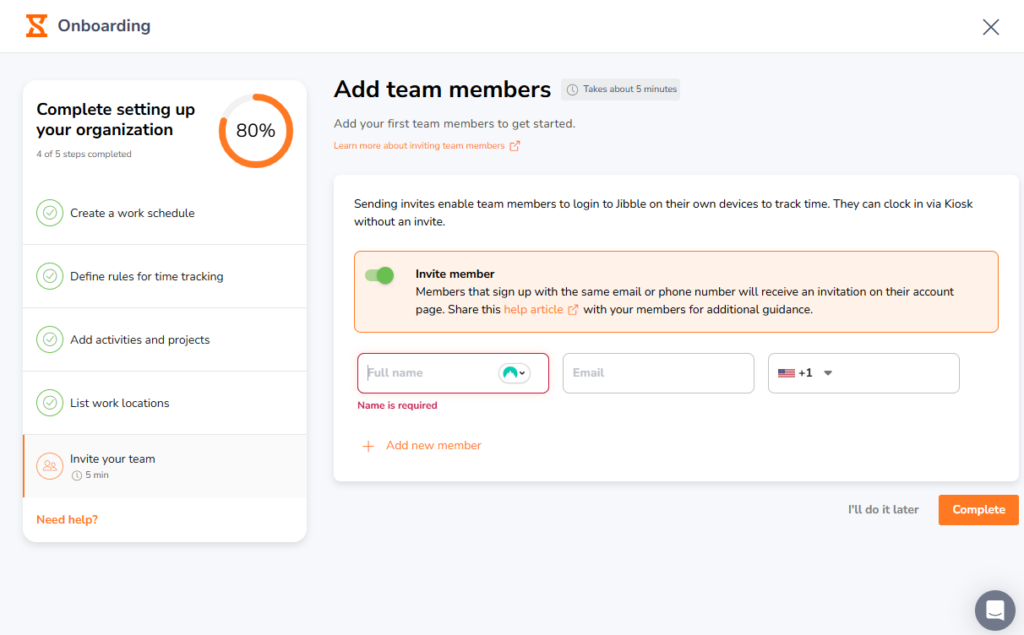
Once I completed onboarding, Jibble directed me to the learning center. I was able to access help articles, video tutorials, and quick tips that helped me quickly understand key features.
Additionally, the first time you open any feature, Jibble provides a quick text walkthrough to make the learning curve easier.
Setting Up Your Team
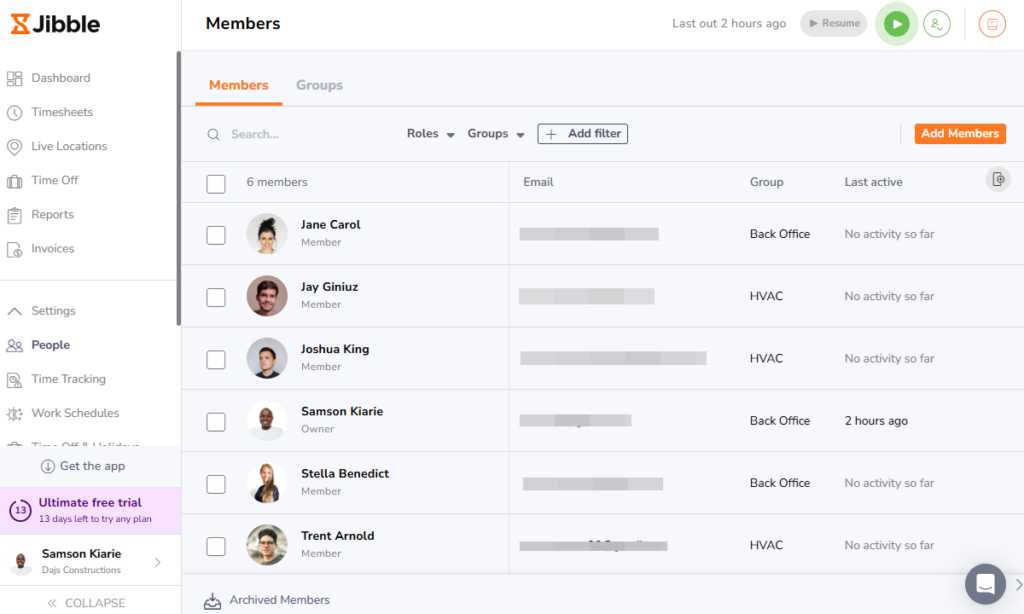
With Jibble, you can add users through email or link invites. I used the email invite option for this review and set up a team of five employees in less than 20 minutes. However, companies with large workforces can use the link invite option to speed up the process and reduce admin overhead.
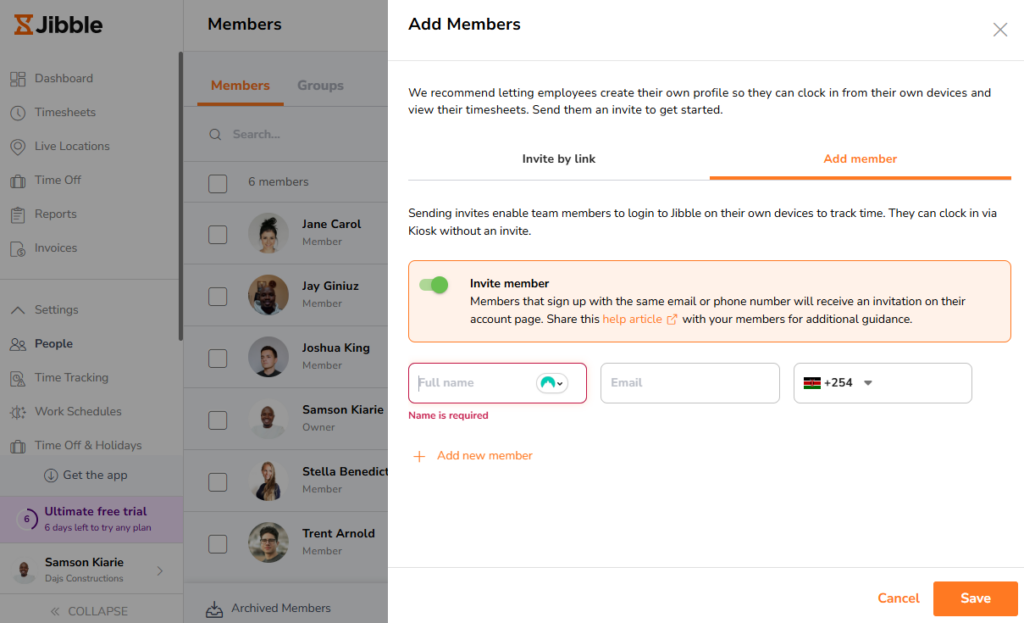
I was also able to create custom groups with unique work schedules, holiday calendars, kiosks, activities, and members. Groups help segment workforces by location, department, or role, making it easier to enforce policies across the business.
It’s worth noting that Jibble does include work schedules for time-tracking rules, but these are not the same as a full shift-scheduling tool. You can use schedules to define expected working hours and time-tracking policies, but Jibble still lacks deeper shift-planning tools like drag-and-drop scheduling, open shifts, shift swaps, and schedule conflict detection.
Jibble Usability and Interface
Verdict: 8/10
Overall, I found the apps so easy to use across all devices that even non-tech-savvy users shouldn’t have any issues.
I used Jibble’s web, mobile, desktop, and kiosk apps for this guide, paying close attention to how easy or difficult it felt to use them. Read on for the full breakdown:
Jibble Web App
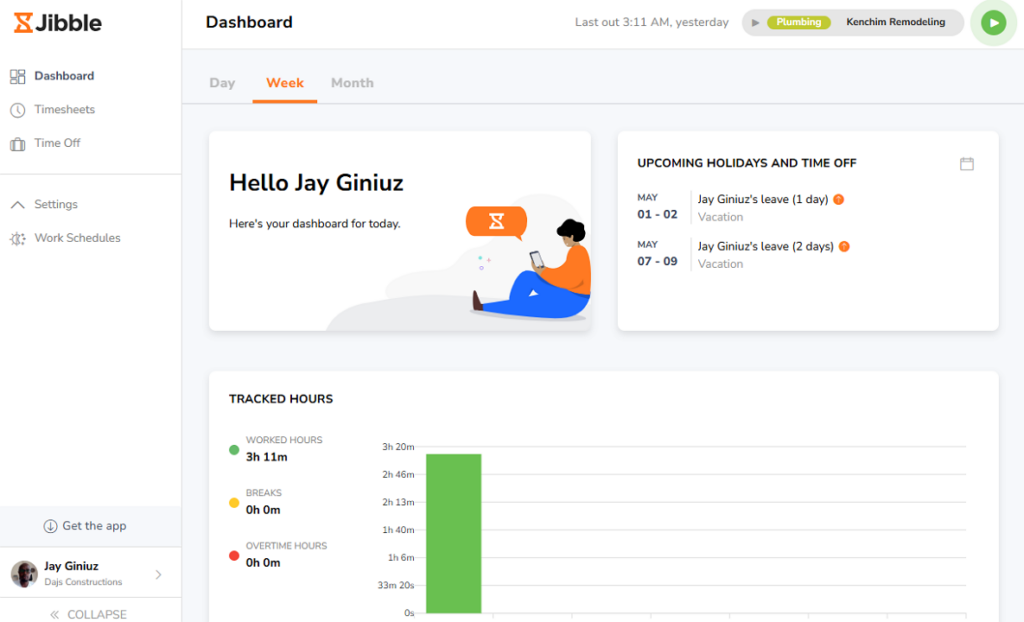
The Jibble web app has an intuitive user interface (UI) with eye-catching aesthetics. The orange, blue, and gray color palette pairs well with the white background, giving the UI a bright and modern feel. The UI is well organized into two action areas: a menu panel on the left and a details area (the rest of the screen).
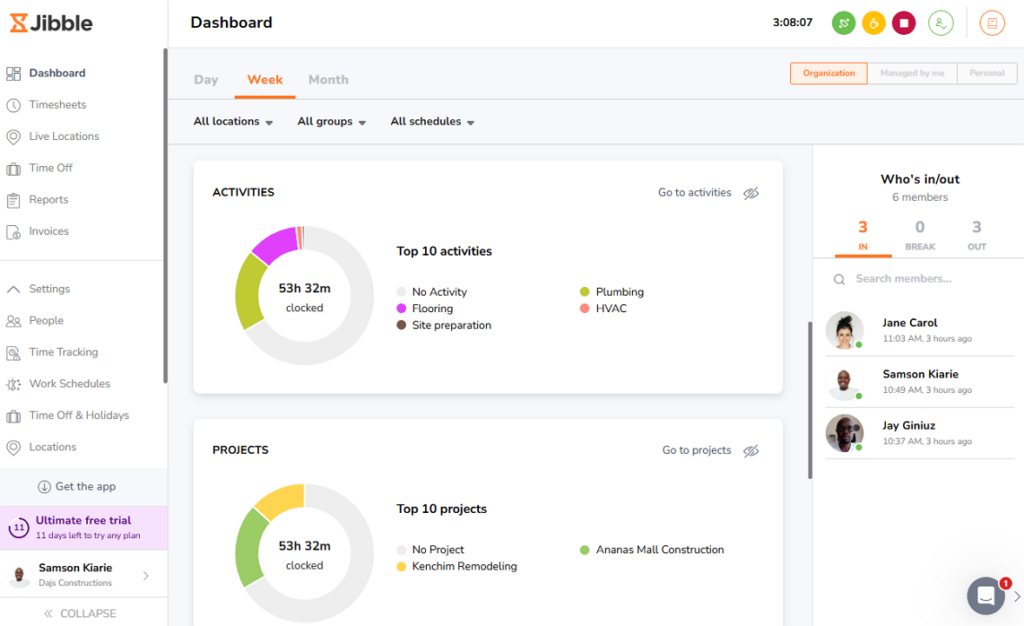
The main features are neatly organized in the menu and have no subfeatures or deep menus. This keeps navigation straightforward, allowing users to quickly access what they need and complete tasks in just a few clicks.
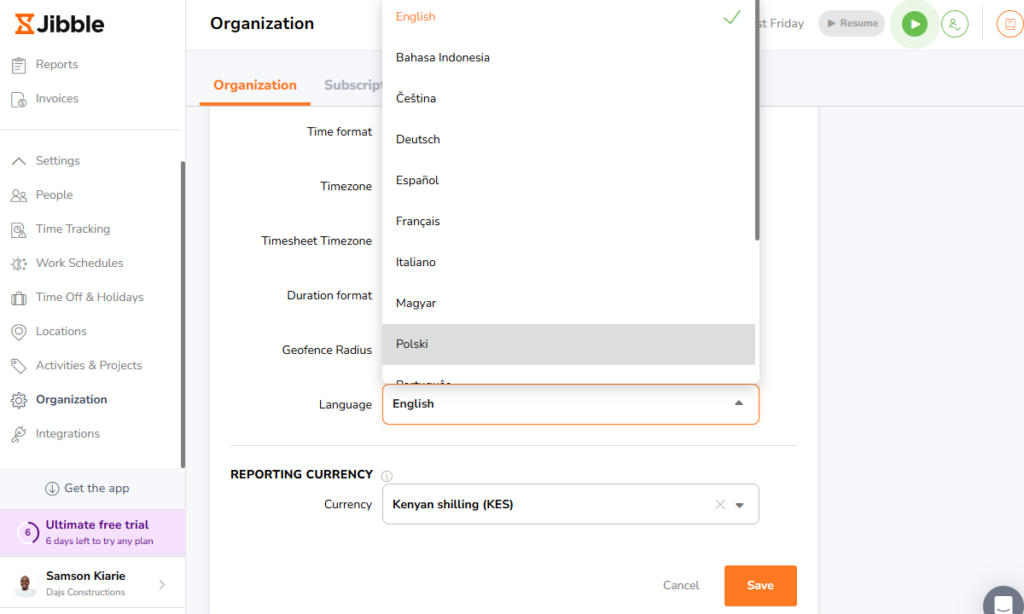
Even better, the Jibble web app supports 15 languages, allowing users to switch the interface to their native language. This simplifies navigation and makes Jibble more accessible to diverse teams. Unfortunately, though, Jibble lacks dedicated accessibility features for users with visual or hearing impairments.
I like that Jibble personalizes the web app experience by employee role. The manager version is feature-rich, with features such as a dashboard, timesheets, live locations, time off, reports, and invoices. Plus, the settings include everything managers need to configure workflows and oversee team operations.
Employees, on the other hand, get a slimmed-down version with four features: dashboard, timesheets, work schedules, and time off. The limited feature set reduces complexity, making it easier for office employees to track time and focus on core daily tasks.
Jibble Mobile App
I used version 2.0 of Jibble’s Android app for this review. The descriptions below also apply to the iOS app, as it has a similar design and functionality. The mobile app mirrors the bright, modern aesthetics of the web app, but it’s cleaner and more intuitive.
The UI’s “time clock” homepage has a clock-in button and a menu at the bottom of the screen. The features on the menu — home, time clock, approval, and menu — are easily accessible from anywhere in the app, keeping navigation simple and predictable.
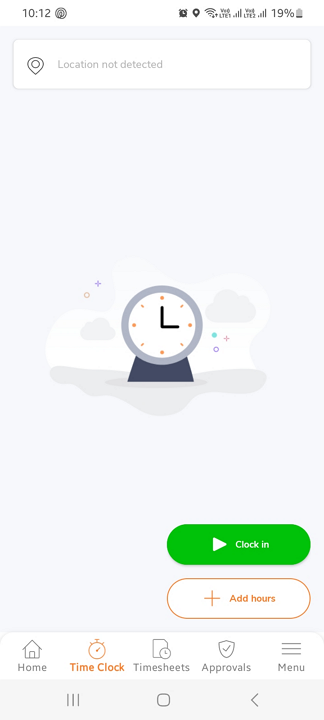
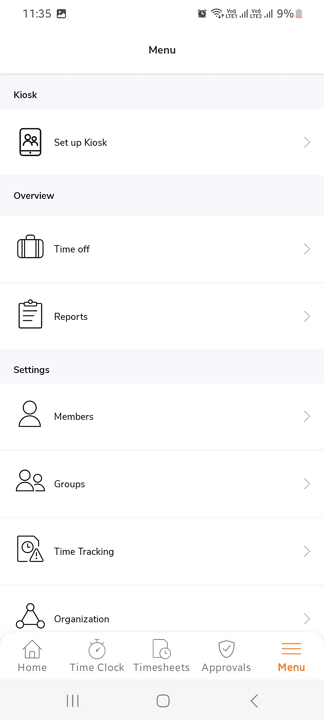
Jibble’s mobile app lets employees track time, request time off, view their timesheets, and manage schedules. The manager version has these features as well, and lets managers perform virtually all admin tasks on the go. They can add users, view reports, add work schedules and projects, and approve time-off requests, to name just a few functions.
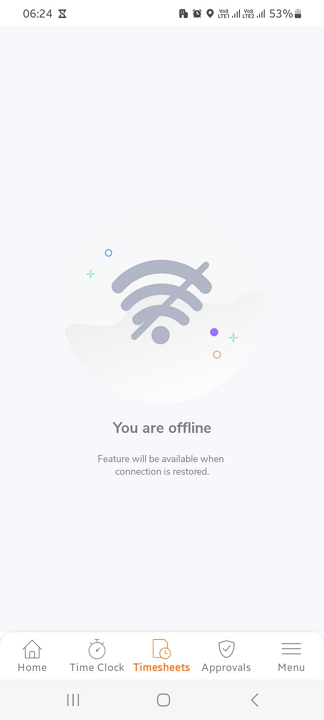
During testing, I was able to clock in with facial recognition without an internet connection. However, other features were inaccessible when I turned off my internet connection, which is particularly problematic for managers in regions with poor cellular service.
| Menu Item | Admin | Employee | ||
| Website | Mobile App | Website | Mobile App | |
| Feature | ||||
| Timesheet | ✅ | ✅ | ✅ | ✅ |
| Time tracker | ✅ | ✅ | ✅ | ✅ |
| Calendar | ❌ | ❌ | ❌ | ❌ |
| Schedule | ✅ | ✅ | ✅ | ✅ |
| Expenses | ❌ | ❌ | ❌ | ❌ |
| Time off | ✅ | ✅ | ✅ | ✅ |
| Analysis | ||||
| Dashboard | ✅ | ✅ | ✅ | ✅ |
| Reports | ✅ | ✅ | ❌ | ❌ |
| Activity | ✅ | ✅ | ❌ | ❌ |
| Management | ||||
| Kiosks | ✅ | ✅ | ❌ | ❌ |
| Approvals | ✅ | ✅ | ❌ | ❌ |
| Projects | ✅ | ✅ | ❌ | ❌ |
| Team | ✅ | ✅ | ❌ | ❌ |
| Clients | ✅ | ✅ | ❌ | ❌ |
| Locations | ✅ | ✅ | ❌ | ❌ |
| Tags | ❌ | ❌ | ❌ | ❌ |
| Invoices | ❌ | ❌ | ❌ | ❌ |
| Settings | ✅ | ✅ | ✅ | ✅ |
Jibble Core Functionalities
I rigorously tested Jibble to determine how its features work. Most of Jibble’s key features work as intended, but I did notice a few minor issues. Read on for the nitty-gritty details:
-
Time Tracking
- Facial recognition: Clock in and out with facial recognition.
- Speed facial recognition: Touchless clock-in and -out with facial recognition.
- NFC mode: Clock in and out with near-field communication (NFC) tags
- Basic mode: Clock in and out by selecting names from a list
- Device lock: Restrict the devices employees can use to clock in and out to prevent fraudulent punches.
- Clock-in/out reminders: Remind employees to clock in or out on time to boost timesheet accuracy.
- Limit early clock-ins and late clock-outs: Set how early an employee can clock in before the official start of a shift and how early they can clock out before the end of a shift.
- Automatic clock-out: Automatically clock out employees after a certain number of work hours.
- Time rounding: Round recorded time to reduce minor discrepancies and streamline payroll processing.
-
AI-Powered Face Recognition
-
Break and Overtime Tracking
-
Activity Monitoring
-
GPS Location Tracking
-
Paid Time Off Management
-
Jibble Integrations
- QuickBooks Online
- Xero
- Slack
- Deel
- Microsoft Teams
- Asana
Verdict: 7.5/10
Overall, Jibble aims to simplify time tracking while improving the accuracy of employee timesheets, and it delivers on both fronts. I like that it lets employees track time in the mobile, web, desktop, or kiosk app, making it a good fit for office, on-site, and field teams. But it loses some points because its geofencing is not strict enough for teams that need time entries tied to exact job sites.
Jibble offers a wide range of time-tracking options that make it a good fit for both office- and field-based workforces. It lets employees track time in the web, mobile, and desktop apps, or via the Chrome extension. Employees can also clock in and out via the time clock kiosk.
Jibble’s time clock kiosk stands out for its ease of use and mobile compatibility. I set up the kiosk on my Android device during testing, and it worked just fine. All employees need to do to clock in is select their name from the list, enter the four-digit PIN, complete facial verification, and choose a project and activity.
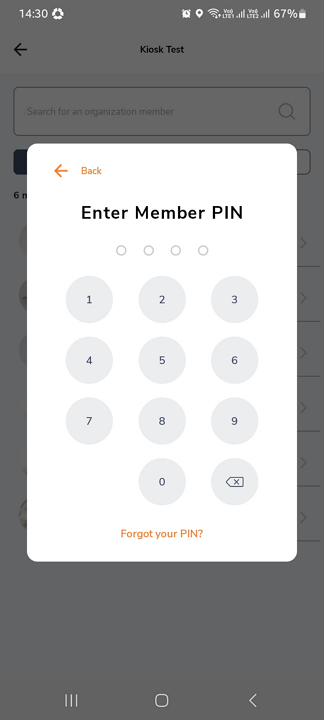
I like that the kiosk app supports several employee verification modes to prevent buddy punching, namely:
I tested all of these modes except NFC tags, and they worked just fine. I did some research on NFC tags, though, and learned that they allow employees to clock in or out by tapping their unique NFC card against a configured device. Keep in mind that managers can configure kiosk settings only on the mobile app.
Time-Tracking Restrictions
Jibble lets business owners set restrictions that can improve timesheet accuracy. These include:
During my last round of testing, Jibble offered four preset time-tracking policies — flexible, moderate, strict, and custom — that controlled how geofencing and facial recognition were applied. However, Jibble has since removed these policies. They felt rigid and didn’t adapt well to some real-world workflows, so their removal is a welcome relief.
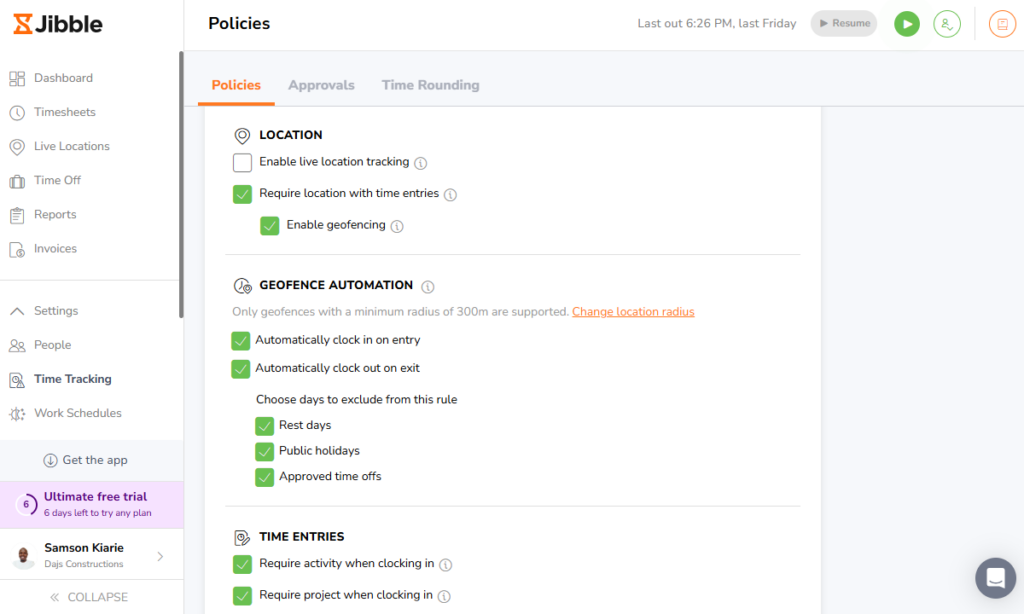
Jibble now offers separate, granular controls for geofencing and facial recognition. I was happy to discover that I could build policies for my specific use cases with the new setup.
Geofencing
I created two job sites to test Jibble’s geofencing: “Ananas Mall” and “Kamenu Estate.” I also created two projects, each linked to its respective job site: Ananas Mall construction (linked to Ananas Mall) and Kenchim remodeling (linked to Kamenu Estate).
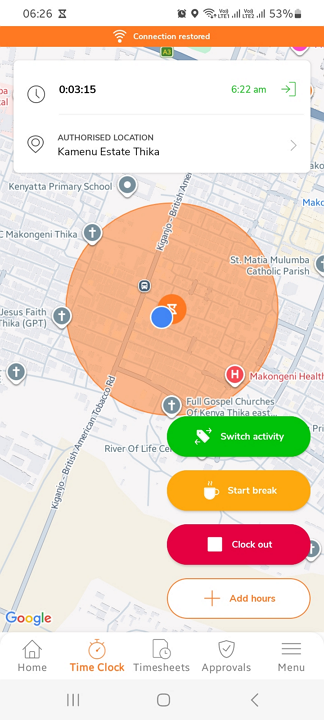
Jibble prevented me from clocking in when I was outside of a job site, which was great. The problem? Jibble let me clock in to the Ananas Mall construction job – which was linked to the Ananas Mall site – while I was at Kamenu Estate. Confused, I reached out to support for an explanation about why Jibble didn’t block the clock-in attempt.
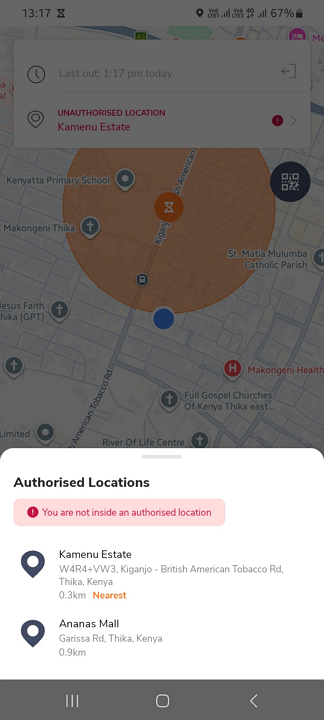
The support agent told me that Jibble lets employees clock in as long as they’re inside any geofence. This may seem like a minor issue at first. However, for some companies, such as field service, door-to-door sales, or home caregivers, this can make it difficult to accurately match work to specific clients or job sites.
Automatic Clock-In
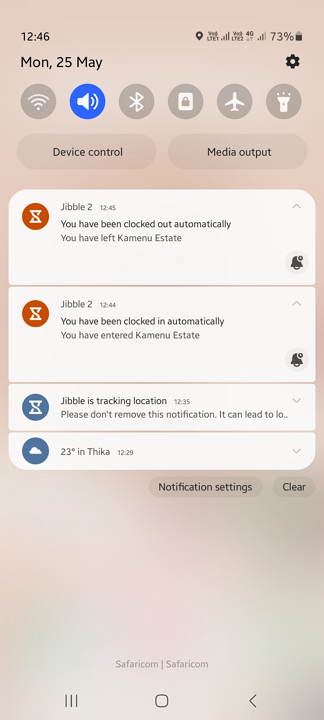
During my last round of testing, the automatic clock-in and clock-out feature was still in beta. I’m glad that Jibble has finally rolled out this feature, and it worked just fine during testing. It clocked me in automatically when I entered a geofence, and clocked me out when I left.
The automation eliminates the need for manual clock-ins and clock-outs. This makes it especially useful for field teams that move between job sites or those that need to clock in and out multiple times throughout the day.
For example, a field technician doesn’t have to worry about forgetting to log time while moving between customer locations. They simply focus on their work while Jibble tracks time in the background, ensuring accurate timesheets without interrupting workflows.
Verdict: 8.5/10
By automatically verifying employee identity at clock-in, Jibble prevents buddy punching and eliminates the need for manual checks. Its occasional glitches can be frustrating, but the added accountability and time savings easily outweigh the drawbacks.
Jibble has built arguably the most powerful facial recognition systems I have ever tested. Jibble requires employees to complete a 3D face scan on the first clock-in attempt to create a biometric face template. The app uses this template for all subsequent punches on the mobile app and shared kiosk.
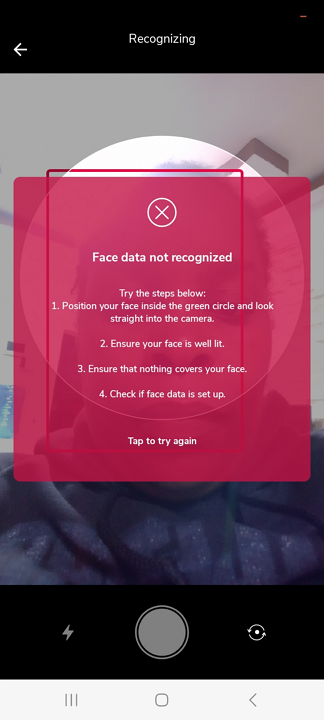
I have tested Jibble several times, and its ability to automatically verify employee identity during clock-in never fails to impress me. Employees can take a selfie at clock-in, and Jibble compares it to the saved template using AI. Jibble blocks the clock-in attempt by default if there’s a mismatch, effectively preventing buddy punching without any manager intervention.
While facial recognition worked without a hitch in kiosk mode during my testing, there was a glitch on the mobile app. When I asked a colleague to clock in on my behalf to simulate buddy punching, Jibble allowed it without any warning.
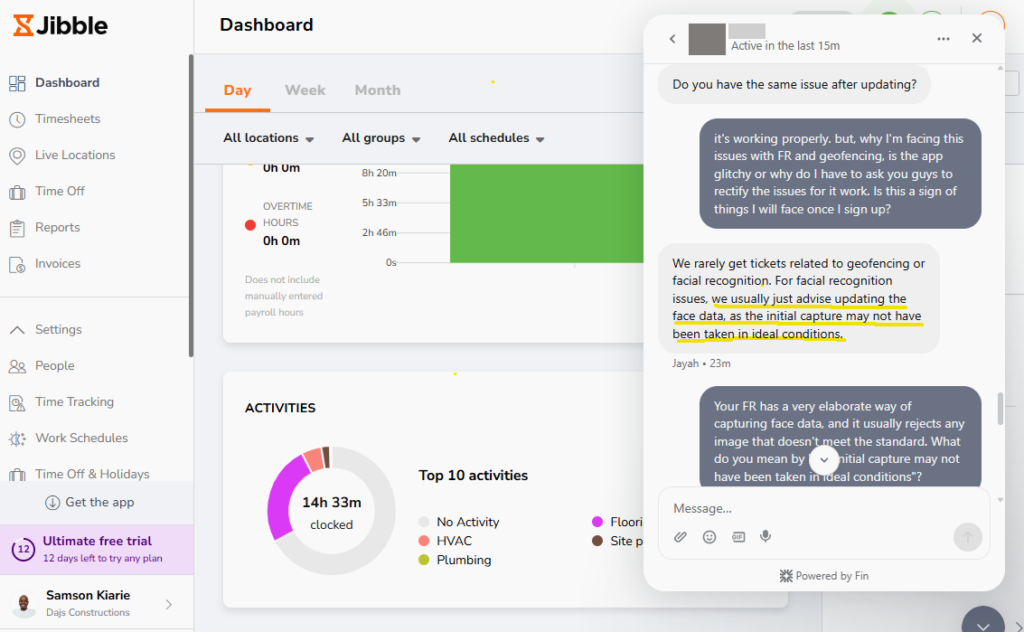
An agent told me that when such cases happen, they usually recommend updating the face data. I didn’t experience the issue again after updating my face data. However, the fact that this issue happened at all raises concerns about the system’s accuracy in busy environments.
Jibble has also introduced face-spoofing detection on iPhones and iPads since my last review. When enabled, this feature prevents employees from using photos or videos of their colleagues to trick the facial recognition system.
Speed Facial Recognition
My favorite feature is Jibble’s speed facial recognition. This touchless, instantaneous kiosk feature removes the manual processes for kiosk punches. When I positioned my face in the face holder, the app recognized me and clocked me in automatically. I didn’t need to select my name, pick a project or activity, or tap any buttons.
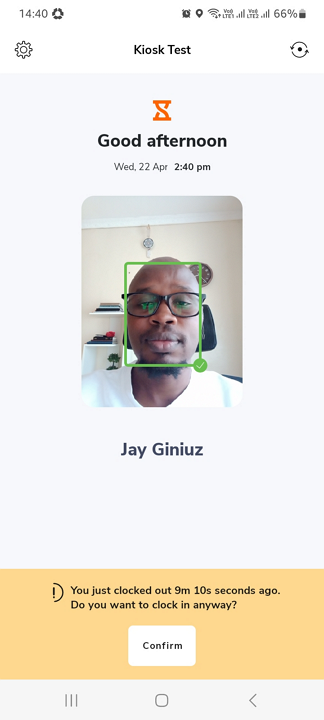
By eliminating these manual processes, Jibble speeds up the clock-in process. This makes it a good fit for companies with large on-site workforces, where employees must clock in from a shared device.
However, because speed facial recognition doesn’t allow employees to select a project or activity when clocking in, it’s not a good fit for shift-based employees who work on different tasks. It’s also supported in kiosk mode only, so teams using the mobile app can’t take advantage of the hands-free clock-in experience.
Verdict: 6.5/10
Jibble’s overtime tracker does a solid job, accurately logging all types of overtime. However, its rigid break tracker falls short, limiting its usefulness for businesses that must comply with strict labor laws.
I found that each work schedule can have only one break type, either paid or unpaid. This rigid policy makes it difficult to create layered break policies that comply with labor laws that require different types of breaks within a single shift.
For example, Jibble can be unsuitable for businesses in California, where labor laws mandate a mix of paid and unpaid breaks, depending on the length of a shift. For example, an employee working an 8-hour shift is entitled to a 30-minute unpaid meal break and two 10-minute paid rest breaks during the shift.
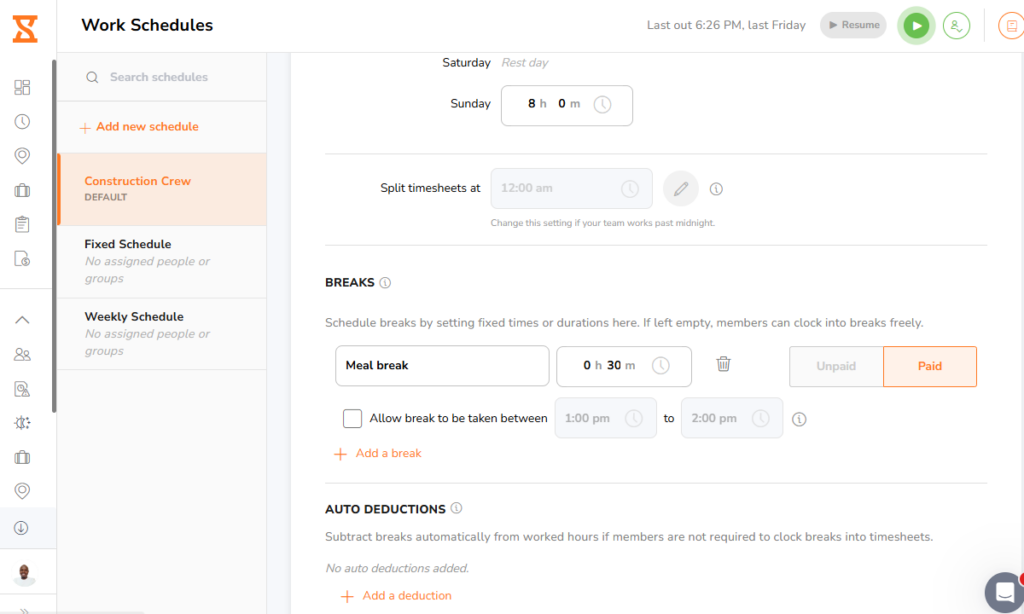
Even worse, you can’t set recurring breaks or restrictions to prevent employees from ending their break early. Without these tools, it becomes difficult to enforce legally mandated breaks, increasing the risk of labor law violations, payroll disputes, and potential compliance penalties.
Did You Know?
With Connecteam’s time clock, you can set up paid and unpaid break policies and recurring breaks for different shifts. This helps managers keep break rules consistent and gives employees clearer guidance during the workday.
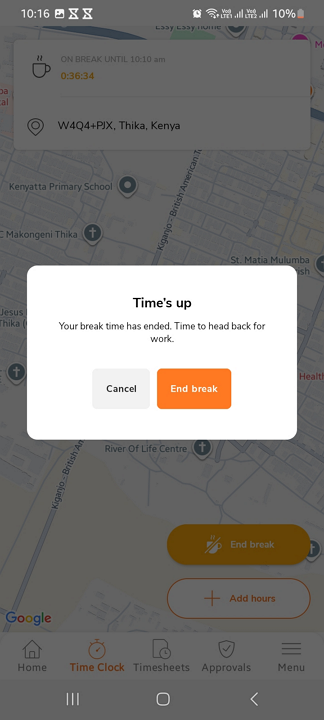
Despite these issues, it was easy to track breaks on any app, including the time clock kiosk. I liked the reminders to start or end a break, which help reduce missed or incorrect break entries to ensure compliance with internal policies.
Overtime Tracking
Creating overtime policies with custom thresholds and rate multipliers was child’s play. Jibble’s overtime framework is quite flexible, allowing managers to create policies for daily overtime, daily double time, rest days, and public holiday overtime. This makes Jibble suitable for tracking overtime across different compliance environments.
For this review, I set Jibble to track overtime and double time in accordance with California overtime law, where overtime starts after 8 hours and double time starts after 12 hours. I left the timer running for 13 hours 23 minutes. Jibble recorded 4 hours of overtime and 1 hour 23 minutes of double time, which was accurate.
Verdict: 6/10
Companies that need deeper insights into office employees’ productivity are better off using a different time-tracking app. However, if all you need is occasional visual proof of work without having to dig through complex metrics, Jibble’s screenshot recording is sufficient.
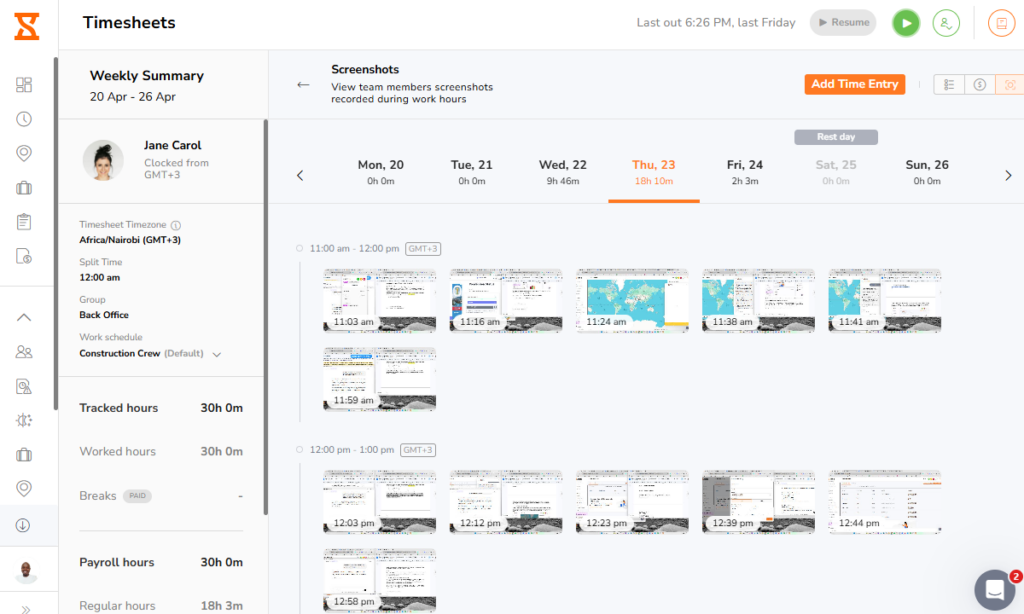
Jibble’s activity-monitoring suite is barebones: All it can do is record screenshots of employees’ activity. One notable improvement since my last round of testing, though, is the added customization.
I could set Jibble to take one screenshot every two, five, or ten minutes, depending on the level of visual proof of work I needed. Even better, I could configure it to take blurred screenshots for enhanced privacy.
That said, the lack of advanced monitoring features, such as app and website usage, keystroke tracking, idle-time tracking, and productivity analytics, means managers have limited insight into how employees spend their time. This makes Jibble less appealing to companies that need detailed tracking of team productivity and performance.
Verdict: 8/10
Overall, Jibble GPS location tracking delivers strong real-time visibility, making it a good fit for companies that depend on real-time employee location tracking. However, it’s not ideal for businesses that need precise route tracking.
Jibble’s GPS location tracking feature worked just fine during testing. The “live locations” map provided a clear, real-time overview of where field employees were, which tasks they were working on, and how long they had been clocked in. These insights can help managers verify everyone is where they need to be and respond quickly to issues in the field.
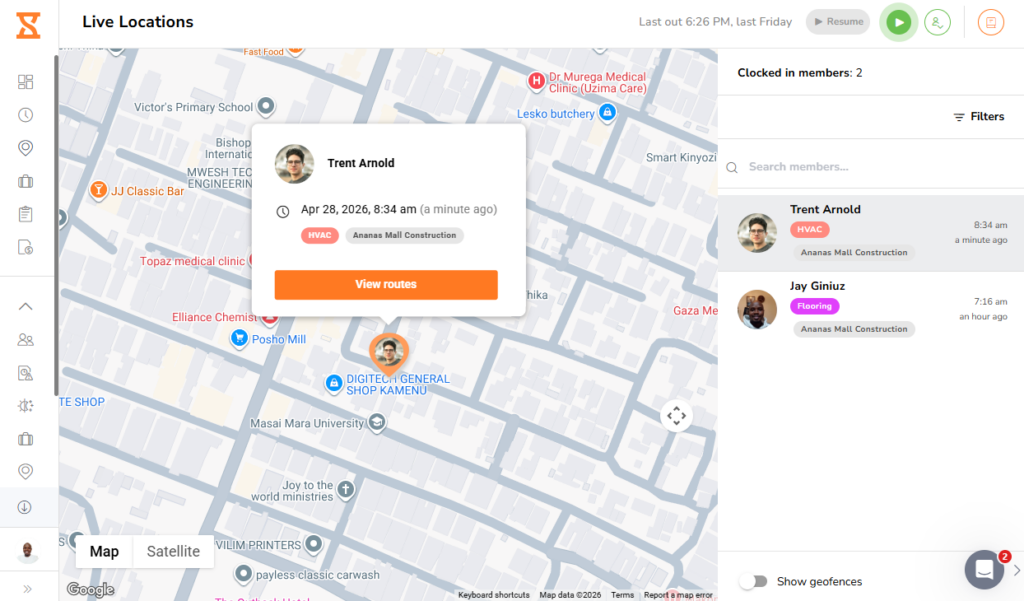
When I enabled the “show geofences” option, Jibble highlighted all the job sites on a map, allowing me to verify each employee’s actual location relative to their assigned job site. This level of real-time visibility helps managers ensure job site compliance and assign urgent field tasks based on employee proximity.
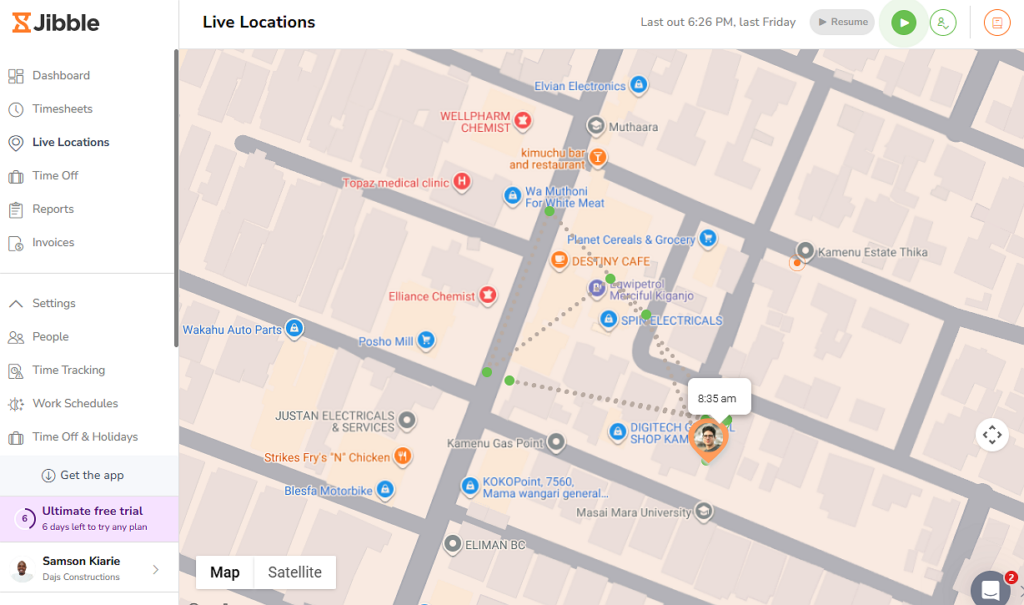
Jibble also includes route tracking, but it’s somewhat basic compared to solutions like Connecteam. In fact, Jibble hasn’t improved this feature since I last reviewed it. It still connects GPS waypoints with straight lines, resulting in a route that doesn’t reflect the exact path the employee followed.
Verdict: 7/10
I found Jibble’s PTO useful for salaried employees, but the lack of hourly PTO makes it less effective for hourly teams. It also doesn’t tick the boxes for teams that need tighter control over workforce planning due to the lack of advanced blackout dates and minimum notice period controls.
Jibble’s PTO module supports only lump-sum PTO, in which employees receive their full PTO balances upfront. You can set the accrual cycle to yearly or monthly. With a yearly cycle, you can reset PTO balances at the start of the calendar year or on an employee’s join date.
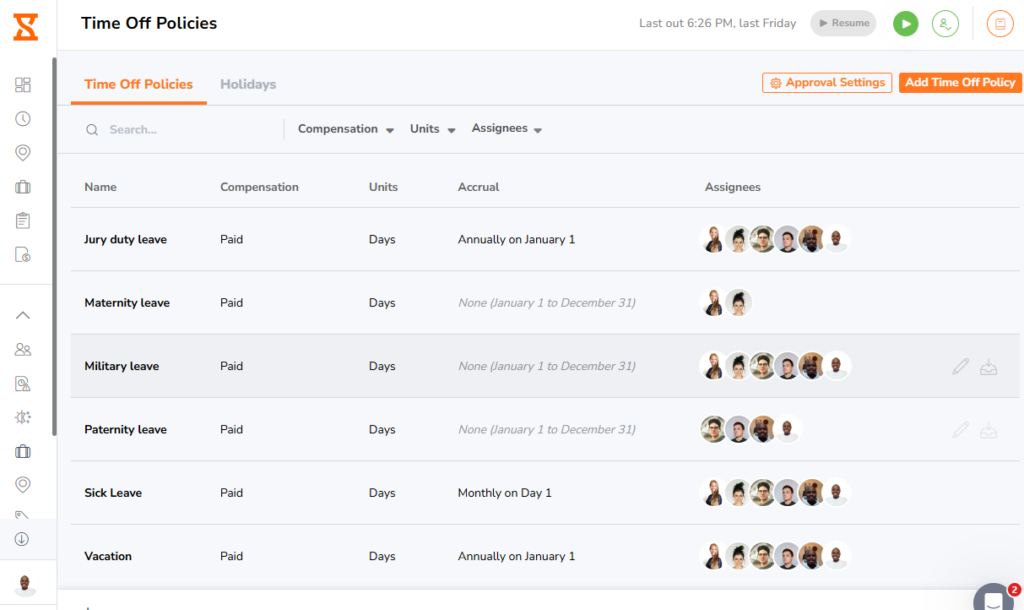
Requesting time off on the web or mobile app was a breeze. Jibble considers time-off requests approved by default, which can lead to availability issues. Thankfully, you can set up an approval workflow and designate approvers for better managerial oversight.
However, Jibble doesn’t notify those in charge of approving time off when an employee submits a request, which can cause delays. Also, you can’t set a minimum notice for leave requests to minimize last-minute requests.
Another issue is that Jibble doesn’t support blackout dates, so managers can’t restrict time-off requests on busy days or during peak seasons. This makes the platform unsuitable for environments where labor demand fluctuates seasonally, such as in the hospitality industry.
Verdict: 7/10
Jibble covers the basics well. In addition to offering a decent number of native integrations, it lets you connect virtually any app with Zapier and API integrations.
As of writing, Jibble offers native integration with dozens of third-party solutions, which is a decent number. The integrations span payroll, accounting, collaboration, communication, and productivity software. Notable integrations include:
Jibble also supports Zapier integration, which is helpful for teams that don’t use some of the native integrations. With Zapier, you can connect virtually any app to Jibble to automate workflows and minimize manual data entry across your tech stack.
Additionally, Jibble supports Application Programming Interface (API) integrations, allowing businesses to build custom connections and tailor data exchange between systems. However, as with most API integrations, Jibble’s API requires technical expertise to implement and maintain.
Reporting and Analytics
Verdict: 6.5/10
Jibble’s reporting is simple yet effective, with a visually rich dashboard that surfaces key insights fast. However, limited report types and basic sharing options may frustrate data-driven teams.
Jibble’s reporting and analytics options are limited to two reports (time tracked and attendance insights) and a dashboard. The dashboard is the standout tool, as it provides a real-time overview of tracked hours, projects, upcoming time off, activities, and employee locations.
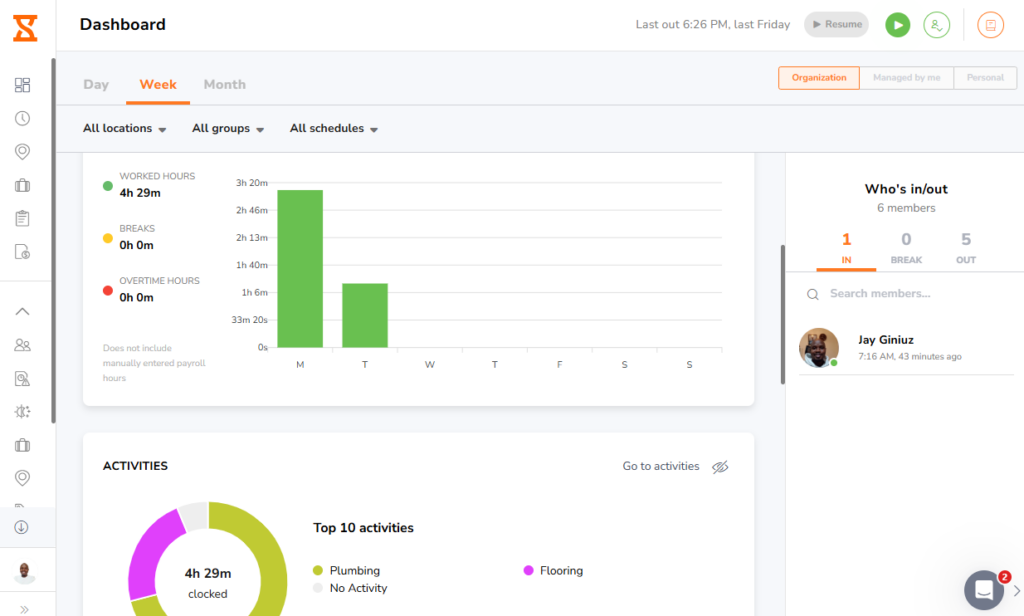
I like that the dashboard presents data through colorful visuals, making it easy for managers to spot helpful insights. I also appreciate the wide range of report filters, which helps customize the report and drill down to a specific workforce metric. During testing, I was able to view reports by member, location, activity, project, client, or schedule.
While that range of functionality sounds useful, Jibble’s report sharing is limited to XLS and CSV exports only. You can also configure the system to automatically send daily or weekly timesheet, activity, and attendance summaries to your inbox. However, the scheduled report option can be difficult to find, as it’s tucked away in the manager’s profile.
Jibble Security and Privacy
Verdict: 7.5/10
Jibble offers solid baseline privacy & security measures with GDPR compliance, encryption, and 2FA. However, missing SOC 2 and HIPAA compliance makes it less suitable for highly regulated industries.
| Feature | Availability |
|---|---|
| Data encryption | ✅ Not specified |
| GDPR compliant | ✅ |
| HIPAA compliant | ❌ |
| Certification | ❌ |
| MFA/2FA | ✅ 2FA |
| Admin controls | ✅ Role-based access control |
| Hosting region | E.U. (current data) and U.S. (legacy data) |
I scoured the web and found no publicly reported security breaches or data leaks linked to Jibble, which is a good sign that its security measures work well. Jibble is GDPR compliant and supports two-factor authentication (2FA) and role-based access. The platform also encrypts data at rest and in transit, but it doesn’t share which encryption standards it uses.
I also couldn’t find a credible source disclosing Jibble’s SOC 2 Type 2 status. If Jibble is not SOC 2 Type 2 compliant, it means its infrastructure and controls have not been audited by any third-party firm. Another issue is that Jibble isn’t HIPAA compliant, which can be a dealbreaker for healthcare businesses in the United States.
Jibble Customer Support
Verdict: 9/10
Overall, Jibble delivers fast, helpful support with a strong knowledge base and responsive chat. However, gated live chat and limited access to human agents can frustrate users on lower-tier plans.
| Support Type | Availability |
|---|---|
| Live chat | ✅ |
| Phone support | ✅ |
| Email support | ✅ |
| Community forum | ❌ |
| Ticket submission | ✅ |
| Help center | ✅ |
Jibble offers live chat, phone, and knowledge base support. Overall, my experience across these support channels was excellent. The knowledge base articles are well organized by category, making it easy to find self-service help. In addition, the help center search bar allows you to find relevant guides by keyword.
When I asked a question in the chat feature, Fin — Jibble’s AI chatbot — provided instant answers. However, I did notice that Jibble has removed the “talk to a person” option, which I used to escalate issues to human agents during my last round of testing. This time around, I had to ask the chatbot to connect me with an agent by sending the message “human agent.”
Jibble claims to respond to all chat questions in less than an hour, but in my experience, the agents got in touch within 10 minutes. They also responded to subsequent questions instantly, which was impressive. However, you must be logged in and on a higher-tier plan to access live chat.
What Are Jibble’s Review Ratings From Review Sites?
(As of May 2026)
Jibble App Review
Jibble is a reliable time-tracking solution for office and frontline teams. Its easy-to-use apps flatten the learning curve, making it easy for all employees to track time, request time off, and manage timesheets.
Its facial recognition and geofencing tools are helpful, despite minor issues. They add accountability to every clock-in, helping reduce time theft and ensuring every employee is paid for time spent on the actual tasks. Even so, frontline teams that want an all-in-one workforce management platform will find Jibble somewhat limited in scope.
The platform lacks broader operational tools such as shift scheduling, built-in communication, task management, and stronger offline functionality, which field-based teams rely on. If you need shift coordination to ensure proper team operations, Jibble forces you to rely on third-party workarounds, which can inflate your technology costs.
Luckily, reliable all-in-one workforce management solutions are available, such as Connecteam. Connecteam lets you manage operations from a single hub, minimizing app switching while reducing your software costs.
Connecteam: The Better Jibble Alternative
There’s no doubt that Jibble’s strengths, such as the AI facial recognition and easy-to-use mobile apps, outweigh its weaknesses. However, the lack of shift scheduling is a major dealbreaker for shift-based teams in industries such as construction, healthcare, manufacturing, hospitality, and cleaning.
If you need an app that combines Jibble’s excellent time-tracking capabilities with efficient shift scheduling, use Connecteam. Connecteam enables teams to track time, manage attendance, plan shifts, onboard and train field employees, and communicate on one platform.
Some of the reasons I recommend Connecteam over Jibble for shift teams include:
Efficient Employee Scheduling
Whether you manage a small team and want a simple, drag-and-drop scheduler or have multi-location workforces and need AI scheduling automation, Connecteam has you covered. With its easy-to-use drag-and-drop scheduler, shift templates, and shift-copying features, creating schedules manually is effortless.
I also like its recurring shift features, which let you create a shift once and set it to repeat on a predefined schedule – daily, weekly, or monthly. Plus, with Connecteam’s auto-scheduler, you can assign hundreds of shifts in minutes, not hours. Even better, the auto-scheduler assigns shifts based on employee availability and qualifications, eliminating potential conflicts.
Other notable scheduling features include:
- Set scheduling rules to help managers set schedules that comply with local labor laws.
- Enable shift swaps so employees can find a replacement when life happens.
- Use the automatic conflict detector to ensure published schedules are conflict-free.
- Use powerful notifications to keep employees on top of their schedules.
Accurate Time Tracking
Like Jibble, Connecteam provides easy-to-use yet powerful time-tracking apps. It enforces various clock-in restrictions and uses facial recognition and geofencing to ensure employee timesheets are accurate. It also offers a time clock kiosk that allows multiple on-site workers to clock in or out using a shared device.
Moreover, Connecteam’s overtime tracker lets you track daily overtime, daily double time, weekly overtime, holiday overtime, and seventh-consecutive-day overtime. That said, Connecteam is more appealing than Jibble for teams that must comply with strict break-tracking laws.
For example, with Connecteam, you can create paid and unpaid break policies, whereas Jibble lets you create either paid or unpaid break policies, not both. Even better, Connecteam supports recurring breaks, allowing you to assign multiple breaks based on shift length. Jibble doesn’t have a similar functionality.
Built-In Team Chat
Connecteam’s chat feature lets teams communicate in one-on-one, group, or company-wide chats. Managers can use chats to ensure employees understand their roles and responsibilities so the team pulls in the same direction. Connecteam notifies employees via email so they never miss important messages.
In addition, Connecteam’s Updates feature allows you to make announcements in a social media-like network. Whether it’s a new hire, a promotion, or a change in the company hierarchy, you can announce it in a way that resonates with the modern workforce.
And So Much More
Connecteam offers additional tools, including:
- Real-time location tracking
- Document management
- Employee onboarding and training
- Knowledge base
- Employee recognition and reward
- PTO management
- Forms and checklists
The cherry on top? Unlike Jibble, Connecteam doesn’t lock certain features behind paid plans. For example, Connecteam’s Small Business plan lets small businesses with up to 10 users access all features without paying a dime. Paid plans start at $29 per month for 30 employees, which works out to less than $1 per employee.
Jibble Review FAQs
Jibble supports labor tracking with timesheets, break tracking, overtime rules, approvals, and time-off management. However, its break tools are limited. Each work schedule can have only one break type, paid or unpaid, so businesses with strict break laws may need a more flexible tool.
Jibble has a free plan with GPS time tracking, break tracking, overtime tracking, project tracking, screenshots, and biometric verification. Paid plans start at $4.49 per user per month when billed annually. The Ultimate plan costs $7.99 per user per month, and Enterprise pricing is custom.
Switching to Jibble is fairly easy. Setup took less than an hour in testing, and managers can invite employees by email or link. Leaving Jibble is possible but may take manual work. Reports can be exported as XLS or CSV files, but settings and policies likely need manual transfer./
Jibble connects with payroll and accounting tools such as QuickBooks Online, Xero, and Deel. The review confirms these integrations but does not confirm whether payroll sync is fully automatic. Businesses should check the exact workflow before relying on Jibble for payroll exports or approvals.
[
Jibble offers integrations for payroll, accounting, communication, collaboration, and productivity tools. Notable options include QuickBooks Online, Xero, Slack, Deel, Microsoft Teams, and Asana. It also supports Zapier and API access for custom workflows.
Jibble protects business and employee data with GDPR compliance, 2FA, role-based access, and encryption at rest and in transit. However, the review found no confirmed SOC 2 Type 2 certification, and Jibble is not HIPAA compliant.
Jibble is easy to use on the web, mobile, desktop, and kiosk apps. Employees can track time, request time off, view timesheets, and manage schedules. Managers get more tools on mobile, but most features require an internet connection.
Jibble helps prevent time theft with facial recognition, geofencing, device locks, clock-in reminders, automatic clock-out, kiosk PINs, and NFC options. Its speed facial recognition is especially useful for shared kiosks, but one mobile facial recognition glitch during testing raised some accuracy concerns.
