


If you’re managing employee records, time off, onboarding, and HR documents across disconnected systems, it’s easy to miss important details, creating extra admin work and compliance risks.
I reviewed 5 human resource management systems and ranked them by how well they organize employee data, streamline HR processes, and help businesses stay compliant.
Use these picks to save time on HR tasks, create more consistent processes, and support your growing team.
| App | Best for | Starting Price | Key Considerations |
| Connecteam | Best HR system for deskless and frontline teams | Just $29/month for the first 30 users | Strongest for frontline teams that need to manage the entire employee lifecycle, from application to fully onboarded employees without switching tools. |
| Gusto | Small businesses syncing payroll with comprehensive HR | $49 base fee + $6 per seat per month | Strong payroll integration, training, and onboarding features. Helpful for businesses prioritizing payroll accuracy and simplicity. |
| BambooHR | Performance management and employee development | $10/user/month | Full employee data management and applicant tracking system. Strong performance review tools. Limited payroll functionality. |
| Rippling | Enterprise workflow automation and IT management integration | Contact vendor for price | Deep trigger-based workflow automation for onboarding and offboarding. Integrates HR with IT device management. Best suited for mid-market and enterprise teams. |
| Zoho People | Budget-conscious teams needing core HR functionality | $1.25/user/month | Affordable pricing with solid core HR features. Good for small to mid-sized businesses. Limited analytics compared to competitors. |
What’s New in This Update (August 2026)
- Replaced HiBob and Paylocity with Gusto and Zoho People to better reflect the most competitive options for small businesses and budget-conscious teams.
- Rewrote the ranking criteria to focus on solving real-world HR pain points rather than just listing features.
- Expanded Connecteam section to include new hiring and onboarding tools.
Our Top Picks
-
1

Best HR system for deskless and frontline teams
-
2

Best for small businesses syncing payroll with comprehensive HR
-
3

Best for performance management and employee development
Why trust us?
Our team of unbiased software reviewers follows strict editorial guidelines, and our methodology is clear and open to everyone.
See our complete methodology
How I Ranked the Best Human Resource Management Systems
These are the key challenges I focused on when reviewing each platform:
Core HR Requirements
- Eliminating scattered employee data: I looked for a single, centralized hub where managers could instantly pull up emergency contacts, certifications, and job history.
- Stopping payroll bottlenecks: Approved timesheets and time-off balances need to sync directly with payroll to avoid manual data entry and costly errors.
- Simplifying onboarding: Managers should be able to send digital offer letters, collect e-signatures, and assign training packets before a new hire’s first day.
- Preventing compliance violations: I prioritized systems that automatically track expiring certifications, mandatory training, and labor law break rules.
Day-to-Day HR Usability
- Cutting the HR admin burden: Employee self-service should let workers update personal details, download pay stubs, and check leave balances without emailing HR.
- Keeping requests from piling up: Time-off approvals, document sign-offs, and policy acknowledgments should route automatically to the right person instead of sitting in an inbox.
- Protecting sensitive employee data: Role-based permissions should tightly control who can view salaries, medical information, or disciplinary records.
- Answering leadership’s questions fast: HR reports on headcount, turnover, and absence trends should take minutes to pull, not days.
Employee Engagement and Development
- Reducing turnover: The software should make it easy to recognize hard work, distribute rewards, and run anonymous pulse surveys to catch morale issues early.
- Making performance reviews useful: Managers need tools to track goals, collect 360-degree feedback, and document regular check-ins.
- Closing skill gaps: I looked for ways to assign training, track completion, and tie learning to career progression.
The 5 Best Human Resource Management Systems
-
Connecteam — Best HR system for deskless and frontline teams
Connecteam is the best choice for deskless and frontline teams because it combines comprehensive HR tools with full operations management in one mobile-first platform. It’s built for businesses that need to manage the employee lifecycle alongside day-to-day operations.
Why I chose Connecteam: I ranked Connecteam #1 because it was the most complete option for managing a deskless workforce, especially in areas like centralizing employee records, streamlining payroll, and supporting employee development.
Hiring and Onboarding
Connecteam’s hiring and onboarding tools let you take someone from applicant to fully onboarded employee without ever leaving the platform. You create a position, build the application form with the exact fields you want, and design your own pipeline with custom stages, such as a screening call, in-person interview, reference check, or home test. Share the application link on whatever channels you use, and follow candidates through the process.
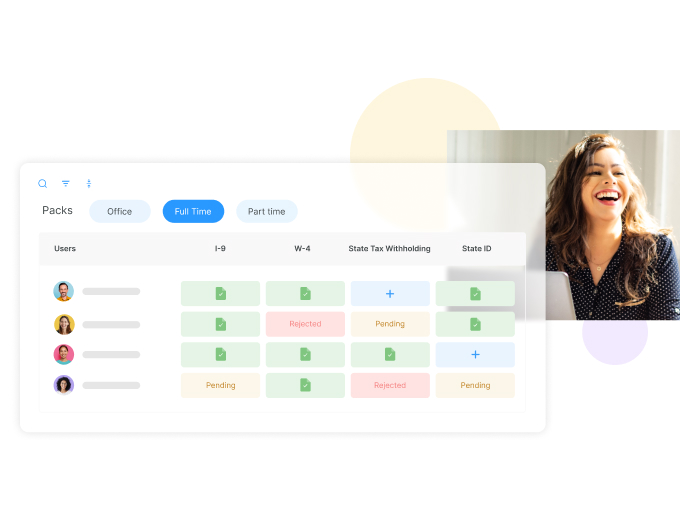
When you hire someone, the information from their application (like their CV or license) automatically carries over to their employee profile and documents, so nothing needs to be entered twice. From there, you can assign a role-specific onboarding pack with personal details, document uploads (including W-4, W-9, and I-9 forms), company policies, and tasks with deadlines for both employees and managers.
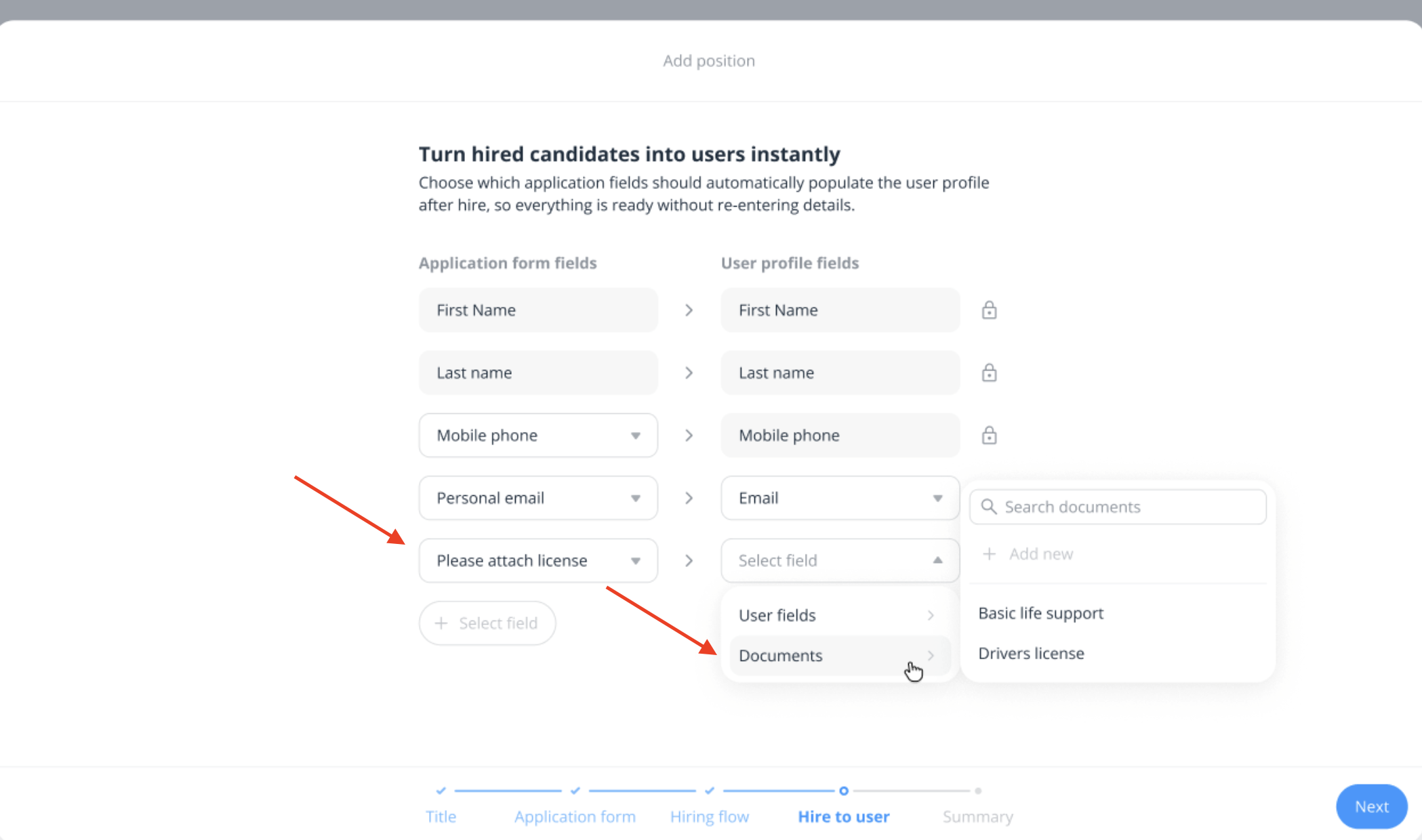
Connecteam’s hiring workflow automatically maps applicant information to employee profiles after hire. Mobile-First Training
Employee training lives in the same hub as onboarding. Start by creating a course from scratch or use one of Connecteam’s customizable templates to get going. The AI Course Creator lets you instantly generate custom training courses, and you can even include surveys and quizzes to test understanding. Managers can track employee progress in real-time from the dashboard and send automatic reminders to anyone lagging behind.
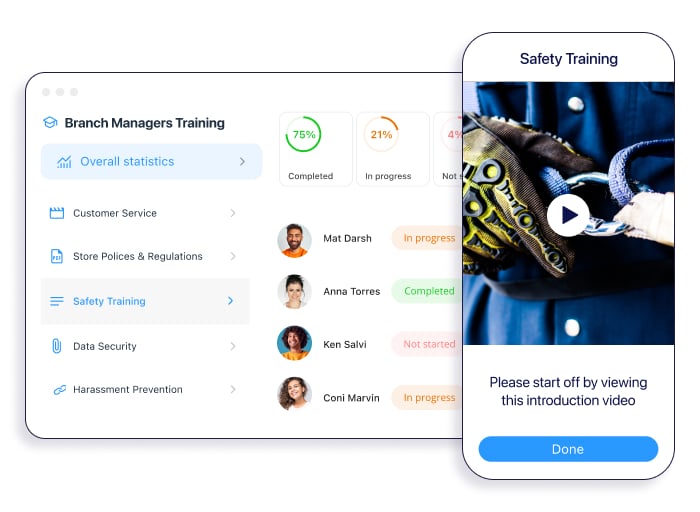
Managers can create mobile training, assign courses, and track progress from one dashboard. Scheduling and Time Tracking
Connecteam combines scheduling, time tracking, and payroll prep in one platform. The drag-and-drop employee scheduler lets you build schedules across locations and departments, while the AI auto-scheduler fills shifts based on custom rules like employee availability, qualifications, or certifications. Employees can request time off in the app, and once approved, leave balances update automatically and sync with the schedule.
When it’s time to work, employees clock in from their phones, and the GPS-enabled time clock can even show their routes throughout the shift. You can set custom pay rules, track paid or unpaid breaks, and automatically calculate overtime. Once timesheets are approved, they’re ready to export to payroll providers like Gusto, QuickBooks, and Paychex.
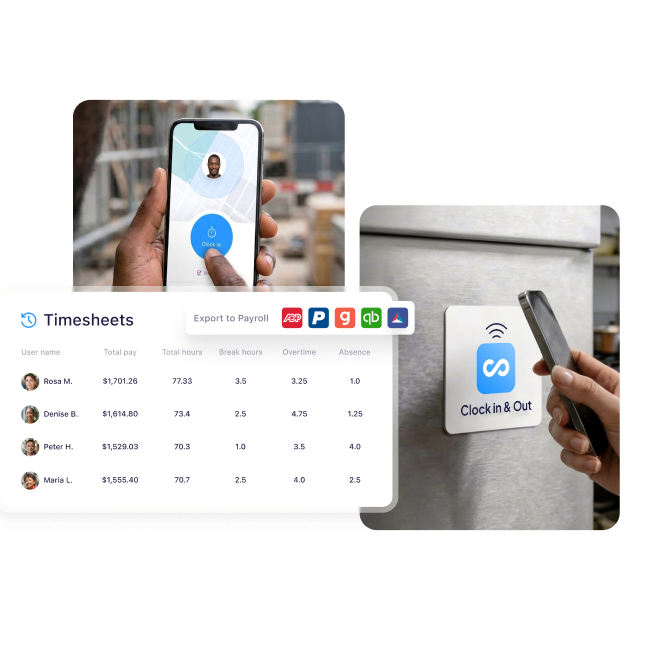
Connecteam covers everything from clock in to payday. And so much more…
Connecteam also includes an online team chat, a company knowledge base with an AI agent to answer employee questions, staff documents with expiration tracking, and an internal help desk for IT or HR requests.
When Connecteam isn’t a good fit
Connecteam is a general workforce management platform, not an enterprise-level human capital management (HCM) suite. If you need built-in payroll processing rather than payroll integrations, or your benefits administration involves complex carrier feeds and enrollment workflows, a dedicated payroll or HCM specialist will be a better fit. The same goes for large enterprises managing intricate union rules or global payroll across many countries.
Connecteam also offers a free for life plan – Try Connecteam here!
0Key Features
- Hiring with custom stages and application forms
- Digital onboarding packets with e-signatures
- Mobile training courses with quizzes
- Drag-and-drop scheduling with AI auto-assignment
- Mobile time clock with GPS and geofencing
- Document storage with expiration reminders
Pros
- Role-specific onboarding packs
- AI Course Creator builds training instantly
- Applicant data flows into employee profiles
- Scheduling syncs with time tracking
Cons
- No built-in payroll processing (relies on integrations)
- Lacks complex enterprise benefits administration
Pricing
Free-for-life plan availablePremium plans start at $29/month for 30 users
Optimize your HR with Connecteam's top-rated HR management system
Get Started Now -
Gusto — Best for small businesses syncing payroll with comprehensive HR
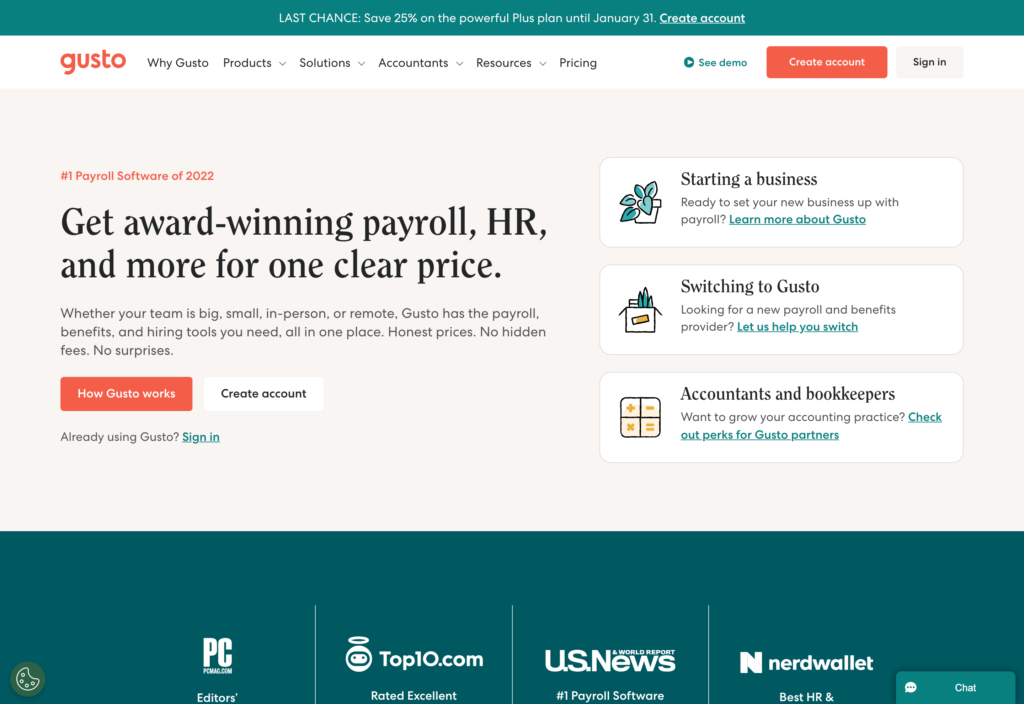
Gusto is a payroll and HR software solution designed to simplify complex administrative tasks for small to medium-sized businesses.
Why I chose Gusto: Gusto stands out for small businesses because it turns payroll into a few clicks, automatically calculating, filing, and paying federal, state, and local taxes for you.
Automated Payroll and Tax Calculations
Gusto’s payroll is closely tied to employee records, so wages, deductions, and payroll taxes are calculated automatically based on each employee’s pay details and current tax rules. After you review payroll, Gusto withholds the correct taxes, files required forms, and can pay federal and state tax agencies on your behalf.
You can customize the company name that appears on employees’ bank statements and choose between 4-day, 2-day, or next-day direct deposit, depending on your plan. Gusto also supports custom pay types for bonuses and commissions, paper checks, and employee reimbursements, with approved expenses automatically included in payroll.
One thing to note is that Gusto doesn’t offer a free plan. However, you can use the platform at no cost until you run your first payroll.
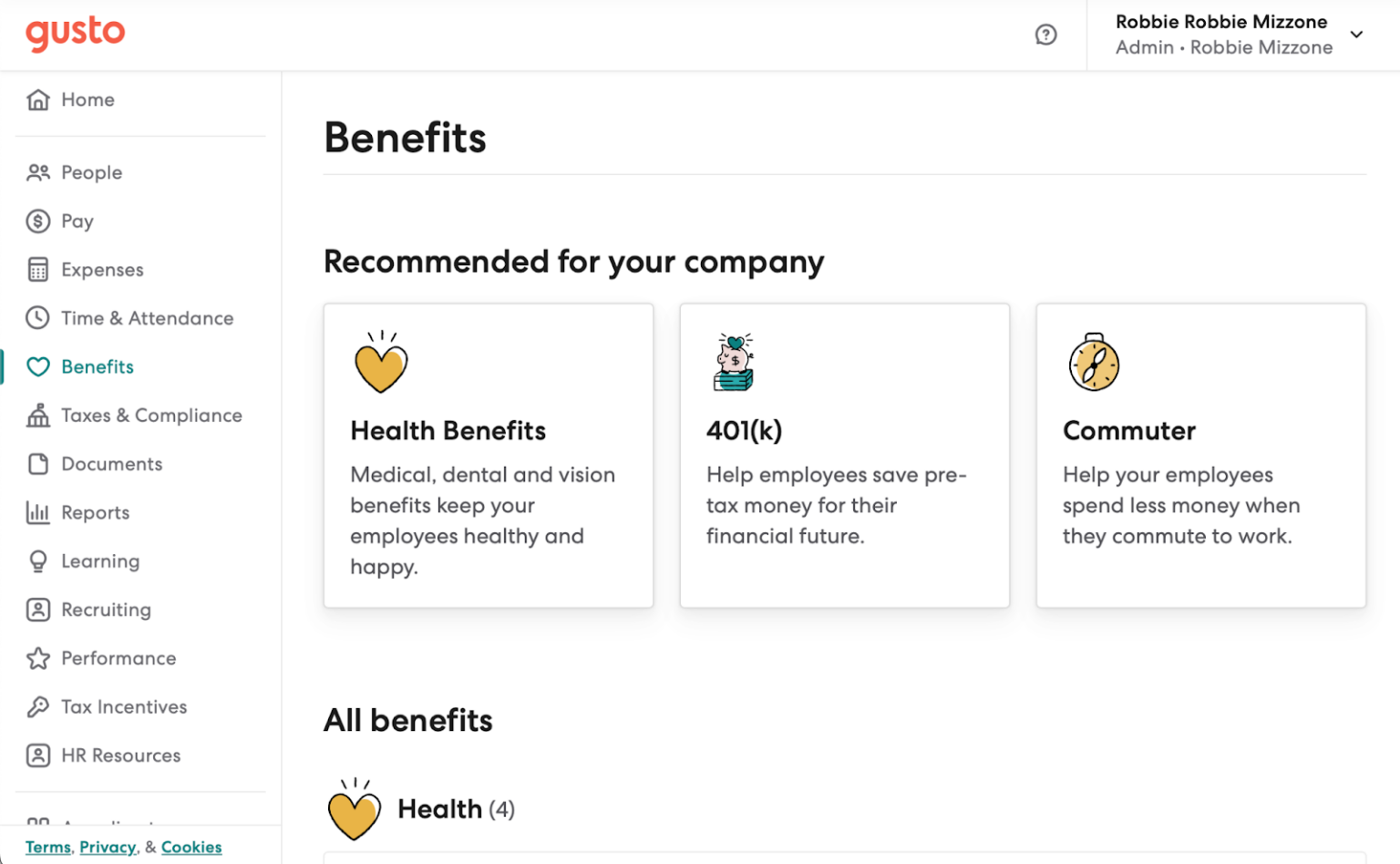
Gusto helps businesses set up health benefits, 401(k) plans, or commuter reimbursements. Employee Onboarding and Benefits
Gusto keeps employee information organized in a single system, making it easy to onboard new hires, maintain employee records, and manage your team as it grows. There’s an interactive org chart, and integrations for recruiting and background checks.
Gusto also lets you set up and manage health benefits, commuter perks, and 401(k) retirement plans through direct integrations with partners like Guideline and Vestwell.
Time and Project Tracking
Employees can track their hours using a mobile app, a shared time kiosk, or manual entry. The project tracking feature is also helpful, and lets you assign specific working hours to different clients or jobs.
However, during testing, the mobile time clock wasn’t always reliable for us, especially when capturing location data. There are also no built-in break reminders or overtime alerts, and biometric login is limited to the Wallet app.
Key Features
- Automated full-service payroll and tax filing
- Employee self-service mobile app (Gusto Wallet)
- Health insurance and 401(k) administration
- Project-based time tracking
Pros
- Automatically handles complex tax calculations
- Wide range of accounting software integrations
Cons
- Geolocation time tracking glitched during testing
- No biometric login options on the web application
Pricing
Starts at $49 base fee + $6 per seat per month Trial: No Free Plan: No
-
BambooHR — Best for performance management and employee development

BambooHR is an HR platform that centralizes employee data and helps growing businesses manage the entire employee lifecycle.
Why I chose BambooHR: BambooHR stands out for its review cycles, goal tracking, and 360-degree feedback tools are built into the core platform, helping growing teams turn annual reviews into continuous development.
Employee Data and Applicant Tracking
BambooHR offers a flexible employee database where you can track personal details, job status, training, and company assets. The Applicant Tracking System is also strong, and it lets you publish job postings to multiple boards, run candidates through custom statuses, group them into talent pools, and send offer letters from reusable templates.
It’s important to mention that the number of job openings you can keep open depends on your plan. You’re capped at 5 on Core, 25 on Pro, and 50 on Elite, so if you’re hiring at scale, it might mean closing postings or upgrading to a higher plan. BambooHR also doesn’t offer AI resume screening or candidate ranking, so you still need to review every application manually.
Performance Assessment
BambooHR’s performance management tools are built to support continuous development, instead of just a single annual review. Goals can include milestones that update a progress bar as employees complete each step. BambooHR also sends from employees and managers a reminder 30 days before a review cycle ends.
After both the employee and manager submit their assessments, the manager can add one final note for the employee to read. BambooHR also includes peer feedback, so managers have a more complete picture of an employee’s performance.
There are a few drawbacks I noticed. First, while employees and managers can access goals, assessments, and feedback from their phones, they need to complete assessment questions in order, with no option to skip ahead. Managers also can’t request peer feedback through the mobile app. Finally, performance management is only available on the Pro plan and up, which could be limiting for small teams that don’t want to commit to $17 per employee per month.
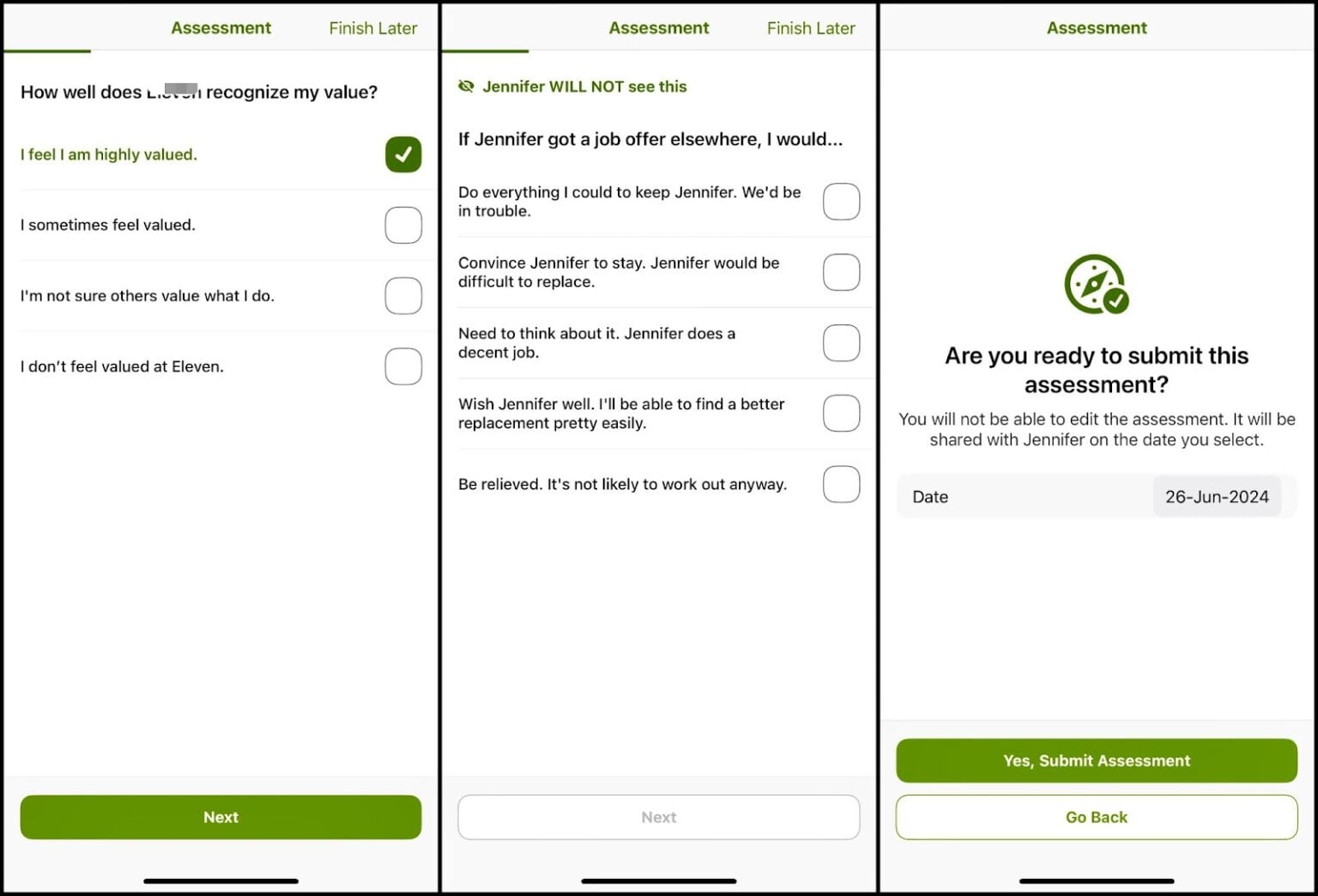
Employees can complete their performance assessments on the BambooHR mobile app. Time Off and Payroll Add-ons
Managing time off is straightforward, and the leave balance calculator warns employees if a request would put them into a negative balance. However, time tracking isn’t included with any plan. BambooHR’s Time & Attendance module (formerly Time Tracking) and Payroll and Benefits Administration are both sold separately.
During testing, we had to activate Time & Attendance through a separate setup process. Once enabled, employees could clock in from the mobile app, but the feature has several limitations.
Employees need to enable precise location services or they won’t be able to clock in, and GPS accuracy depends on the device and signal, sometimes recording only a city and state. There’s also no geofence to prevent off-site clock-ins or live GPS tracking throughout a shift, and recorded locations can’t be edited later. In addition, timesheets only store the most recent 12 months on an employee’s profile, with older records moved to separate reports.
Key Features
- Employee database
- Applicant Tracking System
- 360-degree performance reviews
- Time-off management
Pros
- Job board posting
- Strong performance tools
Cons
- Time tracking requires paid add-on
- Job postings capped by plan
Pricing
Starts at $10/user/month Trial: Yes — 7 day Free Plan: No
-

Rippling — Best for enterprise workflow automation and IT management integration
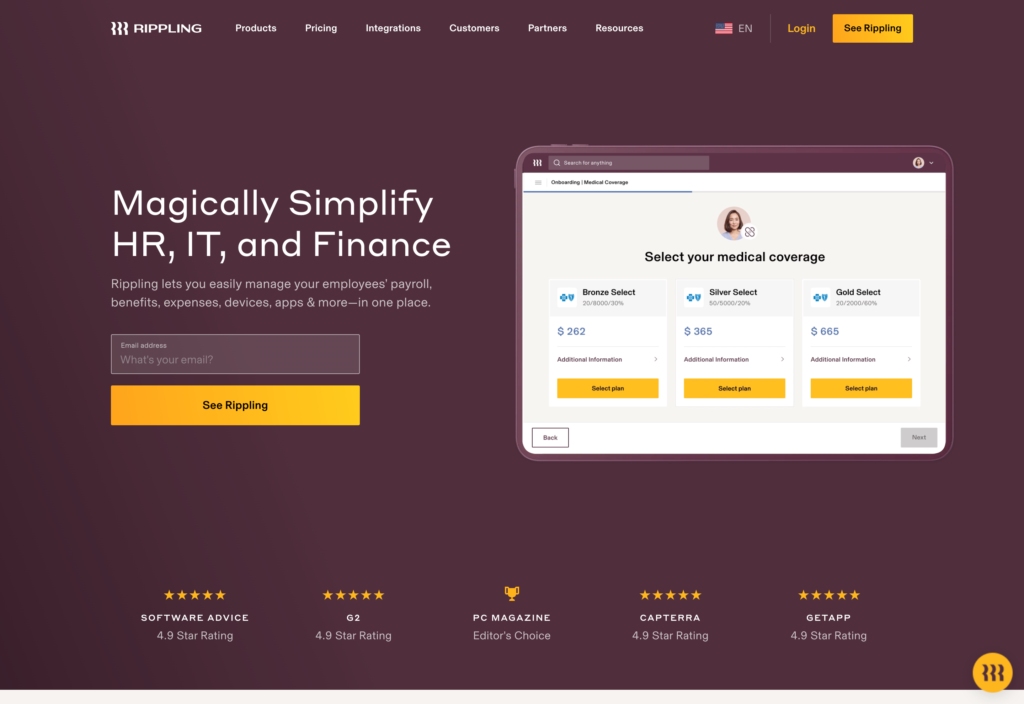
Rippling is a platform that brings together workforce management, HR, payroll, finance, and IT device management into a single system.
Why I chose Rippling: Rippling stands out for enterprise teams because it creates a single source of truth for employee data, helping HR teams automate processes and manage the entire employee lifecycle from one place.
Workflow Automation
Rippling’s Workflow Studio lets you automate HR processes using a visual, no-code editor. You can use one of hundreds of prebuilt workflow templates or create your own, such as automatically setting up a new hire’s laptop or sending a milestone bonus after five years. Because workflows can pull data from across the platform and connected apps, they’re super flexible.
The downside is that advanced workflows can take time to set up. Large organizations with more complex requirements may need help from Rippling’s implementation team to get everything configured correctly.
Scheduling and Time Tracking
Rippling’s scheduling engine uses AI to create and fill shifts based on employee data such as availability, hours, certifications, and time off. Employees can view their schedules, change availability, swap shifts with eligible coworkers, and claim open shifts based on company rules.
The built-in time clock supports QR codes, selfie verification, and geofencing to prevent time theft and off-site clock-ins. It automatically applies overtime rules and break policies, while approved hours flow directly into payroll without manual re-entry.
The trade-off is that time tracking is part of Rippling’s modular platform, so you’ll need to pay extra to use the feature.
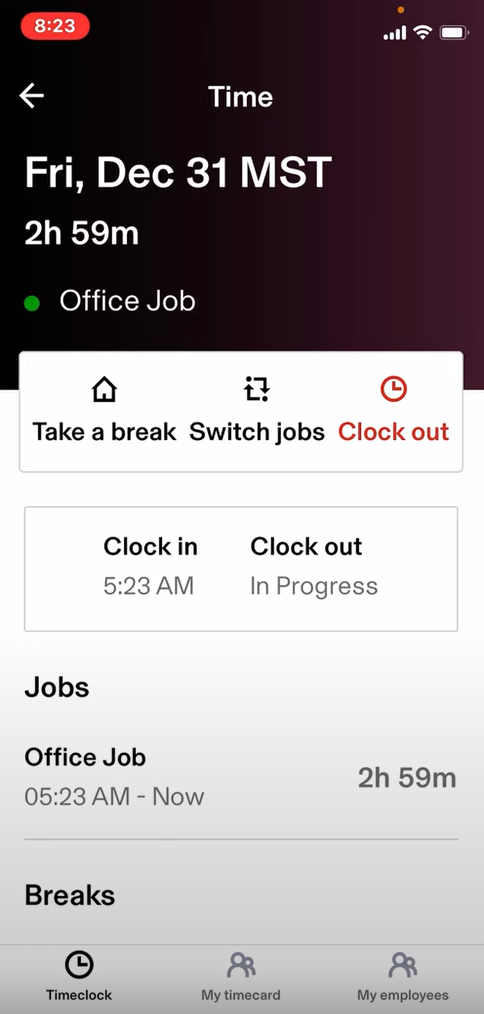
Employees can clock in and out of Rippling’s mobile app. Training and Employee Surveys
Rippling’s Learning Management System lets you create or assign training, enroll employees automatically based on their role, and schedule recurring courses for ongoing compliance. You can also upload custom SCORM courses.
Rippling also includes employee surveys and pulse surveys to help you measure engagement and gather feedback on topics like compensation, company culture, and manager effectiveness. Because survey results are tied to employee data, you can analyze trends by department, tenure, location, and other workforce data. This gives HR teams better visibility into engagement and helps identify areas that may need additional support or attention.
Key Features
- AI scheduling with shift filling and swaps
- Trigger-based workflow automation
- Time clock with selfie and geofence verification
- Learning Management System module
Pros
- No-code workflow builder
- Syncs HR data with IT device management
Cons
- Quote-based modular pricing
- Time tracking is an add-on module
Pricing
Contact vendor for price Trial: No Free Plan: No
-
Zoho People — Best for budget-conscious teams needing core HR functionality
Zoho People is an HR management solution designed to handle essential employee data and time tracking for small to mid-sized businesses.
Why I chose Zoho People: Zoho People stands out for budget-conscious teams because its paid plans start at just $1.25 per employee per month while still covering the core HR essentials, including employee records, attendance, time off, and performance reviews.
Employee Database and Self-Service
Zoho People stores employee records in a central database where employees can update their personal information. Staff can also view the company’s structure through a Department Tree, and check their leave balances.
When it comes to leave management, employees can submit time-off requests, which integrate directly with Microsoft 365 and Google calendars. Managers are notified instantly and can approve requests immediately or route them to multiple approvers if needed.
Time and Attendance Tracking
Zoho People’s time tracking system includes a “People Kiosk” feature that uses facial recognition to clock users in and out. Employees can adjust their hours, and managers can review timesheets and attendance records.
During our testing, however, the mobile app’s biometric login wouldn’t recognize a fingerprint, forcing us to sign manually. The mobile app also lacks some features available on the web version, such as detailed reporting and calendar views, and it doesn’t support offline attendance tracking. That means employees working without an internet connection won’t be able to clock in until they’re back online.
Performance and Communication
Zoho People includes performance management tools for goal setting, performance reviews, and 360-degree feedback. It also has a company feed for announcements, while direct messaging and calling are available through the separate Zoho Cliq add-on.
Key Features
- Centralized employee database
- Time tracking with facial recognition
- Performance reviews and 360 feedback
- Time off management
Pros
- Affordable pricing tiers for small businesses
- Flexible time-off request system
Cons
- Biometric mobile login failed during testing
- No offline data recording for field employees
Pricing
Starts at $1.25/user/month Trial: Yes — 30-day Free Plan: Yes — Up to 3 users
Compare the Best Human Resource Management Systems
| Topic |
 Start for free
|
|
|
|
|
|---|---|---|---|---|---|
| Reviews |
  |
|
|
|
|
| Pricing |
Starts at just $29/month for the first 30 users
|
Starts at $49 base fee + $6 per seat per month
|
Starts at $10/user/month
|
Contact vendor for price
|
Starts at $1.25/user/month
|
| Free Trial |
yes
14-day
|
no
|
yes
7 day
|
no
|
yes
30-day
|
| Free Plan |
yes
Free Up to 10 users
|
no
|
no
|
no
|
yes
Up to 3 users
|
| Use cases |
Best HR system for deskless and frontline teams
|
Best for small businesses syncing payroll with comprehensive HR
|
Best for performance management and employee development
|
Best for enterprise workflow automation and IT management integration
|
Best for budget-conscious teams needing core HR functionality
|
| Available on |
How to Choose the Right Human Resource Management System
Here are a few questions to ask yourself before making a final decision on the right human resource management system:
- Are you managing a small team of 10 people, or a growing workforce of 500?
- Do you need a flat-fee pricing model, or are you comfortable paying a monthly fee for every single employee you add?
- Can you afford to pay extra for essential add-ons like time tracking and payroll, or do you need an all-inclusive package?
- Does your team work at desks in an office, or are they out in the field at different job sites?
- Do you need strict geofencing and GPS tracking to verify where clock-ins happen?
- Are you managing complex, rotating shifts that require an AI-powered auto-scheduler?
- Do you need built-in payroll processing, or do you already use a tool like QuickBooks that you want to integrate with?
What is a human resource management system?
A human resource management system (HRMS) is a software platform that digitizes and centralizes a company’s core HR functions. Instead of relying on paper files, scattered spreadsheets, and endless email chains, businesses use an HRMS to store employee data securely in one place.
These systems typically handle the entire employee lifecycle, from the moment a candidate applies for a job to their final offboarding. They provide tools for recruiting, digital onboarding, time and attendance tracking, performance reviews, and benefits administration.
How does a human resource management system work?
An HRMS works by creating a single source of truth for all employee information. When a new hire joins the company, their personal details, tax forms, and signed contracts are uploaded into their digital profile. From there, the system uses that data to power other workflows.
For example, when an employee uses the HRMS mobile app to clock in, the system checks their profile to determine their correct pay rate and applies any custom overtime rules you’ve set. When the pay period ends, the HRMS automatically compiles those tracked hours into a clean timesheet that can be exported directly to your payroll provider.
The best systems also offer employee self-service portals. This means workers can log in to request time off, view their pay stubs, or update their emergency contacts without having to bother the HR manager.
The Benefits of a Human Resource Management System
Here are a few ways an HRMS can improve your daily operations:
Centralized Data Storage
When you use an HRMS, you never have to dig through filing cabinets to find a signed policy acknowledgment. Every document, certification, and performance review is stored securely in the cloud and attached to the employee’s profile, making audits and record-keeping stress-free.
Accurate Payroll and Compliance
Manual data entry leads to payroll errors. An HRMS automates the flow of data from the time clock directly to the timesheet. It automatically calculates overtime, deducts unpaid breaks, and ensures you’re complying with local labor laws, saving you from costly fines and frustrated employees.
Streamlined Onboarding
First impressions matter. With an HRMS, you can send new hires digital onboarding packets before their first day. They can sign contracts, read the employee handbook, and complete safety training from their phones, meaning they arrive on day one ready to work instead of drowning in paperwork.
Improved employee retention and engagement
Self-service portals, transparent career paths, and regular feedback loops help employees feel valued and invested in their future. Platforms with surveys and pulse checks let you catch disengagement early and address concerns before people leave.
Better workforce visibility and analytics
Real-time dashboards show you headcount, turnover rates, time-to-hire, performance trends, and compensation equity across departments. This data helps you make smarter hiring, promotion, and retention decisions instead of relying on gut feeling.
How Much Does a Human Resource Management System Cost?
Pricing for HRMS software varies depending on the features you need and the size of your team. Most enterprise and mid-market tools charge per-user, per-month fees that typically start from $1.25 to $10 per employee. Many of these platforms also charge a base monthly platform fee on top of the per-user cost, and may gate advanced features behind expensive add-ons.
Connecteam takes a different approach with transparent, flat-fee pricing. The Small Business Plan gives teams with up to 10 users access to the platform completely free. For larger teams, paid plans start at just $29 per month for the first 30 users.
FAQs
A Human Resources Information System (HRIS) generally focuses on core data management, like employee profiles, benefits, and time off. A Human Resource Management System (HRMS) is usually more comprehensive, adding talent management features like performance reviews, applicant tracking, and sometimes built-in payroll.
Yes. Platforms like Connecteam include built-in communication tools, peer recognition features, and anonymous surveys. This allows managers to celebrate wins publicly and keep a pulse on team morale.
Absolutely. Managing even a small team requires tracking time, onboarding new hires, and storing documents securely. Connecteam offers a free-for-life plan for businesses with up to 10 employees, giving you professional HR tools without the enterprise price tag.
The Bottom Line On Human Resource Management Systems
To be successful, HR managers need to stay ahead of market trends. Fortunately, digital human resource management systems that are accessible on the go make it possible for modern organizations to thrive
With the right HR management system, like Connecteam, your HR team can focus on strategic functions rather than mundane administrative tasks. A digital system helps centralize all your employee data and maximizes your company’s workflow.