


When employee records live in spreadsheets and HR tasks are sitting in someone’s inbox, deadlines get missed, new hires are left waiting, and payroll mistakes can cost you time and trust.
I reviewed 6 free HR software platforms and ranked them by employee-data management, useful HR workflows, and day-to-day usability.
Use these picks to cut manual admin, keep records organized, and choose a genuinely free tool without discovering a paywall after setup.
| App | Best for | Paid plans start at | Free plan specs | Key considerations |
| Connecteam | Deskless businesses with up to 10 users managing HR and daily operations | $29/month for the first 30 users | Up to 10 total active and archived users; one time clock and one schedule | Covers employee records, onboarding, leave, documents, scheduling, and time tracking. Payroll integration isn’t included in the full free plan. |
| Zoho People | Microbusinesses needing free employee records, documents, and leave | $1.25/user/month | Up to 5 users; 250 MB storage | Provides a permanent hosted Free edition. Onboarding and attendance require a paid plan. |
| OrangeHRM | Tech-savvy SMBs wanting source-code control over core HR | Contact vendor | Can be hosted or self-hosted | Starter covers employee records, leave, time tracking, recruitment, and performance. Self-hosting adds setup, security, backup, and maintenance work. |
| TalentHR | Small teams managing employee records, time off, and light recruiting | $2/user/month | Up to 10 active users, including the owner; two published job openings; no time limit | Combines employee records, time-off management, onboarding and offboarding task lists, and light recruiting in a hosted free plan. Time tracking isn’t free, and inactive Free accounts can be deleted after six months. |
| Odoo Employees | Unlimited-user employee records and onboarding in one free app | $13.50/user/month | Unlimited users; one selected app | Adding a separate independent app can move the hosted database to a paid plan. |
| Homebase | Single-location hourly teams tracking schedules and attendance | $24/location/month | One location and up to 10 employees; 90-day timesheet storage | Basic includes scheduling and time tracking. PTO and onboarding sit on paid tiers. |
What’s New in This Update (September 2026)
- Replaced Workable and Bitrix24 with TalentHR and Odoo Employees, and added Homebase.
- Added clear warnings about one-app restrictions and the real operating costs of self-hosted software.
Our Top Picks
-
1

Best for deskless businesses with up to 10 users managing HR and daily operations
-
2
Best for microbusinesses needing free employee records, documents, and leave
-
3

Best for tech-savvy SMBs wanting source-code control over core HR
Why trust us?
Our team of unbiased software reviewers follows strict editorial guidelines, and our methodology is clear and open to everyone.
See our complete methodology
How I Ranked the Best Free HR Software
Here’s how I ranked the best free HR software. To qualify, each product needed a permanent free plan or free community edition. I excluded trials, demos, temporary offers, and unverified free plans.
Here’s what I prioritized:
Core HR coverage
- Employee records: The software should give managers one place for personal details, job information, documents, or employment history.
- Useful HR workflows: I looked for leave, onboarding, attendance, scheduling, document, or employee self-service tools that reduce manual processing.
- Plan-level accuracy: I checked which capabilities are included in the qualifying free plan instead of just looking at a product’s paid features.
Day-to-day usability
- Employee self-service: Staff should be able to handle appropriate updates or requests without sending every change to a manager.
- Manager visibility: The tool should help managers find records, review requests, or check attendance without piecing together several spreadsheets.
- Access and permissions: HR data is sensitive, so I looked for practical ways to limit what employees, supervisors, and administrators can see.
Practical fit and risk
- Setup burden: Hosted software should be easy to start, while self-hosted software should explain its server and maintenance needs clearly.
- Room to grow: I considered what happens when a business reaches a user, location, storage, or app limit.
- Privacy controls: Attendance and location tools should support transparent, lawful use during working hours rather than unnecessary monitoring.
The 6 Best Free HR Software of 2026
-
Connecteam — Best for deskless businesses with up to 10 users managing HR and daily operations
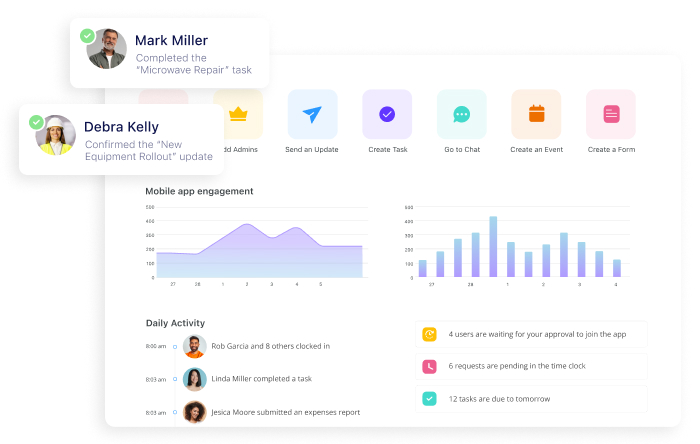
Connecteam is the best choice for deskless businesses with up to 10 users because the Small Business Plan brings employee records and HR workflows together with the tools managers use to run daily work. It helps a small team move away from scattered files without forcing the owner to maintain several systems.
Why I chose Connecteam: I ranked Connecteam #1 because it offers the most complete free plan on this list, especially across employee information, onboarding, leave, scheduling, and time tracking.
Employee profiles and documents
Connecteam’s employee profiles keep contact details, job information, qualifications, notes, time-off data, and documents in one place. Employees can update their personal information, while administrators control which fields and records each role can access.
This makes it easier for managers who handle HR alongside other responsibilities to find contracts, IDs, and qualifications without searching through emails. You can also store staff documents and certifications in the app, with expiration dates and renewal reminders to keep everything current.
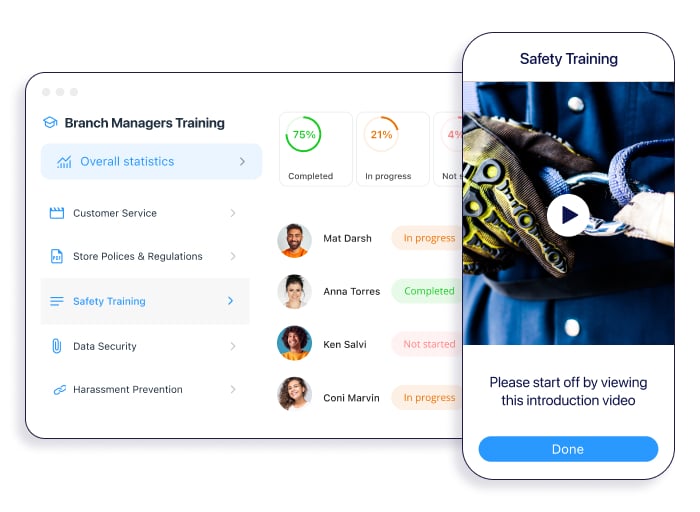
Managers assign training, track completion, and are alerted when certifications need renewal. Hiring and onboarding
Connecteam’s employee hiring tools let managers create mobile-friendly job posts, add role-specific screening questions, and move applicants through the recruitment pipeline. When someone is hired, their information is converted into an employee profile instead of being entered again from scratch.
From there, managers can assign onboarding packs with documents, forms, policy confirmations, and task lists. The Small Business Plan includes two onboarding packs, which works for a team with a couple of recurring job types. If you need different onboarding journeys for each role, you’ll probably need a paid plan.
Employee training
Connecteam’s employee training software lets managers build mobile courses, add quizzes, and monitor completion. Use the AI Course Creator to build custom training in seconds, based on an existing policy or process.
Employees can complete training on their phones, while managers can see who’s started and finished a course.
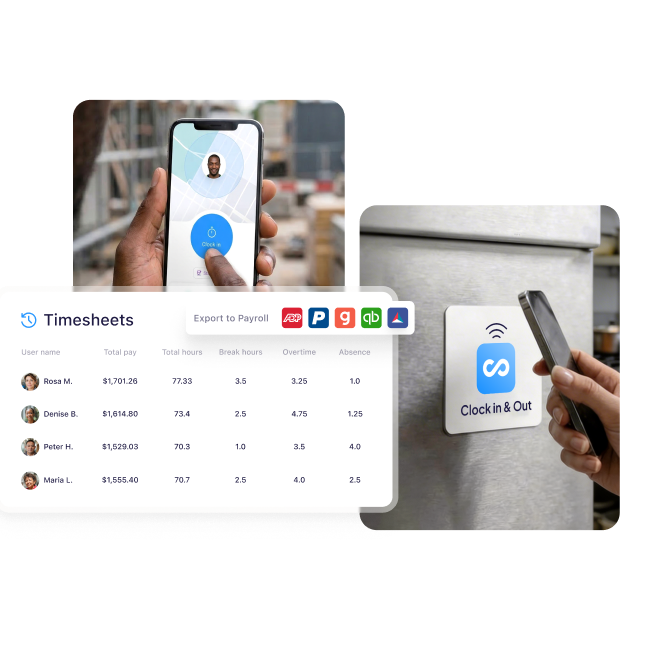
Connecteam handles scheduling, time tracking, and timesheet exports in one place. Scheduling, time tracking, and payroll prep
Connecteam’s employee scheduler lets managers build shifts with the drag-and-drop editor. You can also use the AI auto-scheduler to assign employees based on availability, qualifications, and custom rules. Employees submit time-off requests in the app, and approved leave appears on the schedule.
Staff clock into the employee time clock from their phones, while GPS tools record their starting location and track movement between job sites. Connecteam also handles paid and unpaid breaks, custom pay rules, overtime calculations, and timesheet approvals.
The free plan includes one time clock with exportable timesheets, one job schedule, and up to nine time-off policies with balance tracking. If you need direct payroll integrations and separate schedules for multiple teams, sites, or departments, you’ll need to upgrade to a paid plan.
And so much more…
Connecteam also includes an organizational chart, employee surveys, a knowledge base, and recognition tools, helping managers organize teams, share policies, gather feedback, and acknowledge employees in one app.
Connecteam also offers a free for life plan – Get Started Now!
0Key Features
Employee profiles and documents
Mobile onboarding, e-signatures, and training
Time-off policies and approval workflows
Employee scheduling and time tracking
Pros
Broad free HR and operations coverage
Role-based access protects employee records
Cons
Active and archived users count toward the cap
One time clock and one job schedule only
Pricing
Free-for-life plan availablePremium plans start at $29/month for 30 users
Try Out The Best Free HR Software!
Let's Get Started -
Zoho People — Best for microbusinesses needing free employee records, documents, and leave
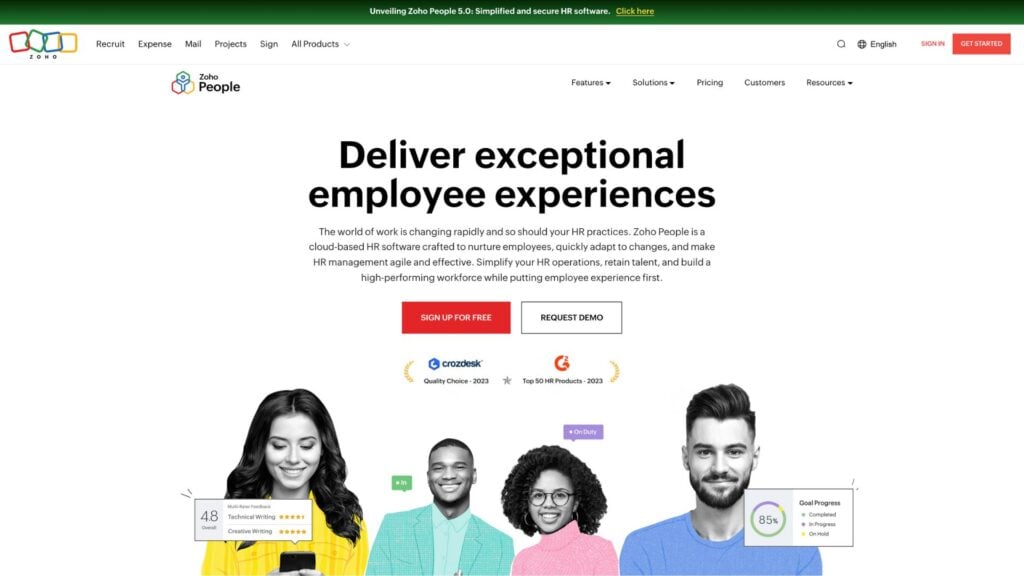
Zoho People is an HR system with a permanent free edition for very small teams of up to five people.
Why I chose Zoho People: Zoho People is ranked #2 because its free edition gives microbusinesses a structured employee database, document storage, and leave management without requiring self-hosting.
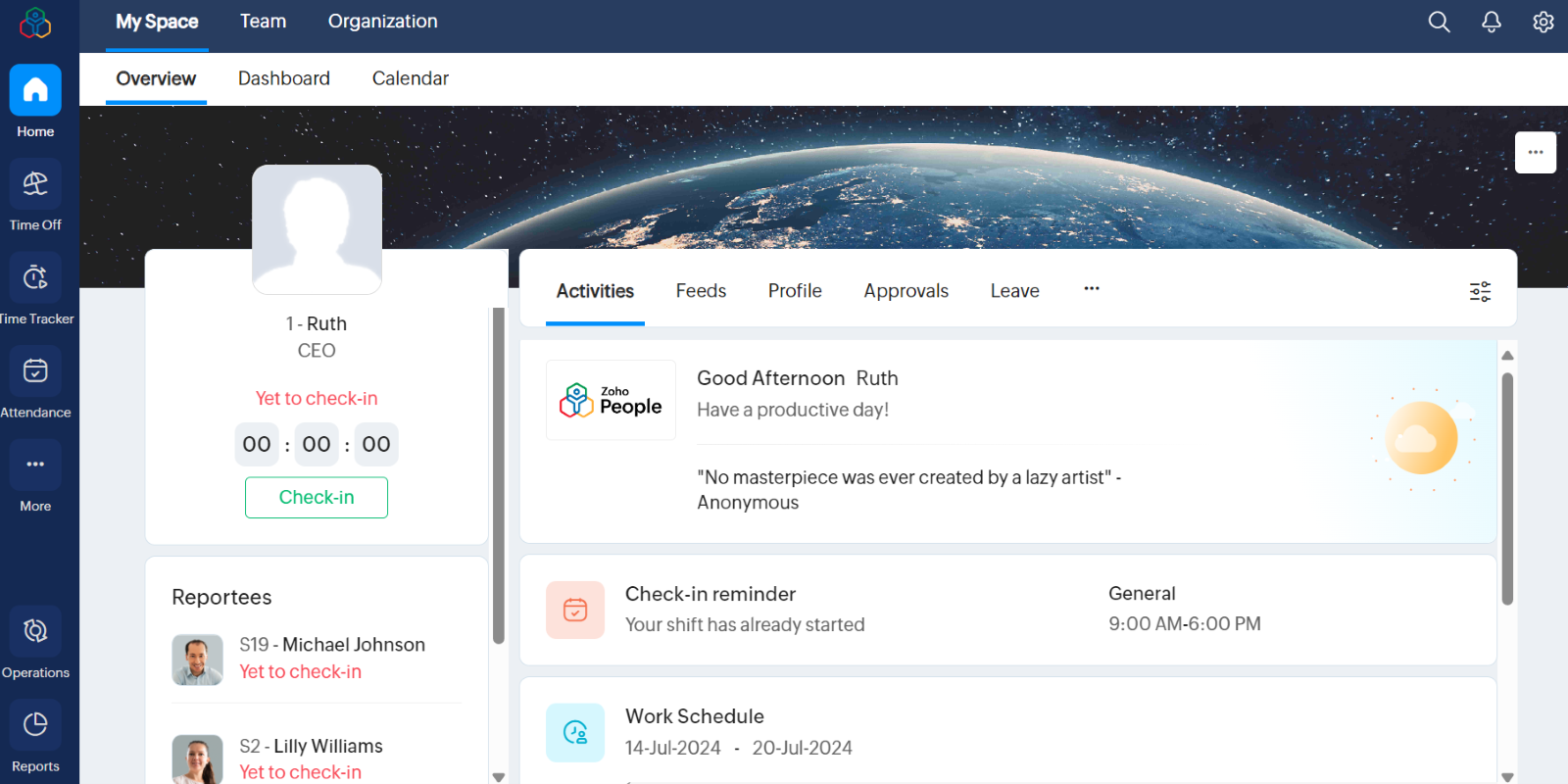
Zoho People’s web interface is easy to navigate and user-friendly. Employee database and documents
Zoho People keeps employee information in a central database and gives staff access to approved profile services. The free plan includes organization and employee files, personal uploads, and up to 250 MB of storage.
That’s enough for a small set of core records, but the storage cap is tight if you need to upload large policy files or many scanned documents. The free plan also leaves out new forms, API access, and custom reports, so it’s better suited for a straightforward setup rather than a tailored HR process.
Time-off management
Managers can create leave policies, record holidays, grant special leave, manage compensatory time off, and approve employee requests. This is the strongest advantage in the free version because it replaces separate calendars and email approvals.
The free edition really centers on employee data and leave. It’s important to note that attendance, shifts, timesheets, overtime, location controls, and kiosk functions all sit on paid plans. That means you won’t be able to access the full time and attendance management system without upgrading.
Employee self-service
Employees can access their profiles, upload personal files, and submit leave requests without asking HR to make every change. Mobile apps are available, which can help a small team handle routine requests away from a desk.
The trade-off is that candidate onboarding, employee onboarding, offboarding, workflow checklists, and the Zia HR assistant aren’t included in the free plan. Businesses that need structured hiring and onboarding will outgrow this tier quickly.
What users say about Zoho People
Zoho People offers a wide range of HR features in a single platform, including leave management, attendance tracking, employee records, and basic performance management.

Zoho is not very user-friendly and requires technical know-how to make the best use of all its features.

Pricing
Starts at $1.25/user/month Trial: Yes — 30-day Free Plan: Yes — (up to 5 users)
-
OrangeHRM — Best for tech-savvy SMBs wanting source-code control over core HR
Available on
- Web
- iOS
- Android
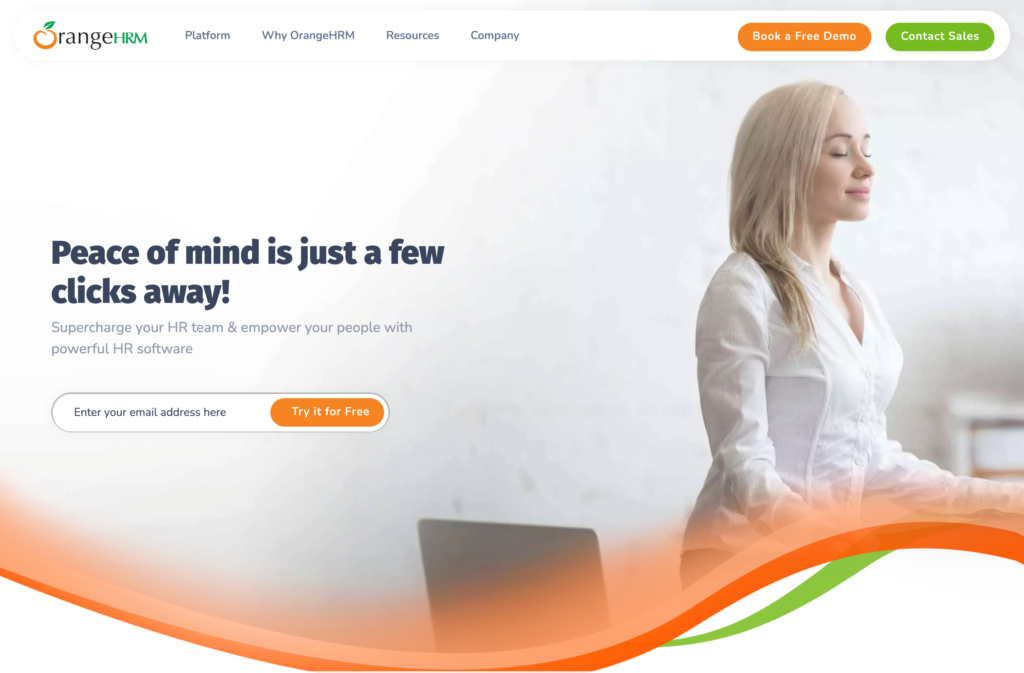
OrangeHRM’s Starter plan is free and open source, with both hosted and downloadable deployment options.
Why I chose OrangeHRM: I chose OrangeHRM because its Starter plan offers a core-HR system with employee records, leave, attendance, recruitment, and performance tools while letting technical teams control their own deployment.
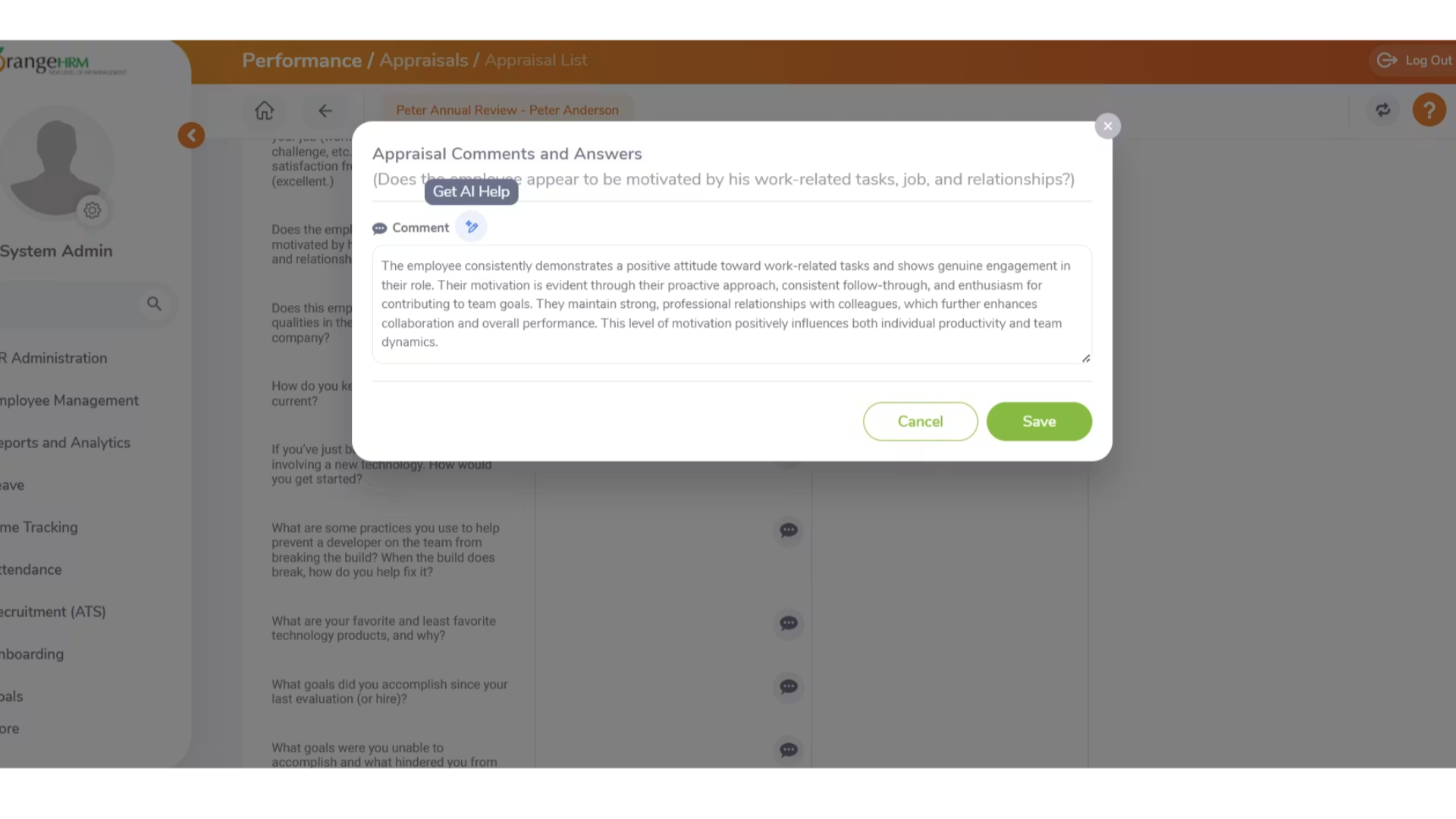
Orange HRM offers a built-in performance management system. Employee records and self-service
OrangeHRM’s free plan provides employee profiles, an employee database, work schedules, an organization chart, a corporate directory, custom roles, an audit trail, and document templates. These tools give HR administrators a clearer structure for building and managing their HR processes.
The downloadable version also gives businesses control over the hosting environment. While that may not matter for every company, it can help teams with internal infrastructure requirements. That said, it also moves the responsibility for installation, access controls, patches, backups, and recovery to the employer.
Leave and time tracking
OrangeHRM lets employees request leave with manager approval. HR can manage policies and the PTO calendar. The free plan also includes clock-in and clock-out, time tracking, and timesheets, making it useful for businesses that need HR records and basic attendance together.
The hosted Starter plan begins as a trial and can become free for life. The downloadable version has no license fee but includes community support instead of the professional support offered with paid Advanced plans.
Recruitment and performance management
On the free plan, OrangeHRM offers job posting, customizable application forms, interview support, e-signatures, goals, review questions, 360-degree feedback, and electronic performance sign-off. That gives a small HR team more talent-management depth than a lot of other free plans.
Just know that structured onboarding and offboarding, roster management, career development, training, surveys, employee-relations workflows, and discipline tools are only available on Advanced.
What users say about OrangeHRM
I love the super flexibility and simple user interface of OrangeHRM, which makes it easy to customize workflows and reduce the learning curve.
The setup of the software was challenging, requiring a LAMP server before setting up OrangeHRM.

Pricing
Contact vendor for price Trial: Yes — 30 days Free Plan: Yes
-

TalentHR — Best for small teams managing employee records, time off, and light recruiting
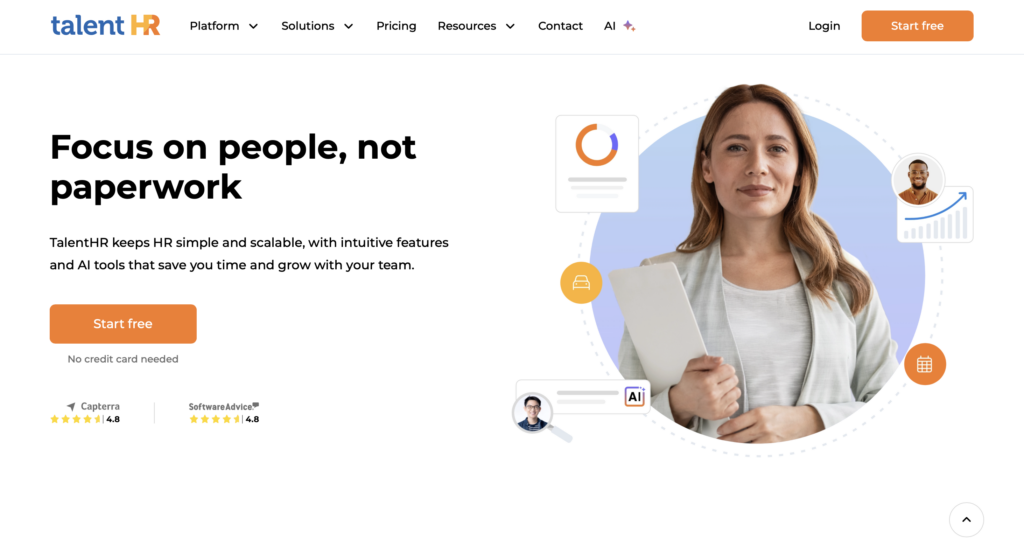
TalentHR is a hosted HR system with a free plan for up to 10 active users, including the account owner. New accounts start with a 14-day Premium trial, then automatically switch to the permanent Free plan.
Why I chose TalentHR: TalentHR’s free tier combines a formal employee information system and time off with a small recruiting pipeline. That gives a very small business more structure than a basic employee directory without needing to maintain its own server.
Employee Information System
TalentHR lets administrators enable its Employee Information System, or HRMS. The employee database gives a small team a central place for workforce information, while the portal helps employees and managers work with records without returning to a shared spreadsheet for every update.
This is a useful starting point for an owner or office manager who needs one source of truth but doesn’t have a dedicated HR department. Just remember that the owner counts toward the 10-active-user cap. Once businesses need an 11th active account, they need to move to a paid plan with a 15-user minimum.
Time off management
The free plan also includes time off management. It supports email notifications and half-day leave, giving employees and managers a clear way to handle basic absence requests.
But the free plan shouldn’t be confused with broader attendance software. Employee time tracking is only available on Premium, so teams that need to record working hours, prepare timesheets, or track time by project will need to upgrade. The free plan is a better fit for small teams whose main need is employee information and leave administration.
Recruitment and talent management
The free plan comes with recruitment and talent management. You can publish up to two job openings at once, which gives a business that hires occasionally a simple way to manage a small candidate pipeline without paying for a separate recruiting system.
The limit may feel tight for a company hiring into several roles at the same time. Unlimited job postings require Essential, while performance reviews, time tracking, surveys, document signing, goals, and several integrations require Premium. Onboarding and offboarding task lists are included on the free plan.
There’s one account-retention condition that’s really important to note: TalentHR may permanently delete free accounts after six months of inactivity. It sends warnings 30 days and seven days beforehand. To maintain your account, make sure to log in regularly and keep backups or exports of employee data.
What users say about TalentHR
It’s easy to understand and use. It covers the key things we need at the start – keeping track of employees, vacation days, opening a few job posts
I think the leave categories can be a bit confusing and unclear which leave is sick and which is annual leave and this makes it confusing to keep track of how much leave I have.
Pricing
Starts at $2/user/month Trial: Yes — 14 days Free Plan: Yes — (up to 10 users and 2 published jobs)
-

Odoo — Best for unlimited-user employee records and onboarding in one free app
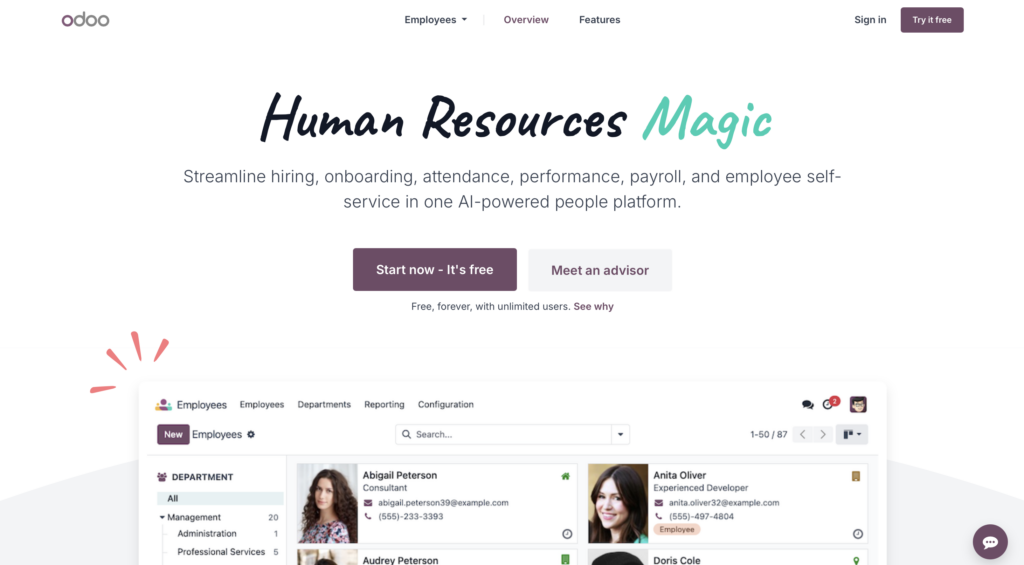
Odoo Employees is free forever for unlimited users when you select it as the single app on Odoo’s hosted free plan. Businesses can also self-host the LGPL-licensed Community edition.
Why I chose Odoo Employees: I chose Odoo Employees because it gives a small business a structured employee directory and onboarding workflow without a user cap on the hosted free plan.
Employee records
Odoo Employees centralizes personnel files, contracts, departments, managers, work locations, skills, certifications, equipment, and other job details. Access rights help keep sensitive information away from employees who don’t need it.
The search filters and grouping controls make a large directory easier to navigate. Administrators can group people by manager, department, work location, job, skills, start date, or status, instead of managing separate lists.
Onboarding and offboarding plans
The Employees app supports structured plans for onboarding and offboarding. HR can create activities for new hires or departing employees, assign responsibilities, and track the process against the employee record.
This is a strong free option because many competitors reserve onboarding for paid plans. However, adding another Odoo app to support the workflow will require an upgrade.
Organization and app limits
Department hierarchies, reporting lines, work locations, contracts, and employee status help managers understand how the workforce is organized. Odoo also allows multiple companies on the free plan and includes dependencies required by the selected app.
The main limit isn’t the number of users. Adding another Odoo app requires a paid Standard or Custom plan, so the free plan doesn’t include the full HR suite. The self-hosted Community edition doesn’t have a subscription fee, but your team needs to manage hosting, backups, updates, and security.
What users say about Odoo Employees
I like the flexibility of the design, because it lets you do anything the company needs.
The interface, while functional, can feel a bit cluttered once you have a high volume of data and multiple modules active
Pricing
Starts at $13.50/user/month Trial: Yes — 15 days Free Plan: Yes — (one hosted app)
-

Homebase — Best for single-location hourly teams tracking schedules and attendance
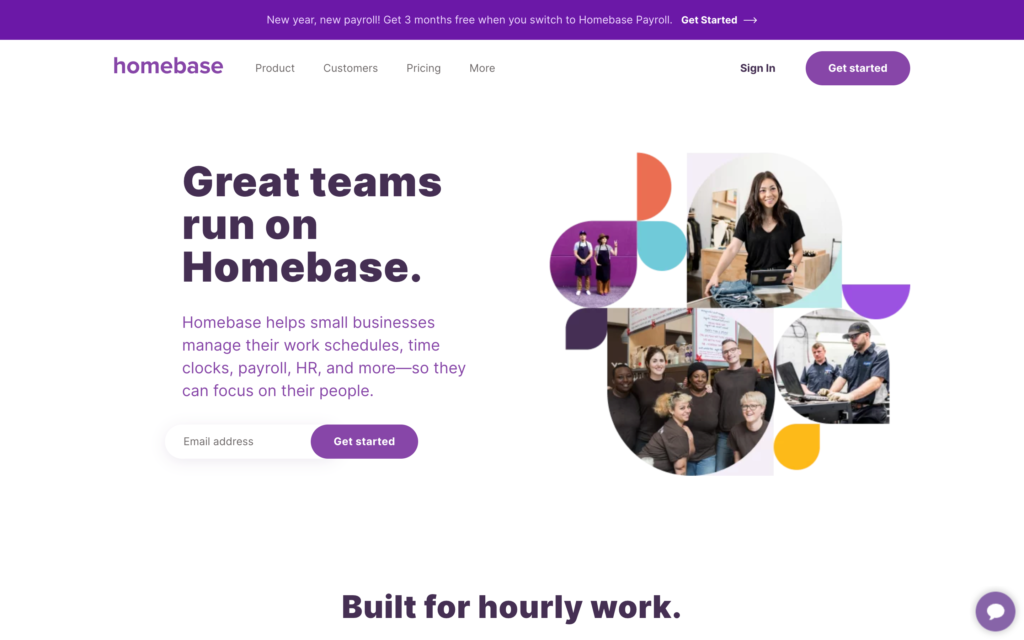
Homebase Basic is permanently free for one physical location and up to 10 employees. It’s a workforce management platform, rather than a broad HRIS, so its strongest tools for HR include running schedules, clock-ins, timesheets, and day-to-day communication for hourly teams.
Why I chose Homebase: Homebase’s Basic plan gives single-location businesses a practical schedule and time clock that employees can access from shared devices or their phones.
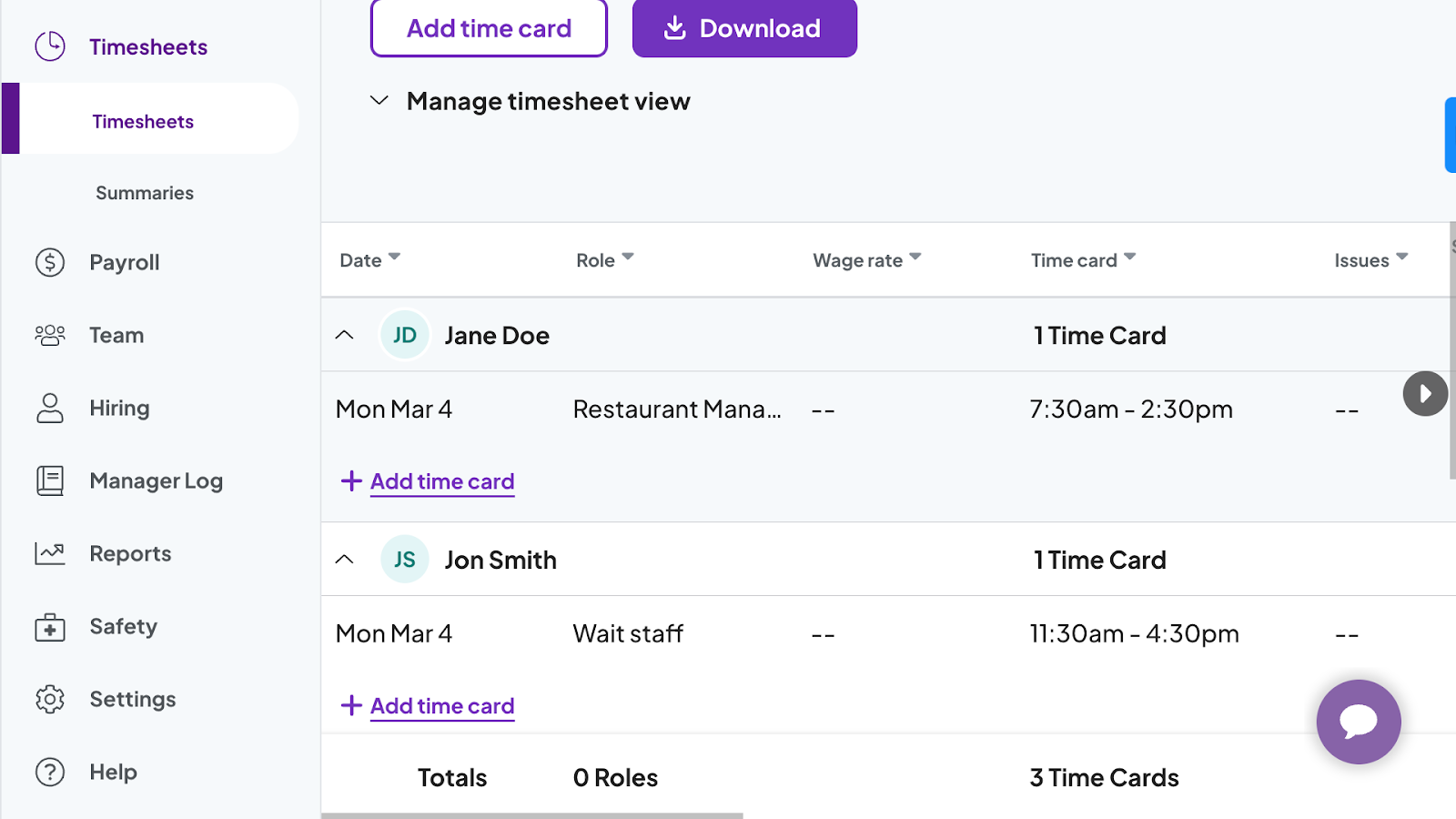
Create digital time cards quickly with Homebase. Employee roster and scheduling
Homebase’s roster stores employee details, roles, wages, and availability. Managers can build a weekly schedule and give employees access through the mobile app, which is useful when the team doesn’t work from computers.
The free plan supports basic scheduling, not the advanced controls on paid tiers. Availability and some self-service functions can help reduce messages, but PTO controls, departments, custom permissions, and more advanced scheduling functions require an upgrade.
Time clock and timesheets
Employees can clock in on tablets, computers, and supported point-of-sale systems. Managers can review basic time records and store up to 90 days of timesheets, giving a very small business a cleaner attendance trail than handwritten sheets.
The platform is useful for hourly teams but the free plan’s one-location and 10-employee is limiting. Location-based mobile clock-ins, clock-in photos, long-term timesheet storage, and payroll integrations are all only available on paid plans.
Team communication
Homebase’s mobile app gives employees access to schedules, upcoming shifts, and team messages, helping managers stay connected. That keeps shift information close to the records employees use each day.
The biggest gap is when businesses wants deeper HR tools. PTO policies, onboarding packets, e-signatures, employee document storage, HR advice, and compliance support require Plus or All-in-One, while payroll is a paid add-on on every tier.
What users say about Homebase
Homebase is user-friendly for both me as the manager/owner and for our employees. It lets us manage all of our HR needs in one central location, which keeps everything organized.
The mobile app doesn’t have the same functionality as the website.
0Pricing
Starts at $24/location/month Trial: Yes — (14-day) Free Plan: Yes — (one location and up to 10 employees)
Compare the Best Free HR Software Solutions
| Topic |
 Start for free |
|
|
|
|
|
|---|---|---|---|---|---|---|
| Reviews |
|
|
|
N/A
|
|
|
| Pricing |
Starts at just $29/month for the first 30 users
|
Starts at $1.25/user/month
|
Contact vendor for price
|
Starts at $2/user/month
|
Starts at $13.50/user/month
|
Starts at $24/location/month
|
| Free Trial |
yes
14-day
|
yes
30-day
|
yes
30 days
|
yes
14 days
|
yes
15 days
|
yes
(14-day)
|
| Free Plan |
yes
Free Up to 10 users
|
yes
(up to 5 users)
|
yes
|
yes
(up to 10 users and 2 published jobs)
|
yes
(one hosted app)
|
yes
(one location and up to 10 employees)
|
| Use cases |
Best for deskless businesses with up to 10 users managing HR and daily operations
|
Best for microbusinesses needing free employee records, documents, and leave
|
Best for tech-savvy SMBs wanting source-code control over core HR
|
Best for small teams managing employee records, time off, and light recruiting
|
Best for unlimited-user employee records and onboarding in one free app
|
Best for single-location hourly teams tracking schedules and attendance
|
| Available on |
Web, iOS, Android
|
How to Choose the Right Free HR Software
Selecting the right free human resources software depends on the size of your team, the work you need to manage, and the limits you can live with. Here are some questions to consider before you decide:
- How many active and archived employees count toward the free limit?
- Will adding a second location, app, or administrator trigger a paid plan?
- Can you afford the server and IT work behind a self-hosted option?
- Is your main problem employee records, onboarding, leave, or attendance?
- Do local privacy rules affect GPS, selfies, or other attendance controls?
- Which HR tasks must be free on day one?
- Can employees update information and submit requests themselves?
- Does the free tier include documents, permissions, and enough storage?
- What data can you export if you change systems later?
What Is Free HR Software?
Free HR software helps businesses store employee data and manage at least one important human resource workflow without a recurring software fee. Depending on the product, that workflow might include leave requests, document storage, onboarding, attendance, scheduling, employee self-service, or payroll.
“Free” can mean a hosted free tier or a community edition you run yourself. It shouldn’t mean a short trial. A self-hosted product may have no license fee but still cost money to deploy, secure, back up, update, and support.
How Does Free HR Software Work?
Hosted HR software runs in the vendor’s cloud. An administrator creates the account, adds employees, configures permissions and policies, and invites the team to use a browser or mobile app. The vendor maintains the underlying service, while the free tier sets limits around users, locations, storage, apps, or features.
Self-hosted HR software works differently. The business installs the software on its own server or cloud account and takes responsibility for the database, security, backups, patches, and uptime. This route can provide more control, but it usually needs technical help. In both cases, managers should configure access carefully because employee records can contain private personal, employment, and payment information.
The Benefits of Free HR Software
Here’s how free HR software can help our business:
Less manual administration
A central HR tool reduces the need to update the same employee information in several spreadsheets. Self-service can move routine profile updates and leave requests away from email, while approvals and status histories give the owner a clearer record of what happened.
More consistent employee processes
Even a basic free tool can make hiring and onboarding, leave, document collection, or attendance more consistent. Managers can use the same steps for each worker instead of relying on memory. Employees also know where to find information and where to submit a request.
Better visibility for small teams
Owners without a dedicated HR department can see missing documents, pending leave, scheduled shifts, or incomplete onboarding in one place. That visibility helps them act before a small issue becomes a payroll error, uncovered shift, or poor first day.
A safer way to test the workflow
A permanent free plan gives a business time to learn what it actually needs. The team can test whether employees use self-service, whether managers keep records current, and which limits create friction before paying for a larger system. Just make sure the product offers a practical export path so the business isn’t trapped if it outgrows the free version.
FAQs
It can be, but check the definition. A genuine free plan remains available after any trial and states its limits clearly. Some websites call a demo, 14-day trial, or paid product “free,” which isn’t the same thing. Self-hosted software can also be free to license while still costing money to run.
The best choice depends on the work and team size. Connecteam is the top pick for deskless businesses with up to 10 users because its free Small Business Plan combines employee information, documents, onboarding, leave, scheduling, time tracking, training, and communication.
Yes. Odoo’s hosted free plan supports unlimited users, but only one selected app. Some open-source editions don’t publish a user cap, though server capacity and technical administration may still limit what the business can support.
The software license may be free, but the system still needs somewhere to run. Budget for hosting, installation, database management, security, backups, updates, troubleshooting, and staff time. A hosted free plan is usually easier for a business without IT support.
The Bottom Line on Free HR Software
Free HR software can replace spreadsheets for employee records, leave, onboarding, documents, attendance, or scheduling. The right choice depends on which workflows are included, how many people and locations the plan supports, and whether you’re prepared to maintain a self-hosted system.
Connecteam stands out for small deskless teams because its free Small Business Plan combines employee information with onboarding, leave, scheduling, time tracking, training, and communication in one mobile app.