


If you want to succeed in the $35 billion golf industry, you need to start running your club like a modern business.
Staying on course in 2026 means navigating rising member expectations, shifting demographics, and complex revenue streams.
With over 8,000 clubs across the U.S., your strategy needs to be as well-managed as your green to stand out.
This guide will help you streamline operations, engage members, and build a club that’s ready for years ahead.
Key Takeaways
- Member expectations are changing; golf clubs need to adapt by offering flexibility, social connection, and flexibility.
- Successful golf club management depends on understanding the connection between your members, facility, and staff.
- Technology is the key to streamlining operations, managing staff, and improving overall service quality.
- All-in-one platforms like Connecteam help you run your club more efficiently and enhance the experience for both staff and members./key
What is Golf Course Management?
Golf course management involves overseeing every aspect of a club’s operations, both on and off the green. It’s about maintaining the turf and running a complex, service-driven business.
Today’s golf club functions as a hospitality venue, event space, dining experience, and retail operation, all under one tent. Running it well depends on keeping members happy and staff supported.
What does a golf manager do?
A golf manager sets the tone for the club. They act as business strategists, team leaders, and company representatives, all in one role. Their job is to position people, processes, and the property for lasting success. Key responsibilities include:
- Operations: Handing daily activities, such as tee sheet scheduling, equipment maintenance, and event coordination.
- Finance: Budgeting, forecasting, driving revenue, and controlling expenses across departments.
- Marketing & Sales: Promoting the club, growing its reputation, and generating business through memberships, events, and services.
- Human Resources: Hiring, training, and managing staff from different teams and functions.
- Customer Service: Ensuring a consistent, enjoyable experience for members and guests each time they visit.
The New Playbook for Today’s Golf Clubs
Golf clubs used to be all about exclusivity. There were strict dress codes and formal atmospheres, built for members only. Today’s clubs are more dynamic, valuing member experience above all else. They focus on blending hospitality and community to create a more engaged member base. And the clubs that succeed are the ones that adapt to a shifting audience.
Millennials, families, and women are joining the game and looking for clubs with inclusive environments to make social connections. In 2024, women made up 34% of private club members and 28% of on-course golfers.
To reach and retain these new demographics, golf course managers need to create more personalized experiences for their members. That means flexible memberships, updated programming, and welcoming clubs that mesh well with modern lifestyles. If your club can’t meet these rising expectations, then you risk losing relevance and revenue.
How to Manage a Golf Club
Running a golf club in 2026 starts by knowing where to focus. You need to understand who you’re serving, how your facility runs, and what your team needs to succeed. Let’s break down how to manage a golf club into three key areas:
Know your golfer
When you manage a golf course, you inherit a legacy and a community of members to serve and grow. But before making changes, you need to know your audience. Members are your customers, and like any customer base, they have their own needs, preferences, and expectations.

Consider creating member personas to get a clearer picture of who you’re serving. That way, you can tailor experiences to a segment, rather than thinking of all members as a monolith. Get personal, and think about what you can offer each of these different groups.
Example personas include:
- The Competitive Golfer: Lives for the game. Wants well-maintained greens, a steady calendar of tournaments, and opportunities to test their skills.
- The Social Connector: Comes for the lifestyle. Values networking, casual rounds, and club events more than scorecards.
- The Family: Seeks flexible tee times, junior programs, dining options, and activities suitable for all ages throughout the year.
- The Newcomer: Wants to learn the game. Looks for a welcoming environment that offers beginner clinics, social play formats, and easy bookings.
What do they want?
To find out what members want, ask them. It sounds simple, but it’s what you do with the answers that really matters. Members want to be heard and see that their suggestions are taken seriously.
Send out surveys, schedule one-on-one conversations, or have informal chats to get feedback. Find out what they like, what bothers them, and what they want to see more of. Everything you learn will help you do your job better and improve the overall member experience.
Keeping them engaged
Once you understand your golfers better, think about what’s going to keep them coming back. Maybe that means hosting more tournaments, planning themed social mixers, or offering junior clinics and family movie nights.
Here are a few ideas to get you started:
- Member spotlights in newsletters or on social media
- Birthday or anniversary perks
- Member referral program
- Club loyalty program
- Leaderboards posted in the clubhouse
- Skills challenges
- Invitations to regional events
- Happy hours or trivia nights
- Networking events with local business groups or charities
- Social media photo contests
- Weekend family tee times
- Holiday-themed activities
Know your club
Members join for your golf course, but they stay for all the community, amenities, and experience. As a golf club manager, you need to know how to leverage your facility to maximize revenue. That starts by knowing your club.
The course
The golf course is your largest and most visible asset. Properly maintaining the turf is essential for playability and pace. Plan maintenance strategically, ensuring that your budget covers equipment and grounds staff. Consider introducing sustainable practices to the course, like water management or integrated pest management. A great course boosts retention and builds pride in both new members and serious players.
The amenities
Members expect excellence on the green and off. Your pro shop, locker rooms, lounges, and practice areas should all support a comfortable and pristine experience. Think about how to improve your pro shop, tapping into its potential as a thriving retail space. Make sure you’re stocking the right merchandise, train staff in upselling, and rotate seasonal items for a steady source of revenue.
The restaurant
If your club offers dining, treat it as another opportunity to create a welcoming destination for members and guests. Your food and service are a reflection of the club, regardless of if you offer a casual cafe or a full-service restaurant. Offer seasonal menus, specials, themed nights, or promotions to increase foot traffic and overall satisfaction.
This Might Interest You
Need some help managing your club’s dining experience? Check out our restaurant operations guide for everything you need to know to succeed.
The event space
The course is the perfect scenic backdrop that can turn underutilized areas into go-to venues. Market the club for weddings, corporate gatherings, and private celebrations. Share photos of past events on your website and social media, and make it easy for prospects to inquire. Allowing non-members to host events can generate off-course revenue and introduce potential new members to the club.
Having an event space is a powerful asset, but overusing it could backfire. Hosting too many outside events may impact the member experience and make the club feel less like their own. Try to find the right balance between generating extra revenue through events and preserving the sense of community and comfort for your members.
Know your staff
Your team is the backbone of your club. They’re the ones interacting with members every day, keeping operations running, and bringing the club’s culture to life. Since you can’t be everywhere at once, it’s essential to create a consistent and unified experience through staff training, communication, and leadership. When your team is on the same page, you can maintain a high-quality experience across every touchpoint that members will remember.
Hire your staff
Think about the superstars on your team; the ones who show up consistently, deliver quality service, and work well with others. What qualities make them a good employee? Use that as your benchmark when hiring. Look for candidates who have the skills you need, bring the right attitude, and understand great service.
Create an onboarding process that gives new hires the tools they need to succeed from day one. It should set clear expectations, lay out standards, and introduce them to your team’s culture. Plus, employees with a strong onboarding experience are more likely to stay longer, perform better, and feel connected to the club.
Pro Tip
Our Guide to a Successful Employee Onboarding Process walks you through what to include, who to involve, and best practices to make it stick.
Train your staff
Training shouldn’t end after onboarding. Instead, you should make it an on-going part of your team’s routine. Instead of formal, sit-down sessions, make it light and consistent with quick refreshers or short quizzes on new policies, seasonal menus, or updated service standards. Introduce new tech, reinforce expectations, and close knowledge gaps. When you invest in your team, it boosts their confidence so they can perform better on the job.
Connect your staff
Good communication is the key to maintaining a healthy workplace culture. When your team members are informed, they’re able to work smarter, feel included, and deliver better results. It’s important to set up dedicated communication channels to connect your staff. Make sure there’s a reliable place staff can easily find announcements, updates, and reminders.
This Might Interest You
Learn about the Most Effective Ways to Share Information with Team Members so you map out a clear plan and make sure every update is seen.
The Modern Approach to Managing Your Golf Club
Great golf club management is great staff management. Your team is at the center of delivering service, maintaining the course, and running events. They’re your frontline for keeping members satisfied and ensuring the club operations go as planned. But when you rely on paper forms, outdated spreadsheets, or disconnected software for scheduling, communication, or task tracking, things can slip through the cracks. Scattered systems can lead to missed shifts, delays, and inconsistent service, which can directly impact the member experience.
To succeed in modern golf club management, you need a single, unified platform. When scheduling, time tracking, training, and communication are all in one place, it makes a difference. Operations run more efficiently when your team knows where to be, what to do, and how to do it. The result is that your members receive a smoother, more professional experience.
Connecteam: The Ultimate Solution for Golf Club Management
Connecteam is an all-in-one platform built to manage employee scheduling, communication, training, and day-to-day operations. From full-time employees to seasonal staff across departments, Connecteam brings everything together into one, easy-to-use app. Here’s how:
Scheduling and time tracking
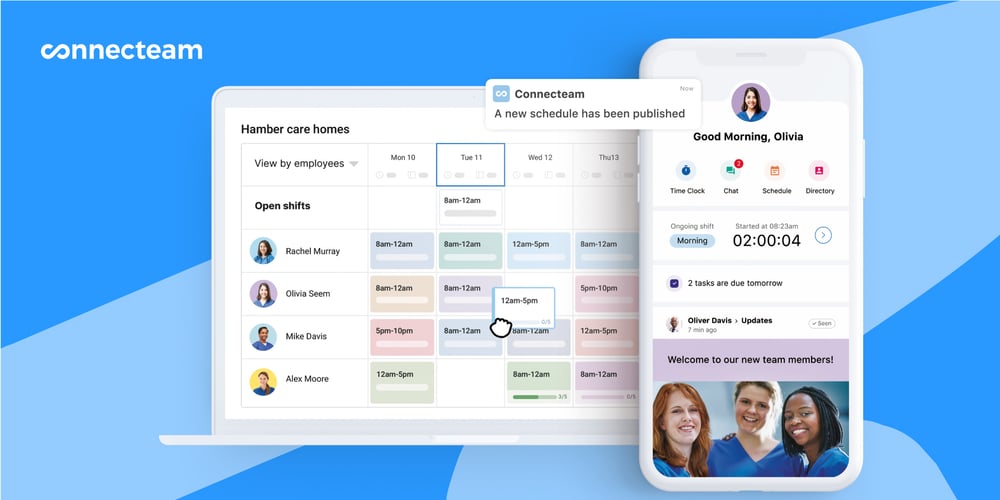
Create and share staff schedules in minutes. Between coordinating shifts for pro shop staff, instructors, caddies, groundskeepers, or servers, Connecteam makes it easy to manage availability, shift swaps, and last-minute changes. Track attendance in real-time with the employee time clock, and automatically log hours with timesheets for payroll. Even better, employees can access everything directly from their mobile devices.
Digital forms and task management
Ditch the clipboards and up your game with digital forms and checklists. Build forms from scratch for anything from course inspection and maintenance logs to event prep and incident reports. If you already have a form that works, upload or take a picture of it and Connecteam’s AI will instantly digitize it. Assign tasks, set deadlines, and track competition to keep your club running smoothly.
Training and onboarding
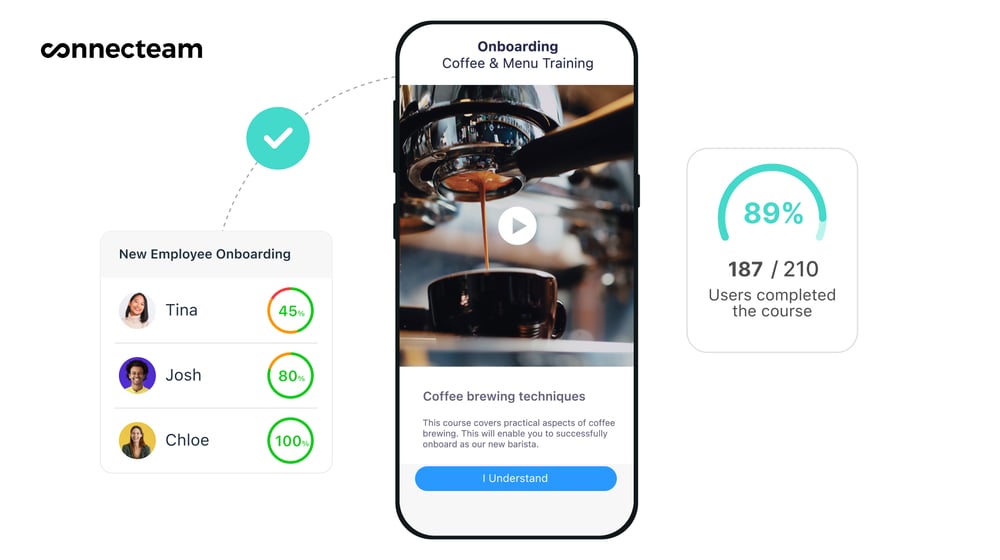
Between seasonal staff and high turnover, you need fast onboarding that you can easily replicate. Connecteam’s AI Course Creator lets you build custom training and onboarding in seconds. Describe your topic, and the platform instantly generates a complete training course. New hires can start right from their phones, so you don’t need lengthy in-person sessions or printed manuals.
Internal communication
Connecteam’s online team chat and company employee directory keep your team aligned from the green, in the kitchen, or at the front desk. Use the company update feed to share updates, announcements, documents, and photos. You can track who’s seen each update, and even require confirmation to ensure that nothing gets lost.
Empower your team
When your staff is trained, informed, and aligned, service improves. Members enjoy smoother check-ins, cleaner facilities, more organized events, and a high-quality experience they can rely on…without ever feeling tension behind the scenes. Connecteam empowers your team to deliver that consistency every day.
The best part? Connecteam’s Small Business Plan is completely free for up to 10 users. If you have a larger team, paid plans start at just $29/month and cover up to 30 employees.
Tee Up for a Successful Future
Running a golf club today is more than managing tee times and maintaining the green. Your success depends on how well you manage your people, your operations, and your member experience.
If you want to stay competitive and deliver the service today’s members expect, it’s going to take more than just tradition and intuition. You need tools that bring control, clarity, and consistency to your club and to your team.
Connecteam helps simplify your systems, strengthen your team, and elevate the member experience on and off the course.
Ready to manage your team like a pro? Take a swing with Connecteam—start for free today!
FAQ
Are golf courses open in the winter?
Many golf courses are open in the winter, especially in warmer climates or regions with mild winters. Courses in colder regions may close or operate on limited schedules during the winter.
What are the educational requirements for golf course management?
Golf course management may require a bachelor’s degree in hospitality, business administration, or golf course management. Professional certifications from PGA, CMAA, or GCSAA are also recommended.
What is the difference between golf course management and general business management?
Golf course management focuses on hospitality, member services, and turf care, while general business management is broader, covering areas like finance, strategy, and organizational leadership.