



Starting a cleaning business is exciting, but the costs can surprise you if you don’t plan ahead. You’re not just buying supplies. You may also need to pay for licenses, insurance, payroll, marketing, and more.
Costs vary based on your state, the type of cleaning you offer, and whether you’re working solo or hiring help. Below, I break down how much it costs to start a cleaning business in the United States and what payments you need to plan for.
Key Takeaways
- The cost of starting a cleaning company depends on where you operate, the type of cleaning you offer, and whether you’re working solo or hiring a team.
- Plan for the main cost buckets: legal setup, insurance, supplies and equipment, labor, and marketing.
- On a tight budget, start with the basics, use free or low-cost marketing, and grow at a steady pace.
What You’ll Spend to Start a Cleaning Business
Like most business owners starting out, you may be wondering: what will you spend to get your cleaning business off the ground? Below is a detailed breakdown of cleaning business costs, so you can budget with fewer surprises:
Legal fees
One of the first costs you’ll face when starting a cleaning business is legal fees. These include registering your business and getting the proper licensing.
Business registration
There are 4 main structures you can register your cleaning business as:
- Sole proprietorship: A single-owner structure where the owner is in complete control of the business. There are no filing requirements, and the owner is personally responsible for all company debt and obligations. Sole proprietors may or may not have employees.
- Partnership: A type of shared-ownership business structure where 2 or more people own a business and share in the profits, losses, and liabilities of the company. The partnership may be informal and not require registration. All profits and losses are reflected on the owners’ personal tax returns.
- Corporation: A structure where the business is a completely separate legal entity from the owners. Owners and shareholders aren’t responsible for the obligations of the company, so their personal assets are protected.
- Limited liability company (LLC): A structure that protects personal assets like a corporation does, but also allows the owner(s) to report profits and losses on their personal income to avoid corporate taxes.
Average cost: The cost to register a business varies from state to state and depends on whether you opt for an LLC or a corporation. It generally ranges from around $35–$500 for an LLC and $50–$300 for a corporation. There may also be annual filing fees, franchise taxes, and legal costs to plan for.
Examples:
- It costs $500 to register an LLC in Massachusetts.
- It costs $35 to register an LLC in Montana.
This Might Interest You
For more information on business structures, check out Connecteam’s comprehensive guides on sole proprietorships, LLCs vs. S corps, and S corps vs. C corps.
Licensing
There isn’t one specific national cleaning license that you need, but you will need a general business license issued by your city or state to run your company legally.
Average cost: The typical cost for a business license in the US ranges from $50 to a few hundred dollars.
Examples:
- A business license in Delaware costs $75 for a first location.
- A business license in Washington costs $50.
Legal fees: Total costs
- For sole proprietors: $85–$1,000+
- For LLCs or corporations with small teams: $85–$1,000+
This Might Interest You
Explore Connecteam’s in-depth guide on the legal requirements for starting a small business.
Insurance
Insurance is crucial for a cleaning business, as it protects you from financial loss as a result of accidents, lawsuits, errors, or other issues. It can also cover employee injuries and help build trust and peace of mind among your customers.
General liability insurance
General liability insurance protects your company in case your work causes a customer injury or damages someone’s property.
Average cost: The cost of general liability insurance varies depending on company size and location, ranging from less than $50 to more than $100 per month. Overall, the average cost for cleaning companies is $48 per month.
Examples:
- The average cost is $59 per month in Texas.
- The average cost is $104 per month in New York.
- The average cost is $42 per month in Ohio.
Workers’ compensation
Workers’ compensation insurance is required for nearly all employers in the US. It offers medical and lost wage benefits for employees who get hurt while on the job.
This is a “significant expense, and it becomes a substantial cost once you bring on employees,” says Ryan Knoll, Founder of Tidy Casa.
Average cost: Cleaning businesses pay an average of $136 per month for workers’ compensation insurance. The exact amount varies depending on where you’re located, the work you do, and how many workers you employ.
Example:
- Workers’ compensation insurance in Texas costs an average of $101 per month.
Equipment and commercial vehicle insurance
Equipment insurance covers the cost to repair or replace your equipment if it’s stolen, lost, or damaged by events like fires, floods, or vandalism.
Commercial auto insurance helps cover costs if one of your work vehicles is in an accident that causes property damage or injuries. Some types of commercial vehicle insurance may also cover physical damage to the vehicle, theft, and vandalism.
Average cost: Commercial vehicle insurance costs cleaning companies an average of $173 per month, and equipment insurance costs an average of $38 per month. Sole proprietors may decide not to insure their tools if they have only a few.
Example:
- A company insuring a single commercial van may pay around $117–$270 per month, while a company insuring a fleet of 5 may pay over $1,000 per month.
Insurance: Total costs
- For sole proprietors: $50–$300 per month ($600-$3,600 annually)
- For LLCs or corporations with small teams: $400–$1,000+ per month ($4,800–$12,000+ annually)
This Might Interest You
You can learn more about getting your cleaning business bonded and insured in our in-depth guide on cleaning business insurance.
Equipment
There are several types of equipment your business needs, ranging from cleaning supplies and hand tools to larger machines, like vacuums, carpet cleaners, and floor scrubbers. These costs vary widely depending on the cleaning work you’re doing and how much equipment you have to buy.
Basic hand tools and supplies
All cleaning companies need a set of basic hand tools for residential and commercial jobs. These include brooms, dustpans, spray bottles, mops, buckets, sponges, cloths, dusters, and scrub brushes.
Companies also need to keep a supply of items such as trash bags, disinfectant sprays, all-purpose cleaners, glass cleaners, degreasers, deodorizers, and paper towels.
Average cost: Buying cleaning equipment and supplies generally costs $300–$900, but the exact price depends on how much you need.
Example:
- A sole proprietor may get by with a single mop, a broom, some cloths, and a few cleaning supplies, which may only cost them around $100. But a business owner with a team of 5 cleaners may need to spend 5 times as much, if not more.
This Might Interest You
Check out Connecteam’s cleaning tools and supplies list to ensure you’ve got everything you need to get your cleaning company off the ground.
Large equipment
In addition to basic tools and supplies, you’ll likely need some larger equipment like vacuums, floor scrubbers/buffers, carpet cleaners, pressure washers, and power sweepers. These will help you clean more efficiently and take on larger projects than you could handle with hand tools only.
Average cost: Costs range from around $200 for a basic vacuum to tens of thousands of dollars if you need several large commercial vacuums, steam cleaners, and floor scrubbers.
Example:
- A high-pressure commercial steam cleaner costs around $5,000.
Personal protective equipment (PPE)
Safety gear like gloves, safety glasses, masks or face shields, protective clothing, shoe covers, and ear protection helps keep your team safe from common cleaning hazards. For example, it can reduce exposure to harsh chemicals, dust, and slippery floors.
Average cost: Proper uniforms and PPE cost around $100–$300 per person. Exact costs vary depending on the nature of your cleaning work.
Example:
- Residential cleaning companies may only need to pay $100 or less per person for basic PPE like masks, gloves, and safety glasses. However, industrial cleaning companies that regularly handle hazardous chemicals with large equipment may need to spend $300 or more on protective suits, ear protection, and other advanced PPE.
Software
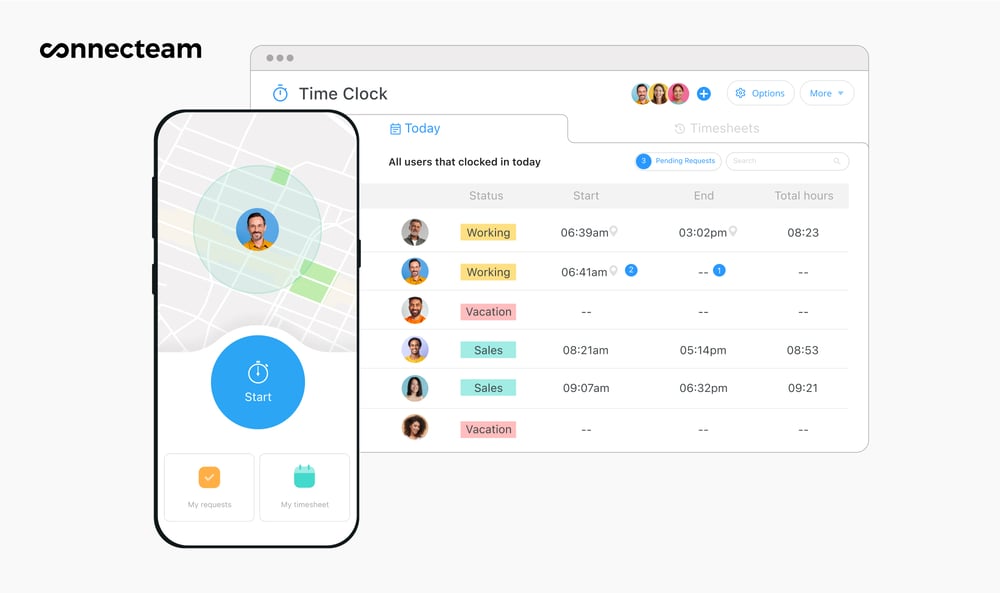
Once you’re juggling multiple jobs and cleaners, it’s easy to lose time to back-and-forth texts, schedule changes, and missed details like gate codes or special instructions. The right software can help you manage everything in one place: scheduling, task lists, time tracking, team messages, and job notes.
Average cost: Cleaning company management software may cost anywhere from $29–$250+ per month.
Example:
- Connecteam is a popular choice for cleaning companies that need to handle scheduling, task checklists, time tracking, and team communication in one place. Plans range from $29–$99 per month, and there’s also a free plan for businesses with fewer than 10 employees.
Vehicles
Whether you’re a solo cleaner or running a crew, you’ll need a reliable way to get people and supplies to each job. Many owners start with a personal car, then move up to a truck or utility van as their routes, team, and equipment needs grow.
Average cost: Sole proprietors may be able to use their own vehicle to travel from job to job and transport tools. Other companies may need to purchase multiple vehicles that can cost anywhere from $3,000–$50,000+ each.
Example:
- A company buying a single used utility van that’s many years old and has plenty of miles on it may pay around $5,000 or less. A newer model with modern features and fewer miles may cost north of $50,000.
Equipment total costs
- For sole proprietors: $400–$10,000+
- For LLCs and corporations with small teams: $4,500–$100,000+
Labor
Hiring and paying staff is one of the biggest expenses you’ll face as your cleaning business grows. Even if you start out solo, it’s smart to know what adding employees will cost before you scale your business.
Hiring/recruiting
These are the costs your cleaning company pays to find, hire, and onboard new employees. It may include advertising open positions, holding interviews, performing background checks, or paying recruitment agencies.
Average cost: While this may not be a major expense if you’re starting a small cleaning business with only a few people, hiring and recruiting can be costly. The average cost per hire (across all industries) is almost $4,700,according to the Society for Human Resources Management (SHRM).
Example:
- A cleaning company hiring its first employee may spend $500–$2,000 to advertise the role and make the hire. Then budget $500–$2,000+ for onboarding and ramp-up, including a few paid training shifts, uniforms/basic gear, and the extra time it takes to get quality consistent. All in, that’s often $1,000–$4,000+.
Wages
The wages you pay your team are likely your largest costs as a business owner. There are several ways you can pay your workers, and choosing the right amount is crucial for balancing your profits and keeping your team happy.
Average cost: A sole proprietor won’t spend anything on wages. Meanwhile, a small cleaning business may spend around $10,000+ per month for a few workers, as the average wage for building cleaning workers in the US is just over $21 per hour (around $43,000 annually/$3,600 monthly).
Examples:
- In Colorado, the average cleaning worker makes over $23 per hour (around $48,000 annually/$4,000 monthly).
- In Florida, the average cleaning worker makes just under $18 per hour (around $37,000 annually/$3,100 monthly).
This Might Interest You
If you’re not sure how you should pay your cleaning staff, check out Connecteam’s cleaning company payroll guide to learn more about each option.
Taxes and benefits
Employers are responsible for tracking and paying payroll taxes for each employee. They may also have to offer benefits like a retirement plan or health insurance, depending on the size of the company and where it operates.
Average cost: You should expect to spend around 33% on top of base wages for benefits, and another 7.65% on payroll taxes, which are Social Security and Medicare. If you’re a sole proprietor and are self-employed, you’re generally responsible for paying 15.3% of your earnings into Social Security and Medicare.
Example:
- If your total cleaning company payroll is $100,000 annually, budget for around $33,000 in benefits and $7,650 in payroll taxes in addition to the salary.
Labor total costs
- For sole proprietors: $0 (but responsible for paying 15.3% into Social Security and Medicare)
- For LLCs and corporations with small teams: $9,500–$25,000+ a month (low end of the range represents 2 workers making $3,000/month; high end of the range represents 4 workers making $4,000/month)
Marketing
Strong marketing is an important factor in reaching new customers and increasing brand awareness. Marketing costs range from incredibly budget-friendly to extremely expensive, depending on the strategies you choose.
Logo
Your logo is often the first impression you have on potential customers. It should be eye-catching, attractive, professional, and memorable. You can create it on your own, or hire a professional graphic designer to make it for you.
Average cost: Logos can cost anywhere from $0 to upward of $10,000, depending on whether you create it yourself or work with a designer.
Examples:
- Designing your logo yourself is free if you use a free graphics editor like Canva.
- Using a paid online logo maker may cost $20–$65.
- Crowdsourcing the design for your logo may cost $100–$1,000. This process involves you posting a logo brief online and specifying the price you’ll pay. Designers then submit their designs to you in hopes of being picked.
- Working with an independent graphic designer or graphic design firm can cost anywhere from a few hundred to several thousand dollars.
Website
A website is a great way to stand out from local competitors and help customers find you online. It’s where customers can read about your services, reach out to your team, and book you for a cleaning job.
Average cost: For many small businesses, building a website costs anywhere from $200–$5,000. However, it may also be built for less, even $0, with a free website builder.
Example:
- Several business owners on Facebook have said that they built their cleaning company websites for free. Among those who did pay, one paid $100, and another paid $350. One individual also said that “$800 to $2k” is a reasonable price range for a cleaning business site.
Local advertising
Local advertising helps get your business in front of local homeowners or businesses that don’t know you yet, which may help you increase your cleaning business’s profit.
You can advertise locally through your Google Business Profile, local Facebook groups, neighborhood apps like Nextdoor, and paid online ads. Offline, options include local newspapers, radio, flyers, business cards, yard signs, and sponsoring community events.
Average cost: Your initial advertising spend may be around $200–$2,000. From there, small businesses often spend 5–10% of their annual revenue on marketing and advertising.
Examples:
- You may sponsor a youth sports league in your city, and pay around $250–$1,000 to hang a banner displaying your company name and/or logo at the field for an entire season.
- A small cleaning company may maintain a $10 daily ad spend (around $300 per month) to reach out to people looking for its services.
This Might Interest You
Want ideas you can copy and tweak fast? Check out our guide on great cleaning flyers to get inspired.
Marketing total costs
- For sole proprietors: $200–$2,500*
- For LLCs and corporations with small teams: $200–$12,000*
* These ranges include one-time setup (logo and website) plus early promotion. The low end assumes DIY tools and minimal spend; the high end assumes a paid site build and a larger ad budget.
Total Cleaning Startup Cost Estimates
Below is a detailed estimate of how much it costs to start a cleaning company. Keep in mind that these costs may vary widely depending on your location, company size, and needs. Also, many of these costs are ongoing and continue beyond the startup phase, such as insurance, labor, and marketing.
| Expense | Sole proprietors | LLCs and corporations with small teams |
| Legal fees | $85–$1,000+ | $85–$1,000+ |
| Insurance | $600–$3,600 | $4,800–$12,000+ |
| Equipment | $400–$10,000+ | $4,500–$100,000+ |
| Labor | $0 (but responsible for paying 15.3% into Social Security and Medicare) | $9,500–$25,000+ |
| Marketing | $200–$2,500 | $200–$12,000 |
| Total | $1,285–$17,100+ | $19,085–$150,000+ |
Tips for Managing Cleaning Startup Costs
Here are three top tips for starting a cleaning business with no money or on a very tight budget:
Spend strategically
“True growth requires strategic investment,” Pristine Beers, owner and operator of White Lilac Cleaning, pointed out to Connecteam. And it’s true: Not every cleaning business cost I’ve covered in this article is something you need to address immediately when starting your company.
“In the early stages of building my business, I kept my initial expenses lean, limited primarily to essential consumables and a reliable vacuum,” Beers explains. Take her advice and focus on buying equipment, tools, and other resources you actually need first. You can expand later when you have more cash flow.
Don’t rush
Building a cleaning business is a process, and don’t try to do too much too soon. For example, if you’re just getting started, consider running your cleaning business on the side and continuing to work full-time until you’re confident in its success.
Ryan Knoll used this strategy to get his business, Tidy Casa, off the ground. “The main part was getting my bills paid through the job,” he tells Connecteam. “This allowed me the flexibility to grow the company and reinvest the profits back into the business.”
Use low-cost marketing
While paid marketing techniques often deliver solid results, companies on a tight budget can turn to several free advertising strategies, as well. This includes posting content on social media, creating and managing your Google Business Profile, building a website through a free tool, or even attending local events.
Create simple systems early
As you take on more jobs or hire your first employee, small issues can turn into daily headaches, like missed messages, double-booked cleanings, and inconsistent work. Simple systems help you stay organized and save time.
Start with a basic schedule, a repeatable cleaning checklist, and a clear way to track hours and job notes. Tools like Connecteam can help you keep scheduling, task checklists, time tracking, and team communication in one place. It also offers a free plan that small cleaning companies with up to 10 employees can use forever.
Connecteam – Cleaner Systems for Cleaning Crews
Learn moreFAQs
The type of cleaning business that makes the most money tends to be commercial cleaning. This is because commercial cleaning jobs and contracts are generally larger than residential work, as there’s much more space to clean.
The easiest cleaning businesses to start are those requiring limited equipment, tools, and supplies. Typically, these are basic residential cleaning, window cleaning, and carpet cleaning businesses.
Before purchasing equipment and starting your cleaning company, make sure to create a business plan, perform market research, and choose the types of services you’re going to offer.
Most cleaning businesses start with a wide cost range. A solo owner may spend about $1,200–$17,000+, while a small team may spend about $19,000–$150,000+. Your total depends on your location, services, equipment needs, and whether you hire employees.
Commercial cleaning often costs more upfront because you may need heavier-duty equipment, larger supply orders, and stronger insurance coverage. Costs vary by contract size and service type (office, medical, industrial). Plan for higher equipment and labor needs than a basic residential setup.
You typically need a legal business setup (name and registration), a business license, basic insurance, cleaning supplies and tools, and a way to get to jobs. You’ll also need a simple system for scheduling, customer communication, and tracking payments and expenses.
Most cleaning businesses need a general business license from the city or state. Some areas also require a DBA (“doing business as”) if you use a trade name. Requirements vary by state and city, so check your local business licensing office.
A cleaning business license often costs $50 to a few hundred dollars, depending on your state and city. Some locations also charge renewal fees each year. Check your local licensing site for exact pricing and timelines.
Cleaning business income varies widely. It depends on your pricing, how many jobs you book, your expenses, and whether you pay employees. A simple way to estimate is: monthly revenue − monthly costs (supplies, insurance, labor, taxes, fuel, and marketing).
The biggest cost drivers are your location, cleaning type (residential vs commercial vs specialty), equipment needs, insurance requirements, and staffing. Your marketing approach and whether you buy or lease vehicles can also change your startup budget quickly.
Legal setup usually includes business registration (like LLC filing fees), a business license, and possible yearly renewals. You may also pay for name filing or help from a professional. Costs vary by state and business structure.
Most cleaning businesses start with general liability insurance. If you hire employees, you usually need workers’ compensation. If you use a work vehicle, you may need commercial auto insurance. Equipment coverage can help if tools are stolen or damaged.
Common ongoing costs include insurance premiums, replacement supplies, fuel and vehicle maintenance, software, and marketing. If you have employees, add wages, payroll taxes, and any benefits. Some costs are monthly, and others hit yearly or as-needed.
Start small and buy only what you need for your first jobs. Use a personal vehicle at first if it works, choose free or low-cost marketing (Google Business Profile, local groups), and grow step-by-step. Delay major purchases until steady demand supports them.
Disclaimer
This article is for general informational and educational purposes only. It is not intended as and does not constitute business, financial, or professional advice, and should not be relied upon as such. Connecteam accepts no responsibility for consequences arising from actions taken or not taken based on the information present in this article.