

Effective hospitality communication strengthens teamwork, improves guest satisfaction, and supports better operations across the board.
Missed updates, disorganized handoffs, and scheduling mishaps can throw off an entire shift. Rooms aren’t ready, guests have to wait, and staff struggle to catch up. These gaps can stack up fast in an industry built on speed and service.
In this guide, we break down how to enhance hospitality communication to reduce confusion and boost confidence across your staff, operations, and guest interactions.
Key Takeaways:
- Hospitality communication is a mix of internal coordination between team members and external interactions with guests.
- Strong communication reduces errors, improves productivity, and enhances guest satisfaction.
- Tracking metrics like employee engagement, task completion time, and guest satisfaction scores helps you measure the effectiveness of your communication strategy.
What is Hospitality Communication?
Hospitality communication is two-fold. It’s how information flows between team members and across departments, and how staff interact with guests to create a seamless, memorable experience. Strong internal communication serves as the foundation for great guest service, helping teams deliver clear, consistent, and timely updates.
It’s what keeps the front desk, housekeeping, maintenance, and management on the same page. Good hospitality communication helps teams anticipate needs, resolve issues quickly, and present a unified, professional image to every guest.
In hospitality, communication is a mix of conversations, body language, and written updates that keeps everyone aligned.
Types of communication in hospitality
Internal communication stems from a few key sources, including:
| Description | Example | |
| Cross-team | Departments share information with each other, like reception speaking with housekeeping or management updating the kitchen. | Housekeeping calls the front desk to let them know a room is clean and ready for early check-in. |
| Shift handovers | Teams pass important details from one shift to the next, so nothing gets lost in the changeover. | The front desk worker leaves a note for the next shift about a VIP guest arriving late and a leak in room 211. |
| Leadership | Managers set expectations, provide feedback, and show the team what good communication looks like. | The hotel manager sends out an update so staff knows the daily priorities and changes guests should expect. |
When it comes to dealing with guests, external communication can be broken down into three main categories:
| Description | Example | |
| Verbal | Your words, tone, volume, and clarity. | The front desk worker warmly greets a guest and explains how check-in works. |
| Nonverbal | Your body language, facial expressions, eye contact, and posture. | The porter smiles and makes eye contact as they open the door for a guest. |
| Written | Anything in writing, including emails, text messages, and in-room notes. | The maintenance tech leaves a note on the nightstand confirming the lock is fixed. |
All these forms of hospitality communication build on each other, improving team coordination to enhance every guest’s stay.
Why Does Good Hospitality Communication Matter?
Communication is the core of great hospitality. It plays a part in everything from guest satisfaction to your bottom line. When your team communicates clearly, everything runs smoother for both staff and guests. But when it breaks down, you feel the impact right away.
Benefits of strong hospitality communication
When your team communicates well, it benefits your operation in multiple ways, including:
Improved guest satisfaction
When your team is aligned, they can respond faster and meet guest needs. It also leads to fewer mistakes and more personalized moments, ultimately creating better interactions. And when guests enjoy their stay, they’re more likely to return, which becomes a real driver for repeat business.
Increased efficiency
Clear communication gives staff the right information at the right time, reducing errors, eliminating rework, and saving time. It makes shift handovers smoother and keeps everyone on the same page, so tasks get done quicker and guests receive more consistent, professional service.
This Might Interest You
Become a communication pro! Check out our guide on the Most Effective Ways to Share Information with Team Members to learn more.
Reduced risk and liability
Communicating clearly helps prevent misunderstandings, safety issues, and oversights that can lead to accidents or disputes. By documenting issues, sharing quick updates, and following procedures, your team creates a safer space for guests and reduces risk for the business.
Fewer avoidable problems
Good communication lets teams act on small issues before they grow into big problems. This keeps service standards high and helps the business avoid unnecessary costs, delays, and stress.
Enhanced employee engagement
Staff that are informed feel more supported and motivated to excel in their roles. They understand how their work fits into the bigger picture, boosting job satisfaction, increasing retention, and trickling down to positive guest interactions.
How to Improve Hospitality Communication
Now that we’ve covered the basics and benefits, the next step is learning how to use better communication with your team day to day. Here’s where to start:
Set the foundation
Your team needs one reliable place to check for memos, events, updates, and schedule changes. This could be a bulletin board in the breakroom, a binder at the front desk, or a team communication app, like Connecteam. What matters most is that everyone knows where to look.
Use this space to share the important details: shift schedules, room assignments, daily tasks, deliveries, VIP reminders, and anything else your staff should know. When there’s one spot for information, staff spend less time searching for answers and more time supporting guests.
Standardize shift handoffs
Shift handoffs shouldn’t feel rushed or like a last minute chore for the outgoing employee. Instead, make handoffs a regular part of the shift. They should be a routine task employees complete before they clock out. This keeps important reminders from slipping through the cracks.
Use a digital checklist or create a form to guide the handoff process. Log key details, so the next team member can pick up right where the last one left off. Guests won’t have to repeat requests, and nothing will catch the incoming shift by surprise.
Personalize every guest’s stay
Logging guest information should be a team-wide effort. Train your staff to take down details, like room preferences, food allergies, or special occasions. Record the information in your CRM or PMS, and review the notes during daily meetings.
This helps every team member create a memorable moment. A server can guide guests away from menu items that don’t fit their dietary needs, and the front desk can celebrate a guest’s anniversary at check-in. These small touches can make a lasting impression on a guest’s visit.
Connect departments with workflows
Set up a system for handling common requests between teams. If the front desk needs extra pool towels, they should know exactly how to ask housekeeping. Whether that’s through team instant messaging or a quick task, the process should be easy to follow and easier to complete.
This cuts down on waiting, and guest needs are addressed quicker and more accurately.
Help staff solve problems on the spot
Give your frontline team the authority and tools to solve common issues on their own. Instead of waiting for a manager, build simple guidelines that lay out what they can offer and when. Store these policies in a company knowledge base that staff can easily access.
When a guest’s issue is resolved by the first team member they talk to, a negative situation can turn into a positive one. Quick solutions can reduce frustration and show guests that their time and experience truly matter.
Create a feedback loop
Make it easy for staff to share guest feedback and suggestions, and pair it with post-stay surveys. Review feedback regularly so you can spot patterns and act on areas of improvement as a team.
How to Measure the Impact of Hospitality Communication
Measuring your hospitality communication efforts helps you see what’s working and what needs improve. By tracking key metrics, you can connect internal communication to happier staff and a better guest experience.
Here’s what to focus on:
- Employee Engagement and Reach: Track how many staff members see messages and interact with announcements. If engagement is low, it probably means important information is being missed, which could lead to service gaps.
- Employee Satisfaction: Run surveys to assess how staff feel about internal communication. Is it clear? Timely? Helpful? Staff can help point out on-the-ground issues that you might not see.
- Employee Turnover: In an industry with nearly 70% annual turnover, a high churn rate can indicate poor communication and a disconnected team. When employees feel informed and supported, they’re more likely to stay. Lower turnover reduces training costs, freeing up time and resources for better service.
- Guest Satisfaction Scores (GSAT/NPS): Look at your guest satisfaction surveys, and focus on feedback related to service speed, staff helpfulness, and problem resolution. When scores rise, it often reflects improved internal communication.
- Task Completion Time: Use an employee task tracking app to measure staff productivity. Faster completion rates can signal better coordination and quicker service for guests.
This Might Interest You
Read our full guide on measuring your internal communication strategy to learn more about how to track your success.
Streamline Your Hospitality Communication with Connecteam
Connecteam is an all-in-one platform that helps hospitality teams communicate better. You can use it on the web or right from your phone for business-wide updates or quick one-on-one messages. It gives you the tools to stay organized, share information clearly, and keep every department in sync. Here’s what else Connecteam has to offer:
In-app chat
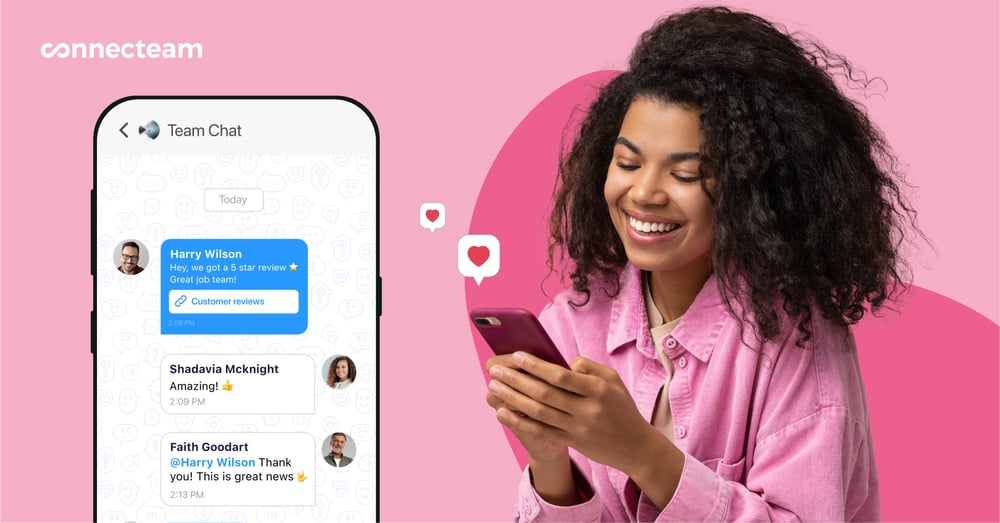
Use the online team chat to reach your staff instantly. Start individual or group chats, send files or voice messages, and check read receipts to know who’s up to speed.
Shift scheduling
Create shifts schedules in minutes, and add notes, tasks, or files so staff know exactly what’s expected each shift. Staff can swap shifts, mark their availability, and request time off directly in the app.
Company newsfeed
Share company updates and announcements in the newsfeed. You can schedule posts in advance, track who’s viewed them, and let employees react or comment to boost engagement.
Task management
Assign recurring or one-off tasks to individual team members or groups, add subtasks, and monitor completion progress in real-time.
Knowledge base
Build a searchable company knowledge base and fill it with important resources, like handbooks, training manuals, and policies. Staff can ask Connecteam’s AI Agent for quick access to the answers they need.
Surveys and polls
Send out quick surveys or live polls to gather feedback and learn what’s working best for your team.
And so much more…
Connecteam is a full employee management platform with additional tools for training, time tracking, workflows, and more.
The Small Business Plan is completely free for teams with up to 10 employees. Paid plans start at just $29/month for up to 30 users, and higher tiers start at $49/month for Advanced and $99/month for Expert, both also covering up to 30 users.
Access everything you need to manage your team and keep them informed in one app.
Get started with Connecteam for free today!
The Bottom Line on Hospitality Communication
Strong communication is a must-have if you want to succeed in the hospitality industry. When teams share information clearly across shifts, departments, and guest interactions, you create an experience that promotes satisfaction, loyalty, and efficiency.
By standardizing handoffs, empowering staff, and using the right tools to communicate, you can transform internal coordination into memorable guest stays. Great hospitality communication helps reduce misunderstandings, frustration, and turnover.
When communication is simple, staff are happier and guests are more likely to return.
FAQs
What are some strategies for dealing with difficult or demanding guests?
Deal with difficult guests by staying calm, listening actively, showing empathy, and offering timely solutions. Clearly communicate, set boundaries if you need, and escalate issues to management if necessary. Always document incidents to maintain service quality and protect staff.
What is the role of active listening in hospitality communication?
Active listening helps staff understand guest needs, resolve issues, and build trust. It improves accuracy of service, cuts down on miscommunication, and enhances guest satisfaction.
How does crisis communication work in the hospitality industry?
In hospitality, crisis communication involves delivering timely, accurate updates, managing guest concerns, and coordinating staff responses. You need to follow clear protocols, train employees for emergency situations, and maintain transparency to protect business reputation and ensure safety.